

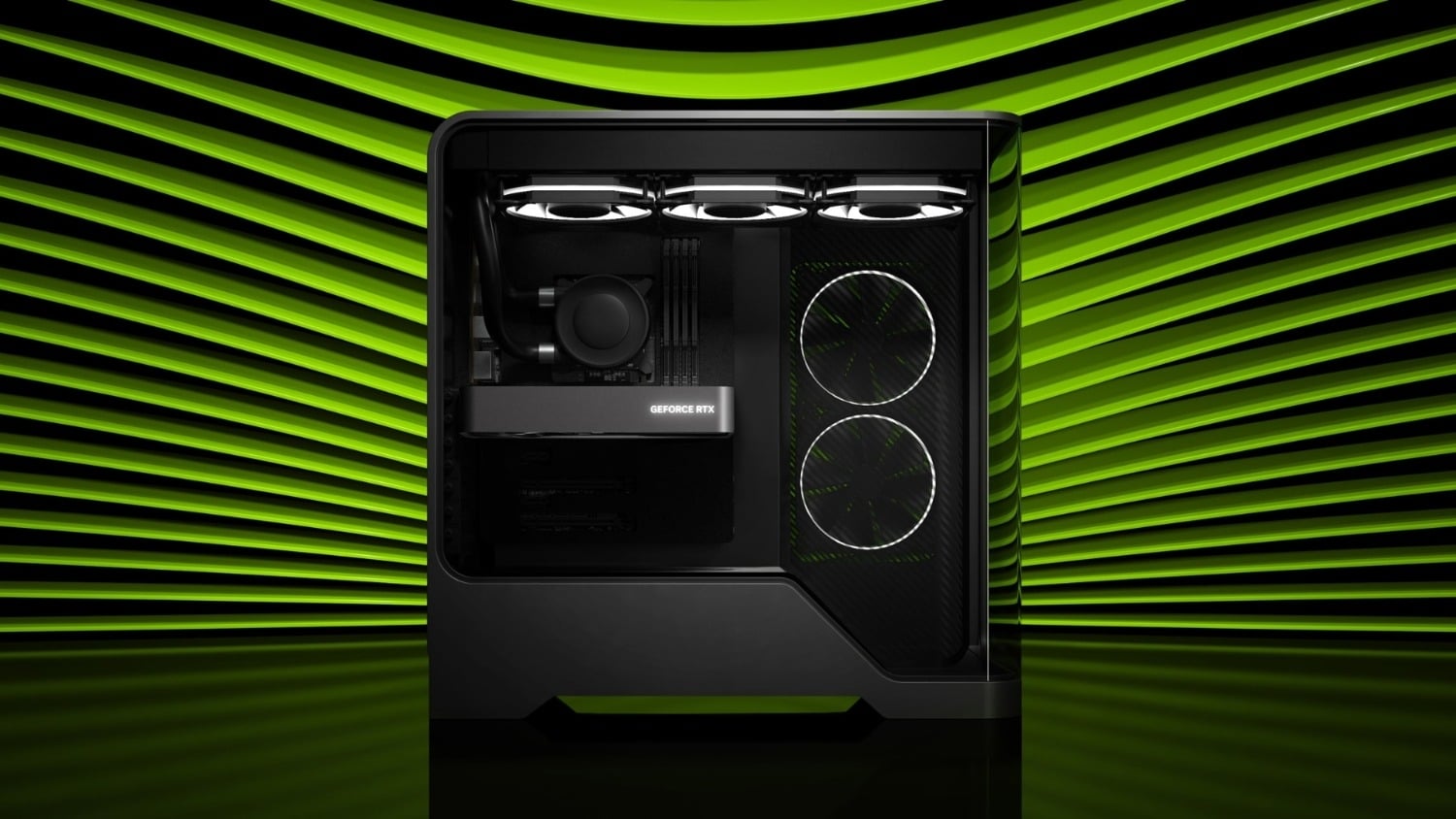
TL;DR: NVIDIA’s Q2 2027 report omits any mention of GeForce RTX or Gaming after the company moved Gaming into a broader Edge Computing category. The report lists $89.0B Data Center and $7.2B Edge Computing revenue, highlights local AI, autonomous vehicles, and robots, but gives no gaming revenue breakdown.
Voice: Kosta AndreadisSpeed
0:00 / 3:22
Use left and right arrow keys to seek audio.
Back in May, NVIDIA changed how it structured its quarterly financial reports by removing the Gaming segment, which covers the company’s desktop and laptop GeForce RTX hardware, along with semi-custom revenue from consoles like the Nintendo Switch 2 and services like GeForce NOW. Instead, it lumped Gaming revenue into a broader Edge Computing segment that also includes workstations, robotics, and automotive.
NVIDIA said the change “better reflects” its “current and future growth drivers,” which makes sense since NVIDIA hardware is the go-to option for local AI, including for those who repurpose gaming cards like the GeForce RTX 5090 to run complex models. Of course, this timing coincides with some of the biggest price increases we’ve seen for GeForce RTX gaming GPUs, and the memory crisis is also leading to fewer cards available for purchase.
So, it’s not outside of the realm of possibility that this change was also made to shield an expected decline in Gaming revenue. That said, with the company’s latest Q2 2027 financial report now available, which confirms $89.0 billion in Data Center and $7.2 billion in Edge Computing revenue, there’s no mention of GeForce RTX or Gaming at all. Not even DLSS gets a mention, even though it passed the impressive 1,000-game milestone and NVIDIA announced DLSS 4.5 Ray Reconstruction.
- Read more: NVIDIA’s quarterly revenue reaches almost $100 billion, and $90 billion of that is from AI
- Read more: NVIDIA’s latest financial report removes Gaming as a segment, it’s now called Edge Computing
NVIDIA RTX Spark, of course, is mentioned, but that’s the only real Edge Computing highlight that has anything to do with Windows PC gaming or RTX technologies for gamers and creators. Instead, NVIDIA highlights local AI initiatives for popular models, autonomous vehicle advancements, and humanoid robots as the key Edge Computing milestones for the quarter. Without a breakdown of the various segments’ revenue streams, it wouldn’t be out of the realm of possibility to assume that Gaming revenue for Q2 2027 has declined.
In fact, AMD’s most recent quarterly financial report shows Gaming revenue dropped 31% compared to the same period last year, with the company citing lower PlayStation 5 and Xbox Series X|S sales as a key reason. As NVIDIA isn’t alone in massive gaming hardware price increases due to the memory crisis, AMD’s report shows the impact the current situation is having on gaming. And with GeForce RTX still the biggest name in PC gaming, it’s a shame that its latest financial report doesn’t mention gaming at all, let alone offer some insight into how the market is situated.
Why did NVIDIA remove the standalone Gaming segment from its quarterly financial reports?
NVIDIA folded the standalone Gaming segment into a broader Edge Computing category, saying the change “better reflects” its “current and future growth drivers.” The company framed this as aligning reporting with how its hardware is being used for local AI and other Edge Computing markets such as workstations, robotics, and automotive.
Question #2
How does NVIDIA now categorize GeForce RTX and other gaming-related revenue in its reports?
Did NVIDIA’s Q2 2027 report mention DLSS or its 1,000-game milestone?
What gaming-related NVIDIA technologies or initiatives were highlighted in the Q2 2027 report?
Have a question about this content not listed here? Ask below and TweakBot will answer it.
Now, beyond the financial report showing record revenues, NVIDIA brought its GeForce RTX brand to Gamescom 2026 this week in a big way, with several game-related announcements and impressive RTX showcases. With AMD mostly absent from the event, Radeon-wise, this shows NVIDIA is still consumer-facing in its gaming business.
