

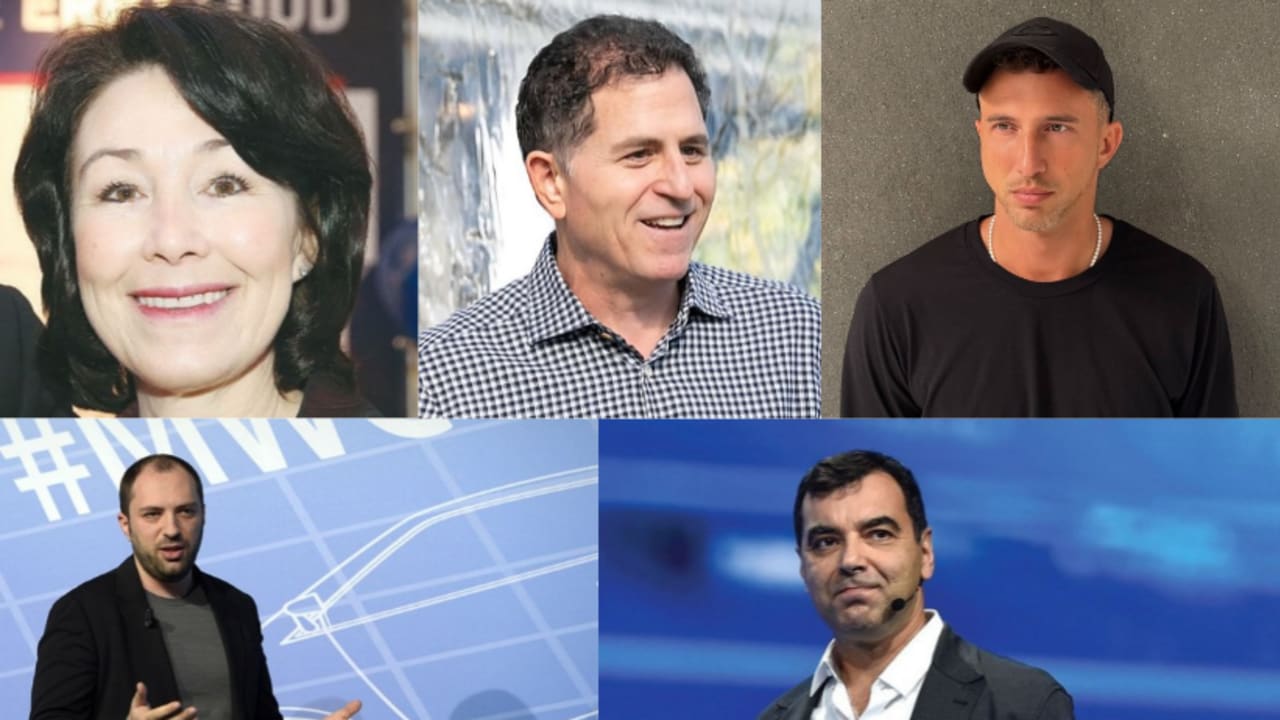
Michael Dell is the Jewish-American founder and CEO of the eponymous computing conglomerate Dell Technologies.
In 2026, Dell has been one of the year’s biggest gainers among the global ultra-wealthy, propelled by surging demand for Dell Technologies’ AI-optimized servers.
On May 28, 2026, the company posted its best trading day ever – a roughly 36% stock jump that added $35.8 billion to Dell’s net worth in a single day, lifting him to about $245.9 billion and sixth among the world’s richest people, with the firm booking around $24.4 b. in AI orders in that quarter alone.
His fortune has swung widely with the stock – ranging from roughly $135 b. early in the year to nearly $246 b. at its peak – but through mid-2026, he has consistently ranked among the world’s five-to-seven wealthiest individuals (estimated near $212 b. in mid-2026 by Bloomberg and Forbes), a sharp rise from the $113.5 b. cited in 2025.
Throughout Israel’s war in Gaza and after, Dell has continued to invest in Jewish communities through the Michael & Susan Dell Foundation, set up with his wife. Beyond immediate relief efforts, he has long supported educational programs, youth leadership initiatives, and technology-focused projects in Israel.
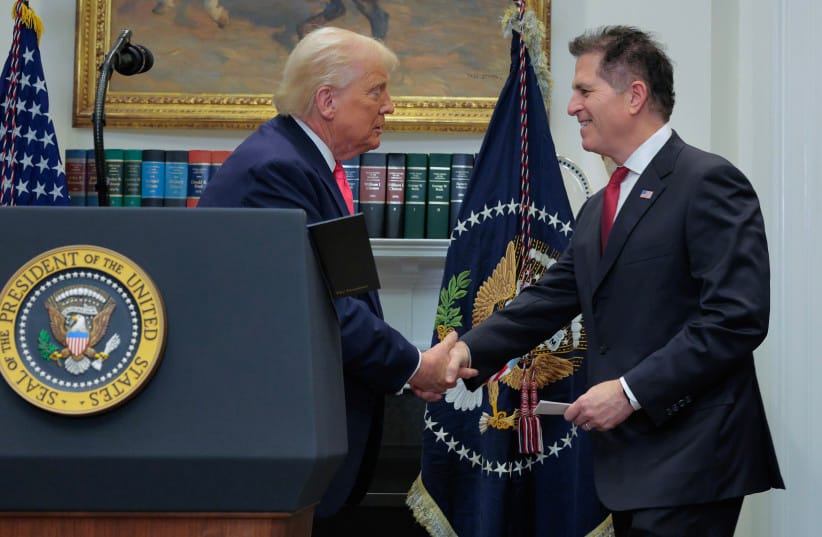
In 2026, that work has continued through the foundation’s Israel portfolio, including new tech-career pathways for Israel’s haredi (ultra-Orthodox) community, backing for a national plan to turn around 150 underachieving schools serving 25,000 students, and zero-interest recovery loans for the families of military reservists.
More broadly, in late 2025, Michael and Susan Dell donated $6.25 b. to “Trump Accounts,” a federal savings initiative for children, one of the largest single philanthropic commitments of the period.
Few figures embody AI’s leap from science fiction to daily life like Israel’s Amnon Shashua.
The Hebrew University of Jerusalem professor-turned-entrepreneur co-founded Mobileye, the Jerusalem company whose computer-vision systems let cars detect pedestrians, read road signs, and steer to avoid accidents. Intel’s $15.3 billion acquisition in 2017 was a national milestone; Mobileye returned to Wall Street in 2022.
In July 2026, after nearly three decades, Shashua announced he would step down as Mobileye’s CEO once a successor is found, remaining on the board. The news sent the share price sharply lower – proof of how bound the company remains to its founder. He is steering Mobileye into “physical AI,” including a roughly $900 million move for humanoid-robot startup Mentee Robotics and a Volkswagen robotaxi partnership.
DoubleAI, founded in 2024 with Prof. Shai Shalev-Shwartz, pursues “Artificial Expert Intelligence” – its aim is systems that reason well enough to eventually match human experts in fields like science and engineering. Its first model, WarpSpeed, rewrote GPU code that outperformed most hand-written equivalents. The venture has raised hundreds of millions at a valuation above $1 b.
Not every bet has paid off: OrCam, his assistive-tech venture, has shed much of its value, and his One Zero bank remains unprofitable. Yet honors keep pace – the 2023 Israel Prize, the 2025 TIME100 AI list, and the 2026 election to the US National Academy of Engineering.
As Israel cultivates its AI ecosystem, Shashua’s pursuit of the next breakthrough continues to resonate.
For a quarter-century, she was the steady hand at Oracle – the disciplined executor who turned a legacy software house into one of the defining players of the AI age. This past year, Safra Catz reached the summit and then stepped aside.
Under her leadership, Oracle’s remaining performance obligations – the pipeline of future revenue – surged 359% to a record $455 billion, powered by cloud contracts with a “who’s who of AI,” including OpenAI, xAI, Meta, and Nvidia. The company’s stock posted its best single-day gain since 1992, briefly carrying Oracle toward a trillion-dollar valuation and cementing Catz’s reputation as the financial architect behind its transformation.
Then, in Sept. 2025, she made her most consequential move. After more than 25 years in Oracle’s executive ranks, Catz ceded the CEO role to a dual-leadership structure and transitioned to Executive Vice Chair, remaining close to founder Larry Ellison as the company pressed deeper into “sovereign AI” and global data-center expansion.
Born in Holon to a Holocaust survivor mother, Catz has long stood as one of the most powerful Jewish women in global business. In a year defined by both triumph and transition, she proved that lasting influence is measured not only by the empire one builds, but by the confidence to hand it on.
Among the Jewish billionaires whose wealth and influence have shaped Jewish life and Israel in recent years, few move as quietly – or give as consequentially – as Jan Koum.
The Ukrainian-born American is best known as the brains behind WhatsApp, one of Israel’s and the world’s most popular messaging apps. His story is a classic immigrant arc: he arrived in the United States as a teenager, grew up on government assistance in Mountain View, California, and swept the floors of a local grocery store for extra money before co-founding WhatsApp with Brian Acton in 2009.
Facebook’s roughly $22 billion acquisition of the company in 2014 turned him into one of tech’s wealthiest figures. He stepped down from Facebook’s board in 2018, and Forbes has since pegged his fortune at around $17 b., though estimates vary widely.
Where some billionaires court the spotlight, Koum has built his philanthropy behind it. He directs his giving largely through the Koum Family Foundation, and has been linked in reporting to a newer multi-billion-dollar charitable fund and to his investment firm, Newlands. Across these vehicles, he has supported Jewish education, community centers, and cultural preservation, with a particular focus on Jerusalem.
In 2026, the Koum Family Foundation committed a reported $200 m. to Jerusalem’s Shaare Zedek Medical Center to fund a new hospital tower and housing for medical staff – among the largest philanthropic gifts to an Israeli hospital in recent memory. He has also backed organizations that foster Jewish identity in the city.
Despite maintaining a low public profile, Koum’s impact continues to resonate widely across Jewish communities worldwide – proof that influence need not be loud to be lasting.
Brandon Korff, 40, is a Jewish-American billionaire and the heir to the Paramount empire, best known for orchestrating the roughly $35 billion sale of the business to David Ellison’s Skydance. He is the son of Shari Redstone and grandson of the late media mogul Sumner Redstone, from whom the family inherited control of Paramount.
Until the sale, Korff sat on the board of National Amusements, the Redstone family’s private holding company that controlled the media giant and its marquee brands, including CBS, MTV, Nickelodeon, and franchises such as Star Trek and Mission: Impossible.
Korff’s connection to Israel is well-established. He has made substantial charitable donations to various Israeli causes over the years – including the IDF, medical institutions, and local community projects – and reportedly expanded that support through 2025 while spending significantly more time in the country. His brother served as a lone soldier in an elite IDF unit. Korff was previously in a relationship with Israeli model Yael Shelbia.
At the end of August 2025, Korff filed an application for Israeli residency, a move officials framed as a gesture of solidarity amid global boycotts and rising hostility toward Israel. As of mid-2026, no major outlet has confirmed that the application was formally approved, though pro-Israel social media accounts have circulated claims that he obtained citizenship.
Two brothers from a provincial Russian city now sit atop one of the world’s largest mobile-gaming empires.
Igor and Dmitry Bukhman grew up in Vologda, sharing a bedroom and a single computer as they taught themselves to program. While studying applied mathematics, they released their first game around 2001 – priced at $15, earning about $60 in its opening month – and founded Playrix in 2004.
Today, Playrix is one of the world’s largest mobile-game developers, generating billions through blockbuster titles like Homescapes, Township, and Fishdom, with well over 100 million monthly players. It reported roughly $2.6 billion in revenue in 2024 and is headquartered in Dublin.
The brothers rank among the world’s wealthiest self-made entrepreneurs, with Forbes valuing Dmitry at around $13.6 b. as of early 2026. When Russia invaded Ukraine in 2022, Playrix closed its offices in Russia and Belarus – a decisive break with their homeland.
Now Russian-born British-Israeli citizens based in London, they have channeled part of their wealth into Rix Capital, a family fund seeded with billions. Quietly influential and rarely in the spotlight, the Bukhmans wield financial power reaching well beyond gaming.
No. 45: Ben Shapiro, Mark Levin, Dan Senor, and Jake Tapper >>
The 50 Most Influential Jews 2026 Full List
