

‘More postmodern than ancient’: why the Odyssey is everywhere, from Oz to Westeros
Christopher Nolan’s take on the Odyssey is set to break box-office records. What made the director so determined to adapt the ancient Greek epic? And why does a poem from 600BC hold a vice-like grip on pop culture? Warning: contains 2,600-year-old spoilers
Christopher Nolan’s Odyssey movie has all the hopes of a summer blockbuster pinned to it, and all the promise – as the trailers have showed – of magnificent effects, shocks and thrills. You will be taken inside the cave of the terrifying one-eyed giant, the Cyclops Polyphemus, who likes to dine on human flesh. You will visit the dim and misty shores of the land of the dead, where no warm-blooded human should ever tread. You will flee the pounding tread of cannibals. You will be tossed on stormy seas sent surging by vengeful gods.
And all of this spectacular adventure, for sure, is part of the Odyssey, one of the first great works of world literature, which was written down soon after the Greeks acquired the technology to do so, probably in the 600s or 500sBC. The ancient Greeks attributed the poem to a man called Homer, often described as a blind bard from the island of Chios
In recent centuries, though, the idea that the poem can be meaningfully called the work of one single creator has been firmly called into question. Particularly after the 1930s, when the American classicist Milman Parry studied the composition techniques of nonliterate epic singers in the Balkans, it became clear that the Odyssey, and the other Homeric Greek epic, the Iliad, were written forms of poems that drew on a long oral tradition. That means that versions of what we call the Odyssey were – perhaps for centuries, long before they were consigned to writing – performed by bards, using a combination of memory and on-the-hoof improvisation.
Imagine then, for a moment, not the darkness of the cinema so much as the darkness of the king and queen’s pillared hall, where guests are gathered for feasting and for telling stories. Against the flickering fire, the bard strikes up with his harp and starts to sing, performing tales of adventure and loss, return and homecoming, of war and death and the fragile, tender threads that hold a husband and wife and a family together
I have a feeling that the bard’s performance in this dark hall might have been a more thrilling and overwhelming experience even than that created by Nolan’s cinematic imagination. Had we been there, in that shadowy hall, we might now be weeping together at the emotional force of the stories of the bard. I think this is the case because within the Odyssey – a poem that is so knowing and alert about its own status as an artwork that, at times, it can feel more postmodern than ancient – there are several scenes in which bards in palace halls tell stories, and these stories are sometimes stitched seamlessly into the epic itself. And, hearing these stories, the listeners-in-the-poem weep to hear their own experiences – or experiences they fear, or long, to have – turned into song.
The question is: why are we still connecting with stories that were told in those ancient halls, their animating sparks perhaps as old as the Greek bronze age? Why has the director of Inception and Oppenheimer been so determined to adapt them, and why will so many people want to experience his vision of them?
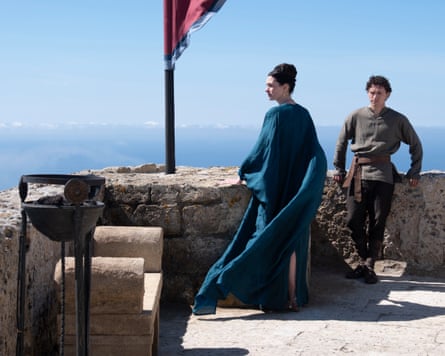
The answer partly lies in the fact that the Odyssey – the story of a warrior’s homecoming, his long and tortuous journey to reintegrate himself within his own household – has passed into the bloodstream of many storytelling traditions. In his introduction to his recent translation, classicist and essayist Daniel Mendelsohn lists Dante’s Inferno, Star Trek, Alice’s Adventures in Wonderland, The Wizard of Oz, Finding Nemo, The Catcher in the Rye, Gladiator, Pride and Prejudice, and Game of Thrones as works in which the Odyssey’s ideas and motifs resurface.
More obviously still, there’s James Joyce’s Ulysses, which maps the events of an epic day in Dublin on to specific episodes from the Odyssey; Omeros, Derek Walcott’s long poem about colonialism and the slave trade; and a whole host of contemporary novels from Madeline Miller’s Circe to Margaret Atwood’s The Penelopiad. You could add to Mendelsohn’s list a multitude of other works: The Lord of the Rings, Homeland, The Return of Martin Guerre, and earlier cinematic adaptations of Homer, such as the 2000 Coen brothers film O Brother, Where Art Thou?
I have read the Odyssey many times – starting with storybook adaptations as a child, through to plunging through it, imperfectly, in Greek as a teenager, to rereading it in different English translations as a young, then middle-aged adult. I began with my father’s battered postwar copy translated by EV Rieu. Then it was the Robert Fagles’s translation, then George Chapman’s, then Emily Wilson’s, then Mendelsohn’s. My most recent reading is ongoing: a long and lingering journey through Wilson’s fleet-footed version, in fortnightly discussion with classicist Mary Beard and alongside a band of wonderful listeners. This is our Odyssey book club podcast (which runs alongside Instant Classics, which Mary and I also co-host).
The 12,000-line poem that is the Odyssey endures – like any rich and multilayered text – not because it is perfect, but because it flexes and bends into different shapes when it is reread; the light that glints off it always looks different. My reading now is different from my earlier readings; and I know the next will be different again. We read through our own lives and experiences: this time, because I have reported often from Ukraine over the past four years, I can’t help reading the Odyssey through the stories of the soldiers of today who return from the front transformed by experience, and as strangers to their families. So many stories that I hear – about the relationships that don’t survive, those that have to be carefully built up again, those that are completely transformed by one partner’s disability or trauma – chime strongly with the Odyssey.
Here is what the poem is “about”, at least in terms of its plot. It begins on Mount Olympus, among the gods. Zeus and his daughter, the goddess Athena, discuss the fate of Odysseus, the cunning and resourceful Greek who was one of the leaders who won the 10-year-long siege of Troy. The gods agree that Odysseus – whom we encounter weeping for home on the shoreline of a remote island, where he has been trapped for years by the loving but possessive deity Calypso – can at last be allowed to reach home. But the action now cuts to his home island, Ithaca, where his wife, Penelope, despite various shrewd delaying tactics, is being pressed to choose a new husband from among a set of unruly and violent men who have taken up residence on the family property.
Penelope and Odysseus’s son Telemachus, a teenager on the brink of adulthood, is inspired by Athena to set out in search of news of his father. On his journey he encounters some of his father’s old companions at Troy: the ageing warrior Nestor, and Menelaus, who is now reunited with his magnetic wife, Helen, whose abrupt departure was the cause of the Trojan war. Along the way he hears many stories, including about how Agamemnon, the leader of the Greeks, was murdered by his wife, Clytemnestra, and her lover when he returned home from Troy, but avenged by his son Orestes: a warning, about the dangers of homecoming, and an example of how to be a loyal son.
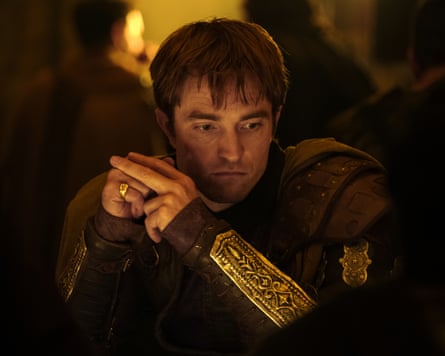
We return to Odysseus, who is helped by a reluctant Calypso to build a boat to get him home. But a storm brews, and he barely survives it to be washed up on an unknown island – that of a distinctly strange but broadly friendly people, the Phaeacians. The self-possessed young princess Nausicaa, encountering the naked, battered warrior on the beach, helps him to reach her parents’ palace, where he recounts the stories of what happened to him after the victory at Troy: how he was prevented from reaching home by angry gods, how he encountered the Lotus-Eaters, the flesh-eating Laestrygonians, the Cyclopes, the witch Circe, the deadly Sirens, the sea monsters Scylla and Charybdis, and even the borders of the land of the dead. His last remaining men, he tells them, were killed in a storm after, against explicit instructions, they had slaughtered and eaten the Sun God’s cattle, leaving Odysseus alone to make it to Calypso’s island. So: a large part of this looping, nonlinear poem is told in the first person, in flashback, by the hero himself, a cunning man and a liar.
The Phaeacians get him home, unloading him on Ithaca from their ship while he’s sleeping, so that he awakes on the misty beach in despair and confusion, not immediately recognising where he is. Unlike Agamemnon, the leader who was murdered on his return from Troy, he arrives home not in pomp and arrogance, but stealthily, in disguise as an old beggar, testing his household – the slaves, his son, his wife – for their loyalty. Gradually, he is recognised as the head of the household, as a father and, at last, as a husband. He and Telemachus turn the tables on the suitors, and the story becomes one of violence and revenge.
‘We recognise it in this very primal way’: Stephen Fry, Brie Larson, Chris Ofili and more on why we can’t get enough of Greek mythology
Read more
You can try to tame the Odyssey into familiarity, to unsee its darker aspects in favour of the good old spectacular adventure of it all. It will be intriguing to see how unsettling a version of the story Nolan is willing to offer. The entire poem might be said to be “about” the taming of a disordered home into equilibrium – thus providing the underlying DNA of everything from Shakespearean comedy to the TV soap opera. But its long, spiralling, circuitous motion from social disruption to social order is also marked by many fundamental questions.
Some of these are moral; others penetrate into the dark recesses of the relationships that make us human. To what extent does our fate lie in our own hands? What makes a good leader, a good man, a good husband? What are the acceptable limits of revenge? What does a marriage consist of, and how can it survive the shocks of separation, of bifurcated experience and of ageing? How should you treat strangers when they arrive on your shores? How can a soldier returning from the blood-letting of the battlefield reintegrate into peaceful civilian life?
None of these are abstract questions. Every day, humans are tackling them. Whatever Nolan’s spectacular take on the Odyssey – whether his film is a triumph or disappointment – they will keep on being asked, and the Odyssey will remain a poem for the moment
The Odyssey is in cinemas from 17 July
