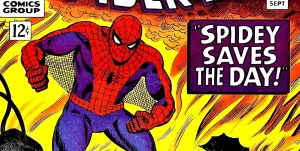
The seventies were a decade of strange transformation for the comic book industry, and nothing marks that period of change better than the resurrection of horror comic books like Marvel’s Tomb of Dracula. When Marvel published Amazing Spider-Man#96 in 1970 without the approval of the Comics Code Authority, it encouraged other comic creators and publishers to challenge the Comics Code and its censorship, which among other things had created an effective ban on horror comics. In 1971, facing irrelevance, the Code was revised to be more accommodating to the increasingly dark and complex stories creators sought to tell. Among the changes made were an allowance of “vampires, ghouls and werewolves… when handled in the classic tradition such as Frankenstein, Dracula, and other high calibre [sic] literary works written by Edgar Allan Poe, Saki, Conan Doyle and other respected authors whose works are read in schools around the world.” While DC’s horror and mystery titles leaned close to Poe and Conan Doyle, Marvel embraced monsters, launching their most iconic horror title, Tomb of Dracula, the following year.
Alongside Len Wein and Bernie Wrightson’s tenure on Swamp Thing, Marv Wolfman and Gene Colan’s Tomb of Draculais upheld by Bronze Age comic fans as the pinnacle of the era’s horror comics. Colan’s moody, evocative pencils are the defining feature of the entire run; the artist served as the sole regular penciller for the entire series, a claim few can make. His Dracula is stillthe definitive comic book portrayal of the character, and is a perfect compliment to Wolfman’s gothic, Hammer Horror-inspired scripts. The title boasts a passionate fanbase, and is among the most sought-after Marvel runs of the decade. Near-mint condition copies of its debut and tenth issue (first appearance of Blade) are worth thousands and sometimes tens of thousands to these collectors. Early next month, Hakes is set to auction a 9.0 Near-Mint CGC (Certified Guarantee Company) graded copy, but with a caveat: its “conserved” condition, indicating it has been cleaned — not big deal to some collectors, but a drawback for some purists.
What Makes Tomb of DraculaMarvel’s Definitive Horror Comic
Image Courtesy of Marvel Comics.
The Bronze Age is referred to by some fans as “when comics grew up.” In the seventies, creators were able to push the bounds of the medium and embrace more adult storytelling, portraying mature themes like drug addictionand grief. Where horror comics were concerned, it enabled writers and artists to develop stories that were truly scary: Marvel’s Dracula inhabited a world that was dark, violent, and where the good guys didn’t always win. While the comic featured an intrepid band of vampire hunters, its title character and focus was Dracula. By its nature, that meant that the vampire hunters were constantly on the back foot, and Dracula continuously evaded their efforts to destroy him. Wolfman compensated for this (and made the heroes look less hopelessly incompetent) by introducing hordes of ghouls, monsters, and vampiric minions, several of whom remain important characters in Marvel Comics.
The most significant of them is Deacon Frost, an impudent young vampire who seeks to claim Dracula’s mantle as “Lord of the Vampires.” Frost is responsible for turning reluctant vampire and private investigator Hannibal King into one of the undead, as well as for the death of one Vanessa Brooks. Vanessa’s unborn child comes into the world with both a vendetta against vampires and some of their powers — given to him by Frost’s bite while he was still in the womb. That child grows to be Tomb of Dracula‘s breakout character, Blade, star of Marvel’s first-ever film franchise, and unlikely to be headlining his own film again any time soon. Blade was a hero for Marvel’s seventies, swapping the idealism of the Silver Age sixties for a cynical, hard-edged world-weariness, similar to Marvel’s other Bronze Age break-outs like the Punisher and Wolverine. A founding member of the Midnight Sons and a staple of Marvel Knights titles in the early 2000s, Blade’s popularity and relevance in Marvel Comics has eclipsed Dracula’s own — not the least bit due to a 1982 Doctor Strangestoryline in which a Darkhold incantation known as the “Montesi Formula” was unleashed, destroying all the world’s vampires.
The Montesi Formula storyline represents a hard end to Marvel’s seventies fascination with the occult and supernatural, an in-universe response to the flagging sales and creative stagnation titles like Tomb of Draculaexperienced. Tomb of Dracula, Werewolf by Night, and most of Marvel’s other horror titles were cancelled between 1975 and 1977. Audience tastes changed rapidly, and the science fiction boom brought on by films like Star Wars. Wolfman would state in interviews that this actually suited him and Colan fine: they recognized that Tomb of Draculawas an inherently more limited title and premise than many of Marvel’s long-running super-hero titles, and were concerned their stories were becoming repetitive. A planned three-issue finale storyline, in which Dracula and his nemesis Quincy Harker (son of Jonathan and Mina Harker) would meet their mutual end, was cut short by the title’s cancellation with issue #70.
How the Bronze Age Made Dracula Part of the Fabric of the Marvel Universe
Image Courtesy of Marvel Comics.
While Tomb of Draculaand spin-off magazine Dracula Lives!lasted, Dracula was the cornerstone of Marvel’s horror universe, and a recurring antagonist to the House of Ideas’ super-heroes on par with Doctor Doom. In his own title, Dracula faced off against Doctor Strange and the Silver Surfer. He would also cross-over into the pages of Thor, Uncanny X-Men,and Captain America, where his bite would spawn fan-favorite foe Baron Blood. Dracula’s appearances in X-Men, especially, have a surprisingly long legacy. Coming at the height of Chris Claremont’s iconic run, the X-Men vs. Dracula stories in X-Men#159 and X-Men Annual#6 are a startling, striking departure from the issues around them, with #159 even following some of Bram Stoker’s original novel — just with Ororo Munroe swapped for Mina Harker. Though a footnote in the Claremont run, these issues left their impact on continuity, inspiring 2010 storyline “Curse of the Mutants.” “Curse of the Mutants” turned Jubilee into a vampire and teamed the X-Men with Blade in battle against Dracula’s son.
All this can be traced back to Neal Adams’ striking Tomb of Dracula#1 cover, one of the most iconic and homaged images of the Bronze Age. The Hakes auction represents a striking example of the issue, a perfect display copy for a dedicated collector of horror or Bronze Age comics. Unless, of course, they object to a CGC silver label. The label signifies that the book has been cleaned, meaning that slight, minor restoration has been performed to create its current, high-grade condition. Extensive restoration is a highly contentious issue among the comic collecting community; many purists consider restoration “cheating” the condition of a book through artificial enhancement. These books are marked with a purple label, referred to hyperbolically by some comic collectors and sellers as the “Purple Label of Death.” While cleaning is generally more widely accepted by collectors, and the silver label lacks much of the stigma of the purple label, it could still impact the final price of this auction — though by how much remains to be seen. The impact of Adams’ cover, especially in this condition, is such that many collectors may find themselves unbothered by the minor restoration.
What’s your favorite horror comic? Leave a comment below and join the conversation now in the ComicBook Forum!
Iron Fist #14 Is a Major Marvel Key, & Its Value Has Little to Do With Iron Fist
More Collectibles
<img src="https://comicbook.com/wp-content/uploads/sites/4/2026/10/Screenshot-2026-10-27-135622.jpg?w=300" alt="Vintage Star Wars Toy Prices Have Resurfaced and Fans Can’t Believe How Unaffordable the Hobby Is Today”>
Collectibles
2 days ago
Vintage Star Wars Toy Prices Have Resurfaced and Fans Can’t Believe How Unaffordable the Hobby Is Today
Collectibles
3 days ago
Godzilla Once Got a Ridiculous Hot Rod Model Kit and Its Rarity Has Made It a Monster Collectible
Image Courtesy of Marvel Comics
Collectibles
3 days ago
Iron Fist #14 Is a Major Marvel Key, & Its Value Has Little to Do With Iron Fist
Images Courtesy The Pokémon Company, Goldin, and Fanatics Collect
Collectibles
3 days ago
3 Dark-Type Pokémon Card Grails Break Auction Records, Fetch Over $1.6 Million
Collectibles
4 days ago
Star Wars Collectors Pay a Premium for This Yak Face Figure and Its Canadian Origins Explain Why
Courtesy of The Walt Disney Company
Collectibles
4 days ago
One of Star Wars’ Most Divisive Characters Is Behind This Unusual Auction Find — and It’s More Affordable Than You’d Think
Collectibles
4 days ago
The Green Goblin’s Origin Is a Spider-Man Classic, and This Silver Age Lot Has Eight More Issues to Explore
Collectibles
5 days ago
Star Wars Had a Very Strange M&M’s Collaboration and One Leia Figure Makes It Even Weirder