

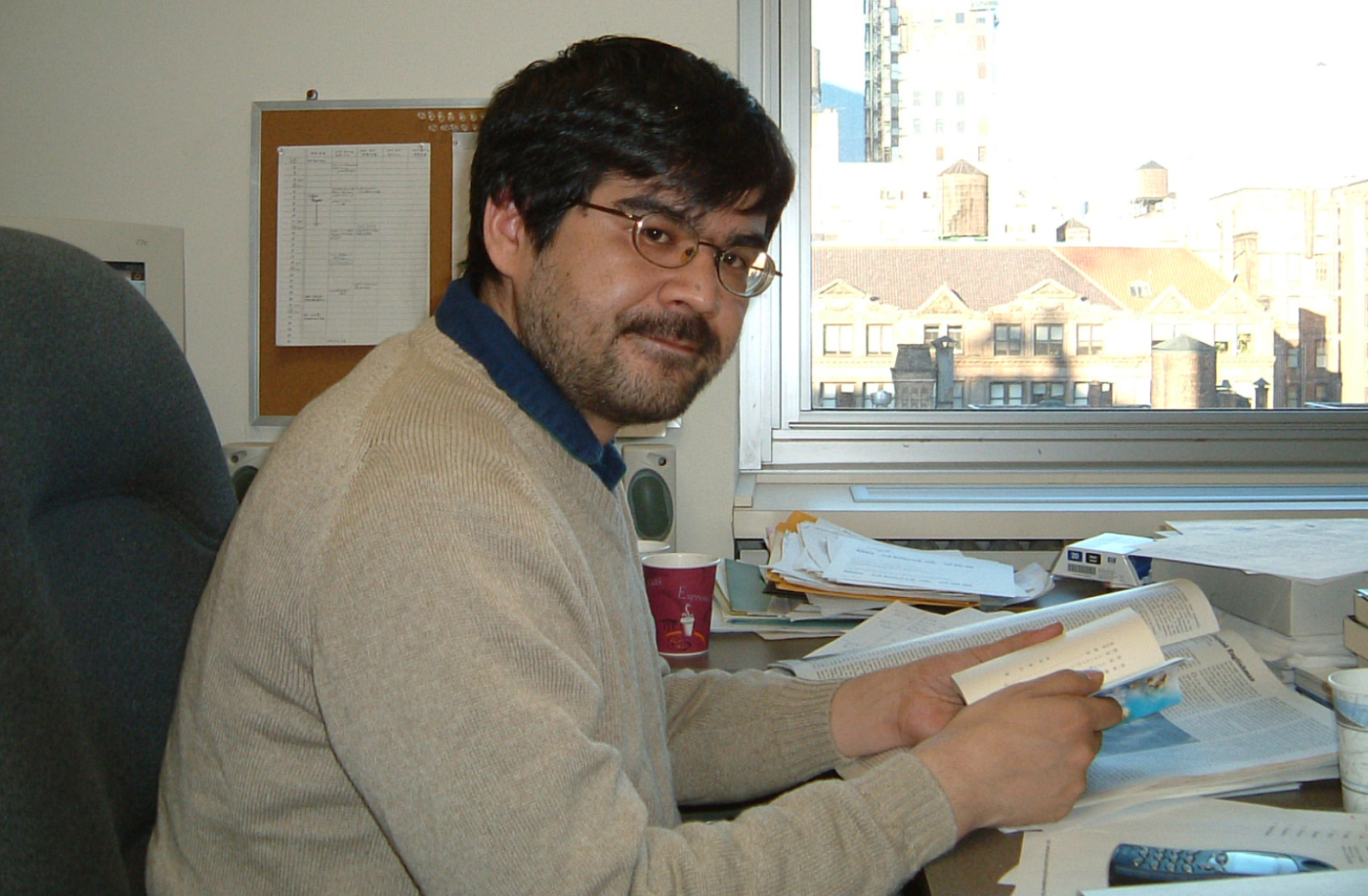
“Ioannis “Yani” Mentzas — co-founder alongside Hiroki Sakai of the publishing house Vertical and, at the time of his death, Editorial Director of Kodansha USA — passed in late January of this year at the age of 53 after a brief struggle with lung cancer; he is survived by his brother, Spiros.
Mentzas’ death likely registered on few outside the industry; in the six months since his passing the only acknowledgments I have seen boil down to a small memorial on Kodansha USA’s Instagram account and a two paragraph obituary on Anime News Network that cited as its only
In many ways it’s no surprise. Even at its zenith, Vertical — and the Vertical Comics imprint through which it released manga — was far from a household name, much less so after it was folded into Kodansha USA in 2020, all evidence of the imprint’s existence reduced to a mere blurb on the copyrights page that still identifies several of Kodansha’s titles as “A Vertical Book.” Few mourned the passing of the imprint itself; how much more likely were they to mourn the passing of a man whom they knew as but a name in the credits if they knew him at all? And yet, it’s a horrible disappointment to reckon with the fact that somebody who was so influential to the direction of the American comics industry could pass with such little fanfare.
For those who were not there to experience it or who have grown up taking the present glut of manga publishers and titles for granted, the industry that Vertical intruded upon in the early aughts would appear a warning from some alternate dystopian timeline. Any trip my friends and I took to our local Borders or Books-A-Million in search of exciting, new graphic narratives almost never yielded anything more than shelves packed with the ugly but recognizable logo Tokyopop had chosen to adorn the endless waves of poorly-translated dross it flooded the market with, or the appealing but cartoonish pop graphic sensibilities Viz Media was betting on to make Shonen Jump contemporary hits like One Piece, Naruto, and Bleach as big in America as they were in Japan. Dark Horse had earned some goodwill from us weeaboos by publishing incontestable classics like Lone Wolf and Cub and Ghost in the Shell, and Random House’s attempts to infiltrate the burgeoning market with Del Rey Manga eventually yielded a number of gems like Mushishi, Nodame Cantabile and the perennially popular Parasyte, but to more discerning consumers the majority of translated manga meant to woo them from the four-color power fantasies of American superhero comics still smacked too much of commercial product.
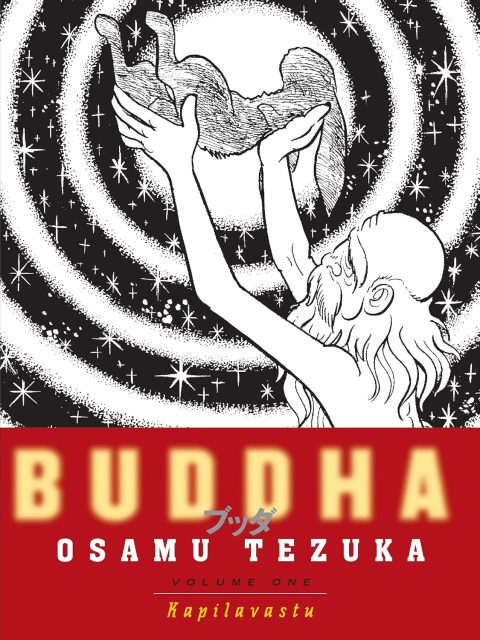 When Vertical released the first volume of Osamu Tezuka’s Buddha in late 2003 we weren’t entirely certain what to make of it. We knew only that somebody somewhere seemed somehow to have heard our prayers. As would-be devotees we understood implicitly Tezuka was a cornerstone of the medium, but had been put off by the few botched attempts to sell him to Americans:.Dark Horse had done the legend no favors by pushing out embarrassing juvenilia like Metropolis, while Viz’s efforts to sell Adolf and, later, Phoenix to American audiences had been hampered by truly appalling graphic design and scattershot release schedules.
Vertical’s approach, by contrast, had all the gravitas we had come to associate with serious literature. Here, with its striking choice of alluringly ambiguous central image, its high quality hardback binding and its decision not to apologize for the lack of colors on the page but to embrace that minimalist scheme as a signifier of sophistication, was an art object we would feel no shame in slotting alongside the shelves of literary fiction we were also assembling. Nor was this any accident. Vertical had begun as a translator of literary and genre fiction, and for the first seven years of its existence entrusted the already legendary Chip Kidd with their design work.
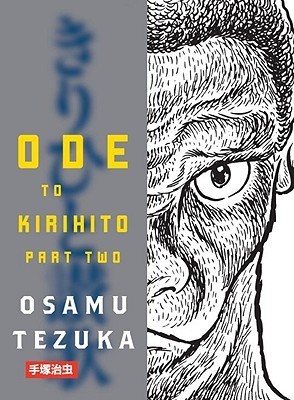
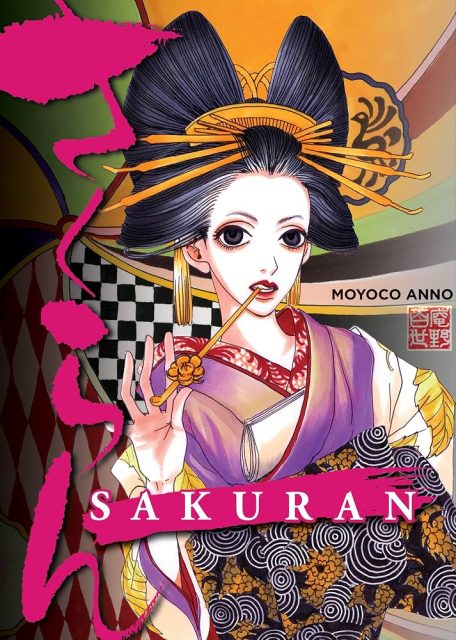
And so while other licensors like Dark Horse were content to mine Osamu Tezuka’s corpus for the pleasant and familiar like Astro Boy, Mentzas and his team worked doggedly to make a place in American comics for the God of Manga’s more sinister projects, tales of political intrigue and psychosexual confrontation like MW or Ode To Kirihito. And while other companies played the hits to young female audiences, assuming there was little appetite among girls for anything but safe shojo staples like Fruits Basket and Ouran High School Host Club afterSailor Moon established a beach head, the bullpen at Vertical worked doggedly to bring over the likes of Moyoco Anno’s Sakuran and In Clothes Called Fat or Kyoko Okazaki’s pink and Helter Skelter, titles that anticipated by some years the desire for thorny, complicatedly feminist fictions that would center the struggles of unapologetically difficult women. It’s hard not see in the publication of these works an awareness of the trends that would find American readers embracing literary provocateurs like Ottessa Moshfegh and Melissa Broder only a few years later. It’s similarly difficult to imagine a world in which Drawn and Quarterly’s decision to license seminal manga artists like Yoshihiro Tatsumi and Shigeru Mizuki in upscale hardbacks succeeded absent the example set for by Vertical, to say nothing of their later work in bringing over luminaries such as Yoshiharu Tsuge. As Alvin Lu, then-VP of Viz and current CEO of Kodansha USA, has said, “While all of us on the west coast where I was saw these comics as mass entertainment, what [Vertical] was doing felt more literary, more down town, more New York. Yani and his team at Vertical brought a cultural sophistication to their work, perceived a kind of ‘cool’ factor in Japanese culture at a time when it was decidedly not cool. I remember meeting them shortly after they beat Viz out for the rights to [Koji Suzuki’s] Ring and thinking ‘I want to be a part of that; that’s what I wanna be doing.’”
Ed Chavez — himself once the Director of Marketing and Licensing Manager at Vertical — similarly acknowledged that his time at the company would lead him to start his own imprint, DENPA, and speculates that the peculiarities of design and editorial vision that defined Vertical explain the existence of the many indie houses like Glacier Bay Books and Starfruit Books that have proliferated in recent years. “I always found it interesting that some comics publishers would try to replicate what Vertical had done in the early ’00s. Hardcovers, classic manga, indie or seinen works weren’t a thing from publishers like D&Q or Fantagraphics before Buddha was a hit.”
But while it is easy and in many ways correct to attribute the publisher’s success, longevity, and eventual influence to the many talented names that helped shape both catalog and strategy — from Anne Ishii, Vertical’s first Director of Marketing and Publicity, to later additions like the aforementioned Ed Chavez, designer Peter Mendelsund, and CEO Takashi Sakuda — it would also be disingenuous to downplay just how much of the business was driven by Mentzas’ unique sensibilities. Per his own words, “it wasn’t until high school that [Tezuka] ensconced himself at the very top [of my rankings]. What happened was that, in 1987, Black Jack and Buddha started being reissued in deluxe editions, in hardcover … [and] the deluxe treatment had finally jolted me out of a bias I’d unconsciously nurtured despite the sheer joy, and more, that Tezuka had always given me. Vertical’s English edition of Black Jack is modeled on that historic 1987 reissue, and I’d be pleased if it had the same effect on a few youths here.”
“Ultimately things were done how he wanted them to be done when it came to editorial and everything else just happened around that,” Chavez recalled, before asserting, “Vertical did have a direction, however. We did want to showcase what was influencing pop culture in Japan in the moment. So one thing we all took pride in was being able to launch the careers or reboot the careers of mangaka and authors who were doing well overseas but were for some reason or another being ignored by larger publishers, including our parent company Kodansha. Much of what was being published after the first manga bubble [of 2009-2010] was very mainstream and safe. A lot of that was for teens and had tie-ins with major anime properties. But Vertical’s attitude was very different.”
Even if that didn’t always mean Yani got his way — Chavez was quick to note that “eventually … most of those decisions were made by myself and our CEO [Takashi Sakuda]” — he remained throughout his tenure a fierce advocate for works that represented his particular vision of excellence. “Rather than pursuing commercial success, he always seemed to be searching for books that were meaningful to publish,” explained Sakuda when asked what had defined Mentzas’ particular editorial approach. “Whenever I tried to make an easy decision based simply on whether something looked commercially promising, he would push back against that approach.”
 But despite its influence, the company never enjoyed the kind of success that greeted larger firms. “For 15 years, Vertical was operating on a shoestring, not making money,” said Dan Joseph, a senior editor at Kodansha USA, who befriended Mentzas during their time working together. Wracked by the same market problems that flattened retailers like Borders and folded overextended publishers like Tokyopop back in 2010, Vertical found itself acquired by Kodansha in 2011 and, eventually, incorporated wholesale by 2020, though to hear Sakuda tell it this didn’t particularly bother its founder. “I do not think Yani felt any sentimentality at all about Vertical being acquired by Kodansha. On the contrary, he was happy that having a larger company behind Vertical would make it possible to continue publishing the kinds of books he loved. He also did not seem particularly bothered later when Vertical ceased to exist as an imprint.”
Joseph seconded the sentiment, noting, “once Kodansha took over, he could finally relax a little.” Because for all that he was brilliant at, Yani was also humble in the way that only those who consider their work a vocation can be. “[He] was one of those people who would be better known if he wasn’t so old school. The classic image of the editor buried behind his desk, buried in manuscripts, plugging away at work until the sun rises,” said Lu. Having taken himself from modest beginnings in Kobe to Princeton — where he studied astrophysics before pivoting to a major in comparative literature — and Columbia — where he earned his Masters in English — then parlaying his encyclopedic knowledge and mastery of multiple languages into the establishment of a landmark publishing house, he had every excuse to believe himself exceptional.
If he ever did, though, he rarely betrayed it. As Lu said, “Yani was an intellectual, but he also had a real issue with snobbery. Which was part of his vision with Vertical, to create this contradictory beast … to find the most challenging material in these contexts that WERE entertainment.” Joseph concurred, describing him as “a man of contradictions. … On one hand, Yani was a committed nihilist. On the other hand, he spent the last years of his life seeing to the welfare of a colony of feral cats that lived outside of his apartment. He was a total Marxist by training from his school days but it would come out in his conversations that he’d start talking about conservative commentators he found interesting. He could convincingly get you from x-rated manga to Dr. Zhivago in the span of three seconds.” Or, as Sakuda more simply noted, “There is no doubt that he was a genius. I believe that he was a Beethoven wearing a Mozart mask.”
For me, the first artistic model that came to mind upon meeting Yani was Falstaff: big, blustery, eccentric, given to grand but never unsubstantiated proclamations; he did not match at all the image I’d ginned up before our first encounter. If on one hand he considered himself something of a decadent in the tradition of Osamu Dazai, given to eating at elegant French bistros around from the corner from his offices and explaining the intricate structures of baroque music to you, he was also the sort to dress in ancient button-downs discolored by the haze of smoke he lived in or sweat-pants he bought in a 20-for-$5 deal from a bootleg dealer in Chinatown that were emblazoned with nonsensical and ill-fitting slogans like “Best Grandma.”
To me this was so much the better. I had reached to him out sometime in 2017 shortly after breaking into traditional publishing as a managing editorial assistant and discovering I detested the job. What surprised me was not the low pay or long hours: no one has ever been foolish enough to mistake publishing for a lucrative or pleasant career path. Rather, it was the largely staid nature of my co-workers and the thankless, bland tasks that made up the vast majority of my responsibilities. Given how difficult the industry had been to break into — how exacting every standard was — I expected the work to entail grueling and drawn out editorial conversations with authors, late nights spent paring down piles of brilliant competing manuscripts to a handful of winners, and exacting research into profit-and-loss statements; instead, I spent my time between copy-editing Sudoku collections, crossword puzzle compendiums, and Bill O’Reilly hackwork when I wasn’t engaged in marathon sessions updating meta data and scheduling meetings. I was similarly disappointed to discover in my co-workers not a cadre of aesthetes, visionaries and high powered editors possessed by startling ambitions but a team of largely conservative professionals who responded to talk of art with cynicism and fatigue.
To find, by contrast, that one of the most influential publishers in my life was helmed by a man of singular personality renewed my hope that maybe there was point to this whole enterprise . Within minutes of our meeting we had largely dispensed with my prepared questions the better to get to bullshitting as if we were not professionals situated at the opposite ends of our field but old friends who’d simply somehow forgotten one about the other. In that first conversation we covered everything from a shared admiration for the writer Nisi0isin (one of the few artists he was confident declaring a “genius”) to his desperate desire to assemble a coherent and reliable D&D campaign (as I would later learn from Joseph, Yani had a real talent for DMing, even going so far as to compose his own scores for pivotal NPCs and battles) to the love-hate relationship he nurtured with action RPGs like Dark Souls, which I adored, and his inability to penetrate Gene Wolfe’s The Book of the New Sun cycle, a series with which I was then deeply infatuated; if we had not both been shackled by responsibility I have no doubt we would have continued talking until the next day instead of exchanging numbers before begrudgingly returning to our labor.
Certainly that was the pattern that future encounters followed: over the next two years I only saw Yani perhaps a dozen times, but in each of those instances we would meet at his favorite bar where we’d discuss everything that washed up from our sodden minds until some ungodly hour recorded on no clock of which I am aware. The precise details of these forums are difficult to recall; never before had I encountered a bar that offered all you can drink happy hour specials, nor a friend so game to test the limits of that generosity. What remains are fragments, moments of sudden clarity, and a handful of recurrent topics that recurred with enough regularity to assure me I am not fabricating the past. In one charged meeting that had turned to discussions of prestige TV I remember him tearing up to recall a recently-released episode of Bill Hader’s Barry that ended in what he described as one of the most wrenching betrayals he’d witnessed in all of art. In another I remember, for the first and only time, him growing visibly agitated with me after I dismissed Christopher Nolan’s Interstellar; to him, my contempt betrayed a snobbery that said more about my inability to properly appreciate the values of pop sci-fi than it did about Nolan’s talents as a filmmaker. But then, just as you’d think his interest extended no farther than pop culture, he would begin to extol virtues of about Balzac’s La Comedie humaine in a way that suggested he’d consumed more than a good deal of it before segueing into his exacting analysis of Mishima’s twisted romanticism; as Joseph rightly had it, Yani was truly catholic in his taste.
If media was often what initiated our conversations, though, it was merely the springboard to more probing conversations about contemporary events, our work, and our internal lives. As opinionated and forthright as he could be, Yani was also uncommonly considerate and sensitive. If it surprised me not at all to hear him described by other industry professionals and associates as “cantankerous and opinionated,” I was similarly unsurprised when Joseph explained to me how in his closing years Yani had become the caretaker of an entire colony of feral cats that had established residence around his apartment. “The last time I saw him alive it was on a video call, in fact,” Joseph said, “and when his camera turned on there was Yani, sitting in a chair with one of the kittens in his lap. And the kitten just looked so happy. But Yani looked happier than I’d ever seen him.”
This was the man, after all, who spent half of our conversations working with me to understand what path forward if any there still existed for real Marxist politics in a United States given on one hand to the market-friendly scolding of the Dems and the bloodthirsty psychosis of the Republicans. And though himself a perennial bachelor, Yani was always curious to ask me about the ins-and-outs of married life, eager to understand how I balanced my own emotional and artistic needs with a partner that was also an artist and what it was like living so long with another. I knew he had a streak of the playful that bordered on the improper, especially where romance was concerned, and so was touched that he restrained the more puckish elements of his personality to better to understand what what troubling me at any given time. Whenever he felt it appropriate to offer advice over sympathy his responses were always measured and insightful, advocating patience and understanding where my frustrations might have counseled otherwise. He was less shy about asking after my work, both as a corporate drudge and as a writer, and was as eager to talk me through my defeats and frustrations as he was to celebrate my wins; after the publication of an essay of mine about artist Tsutomu Nihei that he was especially taken with, and in a moment of greatest generosity and even greater drunkenness, he described me as a “genius,” a compliment I have not take literally but treasure as humbling given Yani’s own actual genius.
 For my part I enjoyed few things so much as listening to him explain his own frustrations with titles he wished he’d acquired or an annoyance that American audiences still hadn’t quite cottoned to the brilliance of Osamu Tezuka and Nisioisin, the authors he most enjoyed editing. Equally flattering were those moments when he delved into his past with me, and in a particular screed confessed that above all the topic he most enjoyed discussing was the overlap between our upbringings. He hadn’t grown up religious as I had, but he had grown up heterodox in a household and in communities where authority regarded even basic curiosity as a challenge to power and where his mixed heritage made him an easy target for derision. It took him no imagination to understand what it was like to be punished — sometimes physically — for simply asking questions or to soak up the ire and insults of neighbors who forever regarded you askance. Most of all, though, I cherished nothing so much as those moments when our perpetual discourse would turn, as it often did, to philosophy, and from there, inevitability, to nihilism, philosophical pessimism, and, then, finally, antinatalism.
It is not, as you might imagine, a conversation many were willing to take him up on. Few want to be told their life is not just useless but, in the words of Thomas Ligotti, “malignantly useless,” and even fewer to hear that their desire to reproduce is a sin that burdens the parent with responsibility for everything that befalls their children, up to and including death. But Yani was given to these diatribes with an aplomb that suggested he was discussing his favorite restaurant and their greatest dish, not Emil Cioran, David Benatar and the moral weight that attends even the most basic of actions; I suspect, in some ways, he found it freeing. He was quick to insist he harbored no illusions about his worth and would say with a confident smile that should he never have existed the world would never have noticed; that nobody wasted any time mourning the billion of potential lives that went unborn everyday was proof to him enough of this basic truth. When I would agree, describing life as a leisure time activity, a way to pass the time between bookending oblivions, he would nod along enthusiastically, amused to find someone else who seemed in on the joke, though as the conversation turned to his genuine disgust with the various pains that made life unbearable and inevitability limited it was not rare that he would become sullen or despondent. I was not at all surprised to hear how, towards the end of Yani’s life, when Joseph had approached him about translating George Akiyama’s Asura, the tale of an orphan boy who resorts to unspeakable acts of brutality to survive Japan’s Sengoku period, Yani had responded with genuine glee. “I remember showing him the final pages of this story, which just ends with these haunting pure black pages where the only image are the main character’s final words, just ‘Why was I born?’ repeated again and again and Yani effusively jabbing at the page, saying ‘This is me; that’s my mantra!’”
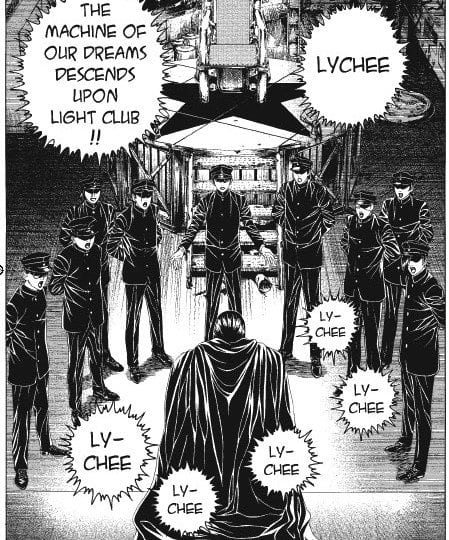
Though I wasn’t present I can picture the scene clearly, can hear both his almost boyish exuberance but also the deep undercurrent of exhausted and adult disillusionment despite the seven years that have passed since I last saw my friend. As many of those closest to him described him — as I would describe him — Yani was a creature of contradictions; it seems entirely in character that he might both find liberty and horror in the realization of his own futile life. And yet, the more I’ve reflected on our friendship and his passing the more I’ve come to wonder if there ever really was any contradiction here, just as I have to wonder if there was any meaningful paradox in the contrast between his sophistication and his vulgarity. That the man given loudly to declaiming the pointlessness of life would spend thousands of his own dollars and hundreds of his hours saving dozen of stray cats likely sounds hypocritical; if life is pain and amounts to nothing then why prolong their suffering? But it was precisely because Yani understood the capacity for misery that inheres in any life that he could extend such extensive generosity rather than excusing himself with the cold comfort that nothing mattered. He had, as Sakuda observed, “a kindness that led him to stand on the side of the weak.” Similarly, it makes sense that only the reader who has experienced the rarefied highs afforded by the most challenging of art could in turn properly appreciate the vitality, the absurdity, the lack of restraint afforded by unapologetic schlock. Knowing how expansive the world was it was as if he’d decided he would make himself capaciousness enough to match it. I could not help but feel ashamed each time I dismissed something only to later learn Yani loved it. I took my disagreement as evidence I had overlooked what made a work interesting, vital. Years after I had reversed my own youthful adoration for Tezuka — bored by what I saw as soppy humanism and clumsy mannerisms — it took Yani to make me reevaluate the artist revered above all others because of, not despite, his limitless capacity for contradiction. “Tezuka … produced serious manga — an oxymoron in that the Japanese word means ‘frivolous pictures’,” Yani wrote in another post for Words Without Borders. “[He] can in fact seem to be out to sabotage his own masterpieces when, say, in the medical thriller Ode to Kirihito, he has a circus performer get fried as a ‘human tempura,’ or when denizens of ancient India anachronistically refer to “Paris” and “Tokyo University” in the epic Buddha. The God of Manga is so unashamed about being an author of comics that he can embarrass the long-faced initiate. But how godly, this madness!”
I’m not sure that Yani’s own contradictions hinted at divinity, or even, properly, madness, nor do I think he himself would have lobbied to be understood that way. It’s easy to see why others might assume that, though, because before he was anything — before he was an editor, before he was an expert — Yani was a wholly unique soul. “It’s good to talk about his importance, but Yani was also just a real special guy. People say that about everybody when they die, but I will never meet his like again, I can guarantee that,” Joseph said. Though it pains me to admit it, I cannot contradict him. I have had the pleasure in my near-forty years to know a cast of remarkable figures from all corners of the world — British Naval officers and foundational New York scenesters, internationally renowned writers and small-town hustlers, disgraced podcasters and soldiers of fortune and career crabbers, sailors, and homesteaders — and among them I can think of none to match Yani for liveliness of character or the wide range of his intellect. Comics lost a great friend in him, as did I. He will be sorely missed.
