

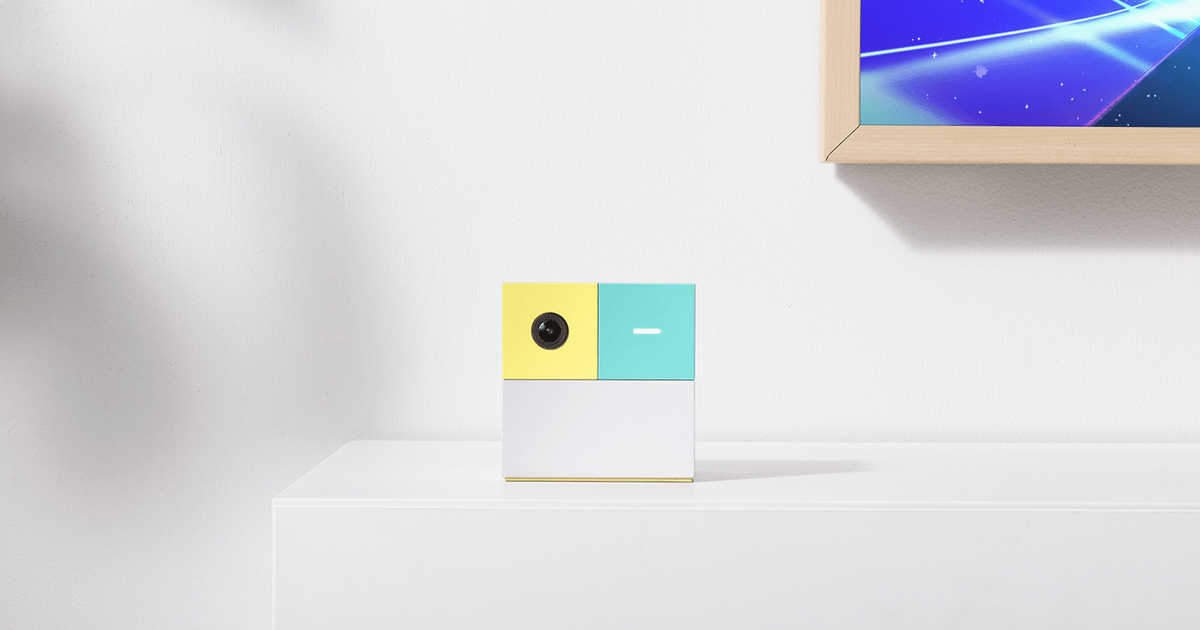
We’re not quite at the finish line, but 2026 has already been a huge year for Nex Playground. The family-focused, motion-controlled console is well on the way to becoming a global platform after expanding beyond the United States. The device has already touched down in Canada, the United Kingdom and Germany—while Asia is slowly coming into focus.
Nex, the company behind the active play system, alsosecured $150 million in equity and debt financingto accelerate that worldwide rollout. Meanwhile, the platform’s rolling roster of titles (accessible has been bolstered with the addition of notable licensed projects likeSonic ForcesandPac-Man
In May this year, Nex Playground head of international Tom Kang said the company has ambitions “as big as the Wii.” It’s a bold claim when you consider Nintendo’s system sold over 101 million units worldwide, but the company is standing by those words. During a follow-up conversation at Gamescom 2026, Kang told Game Developer the Nex Playground continues to exceed expectations.
Discussing how the device has fared in the UK, Kang said sales velocity is currently beating internal weekly and monthly targets. According to Kang, delivering an omni-channel launch across retail stories and digital platforms like TikTok Shop has been fundamental to that success.
“We’ve learned omni-channel works. That being where customers are means we’re able to create awareness and conversion. We’re learning that TikTok is serving multiple functions as a discovery channel and a funneling channel, meaning people discover it there and buy it there or somewhere else,” says Kang. “Creators also love creating content for the Playground because it shows well. You know, seeing is believing right? That’s why we have demos that are playable at retails store, right?”
Establishing a solid supply chain in the middle of an AI-driven component crisis (that has already resulted in price hikes for the Nex Playground) has been a critical challenge for the company, but Kang is confident Nex has the solution. “We have a new leader who’s managing global supply and we’re way more nimble than we used to be. We’re now making product in more than one region—so we’re making hardware in Mexico as well as China—and so we have a shorter lead time to get product to different global regions. Also, the local distributor partners are playing a big role,” says Kang.
He explains Nex initially raised hardware pricing in response to the tariffs imposed by the U.S. administration,which have since been deemed illegal by the U.S. Supreme Court. Still, he accepts the component crisis has thrown the consumer electronic market into chaos, but stressed that Nex remains committed to selling hardware that is “as affordable as possible.”
“We absorb so much of [the cost] to this day to get to this point, versus our peers,” Kang continues. “We have an internal mantra that we have to have margins for both hardware and software, even if they’re slim. We want to be a sustainable business. If we don’t create margin we can’t continue to invest in software, and our software costs are going up every year—significantly. We were profitable last year as a company and we’re likely going to be [profitable] this year as well. So we’re managing that mix well.”
“Our current mode says that under the current cost structure we have a sustainable business that can generate annual profits. Our business, because the backend is driven by subscriptions, the more [hardware] units are out there, the more the economics get better for us.”
When asked whether Nex will increase the price of its Play Pass subscriptions as the market evolves, Kang said the company will likely assess those on a “biannual basis” but doesn’t expect significant change in the near future. “Content drives this device and we want to continue to invest in it,” he adds.
“Subscription fatigue is a phrase [we hear], but we’re delivering subscription value”
On the subject of software, Kang claims that “almost every game publisher” in the industry has approached Nex about a collaboration. He says those publishers are especially interested in reviving legacy Kinect titles—such as Freefall Racers, which originally launched in 2013 for the Kinect and was recently given a new lease of life on Nex Playground.
Porting those titles over to a modern-day platform isn’t straightforward, mind, but Kang said Nex is committed to the cause. “Freefall Racerswas built in Unreal. Our tech stack is built on Unity. So, it was essentially a full port over to a new game engine so [the process] wasn’t triendly for younger audiences. Almost in no instance is it a direct port. But that lane is super, super important to us.”
Given Nex seems intent on revisiting some of the motion controlled classics of yesteryear, we ask whether there’s a chance we might see a few EyeToy titles make an appearance on the platform. Kang isn’t ruling anything out. “We’re going to look at a lot of those opportunities,” he replies.
As that software catalog widens, Nex must be smart about how it manages its portfolio to keep users engaged. The Nex Playground only has 64 gigabytes of memory, so there is no way for owners to download every single game available on the system. By way of a solution, the device will automatically offload titles that aren’t generating playtime. Though, it’ll be possible to manually redownload them with a few button clicks.
Discussing how Nex’s subscription offering might evolve in the future, Kang is quick to rule out the addition of advertisements. “We really think that detracts from the experience,” he adds. “We want to keep it very simple both from a subscription standpoint and no ads. We don’t want kids going to their parents saying ‘buy me this game,’ and we don’t want selling to children to be one of the things that promoted on the platform.”
Kang says Nex’s subscription model is currently bang on the money. The proof, he claims, is a global attach rate of over 80 percent. During an era where the phase ‘subscription fatigue’ is becoming well worn, Kang feels Nex is delivering “extreme value” to its customers by focusing on serving families first.
“I’m a parent who raised two kids,” says Kang. “If there’s a closet in my house and you open it, there are literally hundreds of board games in there. If you go in our bedroom, my son has made every Star Wars Lego set in existence. If you count the dollars I spent on those, it’s in the thousands. We’re charging like €99 per year. We’re launching a game per month. Not only are we doing that, but we’re updating with live content. Subscription fatigue is a phrase [we hear], but we’re delivering subscription value because every day the value of the subscription gets greater.”
Game Developer attended Gamescom as a media ambassador. Flights and accommodation were covered by event organizers.
GamescomTop StoriesInterviewsFeatures
