

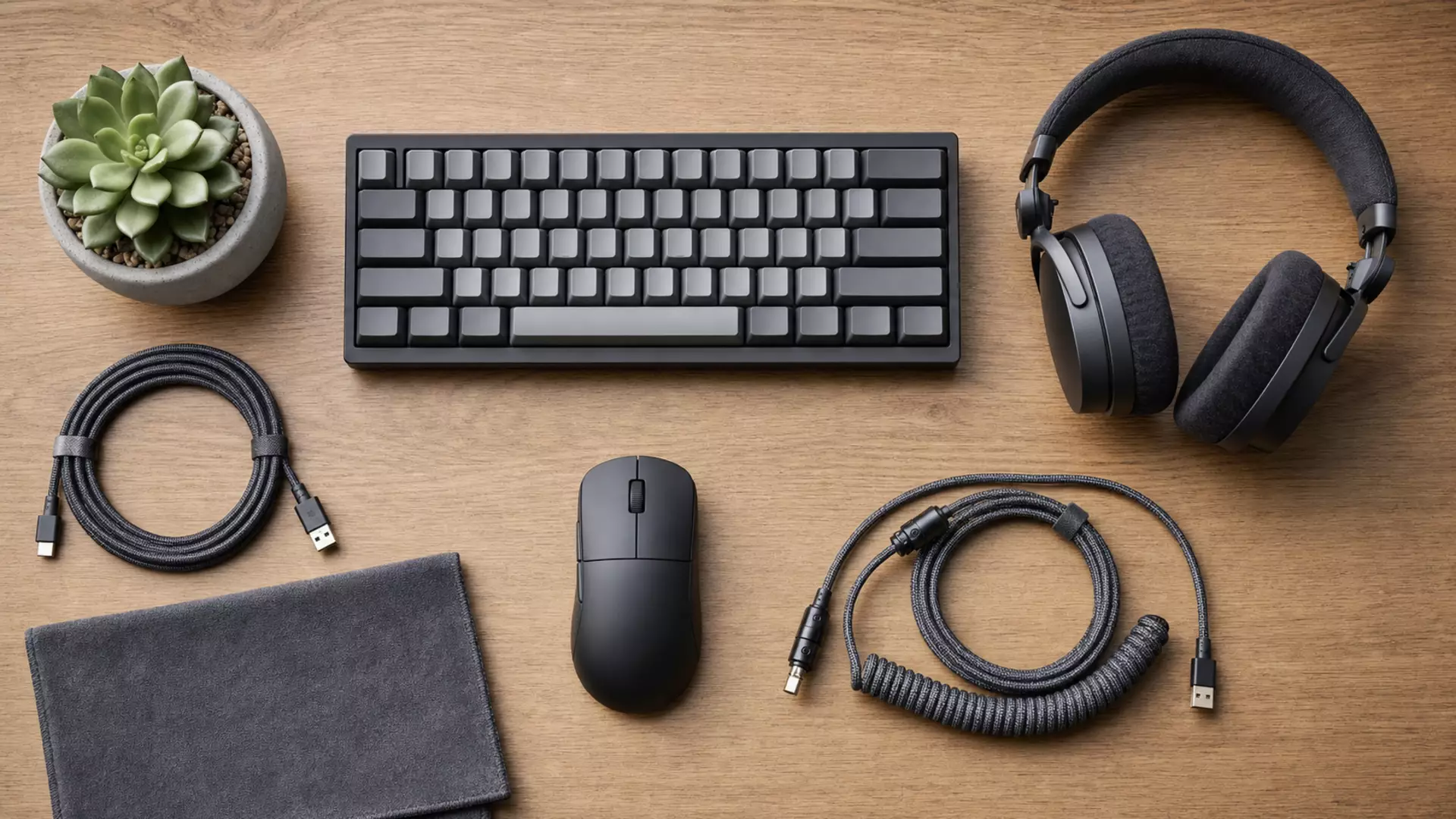
Logitech stock represents ownership in one of the world’s most established designers and manufacturers of computer peripherals, gaming equipment, and video collaboration devices. The company, listed in Switzerland and also traded in the United States through depositary receipts, has built its franchise over decades by focusing on design, usability, and integration with major operating systems. For investors, Logitech’s mix of mature cash-generative product lines and newer growth segments such as gaming and video collaboration defines the long-term equity story.
Logitech’s role in the global peripherals market
Logitech has long been associated with computer mice and keyboards, two categories in which it holds a strong position globally. Over time, the company expanded into webcams, headsets, speakers, and other accessories that accompany both desktop and laptop computing. This broad product offering positions Logitech as a key beneficiary of installed PC bases, workplace hardware refresh cycles, and consumer upgrades
The peripherals market is closely linked to trends in PC shipments, corporate IT investment, and remote work habits. When PC demand slows, peripherals sales often moderate, but replacement cycles and product innovation can offset part of that softness. Logitech’s strategy has been to refresh its core products regularly, improving ergonomics, wireless connectivity, battery life, and integration with productivity software. This helps the company defend share and maintain pricing even in more competitive phases of the cycle.
Beyond classic peripherals, Logitech participates in audio accessories such as headsets and desktop speakers. These products serve both entertainment and professional use cases, including gaming, remote meetings, and online learning. By tuning designs for comfort and voice clarity, the company aims to match evolving user expectations and keep its brand associated with reliable performance
Gaming gear as a structural growth segment
Gaming has become one of Logitech’s most important categories. The company offers specialized keyboards, mice, headsets, and controllers tailored to gamers who value precision, responsiveness, and customization. These devices often include programmable buttons, adjustable weights, and lighting features that distinguish them from standard office equipment
The global gaming market has expanded markedly over the past decade, supported by e-sports, streaming platforms, and increasingly powerful PCs and consoles. Within that ecosystem, third-party hardware providers like Logitech benefit from gamers’ willingness to pay for higher-end equipment to gain comfort and competitive advantages. This creates opportunities for products with premium price points and strong margins
Gaming gear can be more cyclical than some B2B-focused product lines, since spending on discretionary hardware is sensitive to consumer confidence. However, the category tends to show structural growth as new gamers enter the market and existing players replace or upgrade their equipment. For Logitech, a key investment angle is how effectively the company converts this structural demand into recurring revenue, particularly through accessories that complement major gaming platforms
Logitech competes with other established gaming hardware brands, but its experience in input devices, emphasis on design, and attention to latency and sensor technology give it distinct strengths. Investors often compare its gaming segment performance with the broader peripherals and PC-related categories, assessing whether gaming is expanding its share of total sales and contributing positively to margin profiles
Video collaboration and enterprise opportunities
Another important area for Logitech is video collaboration. The company supplies webcams, conference room cameras, speakerphones, and related hardware that enable virtual meetings in offices, classrooms, and home environments. As hybrid work models and remote learning have become more embedded, video collaboration equipment has shifted from a niche to a mainstream requirement in many organizations
Logitech’s products in this category are designed to integrate with popular conferencing platforms and communication tools. High-resolution imaging, clear audio, and ease of installation are key selling points. These features support use in small meeting rooms, larger conference spaces, and individual workstations. The addressable market includes corporate IT departments, educational institutions, and government organizations, in addition to individual users
From an investor perspective, video collaboration distinguishes itself from some consumer peripherals because budgets are often driven by enterprise capital spending and productivity initiatives rather than purely discretionary purchases. This can provide a more stable demand base and potential for multi-year hardware and support contracts. It also positions Logitech in competition with firms that focus on professional conferencing systems, making the company’s price-performance balance an important differentiator.
As hybrid work and digital collaboration become permanent features in many sectors, hardware vendors such as Logitech may benefit from ongoing upgrades of meeting spaces, cameras, and microphones. The pace of adoption can vary by region and industry, but the long-term direction is towards more integrated and user-friendly video communication setups
Business model, profitability, and cash generation
Logitech’s business model centers on designing and marketing hardware, while relying on manufacturing partners and supply chain arrangements to produce its products at scale. This asset-light approach can support attractive returns on invested capital when volumes are healthy, because major expenditures focus on research and development, marketing, and distribution rather than large in-house production facilities
The company’s profitability depends on a combination of gross margins, operating cost discipline, and the mix of products sold. Higher-end gaming and video collaboration devices typically carry stronger margins than entry-level peripherals, whereas price-sensitive categories such as basic mice and keyboards face more competition and tend to have tighter pricing. Managing this mix is crucial for sustaining operating margins
In addition, Logitech’s global footprint introduces exposure to currency movements, logistics costs, and regional demand variations. Effective inventory management and sourcing strategies help mitigate volatility. Investors often look at the company’s ability to generate free cash flow, which can be used for dividends, share repurchases, or reinvestment in new products and technologies
Because Logitech operates in hardware categories that are less subscription-based than many software businesses, investors pay special attention to cycles in demand and potential one-off surges or declines linked to external events, such as broad shifts towards remote work or macroeconomic slowdowns. The company’s long history provides data across multiple cycles, giving market participants a basis for evaluating how profits and cash generation behave under different conditions
Long-term trends shaping Logitech’s outlook
Several structural trends influence Logitech’s long-term outlook. First, the continued digitalization of both work and leisure activities underpins demand for reliable input devices and audio-visual accessories. While the rise of mobile computing has shifted some usage patterns away from traditional desktop setups, many users still require mice, keyboards, headsets, and cameras to complement laptops and portable devices
Second, gaming remains a powerful secular driver. The popularity of competitive online titles, content streaming, and social gaming communities keeps hardware requirements high for both casual and serious players. This environment supports ongoing innovation in controllers, audio, and display-related devices, giving Logitech avenues to differentiate and build brand loyalty
Third, hybrid workplaces and remote collaboration practices are likely to stay relevant, even as employees return to physical offices. Meeting spaces now commonly feature video conferencing setups that require cameras, microphones, and speakers optimized for group communication. Logitech’s participation in this hardware segment allows it to tap into multi-year upgrade cycles as organizations refine their collaboration infrastructure
Environmental and sustainability considerations also play a growing role. Hardware makers, including Logitech, face rising expectations from customers and regulators around packaging reduction, recycled materials, and energy efficiency. By aligning product development with these goals, companies can respond to ESG-focused investors and consumers who prefer more sustainable options. Over time, such practices may influence sourcing, manufacturing, and end-of-life management for devices
Competitive context and positioning
Logitech operates in markets where competition is intense but fragmented. In core peripherals, it competes with other multinational brands, regional players, and generic manufacturers. In gaming, it faces specialized hardware providers that often target specific sub-segments of the gamer community. In video collaboration, rivals include both consumer-focused camera makers and enterprise-oriented vendors that supply conference systems
The company’s positioning stems from its combination of design quality, brand recognition, and broad distribution. Logitech products are widely available through retail stores, online marketplaces, and corporate channels, which helps the company maintain visibility across different customer groups. Many users associate the brand with durable, straightforward devices that work reliably across platforms
For investors, one interpretive angle is how Logitech’s diversified product lines interact with each other under different macro conditions. For example, if standard PC peripherals enter a softer demand phase while gaming and video collaboration continue to grow, the mix shift might stabilize overall revenue and support margins. Conversely, pronounced weakness in all hardware categories at once could weigh more heavily on results
Another consideration is how Logitech differentiates itself as more input and collaboration capabilities move into software ecosystems. While hardware remains essential for physical interaction, software-driven features such as noise cancellation, gesture mapping, and profile management can increase user engagement and lock-in. Logitech’s ability to integrate hardware with companion software remains part of its competitive story
Investor perspective on Logitech stock
From an investor standpoint, Logitech stock reflects exposure to global hardware demand with particular emphasis on PC accessories, gaming peripherals, and collaboration equipment. The company’s diversified product base offers both mature segments that can provide cash flow stability and growth-oriented categories that may enhance revenue trajectories over time
Investors usually evaluate Logitech through metrics such as revenue growth, operating margin trends, free cash flow generation, and returns on capital. Valuation comparisons might be made versus other hardware companies, considering differences in business models and levels of recurring revenue. Because Logitech is not primarily a subscription software company, its earnings profile can be more cyclical, highlighting the importance of balance sheet strength and cost flexibility
Risk factors include competitive pressure, potential commoditization in some product areas, and sensitivity to broader IT and consumer spending cycles. Opportunities arise from successful new product launches, deeper penetration of enterprise collaboration deployments, and the ability to capture higher-value segments of the gaming market. The company’s track record in design and brand-building supports the case that it can continue to innovate within its chosen categories
Long-term investors often consider how Logitech’s established market presence and brand recognition can sustain relevance even as devices and usage patterns evolve. As new interfaces emerge and user expectations shift, the company’s challenge is to remain central to the way people interact with computers, consoles, and collaboration platforms
Go deeper
Learn more about Logitech stock
Explore additional company information, regulatory filings, and news coverage to better understand Logitech’s long-term equity story and its role in global hardware markets
More on Logitech stockInvestor Relations
Representative product: Logitech MX Master mouse
One representative Logitech product is the MX Master mouse, a high-end wireless mouse designed for advanced users who spend significant time working on computers. It combines ergonomic shaping with multiple buttons, a scroll wheel, and features that enable smooth navigation across different applications and screens. The product supports multi-device pairing, allowing users to switch between computers with a single control
The MX Master line illustrates Logitech’s approach to combining hardware and software. Companion software helps users assign functions to buttons, adjust tracking behavior, and create custom profiles for different tasks such as design work, coding, or document editing. This integration contributes to productivity gains and can encourage users to remain within the Logitech hardware ecosystem for future purchases and upgrades
Logitech stock and listing context
Logitech stock is primarily associated with its listing on the Swiss market, reflecting the company’s historical roots and corporate structure. The shares are also accessible to international investors through trading arrangements outside Switzerland, which broadens the shareholder base beyond domestic investors. The company’s presence in major global indices is limited compared to the largest multinational technology firms, but its recognizable brand and steady operations attract investors who seek exposure to established hardware businesses.
Because Logitech operates worldwide, its results and market perception can be influenced by economic developments in North America, Europe, and Asia, where many of its customers are located. The company’s hardware appears in both consumer and enterprise environments, linking its performance to trends in office equipment spending, gaming device purchases, and home office setups. Over time, these patterns contribute to how market participants view the stability and growth potential of Logitech stock.
Logitech at a glance
- Company: Logitech International S.A.
- ISIN: CH0025751329
- Ticker: LOGN
- Exchange: SIX Swiss Exchange
- Sector / Industry: Information Technology / Technology Hardware, Storage & Peripherals
- Index membership: Regional Swiss equity indices
- Next earnings date: Not yet officially scheduled
Follow Logitech stock on social platforms
Disclaimer zu unseren Artikeln: Keine Anlageberatung, keine Kauf oder Verkaufsempfehlung. Angaben zu Kursen, Unternehmen und Märkten ohne Gewähr; Änderungen jederzeit möglich. Börsengeschäfte können zu hohen Verlusten führen. Unsere Beiträge werden ganz oder teilweise automatisiert mit Unterstützung von AI erstellt und geprüft
en | CH0025751329 | LOGITECH | boerse | 69777456 | bgmi
