

‘Fortnite on steroids’: the virtual gaming worlds transformed to train British soldiers
Inside Skyral, part of a consortium that won a £2bn MoD contract to help forces game out complex decisions
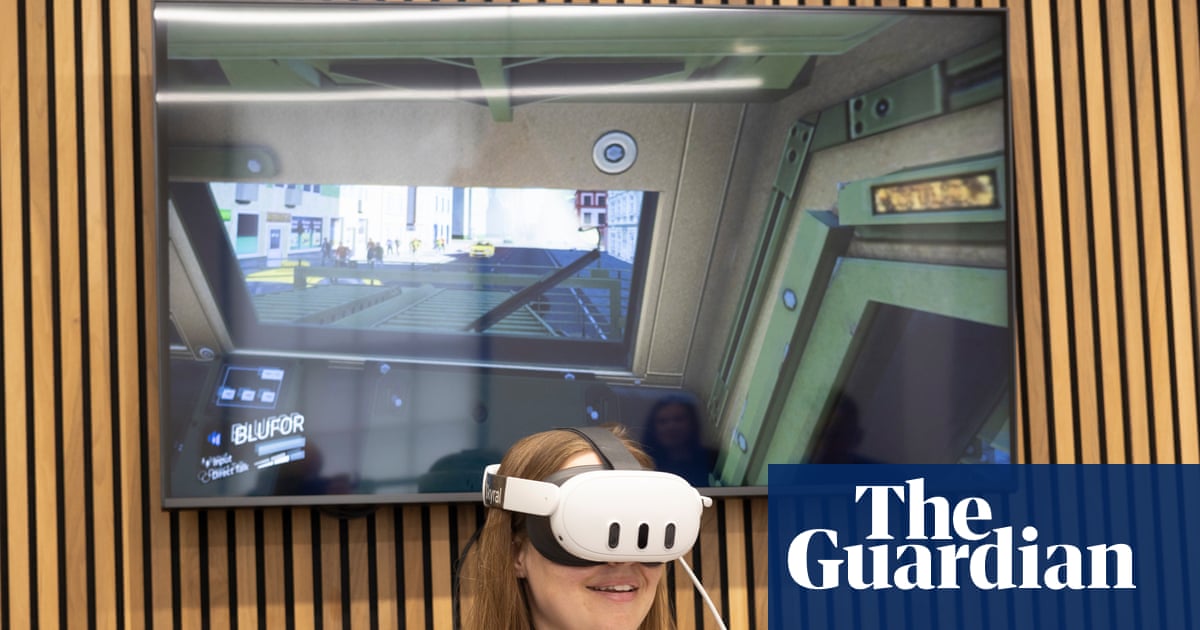
On a sunny July day in Riga, Latand a pharmacy. At a downtown intersection, there is the sound of an explosion and the lead tank bursts into flame
These are real streets in Riga – Lāčplēša iela and the downtown corridor of Tērbatas iela. The kebab shops and the pharmacy are on them. The pedestrians who flee after the tank explodes and huddle at a distance are modelled after the population of Riga: some old, some young, some friendly to Nato, others less so.
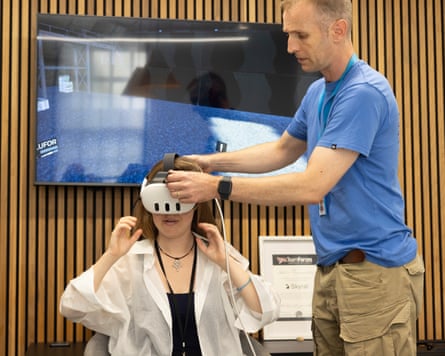
But the entire thing is a simulation. It has been built by Skyral, a UK company that is part of a consortium that recently won a £2bn contract from the Ministry of Defence to train the British army.
Modern armies have been training in virtual environments for decades. In 2002, the US army launched a video game called America’s Army, initially run on Windows, a multiplayer shooting scenario that aimed to model combat situations but was criticised as being propaganda for the US military.
A new generation of companies are trying to offer something different: intricate, layered models of systems or places that can capture the second-order consequences of events. Skyral aims to allow militaries to recreate cities and even entire countries. The purpose is less to familiarise a fighter pilot with how to handle an F-16, and more to train soldiers and tacticians on the consequences of a decision.
For example, if a missile strike hits a crowded city street, the population will flee. But if that missile knocks out a power station on a cold winter’s day, the same people are likely to shelter in different areas.
There’s limited research on how much a technology like Skyral’s might improve how soldiers are trained. Broadly, games work: earlier research has suggested that service personnel who have trained on flight simulators perform far better in real-world scenarios. But there are limits to how effectively such scenarios model real-world environments, or how transferable they are to combat. That said, running a simulation is easier and cheaper than organising live combat drills – which is why militaries are spending billions on them. They may not perfectly replicate the real world, but they allow soldiers to train key skills on repeat.
The ideas Skyral is offering have been in development for some time. But the UK will be one of the first militaries to integrate the technology deeply into training its forces. The contract comes amid a wider public debate around how much money the UK is allocating to defence, and if this is sufficient to address changing and growing threats.
How is it different than soldiers playing Call of Duty?
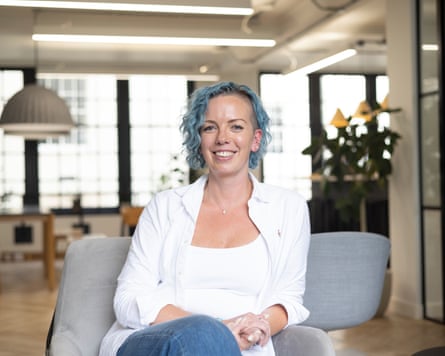
It’s “probably a bit more Fortnite on steroids,” says Naomi Hulme, Skyral’s co-chief executive, who co-founded the company with Jason Kennedy, formerly of the military tech company Raydon. Hulme joined the company after 20 years at BAE Systems, soon after the company was spun from Improbable Worlds Limited, a software company focused on gaming engines and the metaverse.
They began with the virtual worlds that Improbable had developed, Hulme said. “If you swap, like, wizards for soldiers and dragons for tanks, it becomes really sort of defence applicable.” But over time, they built something else: a platform that integrates layers upon layers of information to build, as far as possible, a faithful and usable model of a real city and a real battlefield.
Skyral calls this a “digital twin”. The term originally referred to virtual models of machines, such as cars, that enabled predictive maintenance – for example, by simulating how the brake pads might wear down after five years’ use. But it has widened out recently to refer to new, more ambitious efforts to model reality and allow armies – and humanitarian missions and surgeons – to game out complex decisions.
“It has become a buzzword,” says Wiktor Dotter, the chief executive of Power Size Technologies, a defence and automotive-tech company based in Royal Leamington Spa.
Power Size Technologies is working with the UK military – as well as the US and a few others – on a separate set of simulations. The company builds virtual models of energy systems – everything from the batteries in a tank to the solar panels in a desert camp – and offers these to militaries to help them decide how to electrify their equipment.
These technologies are particularly applicable to the military, he says, where procurement is expensive and decisions are political and take time. It is more challenging to trial a new tank than a new car.
“In defence, you will see quickly that if the development of technology is not connected to usability, so everything’s driven by policy and rules,” he says. “What we try to do is say [to the] MoD: ‘You want to try solar panels in the desert? … You can just do that in simulation. You want to have a crazy idea to have a hybrid battle tank? You can just do it right here in simulation. We have enough data to do that.’”
Skyral’s value proposal is to develop ways to train soldiers on the second-order consequences of battlefield decisions – how combat might affect logistics networks, critical infrastructure, and the behaviour of a human population. To do this, it builds extensive models of real cities, such as Riga.
“In defence, you may well be making decisions without understanding the full consequences,” said Hulme. “What we do in a digital environment is you can test those decisions.”
Meanwhile, a cluster of Nato researchers have been working on digital twins, though often more limited setups, such as models of underwater systems. The difference is in degree. Skyral is offering models that extend far beyond a single system, attempting to incorporate layer upon layer of information: the shape of the electrical grid, and the age and education levels of a real population, for example.
“All of these things that up until now have been done in very siloed sort of modelling – you’re taking all of those models and bringing them all together,” said Hulme. “If you impact one, you see the cascading impact.”
Explore more on these topicsShare
Reuse this content
