

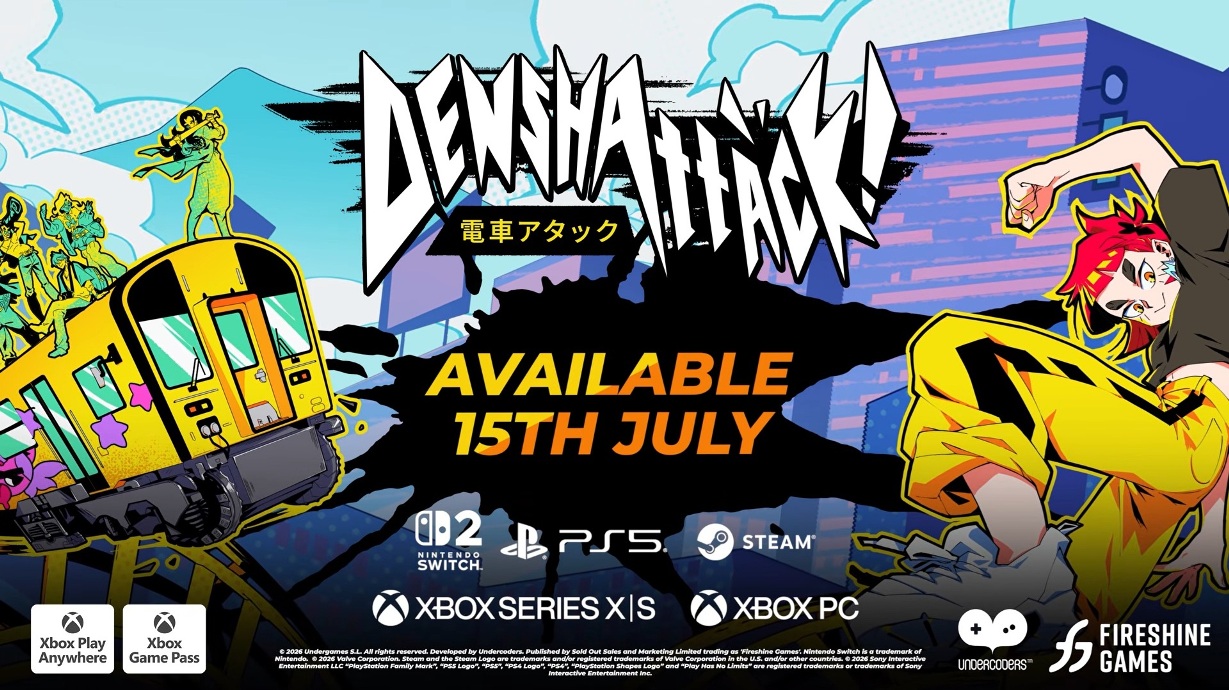
Denshattack interview: dev talks influences, Nintendo Switch 2, pursuing the project despite publisher rejections, more
Denshattack interview: dev talks influences, Nintendo Switch 2, pursuing the project despite publisher rejections, more
Posted on July 12, 2026 by Brian(@NE_Brian)
in Interviews, Switch, Switch 2
Denshattack has been a fan favorite since its reveal last summer, and the game is now only a few days away. With the launch coming up, there’s no better time than now to speak with David Jaumandreu, studio and game director at Undercoders
We touched on a variety of topics during our discussion, including influences (both feedback from fans and games that inspired the art style), supporting Nintendo Switch 2 with its own version, and the drive to continue pursuing the project despite multiple rejections from publishers
Here’s our full interview:
Denshattack has a very distinct premise. What was the original idea or moment that made you think, “This is the game we have to make”?
The base idea came up completely by chance, while fiddling with a toy train as if it was a fingerskate. I thought it was a cool concept and started imagining how it could translate to a game, how would it control, the rules, the challenges of on-rail tricking… the idea stuck for a while in my head and, when we were wrapping up the previous project and had to start something new, I shared it with the rest of the team
At first everyone regarded it as a funny yet silly thing, but still we gave it a chance with a prototype and all of us agreed it was really exciting to play. After iterating the gameplay a bit and expanding the design into a full game, we were convinced that we wanted Denshattack to be our next project!
What was the biggest challenge in balancing the game’s action, strategy, and pacing without making it feel overwhelming or repetitive?
One of the biggest challenges, which was iterated upon on numerous occasions, was the track’s visibility. On one hand, we wanted to create a rich and vibrant world that popped out of the screen and was faithful to real-life Japan’s stunning landscapes and landmarks, but, on the other hand, we also wanted players to go very fast and be able to clearly read the track and anticipate all of the obstacles. It took us a while to find the balance between those two and we had to play a lot with careful signaling, complementary color palettes, per-level camera positioning, non-intrusive visual effects and smart stage dressing, to reach a result we were happy with and worked nicely during playtests.
To address pacing and repetitiveness, we put a lot of effort into making each chapter feel new and surprising. All of the stages have their own theme and tell a unique story beat, offering also a lot of replayability with secondary challenges, collectables, scoring medals and even some secret exits. On top of that, the game introduces new mechanics every chapter to keep things fresh and all bosses offer a completely different experience that (hopefully!) will keep surprising players up to the very end.
Was there a feature, mechanic, or level that seemed like a great idea at first but had to be completely reworked, or cut entirely, during development?
A lot of them! Actually I don’t think there’s a single mechanic in the game that hasn’t been reworked a dozen times. The basic control scheme, for example, was iterated for months: at first we had a much more complex system, that required the use of more inputs, combinations and sequences to control the train, but after a lot of playtesting with focus groups, we were able to make it much more simple and user friendly, while keeping the depth of the gameplay
When Denshattack was announced at Gamescom last year, it made a pretty big splash and was one of the notable announcements from Opening Night Live. Were you surprised at all by the fan reaction?
That was one of the most magical moments we’ve experienced with the development of Denshattack We were able to be present at the show floor and we can’t remember being ever so nervous in our lives… we were incredibly excited to reveal the project we had been already working for years, but, at the same time, we were super scared that people would think it was stupid, didn’t like it or, even worse, just didn’t generate any reactions
When we started seeing that people were cheering at the trailer we felt relieved, excited, happy, tired… all the feelings at the same time and couldn’t take the eyes from our screens reading the reactions throughout the whole night. We never expected to have such a welcoming reaction and that gave us an incredible amount of energy to keep developing the game
Has community feedback influenced the game? Was there any suggestion from players that ended up changing the final product in a meaningful way?
Yes, it has influenced it a lot. As mentioned above, way before the game was announced we were able to test the game with focus groups of players and that gave us a lot of feedback and ideas to improve the concept, controls, visuals, designs etc. But seeing live gameplays and chatting with hundreds of players live at shows such as Gamescom, Tokyo Game Show or BCN Game Fest further served us to understand what players liked about the game and, most importantly, didn’t love so much, so we could fix it and test it at the next event.
Besides the usual controls, tutorial and visuals feedback, which has been massive and invaluable to polish the experience, we’ve also adjusted a lot of scoring systems, based on wild trickpark gameplay that was shared when the public demo became available. We also added the much requested “overtime rule” to further please tricking enthusiasts!
Are there any direct influences on the game’s art style and tone?
A lot of them! Jet Set Radio and the Tony Hawk Pro Skater series have both been incredibly influential for us: the first one for its groundbreaking visuals, theme, music and tone and the second one for, basically, defining how we play and understand skate video games. But aside from those, we’ve taken a lot of energy inspiration from classic Sega arcade games, colorful references found in titles such as Splatoon or HiFi Rush, present era trick and rhythm games, such as Thumper and OlliOlli World, and, of course, our favorite arcade train riding series, Densha de Go!
We know that Nintendo platforms weren’t a part of the original announcement, so when did Switch 2 come into the picture?
As big Switch 1 users (and developers!) we knew we wanted Denshattack to be on the eShop from the very beginning of the project, but at that time Switch 2 was just rumours. When it was finally officially announced, we immediately started working with our publisher to get ourselves permission from Nintendo to develop for it. With all the console launch’s workload during 2025, it took some time for us to get the development kits, so that’s why it wasn’t included in the first announcement and, at the time, we could only answer, “We’d like to!” when people asked us if it was coming to Switch 2.
Did the team ever consider making a Switch 1 version?
As Switch 1 developers of games such as Mail Mole or Koa and the Five Pirates of Mara, we definitely did consider a Switch 1 version. At the same time, though, we also didn’t want to constrain ourselves to a certain set of hardware specs, as we knew that the visuals, juiciness, speed and, obviously, constant high framerate, were key aspects of the experience we wanted to create. So when Switch 2 was announced and its specs revealed, we thought it was the perfect platform to have Denshattack on.
Looking back on what you’ve accomplished with Denshattack, what’s one lesson you’ll carry into your next project, and what excites you most about the future of making games?
There are actually a lot of them, haha! But maybe something we remember often is how we pushed Denshattack to become a reality for over a year, even when we were being continuously rejected by publishers. At some point we asked ourselves if we should just ditch the idea and try something more conventional, but we were so convinced that it could work that we kept improving the build and pitching the project. We learned a lot about presenting ideas, minimizing risks, being conscious about our limitations and believing in the value of the proposal and we hope the experience serves us well for future projects.
For the future we really hope our industry heals, after these terribly harsh years that we’ve all been living, and that we have the opportunity to keep exploring new interesting concepts and turning them into games that people want to play!
Denshattack will be available for Nintendo Switch 2 on July 15, 2026
More: Denshattack, Fireshine Games, highlight, top, Undercoders
© Copyright 2026
