

Nintendo does care about Mario lore – here’s why
Nintendo does care about Mario lore – here’s why
Posted on August 2, 2026 by Ethan in Features, General Nintendo, Switch 2
If you take a look at the Super Mario series as a whole, it’s safe to say that Nintendo has never placed a big emphasis on the franchise’s story. Most of the games are as simple as Bowser kidnapping Peach, with no further plot details or anything of the sort. After New Super Mario Bros. Wii released in 2009, a huge chunk of Mario games began putting even less thought into their stories. The Paper Mario series is a great example – Sticker Star’s plot is as paper-thin as it gets, with Bowser serving as a silent main antagonist.
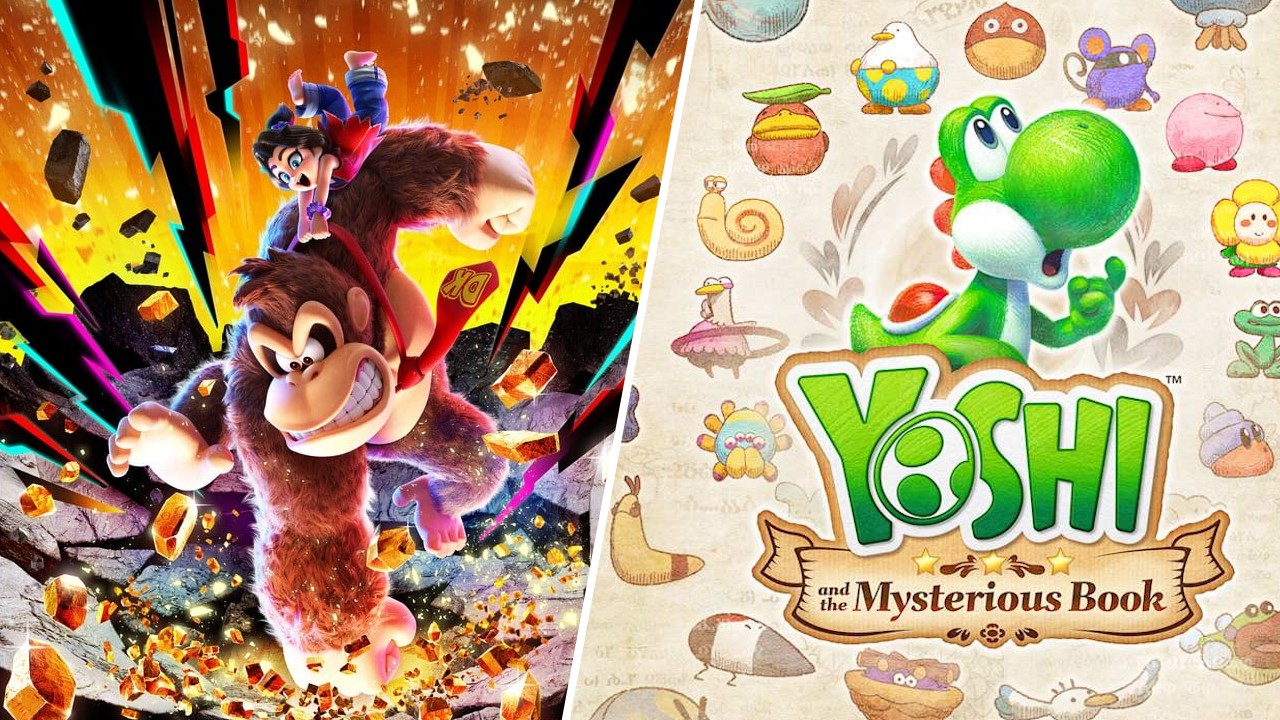
That being said, Nintendo has clearly been putting more effort into including plot and story tidbits in their recent Mario universe games. We’ll be discussing spoilers for pretty much every Mario game released over the past year or so, including Donkey Kong Bananza and Yoshi and the Mysterious Book, so please keep that in mind before you continue.
The biggest indicator to me that Nintendo is changing its tune regarding Mario lore is the recent emphasis on Super Mario Galaxy. Sure, the movie’s story isn’t that great – it moves far too fast and there are a few tidbits in there that fans of the games don’t really like. But we’re talking about the games here! Super Mario Galaxy doesn’t have a super-involved story, but it’s still got more than any other 3D Mario game. Rosalina’s storybook is the main reason why she’s such a beloved character, and the story it tells is simple but sad and ends in a hopeful message. Mario stories don’t have to be anything grand, but that small amount of plot is another reason so many people love Super Mario Galaxy.
When Nintendo re-released Super Mario Galaxy and Super Mario Galaxy 2 on Switch, an entirely new storybook was added to the second game. It told the story of Mari and Lu, a pair of Luma twins who were separated from each other. Lu winds up becoming Lubba, which gives lore to a character who otherwise had very little backstory in the original Wii game. Nintendo were even willing to officially change Lubba’s gender from male to female in non-Japanese localizations as part of the revised story.
Super Mario Galaxy 2 is loved as well, but it’s a little bit infamous for having absolutely none of the heartfelt plot moments from the first title. That remains mostly true here, but the inclusion of a new storybook does mean that Nintendo is thinking about the Mario franchise’s lore. Furthermore, after the release of The Super Mario Galaxy Movie, Nintendo added one last chapter to Super Mario Galaxy 2 that involves Rosalina symbolically speaking to a younger version of herself. More on thathere.
It’s not just Super Mario Galaxy with more story, though. In a similar way, Donkey Kong Bananza’s story isn’t anything crazy deep or involved, but it does contain more plot elements than the average Nintendo 3D platformer. Pauline goes through very defined character development. At the beginning of the game, all she can think about is herself – which makes sense, given that she’s a child – but by the end of the game, she’s learned to consider and care about others as well. You’ve also got the return of King K. Rool, and his long absence from the DK series has been explained – the king was searching for the Banandium Root, but wound up trapped by the root itself when he tried to have an evil wish granted. This wound up trapping all of the Kremlings as well, which explains why they were gone for so long.
Then there’s the matter of where exactly in the “Mario timeline” this game takes place. Nintendo does care about Mario lore, yes – but maybe the company doesn’t care about a definitive timeline? This one’s very difficult to place. I’d venture to guess that Mario and Pauline are around the same age, so since Pauline is a child here, that would imply Mario is, too, even though he doesn’t appear in the game. That means Donkey Kong Bananza takes place after the Donkey Kong Country games (because Dixie Kong mentions that the events of the first three games have already happened), but before any of the mainline Mario titles and definitely before Super Mario Odyssey. The only other explanation is that this game takes place in the far future, and the Pauline in this game is a completely new character whose grandmother is the Pauline we know from Super Mario Odyssey.
But that has flaws too, and since no explanation seems to fully line up, that’s led many to believe that Nintendo doesn’t care about their stories making sense. On the other hand, though, I think Nintendo does things like this on purpose – discussion around Bananza has continued for months because of its story implications. Leaving things unclear, while frustrating for fans in a sense, does open up a ton of discussion and personal theories as well.
Surprisingly, Yoshi and the Mysterious Book has lore too. Traditionally, Yoshi games are very light on story, so it’s a big surprise that this one adds plot details that are relevant to the greater Mario franchise. At the very end of the game, Mr. E lets you access hidden pages within his records that actually serve as a dual lore drop – a rarity not just in the Yoshi series, but in the Mario series as a whole. According to these pages, a professor from the distant past predicted that calamity would strike the world and its wildlife, and began to chronicle all life on the planet, which is why multiple species appear in the book. As shown in Chapter 10 of the game, a Crazee Dayzee grown gigantic enough to become a moon fell from its stem, and caused an impact on the world that did in fact wipe out a ton of its wildlife. That means the Mario universe is technically post-apocalyptic, which means it’s now joined Kirby, Splatoon, and possibly Pikmin as fellow post-apocalyptic universes. Furthermore, it’s revealed that Kamek fell into the book’s pages sometime after all of the Yoshi’s Island games, and was trapped there from the time Baby Bowser was a kid until he grew into an adult. This possibly explains Kamek’s absence from numerous main series Mario games, as well as why he doesn’t serve as much of a father figure to Bowser in the main series.
All of this is to say, whether you think Nintendo cares about a “unified Mario timeline” or anything like that, they have certainly been making an effort to put more stories in Mario games. Are these story additions meant to make sense with each other? Who knows – maybe there’s some crazy explanation for Donkey Kong Bananza that actually does make sense in the greater Mario universe.
In any case, these new story additions do create genuine discussions that I personally find pretty fun to speculate about. We’ve yet to get a brand-new 2D or 3D Mario game on Nintendo Switch 2, so it remains to be seen if a new entry would include a greater focus on story – but we’re seeing extra lore in Donkey Kong and Yoshi games, which have never been known for their plots.
What do you think about this renewed emphasis on lore details? Do you like these little tidbits in Mario games, or do you prefer tuning it all out and enjoying the gameplay? Let us know in the comments down below.
More: Donkey Kong Bananza, Good Feel, Yoshi and the Mysterious Book
