

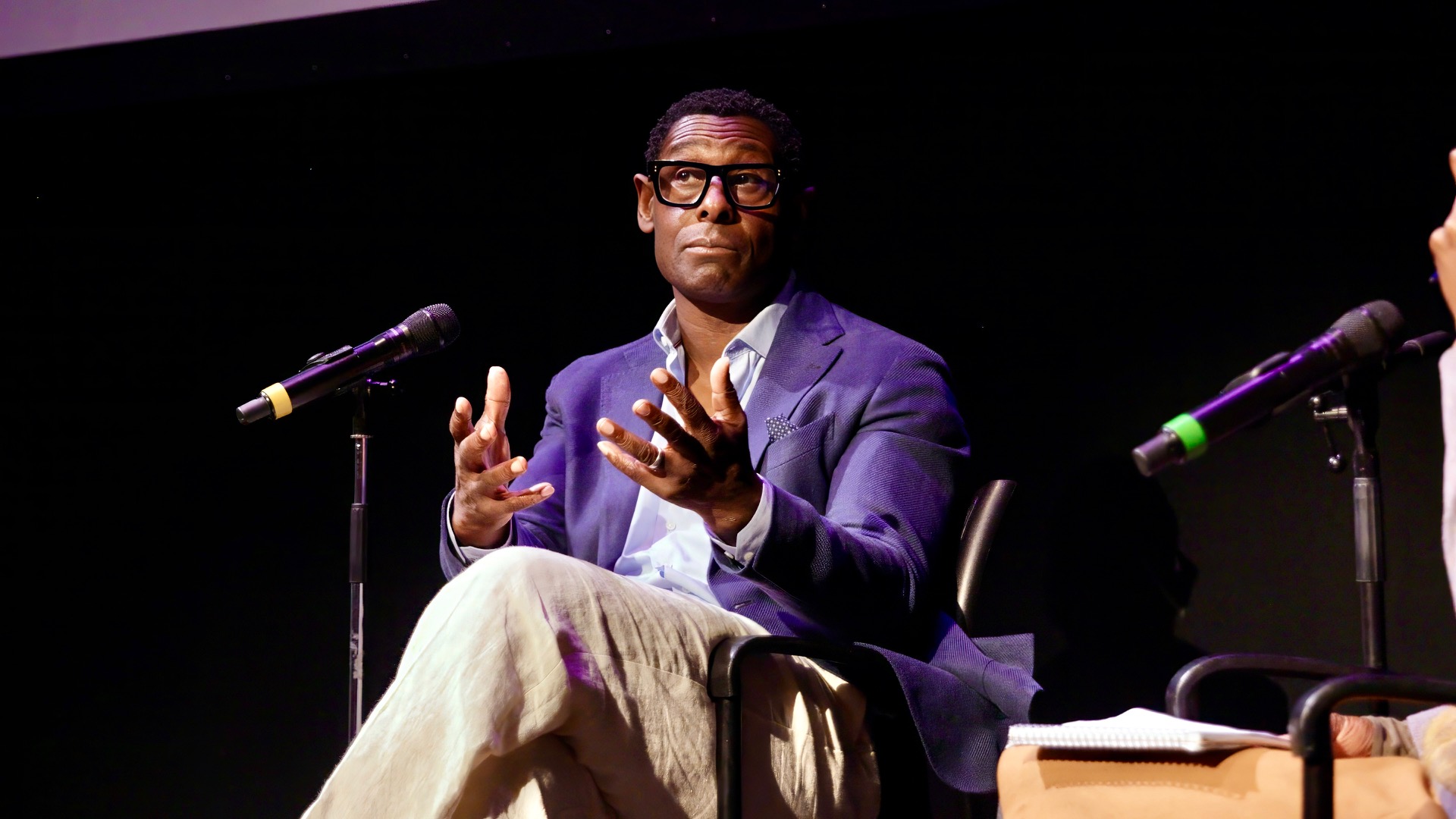
“IF WE believe art is good for human wellbeing, we have to ask what we are doing about the wellbeing of those who create art” says David Harewood
In celebration of the inaugural Mona Hammond annual lecture series, Harewood delivered a keynote speech that explored the topic of creative lives in changing times: wellbeing and the artist.
The event was jointly presented by the UK’s leading Black British theatre company Talawa and world-renowned Royal Academy of Dramatic Arts.
The conversation honoured the legacy of the co-founder of Talawa Theatre Company and Royal Academy of Dramatic Arts graduate Mona Hammond OBE.
Harewood highlighted the achievements Hammond made on screen playing the beloved aunty Susu in Channel 4’s Desmond’s and being the first Black actress to play Lady Macbeth on the British stage.
“Mona helped make it possible for a generation of young Black actors to imagine a creative life for themselves,” says Harewood.
Hammond was a trailblazer that expressed devotion in her craft but a deep concern and interest in the wellbeing of the young Black actors following in her footsteps. “She helped build a more inclusive British theatre,” Harewood enthused.
According to the World Health Organisation, the arts was unique in helping us understand and communicate emotions through our senses and capacity for empathy. This is the power theatre has in shaping how we interact with people and their experiences.
“Wellbeing is about the culture we create” Harewood added.
Consensus on the evening centred on theatre communities and production companies not reducing wellbeing to a ‘workshop’ or ‘wellbeing week’, as it takes meaningful change through ‘sustaining relationships, remaining curious and asking for help and striving to achieve artistic excellence’. Diversity must go beyond who enters the building into exploring the changes that happen in the building.
Throughout Harewood’s lecture he shared how crucial it is for creative environments to broaden the meaning of what success looks like through building a creative life.
“A job may last three months but hopefully a creative life will last 60 years or more,” he sid.
Speaking to new creativity Harewood said: “success will not on be measured by what you achieve but by what becomes possible when you’re in the industry.” Being bold enough to imagine theatre and how it can be advanced “needs imagination but also sustained imagination for a lifetime.”
Harewood encouraged the next generation of artists to ‘find their voice, protect it and use it’.
He added that if we can create cultures of ‘belonging’, perhaps we can tell more ‘truthful stories’, and make room for ‘vulnerability and art that reaches further’.
The future of theatre is being made now, by artists and young people invited in by RADA and organisations like Talawa theatre company.
For 40 years Talawa theatre company has diversified the creative industry by championing Black talent and by pushing for better representation of Black people in theatre, platforming Black artists and providing them the autonomy to tell their stories to everyone.
The power of theatre is experiencing togetherness with an audience while invoking a plethora of emotions, reactions and lessons for all individuals in an audience.
‘Fro Festival’ first marks tenth anniversary of World Afro Day

1 Comment
Pingback: Forget The Last of Us, This Is the Best Post-Apocalyptic TV Show of All Time, and I Can Prove Why - Comic Vibe