


Andrew Osmond quizzes the prolific author about his new book: ‘Japan’s Anime Revolution: Twenty Animated Films That Changed The World.’
Jonathan Clements has been writing professionally about anime since 1992. His many books since then include successive editions of “The Anime Encyclopedia” (co-written with Helen McCarthy), as well as “Anime: A History” (two editions); additionally, he’s translated reams of anime scripts. He’s also hosted Scotland Loves Anime since its inception in 2010, introducing anime films to fans in Edinburgh, Glasgow and (since 2024) in London
His new book, “Japan’s Anime Revolution: Twenty Animated Films That Changed the World,” is he gives a detailed account of its production, achievements and context, bolstered by comments from the creators (many of whom he’s met)
Starting with the pioneer works, there’s Momotaro – Sacred Sailors, a war propaganda film released just before Japan’s defeat in 1945. It’s followed by Hakujaden, the first color anime feature in 1958, and 1968’s The Little Norse Prince, which united future Ghibli founders Isao Takahata and Hayao Miyazaki
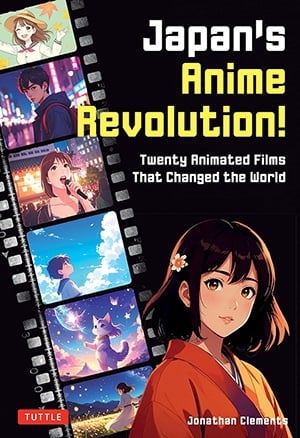
Then there are film versions of Space Battleship Yamatoand Gundam. There are TheWings of Honneamise, Akiraand the incredible double-bill of Totoro and Grave of the Fireflies. Into the 1990s, there are Street Fighter II, Ghost in the Shell, Perfect Blue and Pokémon: The First Movie. Beyond 2000, the book covers Spirited Away, The Case of Hana & Alice, Miss Hokusai, A Silent Voice, Your Name, Mirai and The First Slam Dunk
It’s a long journey, festooned with army animals, giant robots, phantom singers and woodland spirits. How did Clements go about it?
Andrew Osmond:For younger anime fans who are interested in trying some anime films from before they were born, which “vintage” films do you think make good starting points, beyond Ghibli?
Jonathan Clements: It’s funny that you say, “beyond Ghibli.” Fans these days can get almosteverything at the touch of a button. For many people, Ghibli movies are just there, on Netflix, whenever they want them, which must make Hayao Miyazaki want to flip the table over. He wants cinema to be a once-yearly appointment, so it probably turns him into Miyazaki-Hulk
My daughter is only three years old, and she loves to summon the film that she called “The Girls” on a daily basis. It’s her name for My Neighbor Totoro. The big deal for her isn’t that there is a big forest spirit. It’s that there is a girl just like her, called Mei, who has a big sister to hang out with in the country. For her, Totoro is not nearly 40 years old, it is just as fresh and new to her as the other movies
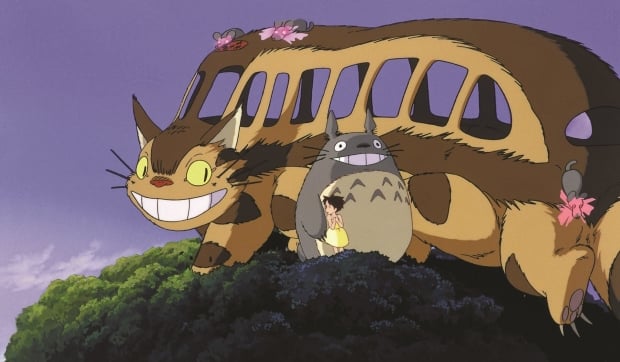
As for recommendations, that’s what my book is for. I’ve come up with 20 films worth talking about, and if you are a young anime fan who hasn’t seen some of them, maybe see which one sounds good to you and give it a go
AO:In your Foreword, you mention that you wanted to include a film by the director Masaaki Yuasa, but you had to leave him out in the end. If you had room to include him, which of his films would you have chosen?
JC: The most influential, world-changing film Yuasa has made is Kick-Heart [released in 2013] and if I had not been limited to feature films, it would have been a mandatory inclusion for its ground-breaking position in terms of crowdfunding in the 21st century. But Kick-Heart is only 12 minutes long. If I’d been able to include shorts, then Gainax would have been represented by Daicon III Opening Animation, and the first “film” in the book would have been the Matsumoto Fragment, which only lasts for 50 frames!
AO:You mention how in 1941, a “contraband” copy of Disney’sFantasiawas shown to Japanese animators, one of whom wept to see its level of production. Do we know how this copy ofFantasia was obtained?
JC: The Japanese had found a pretext to raid an American ship that happened to be carrying two movies. One was Gone with the Wind. The other was Fantasia. The Imperial Japanese Navy was treating Fantasia like nuclear waste, locking it away and only showing it to a select audience of animators
Tomio Sagisu was the guy who was crying. He was impressed by the artistic achievement, but also, he was overwhelmed by the pressure. Japanese animators at the time were putting out black-and-white two-reelers, 15 minutes long, and here they were shown a full-length, color feature. It was a terrifying example of American soft power, and they were just about to take it on
AO:Hakujaden, the first color anime feature, was made especially for the Chinese market. In more recent years, cinema reissues of Ghibli films have been highly successful in China, and last year’s film ChaO(pictured below) by Studio 4°C was set in Shanghai. Do you foresee more anime films in the future being targeted at the Chinese market?
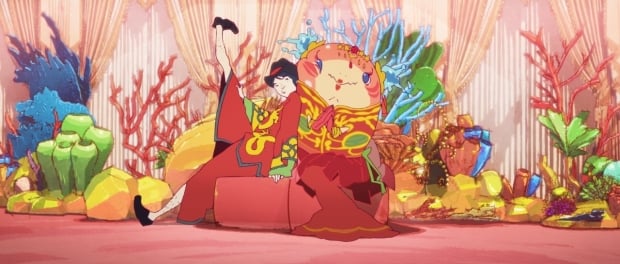
JC:Hakujaden was made for the Chinese market, but it never made it there, because China and Japan spent 15 years refusing to talk to each other. There was a period from maybe 2015-2018 when Chinese investment money was all over the anime business like white on rice, but China’s creative industries are becoming much more inwardly focused now
The Japanese would love to make stuff that sells in China, but there’s a minefield of quotas and censorship to get through. I think ChaO might turn out to be the last attempt to engage with China for a couple of years, and even then, I get the impression that its makers didn’t quite realize how much China-love was being invested in it by their underlings. I interviewed the director and the producer last year, and they couldn’t even agree what the title meant
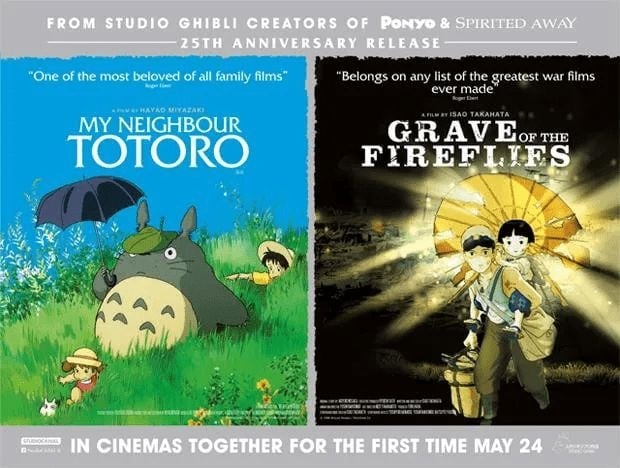
AO: For many Westerners, one of the most incredible bits of anime history will always be the “Barbenheimer”-like double-billing ofTotoroandGrave of the Firefliesin 1988. an insane-looking combo of joy and tragedy. Of course, these were the films their respective directors wanted to make, and they had an energetic supporter in Toshio Suzuki. But is there anything more that you think explains how such a preposterous double-bill could get to Japanese cinemas?
JC: As I relate in my book, the backers were all expecting Totoro to be a flop. I mean, who cares about a movie where nothing happens in the countryside, right? Suzuki came up with the idea of shoring up Miyazaki’s mad pastoral project by running it on a double bill with something that the schools would have to block-book as “educational.”
That’s why my book covers 20 movies but only has 19 chapters, because I am fascinated with what we call the “historicity” of those two movies. Their original presentation was a double bill, so I insisted on watching them together, and considering them together, and I think that threw some new things into perspective
In my book, my deep-dive scene for Totoro is the girls waiting at the bus stop, and I go through it second-by-second, pointing out just how lovingly Studio Ghibli can render a scene in which “nothing happens.”
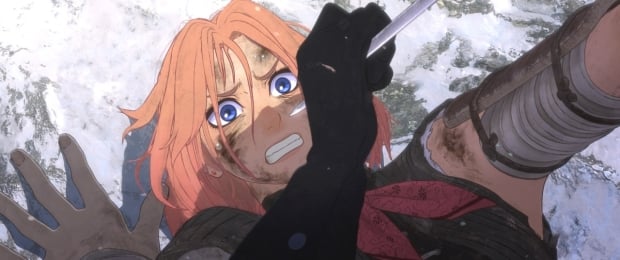
AO:You cover Mamoru Hosoda’sMirai in your book, which was Oscar-nominated for Best Animated Film in 2018. It seems likely that Hosoda’s latest film,Scarlet, pictured above, was an expensive film (it had a long production and co-financing from Sony) and also that it has flopped very badly at cinemas. [Scarlet was covered in this column in February.] As speculation, how badly do you think this will impact on Hosoda’s career?
JC: Hosoda is fine. There will be ructions because of the poor performance of Scarlet, but they will be all-but invisible to the audience. Heads will roll, but they will roll among the speculators who charged in and took Scarlet away from the distributors who had spent so many years backing Hosoda in the English language. There might not be quite such a feeding frenzy over the rights for his next film in English
AO:Pokémon: The First Moviedidn’t get many critical plaudits when it opened in America in 1999, but you highlight how seriously it was taken by its writer and director. The film was made for children, but I wonder if you, an adult, find it more watchable now, having delved into the accounts of the people who made it and what they were trying to do?
JC:Pokémon still leaves me cold, but it was never intended for me. I threw it in because of the tipping point it represented in exhibition – three thousand screens in the USA – and it was fortunate I was able to dig up anything at all by its makers. Children’s stuff tends to lack the kind of testimonies I need, but I found a great piece that the screenwriter wrote shortly before he died
But I still needed that sense of wonder, so I reached out to a couple of Pokémon fans who were 10 years old when the film came out, and I asked them to describe what the film meant to them, because it’s very different when you are 10 than when you are 54
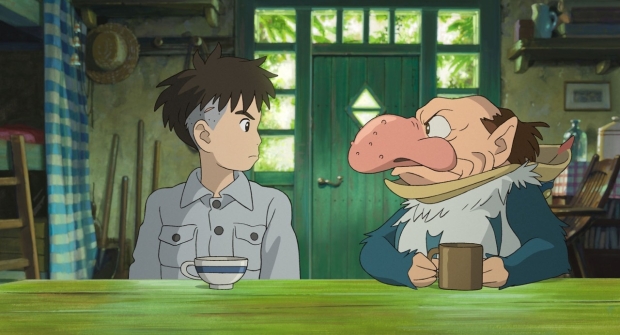
AO:Hayao Miyazaki is now 85 years old, and his latest film (The Boy and the Heron) took about six years to make. If you were a betting man, would you bet that he’ll embark on another feature film, or against it?
JC: My bet is that whether Miyazaki finishes another film or not, his name is going to be plastered on movies for the next decade. He could die tomorrow, and they’d be digging up outlines, and drafts and ideas. He’ll be credited as the screenwriter, or the original designer, or “From an idea by…” and that’ll keep everyone going for a while
AO:For many years, it felt like the only anime film director whose name had “blockbuster” status in Japan was Hayao Miyazaki. Then 10 years ago, Makoto Shinkai started making megahits withYour Name(above). Do you expect any other directors to “break out” in the near future – for example, Naoko Yamada, whose work is beloved by fans, but who hasn’t made a film with that level of box-office yet?
JC: It’ll happen. I was the unwelcome voice in a meeting a few years ago, saying: “Naoko Yamada is going to win an Oscar one day, but not for this.” She needs to be paired with the right writer, and the right story, but even if she knocks it out of the park, the Oscars are a roulette wheel of unpredictable factors. I talk in my book about the behind-the-scenes agonies of trying to get Hosoda’s Belle nominated for a BAFTA, which would have greased the wheels for the Oscars for him. His distributors threw a fortune at enabling the right conditions for it, and it still wasn’t enough.
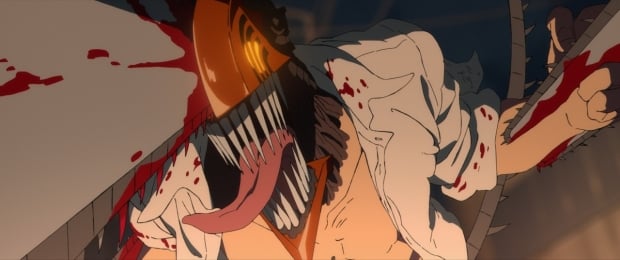
AO:2025 saw two anime films become global hits,Chainsaw Man – Reze Arcand the first part ofDemon Slayer: Infinity Castle. Both were based on action franchises that originated as manga in the magazine Shonen Jump. Do you think films like these will become increasingly dominant in the industry in the coming years, especially if there are no more major Ghibli features?
JC: There’s always been a, well, it’s hardly fair to call it a “sub-genre” of shonen titles. The shonen titles are often the main narrative and the main money-spinners, and the stuff that actually endures, in terms of artistic heritage, is an outlier. Ghost in the Shell played in two cinemas, for two weeks. Angel’s Egg [an avant-garde fantasy by Ghost in the Shell’s future director Mamoru Oshii] was screened on a Sunday morning when everyone else was off watching Captain Tsubasa. For the re-release of Angel’s Egg in UK cinemas in 2026, Anime Limited announced that I would be giving a 15-minute presentation before the film, and social media erupted with people responding: “WE WANT BLEACH!”
AO:Both the newChainsaw ManandDemon Slayerfilms are linked to the TV versions of their respective franchises, and neither have stand-alone stories. There’s also the phenomenon of UK and American cinemas previewing the opening episodes of some new anime series. Science Saru has especially taken that tack withDanDaDan(above) and now with its new series version ofThe Ghost in the Shell, which was previewed in UK and Ireland cinemas in June. Do you think that “anime films” and “TV anime” will merge increasingly in the coming years?
JC: There’s been an integration of TV and film for years. What was so nice about the 1980s was that for a while the original stuff started to crowd out the television spin-offs. They are a greatke making cinema punters do homework before they see a film.

AO:There have also been feature-length films that have become hits based on their online releases – they got cinema releases later on, because their online popularity was so high. I’m thinking of the non-animeKPop Demon Hunterslast year, and this year’sCosmic Princess Kaguya![pictured above; the film was covered in this column in May.] What are the implications when animated features can become “trending” hits just through online distribution?
JC: The issues for cinemas are cataclysmic, because it’s hard enough making a cinema visit enough of an event to get people off their sofas already. I’ve ceased to be surprised by the number of people at Scotland Loves Anime who tell me they have never seen an anime in a cinema before. These are feature films. They are supposed to be 20 feet high, and you are supposed to watch them in the dark. Holding your iPhone close to your face really isn’t the same thing
Which is something else I really wanted to showcase with my book. I could have done something like 20 great TV anime shows, or 20 important video releases, or the pick of streaming. But I really wanted to discuss anime as a cinema phenomenon, before it was too late
AO:You were involved in the marketing of 13 of the films in your book. Over that time, have you found the people you deal with – especially the creatives who you interview on stages at events such as Scotland Loves Anime – have grown more open when talking with foreigners? Or have they (or their PR handlers) grown more cautious in what they say?
JC: The live interviews at SLA are one of the festival’s big draws, but they are hard work. On Naoko Yamada’s short film Garden of Remembrance (above), I was given content that lasted for 17 minutes and told to spin it somehow into a 90-minute event that justified the price of the ticket, without a script and without a safety net. And at these things, there are all sorts of behind-the-scenes directives that shut off certain avenues of enquiry, even if they are the most obvious ones to the audience. All of which I have to steer from the stage with one eye on the clock.
But Yamada loves the festival (I think she’s been four times now), and she loves Scotland, and so she’s an ebullient, enthusiastic performer who has the audience on the edge of their seats. And it helps that we have interpreters like Bethan Jones, who can make the creators feel heard. They tell a joke, and Bethan turns it into English, and the audience laughs. They mention shooting on threes, or machine learning, or rostrum cameras, and Bethan doesn’t blink. That’s rarer than you might think in festival events.
There have been occasions where, for some reason, someone has shown up whose relationship to the film at hand is frankly spurious, and then it’s like I am quizzing a hostile witness. Success can also bring with it a certain dead weight in entourages. There was one director, who I shall not name, who first showed up in the UK with just one friend for company. 10 years later, now much more famous, he turned up with 20 flunkies, all of them desperate to look busy and important. That creates a huge headache in really basic logistics like how to get them all to the restaurant for dinner.
So, every year at the festival, there is a new challenge. But over the years, I like to think, we have developed a pretty robust series of responses that keep the drama on screen, and not backstage
Andrew Osmond is a British author and journalist, specialising in animation and fantasy media. His email is [email protected].
Tags
We Love Our Anime Greats
Japan’s Anime Revolution: Twenty Animated Films That Changed the World
Jonathan Clements
Andrew Osmond
Helen McCarthy
Isao Takahata
Hayao Miyazaki
Masaaki Yuasa
Tomio Sagisu
Toshio Suzuki
Mamoru Hosoda
Makoto Shinkai
Naoko Yamada
Mamoru Oshii
Bethan Jones
Studio Ghibli
Gainax
Studio 4°C
Pokémon
MAPPA
Tatsuki Fujimoto
Shueisha
Shonen Jump
Science SARU
Momotaro – Sacred Sailors
Hakujaden
The Little Norse Prince
Space Battleship Yamato
Gundam
The Wings of Honneamise
Akira
My Neighbor Totoro
Grave of the Fireflies
Street Fighter II
Ghost in the Shell
Perfect Blue
Spirited Away
The Case of Hana & Alice
Miss Hokusai
A Silent Voice
Your Name
Mirai
The First Slam Dunk
Kick-Heart
Matsumoto Fragment
ChaO
Scarlet
The Boy and The Heron
Belle
Chainsaw Man: The Movie – Reze Arc
Demon Slayer: Infinity Castle
Angel’s Egg
Captain Tsubasa
Bleach
DanDaDan
The Ghost in the Shell
Cosmic Princess Kaguya!
Garden of Remembrance
Manga
More From ANIMATIONWorld:
You’re currently viewing the most recent post.Previous PostRe-VIEW: ‘Hoppers’ – We’re All in This Together
