

‘Ashita no Joe’ manga creator Tetsuya Chiba passes on at 87
- Share
- list
Tetsuya Chiba drew on his turbulent postwar experiences after being repatriated when creating the manga “Ashita no Joe” (Tomorrow’s Joe) with fellow artist and writer Asao Takamori. (Asahi Shimbun file photo)
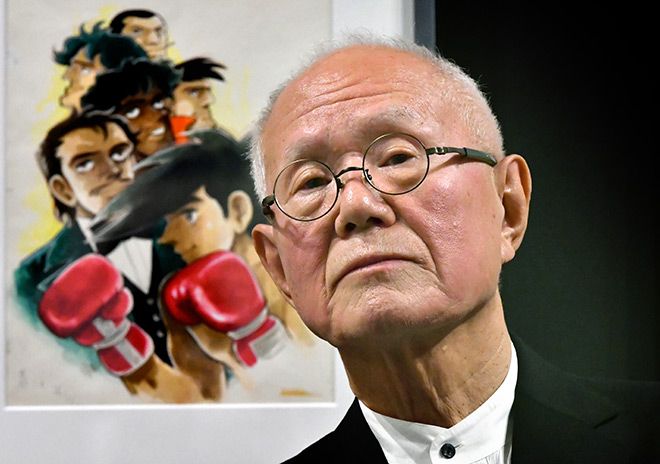
Generational manga artist Tetsuya Chiba, famed for the beloved boxing manga “Ashita no Joe: Fighting for Tomorrow” (Tomorrow’s Joe), died of myelodysplastic syndromes on Oct. 22. He was 87.
A private funeral was held among family members and close friends. A memorial gathering is planned at a later date.
Born in Tokyo in 1939, Chiba and his family moved to Manchuria, now northeastern China, in 1941 before returning to Japan after the end of World War II.
He debuted as a manga creator as a high school student in 1956.
From 1967 to 1973, Chiba collaborated with fellow artist and writer Asao Takamori, who is also known by a pen name, Ikki Kajiwara, on the boxing manga “Ashita no Joe: Fighting for Tomorrow,” which became a landmark of postwar manga.
The series followed protagonist Joe Yabuki as he devoted himself to boxing, growing into a social phenomenon amid the backdrop of the student movements that were flourishing at the time.
The death of Joe’s rival, Toru Rikiishi, sparked an enormous public reaction, even leading playwright Shuji Terayama and others to hold a “funeral” for the fictional character.
The manga was later adapted into a TV <a href="https://comicvibe.com/anime-blush-is-falls-most-adorable-makeup-trend/” title=”“Anime Blush” Is Fall’s Most Adorable Makeup Trend”>anime series, films and a stage production by the Shinkokugeki theater troupe.
Chiba repeatedly drew on his own harsh experiences as a repatriate during the postwar period in his manga and autobiography, and also gave lectures on the subject.
Driven by a desire to protect peace and freedom, he spoke out against restrictions on freedom of expression, including at a Japan P.E.N. Club rally in April 2017 opposing the proposed conspiracy bill at the time.
The government awarded Chiba a Medal with Purple Ribbon in 2002 and the Order of the Rising Sun, Gold Rays with Rosette in 2012 and was named a Person of Cultural Merit in 2014.
In 2018, he received the Tezuka Osamu Cultural Prize’s Special Award.
Chiba became the first manga artist selected as a member of the Japan Art Academy in 2022. He made history again in 2024 as the first manga artist to receive the Order of Culture.
- Share
- list
