


Are you missing a vital ingredient in VR teaching and learning?
VR learning should go beyond aesthetics. Each object, space or interaction must have a pedagogical function, says Nancy Zavala. Learn how a design thinking approach can help students put theory into practice
Higher education pedagogyPractical learningUniversity course design and deliveryFeature articleLatin America
28 Oct 2026
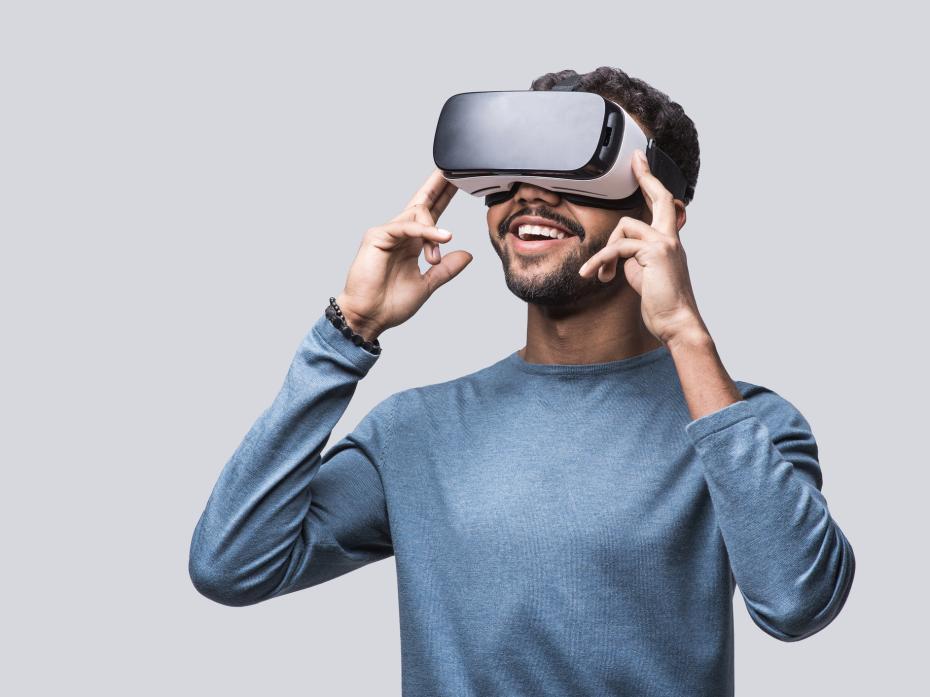

To make classroom learning valuable to today’s students, educators must help them deepen their understanding by translating theory into practice. Virtual reality (VR) offers valuable opportunities but technology-enabled experiential learning requires more than simply transferring the learning content to a digital environment. It requires meaningful design of activities that require students to make decisions, fail and learn in a safe space.
What changes when we use design thinking in virtual reality?
Design thinkingis a problem-solving approach taught as a sequence of steps:
- empathise
- define
- ideate
- prototype
- evaluate.
It is widely used inhigher education, however, in many cases, these steps are simulated or poorly contextualised. When we transfer the methodology to an immersive environment, a shift occurs: the student does not simply follow the steps; they experience them.
This is because VR allows you to create scenarios where every decision has consequences, where information is not presented in a linear way and where learning occurs through interaction.
As a result, students develop empathy by interacting with real contexts; they make decisions under pressure, come up with solutions and make “tangible” prototypes. Evaluation is embedded throughout this process as continuous feedback that strengthens iterative learning.
How to embed design thinking in VR learning
Put pedagogy first
One of the most common mistakes educators make when working with VR is to focus on technology over learning. VR learning should go beyond aesthetics. Each object, space or interaction must have a pedagogical function. Think about what competencies you want to develop; what type of thinking you want to activate and what decisions students should make.
During the empathy phase, students could explore virtual spaces to uncover clues about user needs. In the definition phase, they could interact with the environment to pin down the problem and, during prototyping, they could tackle challenges in a VR lab. Ultimately, this transforms the technology from a flashy visual aid into an engine foractive learning.
Align each design thinking phase with concrete actions
Translate each stage into specific actions for students to take within the virtual environment. For example:
Empathise: students explore spaces, analyse characters and collect contextual information.
Define: students organise findings visually, for example, on interactive whiteboards like Miro and Padlet.
Ideate: students unlock ideas through challenges that prompt discovery, for example, activities where they must use clues and objects in the virtual environment to solve puzzles andencourage creative thinking. This dynamic helps them make connections and generate insights to build potential solutions for the problem they are trying to address.
Prototype: students construct or manipulate elements within the virtual environment by interacting with objects, analysing clues and solving challenges to turn ideas into “tangible” elements. This helps them understand how to test, visualise and refine a potential solution before bringing it to life.
Evaluate: students observe reactions, gather feedback and refine their ideas or prototypes. For instance, they can test a decision, monitor the outcomes and then adjust or pivot to achieve a better result.
In these scenarios, students must act, not just observe. Interaction is the bridge between theory and practice.
- Spotlight guide:Course design for a new age
- Why flexibility is now central to student success
- Use XR to make invisible networks visible to students
Make the narrative core to the experience
In immersive environments, the narrative is not an add-on, it is what gives meaning to the whole experience. Good storytelling builds engagement, adds context to challenges and justifies decisions, maintaining the coherence of the journey.
In a design thinking activity, the narrative can represent a real problem that requires a solution and positions the student as the protagonist of the process.
Embed challenges that become progressively more complex
As the student progresses, the challenges must become more difficult. With design thinking, this reflects what happens in real-life scenarios: professionals explore and analyse the problem, come up with ideas and then make decisions. And clear feedback is fundamental to the process.
Make mistakes essential to the experience
Mistakes drive learning in VR environments. Since design thinking is inherently iterative, the virtual world acts as a safe space for testing, failing and tweaking choices with no real-world consequences. Every misstep is just real-time feedback, prompting students to keep practising and refining their solutions until they hit the mark.
Embed real-time feedback
This helps students understand the impact of each decision. Work it into the experience through visual markers such as satisfaction bars or alerts, environmental cues such as avatars reacting positively or negatively based on choices, and dynamic scenario shifts, such as environments altering or new challenges popping up based on the actions students take.
Design moments of reflection within and beyond the VR environment
Students consolidate their learning when they reflect on the experience, so integrate reflective pauses and subsequent activities that help them understand the process and apply what they have learned in other contexts.
To successfully embed design thinking into virtual reality activities, we must redesign the experience entirely. Because, in the end, one of the best ways to help students understand a process is to allow them to live it.
Nancy Zavala is senior instructional designer at Tecnológico de Monterrey, Mexico.
If you would like advice and insight from academics and university staff delivered direct to your inbox each week, sign up for the Campus newsletter.
AI or VR? Matching emerging tech to real-world learning
4 minute read
How the shores of a VR island promote student well-being and social connections
3 minute read
How to set up immersive VR lessons on your campus
4 minute read
1
