

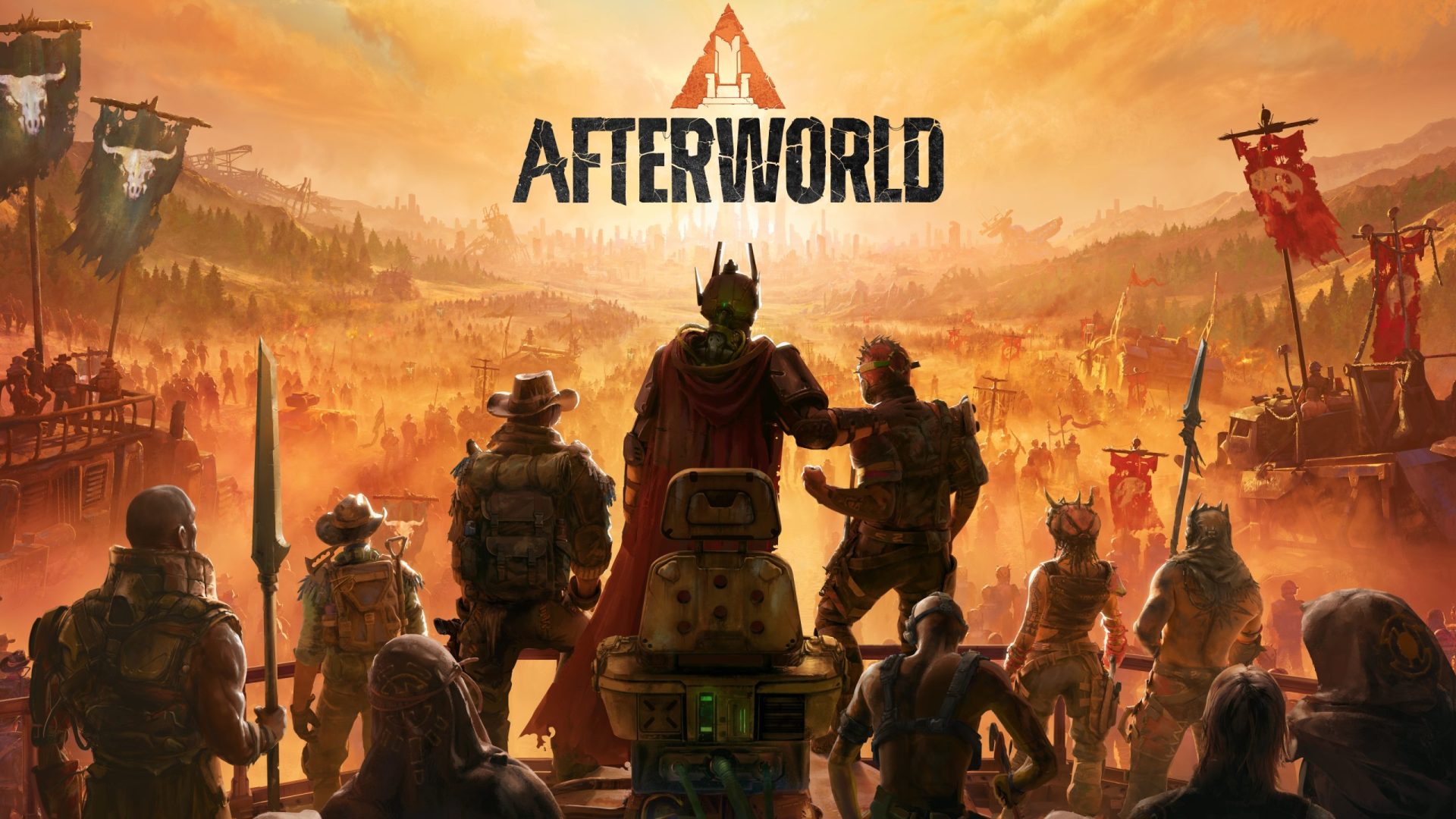
When it was announced at Gamescom, I mentioned in my piece that I had been able to get hands-on with Afterworld. This is the case. In addition to the roughly three hours I spent on the game in Stockholm, three hours essentially being just enough time to select your faction in any Paradox Grand Strategy Game, I’ve played it for over thirty hours since. Here are my thoughts from a very early build of Paradox’s first new IP in over half a decade.
Let me make it clear: when I say “very early,” I mean it. I want to make a crass joke about how the afterbirth is still attached, but this is even earlier. Afterworld is in the third trimester. We’re still quite a way from release, as indicated by several telltale signs. Beyond some professional playtesting I’ve done in the past, this is the earliest I’ve ever played a game. Bear that in mind while reading this.
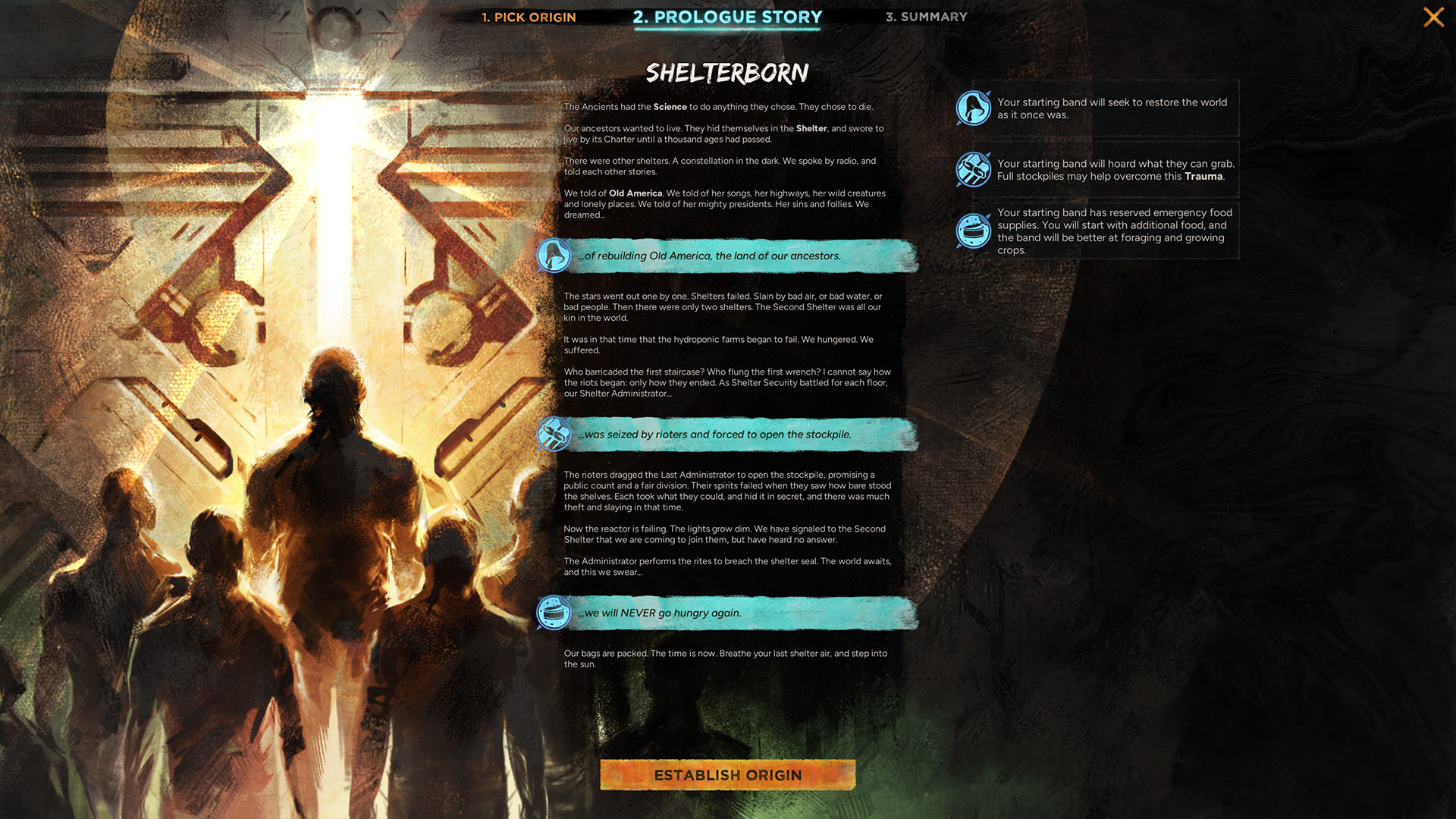
As you may have gathered from the announcement piece and the trailer, Afterworld is set in a post-apocalyptic North America. In the version made available to me, only one faction was made available, the Shelterborn. You start off by selecting your origin – three questions, each with three options. These define the start of your tribe, its abilities, and the issues holding it back. One I kept picking is that when they had been raided, the leader of the tribe allowed them to eat the dead. That history of cannibalism sticks with them until you can ensure a proper food supply in sufficient quantity.
This is a grand strategy game, but as with all Paradox titles, it has some unique twist to go with it. Afterworld takes the story-building you can find in Crusader Kings, but brings it even closer and more personal. Grand Strategy has always been about scale, and at times, the finer details can be lost. That’s where this seeks to be different: your decisions truly shape your direction, and it goes beyond even choosing a certain tech tree.
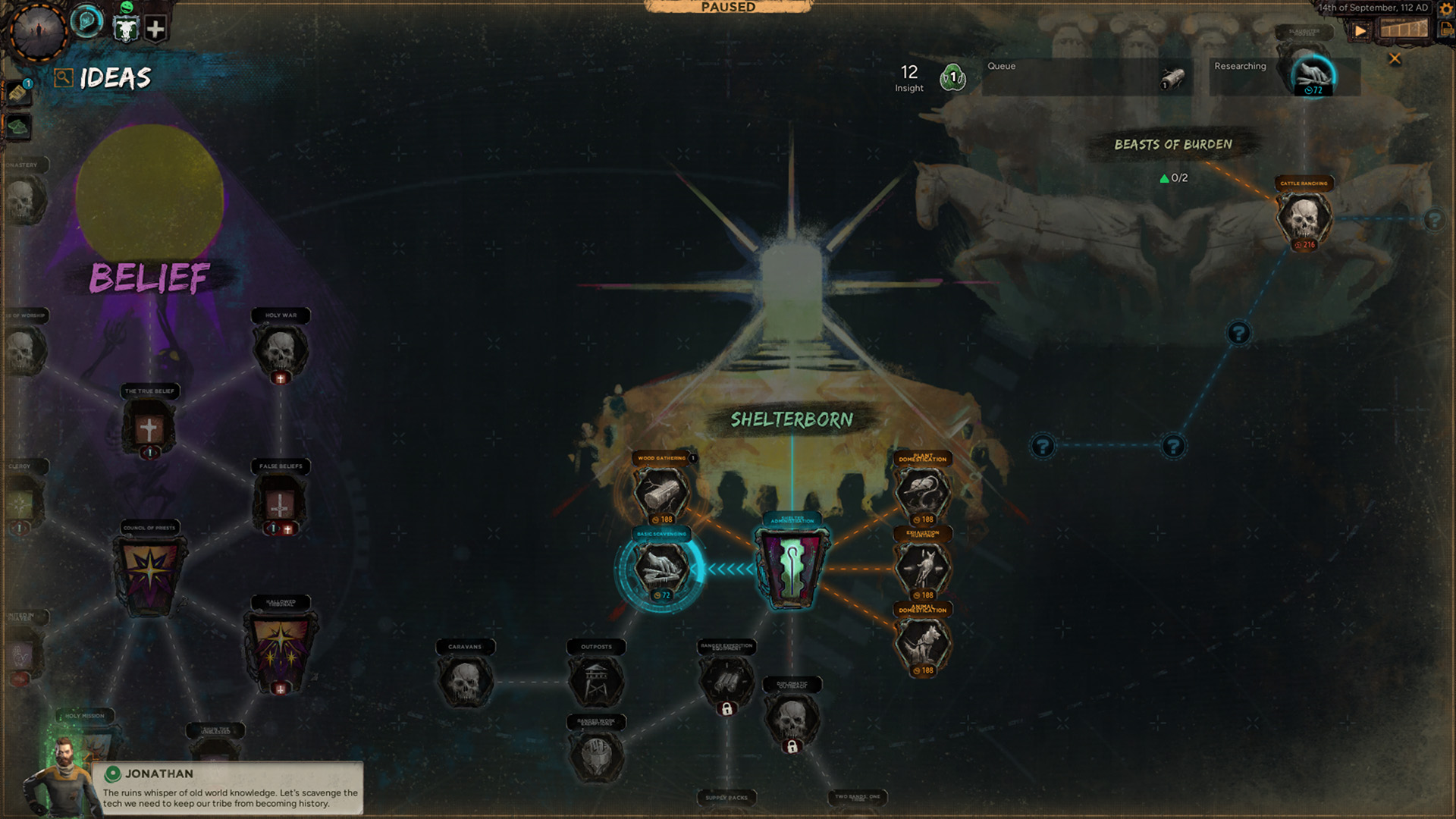
For example, should you decide to explore along the coast or river, this specifically unlocks the ability to research along the “coast” and “river” tech trees, but even that’s not enough, because the more you discover on your travails, the more insight you have into a particular area. Insight can be from uncovering features on the map, from the origins you have picked, to relics you have discovered on expeditions – the more insight you have, the quicker your research in a particular area will be.
Afterworld feels more directed as a result of this, and it is a conscious decision. Game director Dan Lind explained to those who visited Stockholm that this is to allow even game mechanics to be drip-fed to the player, a conscious decision to move away from the traditional Paradox and Grand Strategy issue of throwing everything at a player and just hoping they don’t get too overwhelmed that they do get through it.
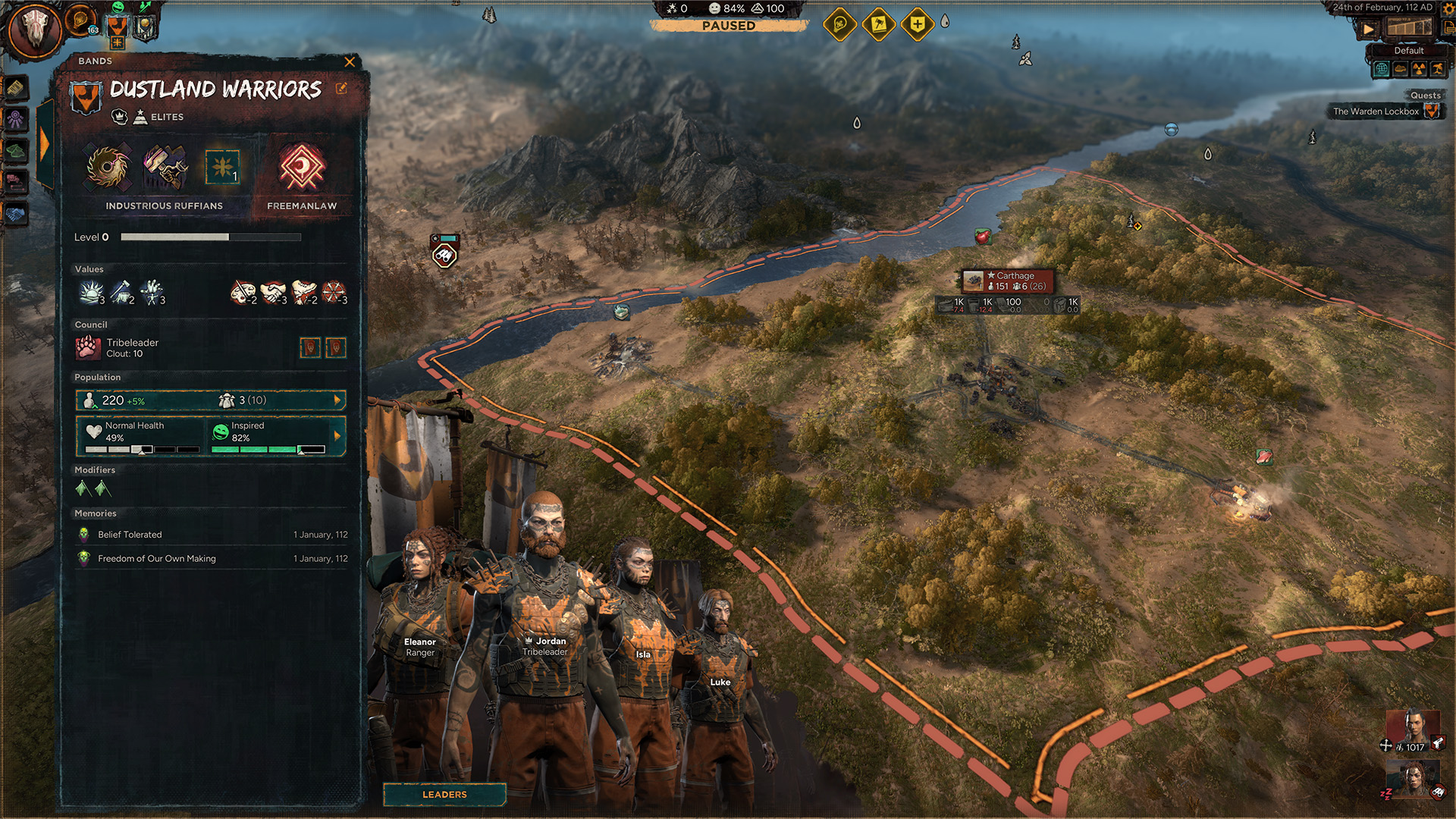
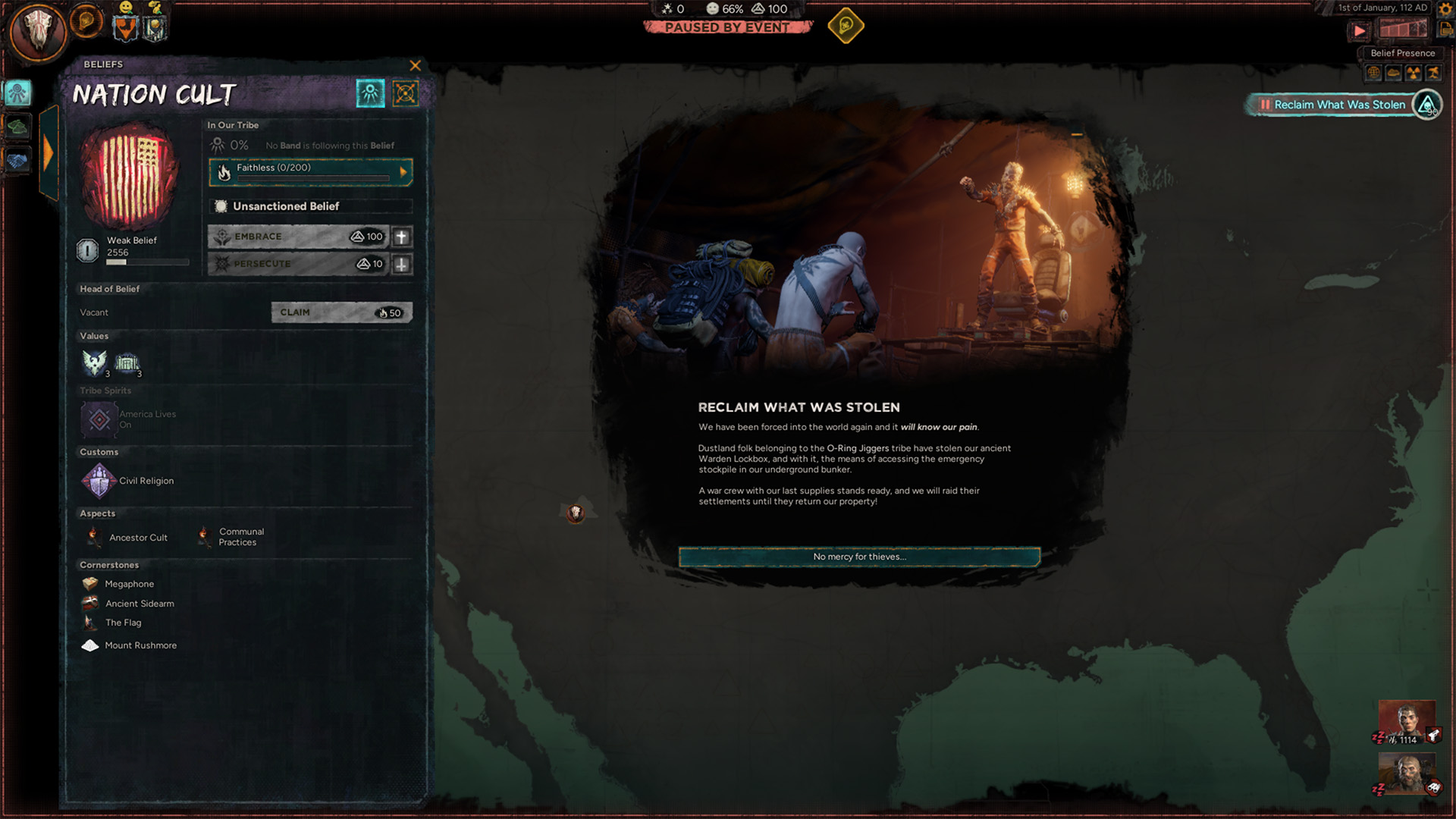
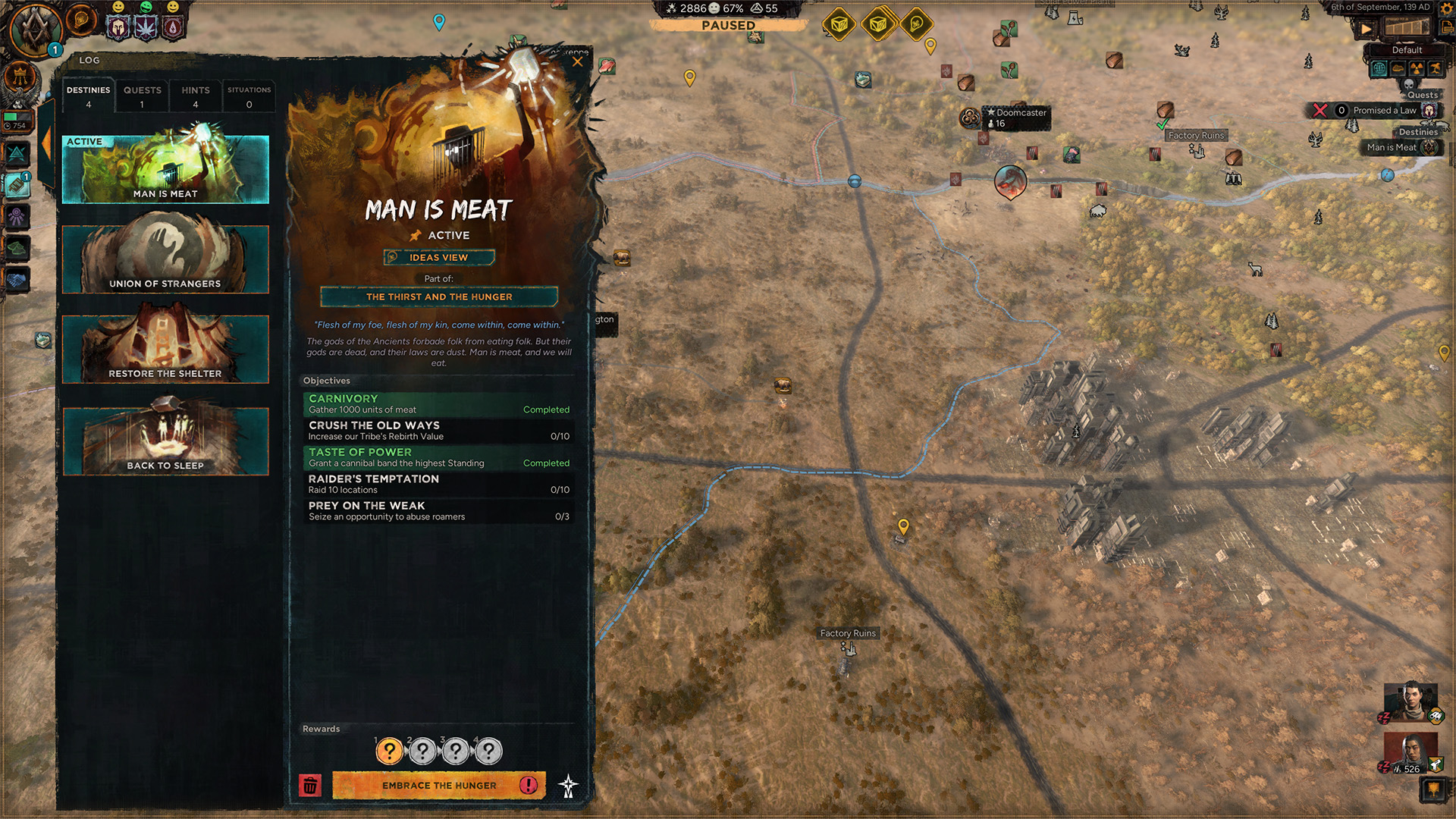
This method of directing based on what you uncover feels particularly organic to me and, even from the limited scope I’ve seen, offers a good amount of replay value. I should say that the version I was playing was limited to playing Shelterborn and always starting at the same part of the map. There will be an element of randomization in the game when starting; it’s always North America, for example, but in the roughly 100 years before the end of the world, it may be that a tribe that was nothing in one game became huge in another, and possibly a city you safely encountered in a game is an irradiated wasteland in your next one.
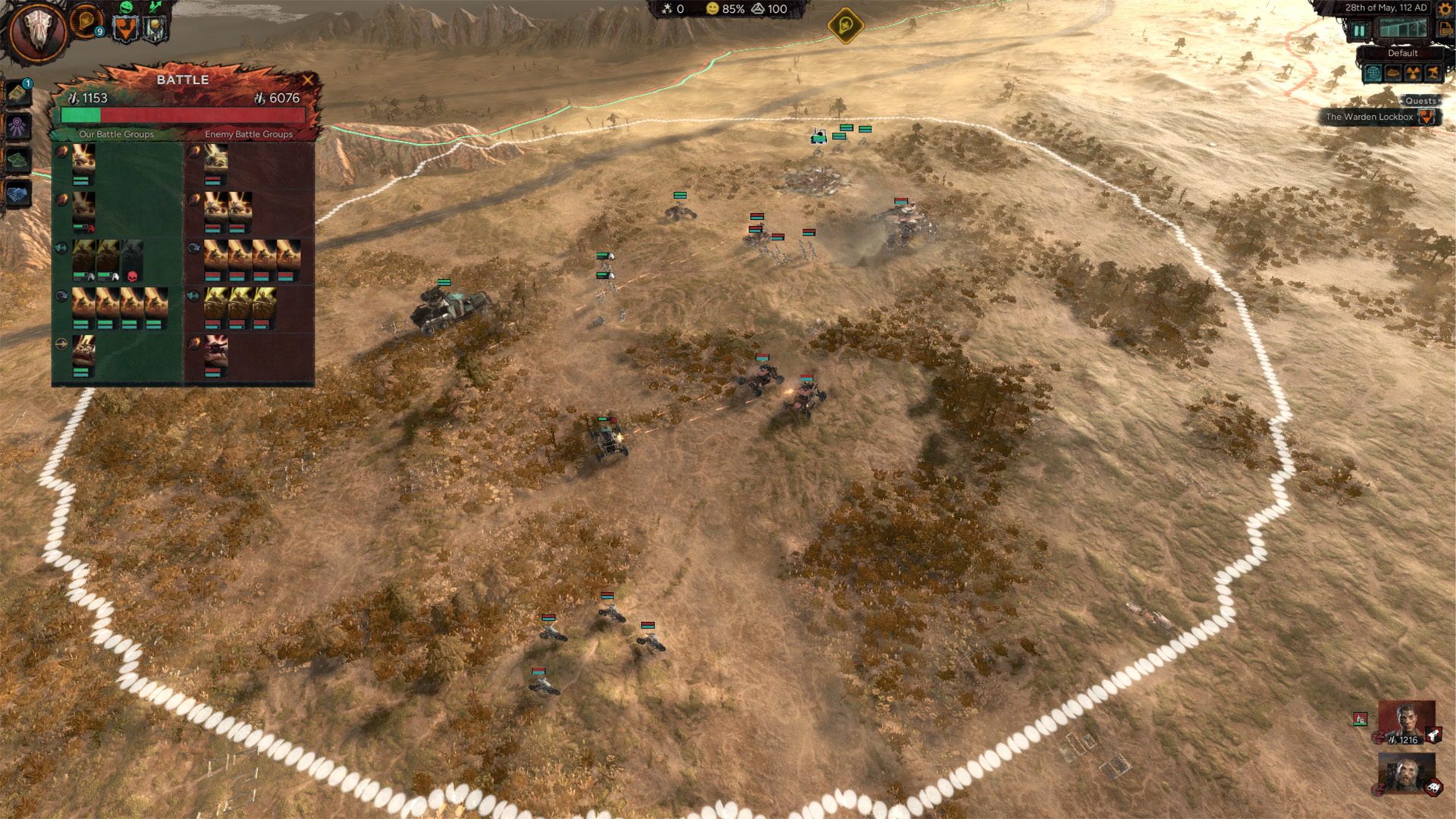
I can’t say for sure how this will play out because my experience so far has been limited. Moving north in the version I’ve been able to play, for example, enabled me to explore more down warfare as I found a buggy and some weaponry. I was able to start researching down that route, as well as research how to utilise the technology of the world.In a different game I’d played, my start ended up being slower, moving south and utilising the rivers and coasts for my food production, but also encountering more hostile tribes. I may have dabbled in slavery and cannibalism.
It’s where the ideas, or tech, element of Afterworld looks like it will come into its own and feel natural, to a degree. Why would a tribe that has barely seen a buggy be able to research, quickly, the ability to repair, adapt, and utilise these machines? On the other hand, what would a tribe stuck in the desert understand about fishing? It’s not an entirely new way of understanding this – exploration linked to tech has been done before, but this feels more story-driven, despite the story being the one of your own actions.
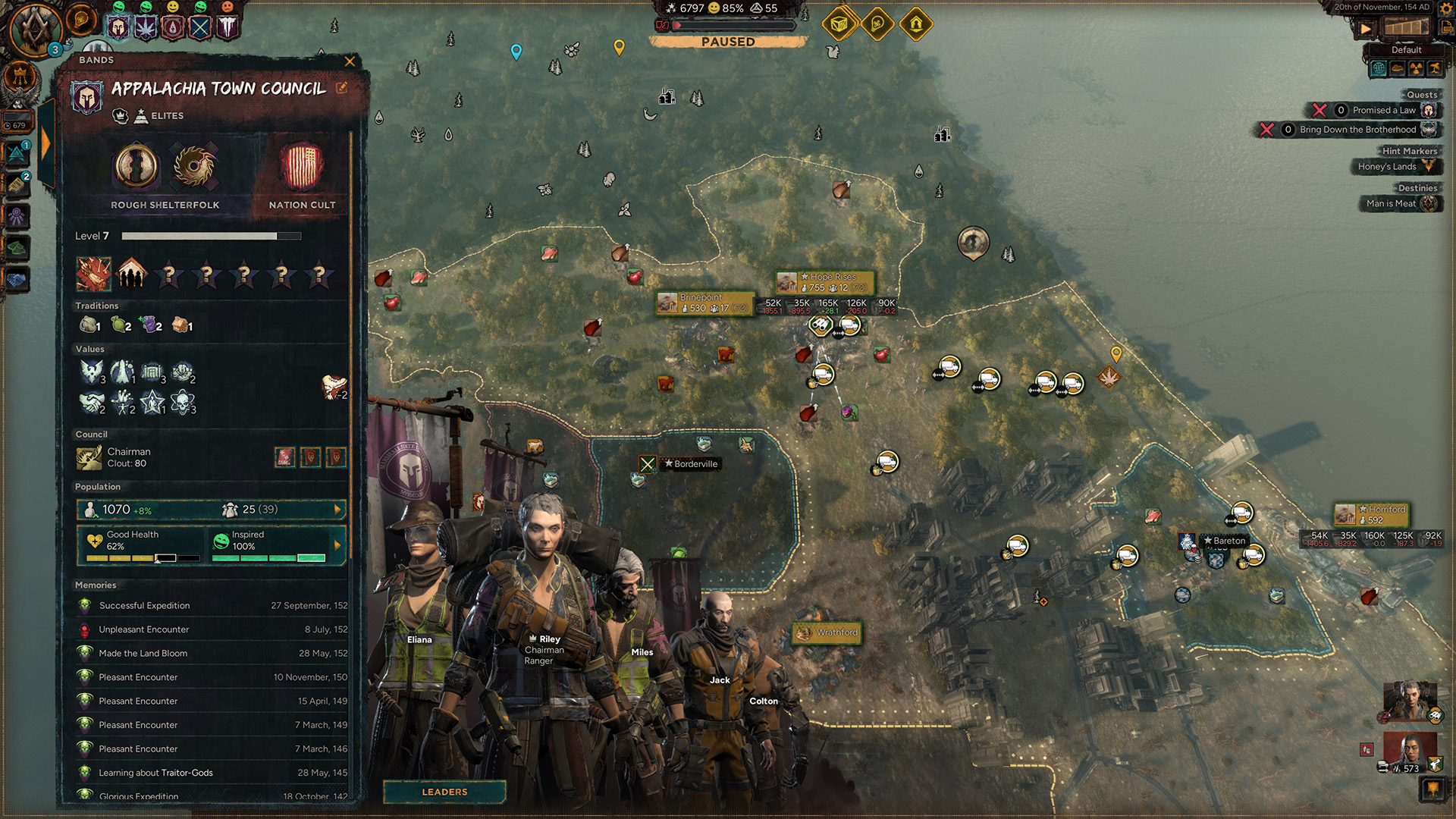
How this links to you, or more your collection of bands – because while you start as your band of Shelterborn (or different in the end project), you will need to let more in. Every band has their own beliefs, customs, ideals, and even traumas. One band may be religious nuts who look upon the ancients as gods, another may be obsessed with a warfare based society that enslaves all others, each of them will try to pull your entire society into a particular direction.
How, you may ask? Your decisions are limited in a way. While you can start as a more mobile tribe, you eventually have to settle down and create a community. When you let more tribes be a part of this, you’ll have a council and there is a class structure where some have voting rights on your council, others don’t. Think similar to that of Frostpunk, but here the tribes are ones you encounter and let into your society.
Depending on your style of society, more or fewer may have voting rights, you may hand control over section of your territory to a tribe which immediately gives them more power and can placate them, but they will naturally want to go along their line of thinking. You can nudge, to a degree, but it’s hard to move people away from a core belief.

I’ll stick with cannibalism. In one save, where I didn’t want to be a cannibal, I still let a tribe in that loved a bit of cannibalism, they were adamant that people made the best auderve. Voting to ban cannibalism passed due to the numbers and the fact that some tribes simply didn’t have voting rights. It pissed that group off. Enough that I had a riot on my hands, because that anger and the fact that society was moving entirely away from what they wanted wasn’t sufficiently countered.
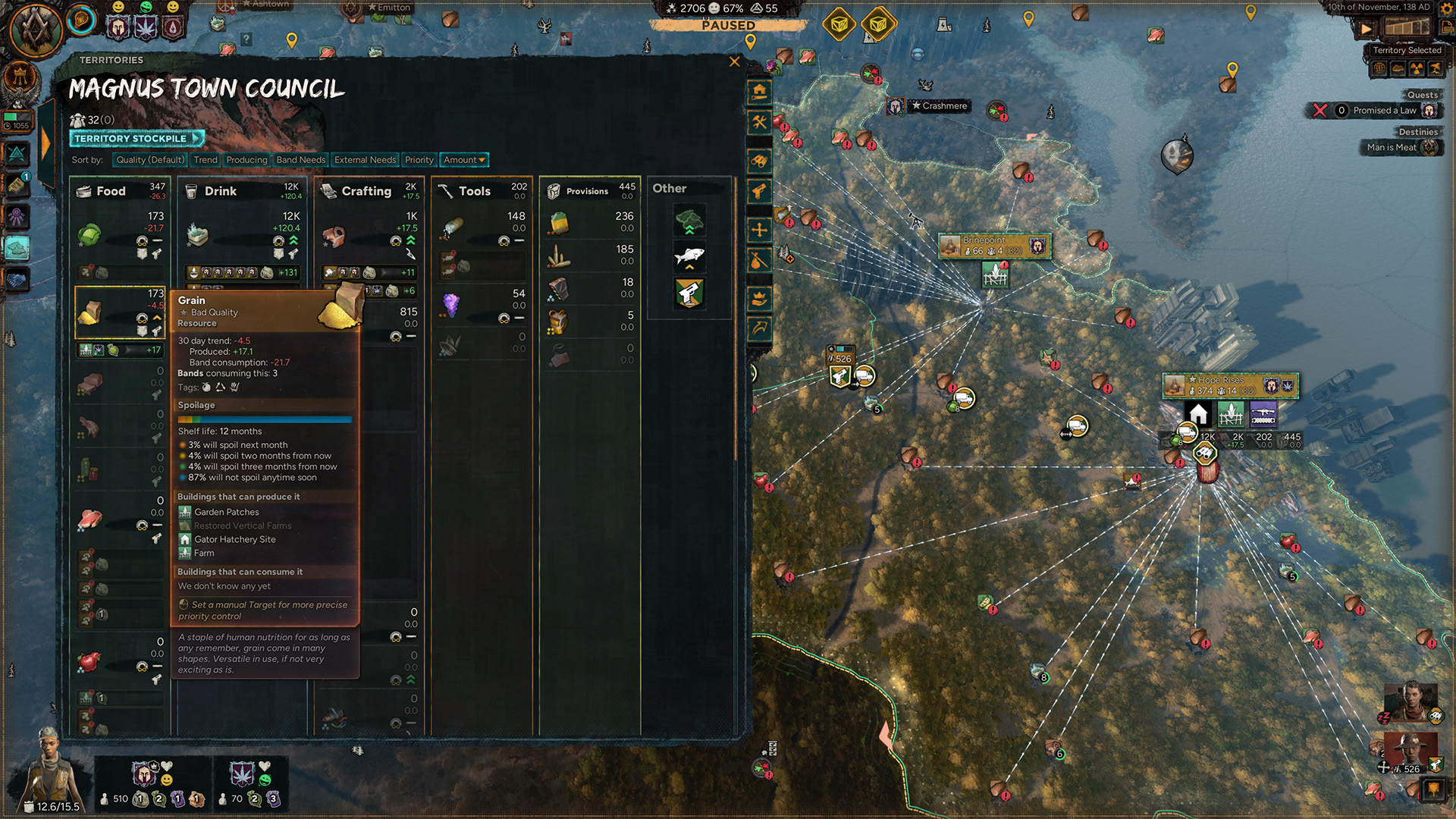
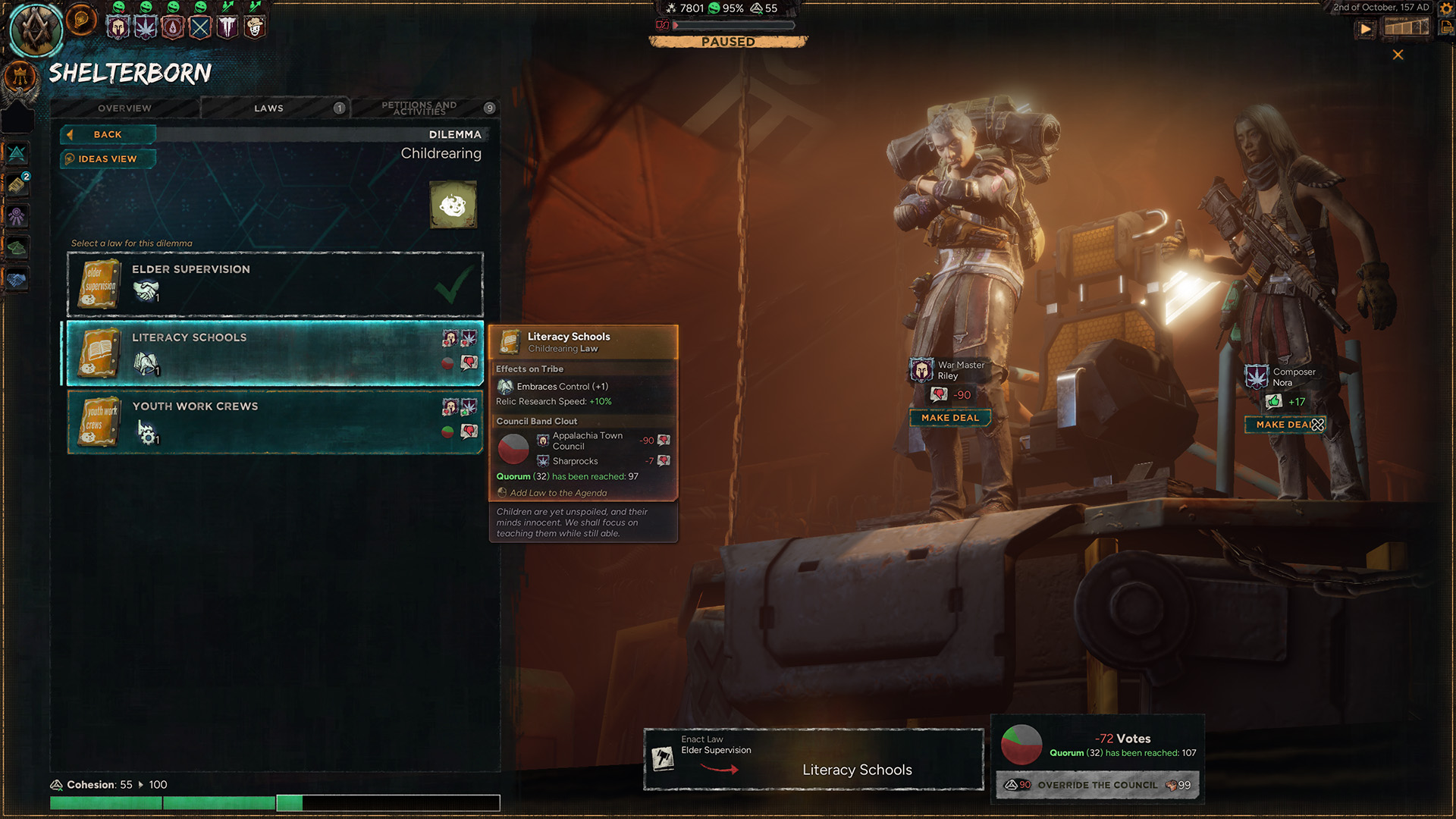
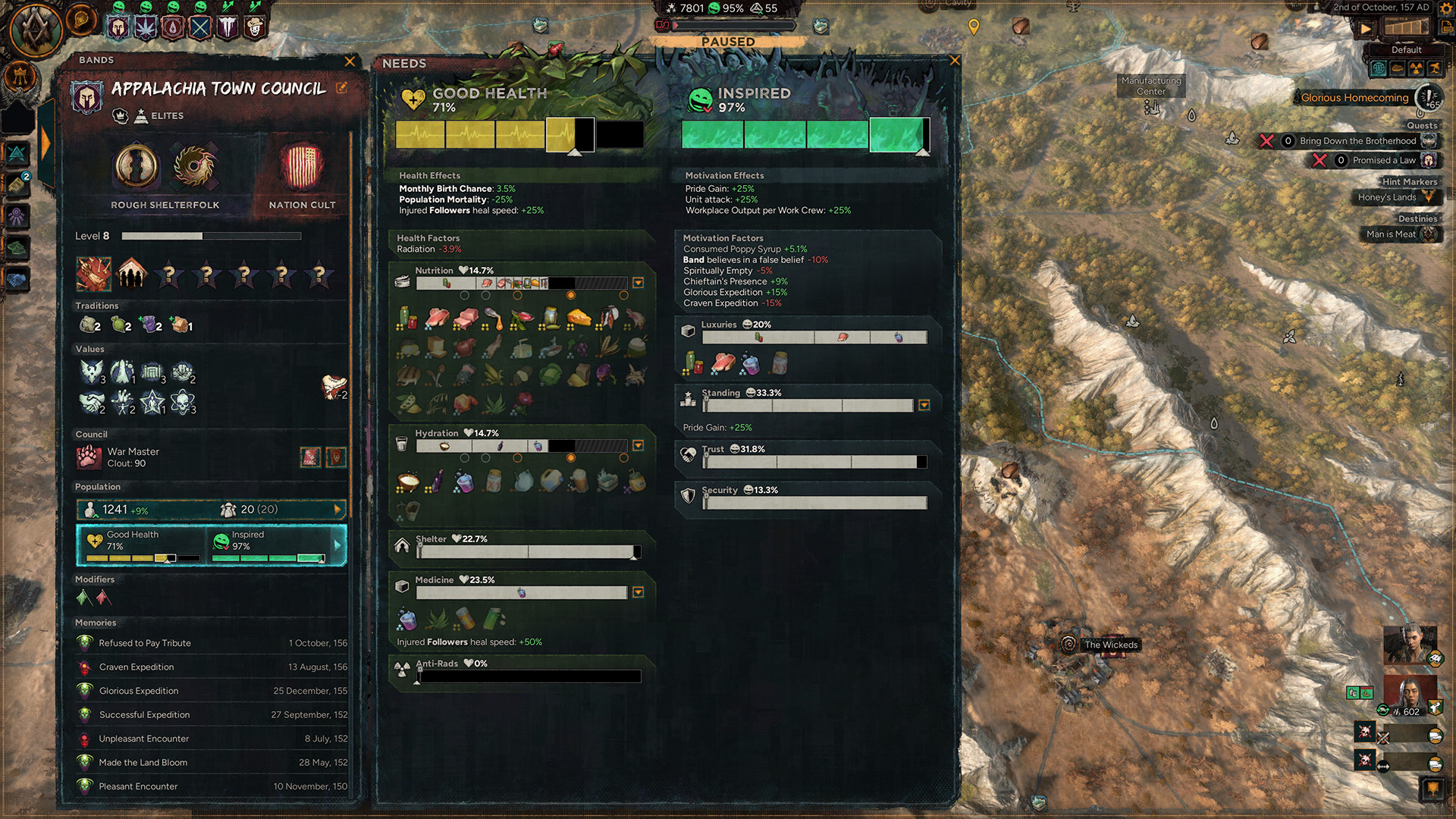
Every tribe in your society has a health and motivation (happiness) level. Part of this can be mollified by granting a tribe control over some territory, giving them more standing and power in your society. Another part is by simply giving them enough necessities – food and water – that being able to survive outweighs some of those urges.
One time, I was able to break the game – remember, this is an alpha – by becoming the grain and fish master of the world. Food and Water were quickly in such abundance due to my creation and expansion of a few settlements with specific buildings, and well-selected river-based tech tree decisions, that meant I was able to build specific structures by the river that kept my water supply in abundance, catch fish in abundance, and grow grain in abundance.
This abundance meant that while one tribe did want to partake in a bit of cannibalism, it wasn’t necessary. Another tribe that just enjoyed a bit of tribal nomadism – they liked to be on the move – were reasonably content to stay settled down in this new society. Other tribes were loving it. At least that was until the nearby Elder, Farouk, decided he was determined to have me, and I started getting attacked by some of the tribes in his wider society.
In another game, however, I decided to be a part of that society. By decided, I more meant that I didn’t want to be overwhelmed, so I was forced. I was rising through his ranks, and one area of research would allow me to stab him in the back, so I certainly wasn’t stuck with him. Again, it all boils down to the choice that Paradox looks to be giving you in Afterworld, a freeform game of survival in the… well… afterworld.
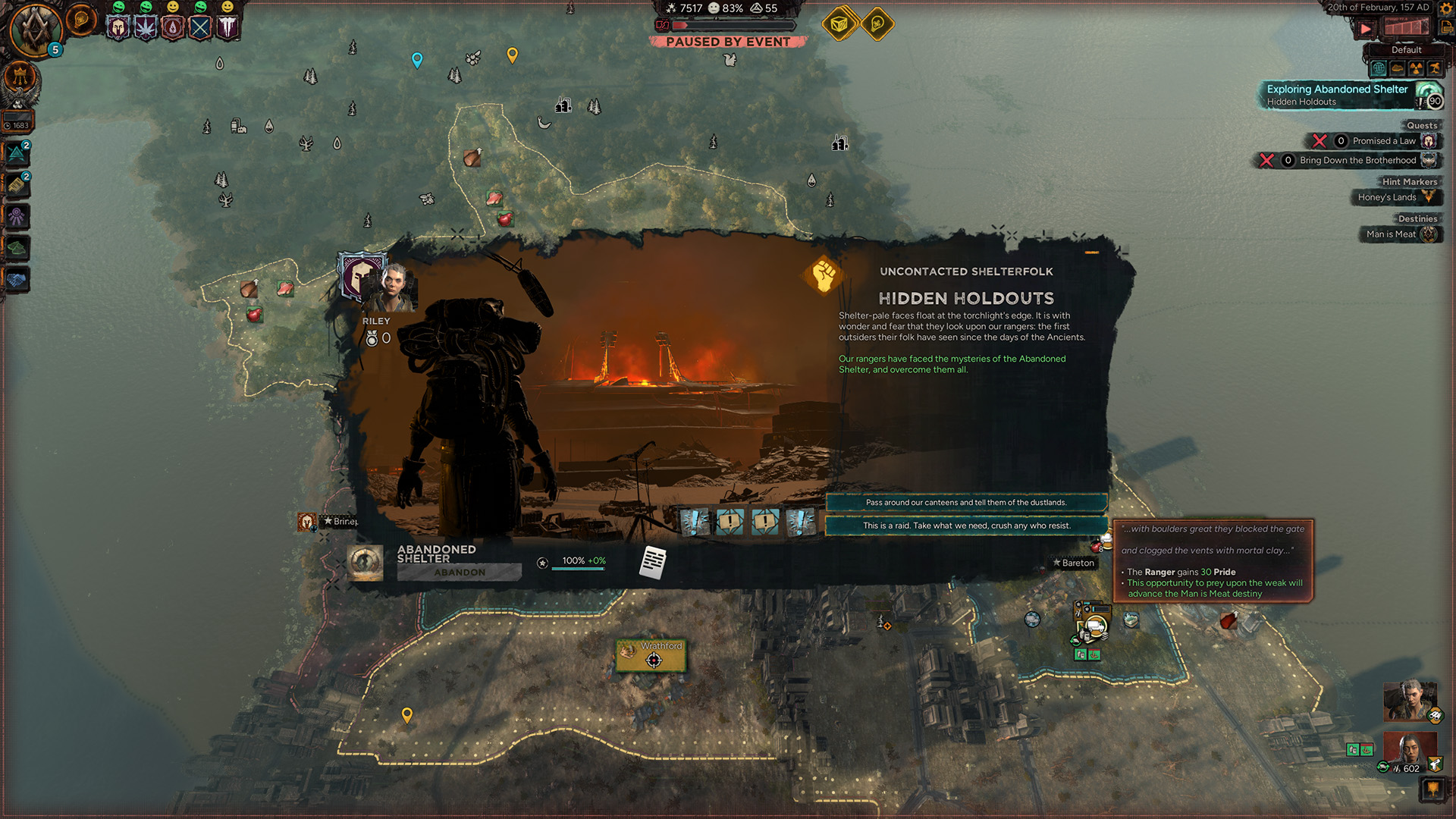
There are a lot of elements I’m not even covering in this preview. From actual warfare, how you build a band and equip it with the weapons you find or manufacture, set a formation, and then just point and go – you don’t have direct control of your units in combat, you have a leader for that – or even the weird and wild tech that you will find in the game, from nanobots and mechs, to railguns.
The fact is that this is incredibly early. The dev diaries have started, but I would predict another nine months, possibly a year, before we get a fleshed out picture of Afterworld and get new hands-on. The economy and balance is broken, there are art assets to be created, and even more to flesh out. Mechanics in themselves could even change before the end release as ideas come in from the very first time somebody outside the studio has had hands-on.
What I’ll finish on is that Afterworld is a Grand Strategy Game. It is a Paradox game. It is a little different, though, and while the end result of any playthrough will be a mountain of icons, mechanics, and more, the slower burn and story/exploration-based approach to encountering even mechanics seems interesting, with an interesting setting to possibly draw new people in.
About the author: Chris Wray has been writing at Wccftech gaming section since 2015 and is an opinionated bloke from the north of the UK (think Ned Stark). He enjoys video games, films, books, beer, whisky and other alcohol. He also supports Manchester Utd and for some reason he writes profile pages in the third person.
His expertise is in gaming and the games industry, primarily on the PC. In addition to this, he works with and contributes to the finance and tech sections.
Follow Wccftech on Google to get more of our news coverage in your feeds.
