


The metaverse, a vast digital world where people would work, socialize and play, was once the bandwagon everybody wanted to hop onto.
Billions of dollars later, much of that vision lies abandoned.
But the dream still lives in one corner of K-pop — stripped down to nascent virtual reality (VR) experiences searching for footing.
Related Article
-
Metaverse hype fizzles out as Korean tech giants pull plug
-
Le Sserafim’s first virtual concert to be shown exclusively at Lotte Cinema World Tower
-
TXT sells virtually all tickets for its VR concert film
“These days, in Korea, using the word ‘metaverse’ gives off the impression that ‘this company might sink,’” Jay Kim, the CEO of SM Entertainment’s technology subsidiary Studio Realive, told the Korea JoongAng Daily on the sidelines of the MU:CON conference held in western Seoul on Thursday.
Studio Realive was founded at the height of the metaverse hype, which peaked in 2021 and 2022 amid the height of the Covid-19 pandemic. One defining moment came in October 2021, when Facebook rebranded itself as Meta.
Then the boom began to fizzle out in 2023.
During that period, Korean companies rushed to launch their own iterations of the metaverse. Many, including Naver’s Zepeto and SK Telecom’s now-defunct ifland, focused on building avatar-based online communities rather than immersive VR content powered by wearable devices, which were mostly too bulky and expensive to be widely accessible.

Tech firms hoping to capitalize on the boom through online spaces, therefore, naturally eyed K-pop fandoms, known for their tight-knit, active online communities. Many firms attempted to attract those fans to nascent metaverse platforms, while K-pop companies also joined the rush through investments in tech firms and collaborations with platforms.
But those efforts were clearly not enough to turn the tide, as SK Telecom shut down ifland in March last year, and skepticism toward the buzzword continues to prevail worldwide.

“The failure of the metaverse in Korea was inevitable,” KAIST engineering Prof. Woo Woon-taek wrote in a 2023 report published by the Institute for Information and Communications Technology Planning and Evaluation.
Woo attributed that failure to a narrow focus on building virtual spaces.
“A virtual space in the metaverse takes on meaning only when it serves as a medium that brings people together to create new experiences and value, ultimately building a world together,” he wrote. “But the naïve idea that a virtual space would automatically lead to the creation of a world fell short, resulting in repeated failures that produced ‘dead virtual spaces.’”
Studio Realive’s Kim echoed the verdict.

“I think the initial approach [during the metaverse boom] was very much technology-driven,” Kim said.
“Technology companies could demonstrate that they could create three-dimensional, real-time spaces on computers, but they failed to show how those spaces offered a different experience,” he said, adding that there had been eager providers but no players or consumers on the platforms.
Yet the company still calls the metaverse the ultimate destination of its vision for fandom communities: a space where fans can interact in real time without physical boundaries. At a text-based level, such communities already exist and thrive on social media platforms, which can be considered the broadest form of the metaverse.
Kim, however, envisions an expanded metaverse space where fans feel as though they genuinely inhabit it and have lived experiences there, potentially through VR technology.
That is why he sees the “physical metaverse” as a gateway to a genuine metaverse community, allowing users to have firsthand experience of the convergence of virtual and physical worlds through interactive augmented reality or VR content.
Another company considered a front-runner in the K-pop industry’s embrace of the metaverse is Los Angeles-based AmazeVR, which produces VR concert content that can be viewed at theaters or even at home with VR headsets.
The company has worked with pop stars such as Megan Thee Stallion and also works closely with HYBE, launching VR concerts of Le Sserafim, Enhypen, Tomorrow X Together and more.
While the company was often categorized as a metaverse company in the early 2020s, AmazeVR co-founder and CEO Steve Lee says the word “metaverse” was never anything more than a buzzword.
“I don’t think the term ever had any solid meaning,” Lee said. “The core idea of VR is being inside a completely different space and having a new experience. Folding that into the discourse surrounding an appealing term like ‘metaverse’ was never particularly meaningful in the first place.”
Lee stressed that AmazeVR’s specialty, VR concerts, leans toward the music industry, given how technology boils down to what problem or agenda it tackles.
“We’re running a music concert business,” Lee said. “While attending a live concert is amazing, it often means watching the spectacle unfold on giant screens. It is rare to see the performance up close, and that is the problem we are solving.”
Despite the metaverse boom fizzling out, tech companies continue to roll out wearable devices for VR experiences, including Apple’s Vision Pro and the Meta Quest.
Advances in and wider adoption of such devices will ultimately reshape how people experience the internet, Lee said. Once VR devices become affordable enough for the broader public, he added, they will begin expanding into a massive ecosystem, much as the iPhone spread exponentially after upgrades.
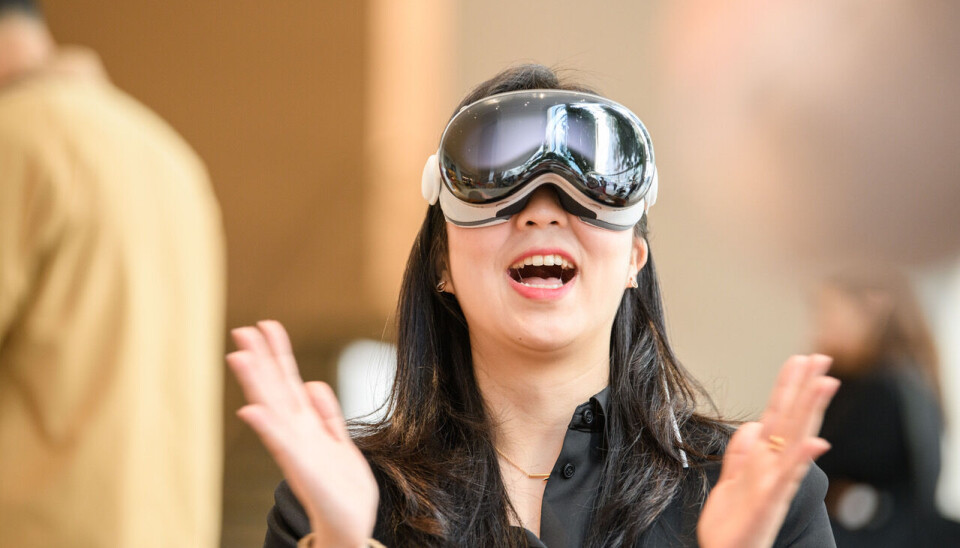
Kim likewise said that technological advances in smart glasses and dome screens would facilitate creating a “physical metaverse” in which people could physically experience augmented reality.
“That is part of what I describe as a portal to the metaverse,” he said.
Noting that extended reality (XR) technology already exists, Kim stressed that what makes or breaks an innovation is how its individual components are connected to create an experience.
“It’s like the iPhone — the technologies and devices were already there, but they had to be connected to create innovation,” he said. “XR technology may advance, but the core premise does not change. What we are doing is identifying the connection that works.”
