

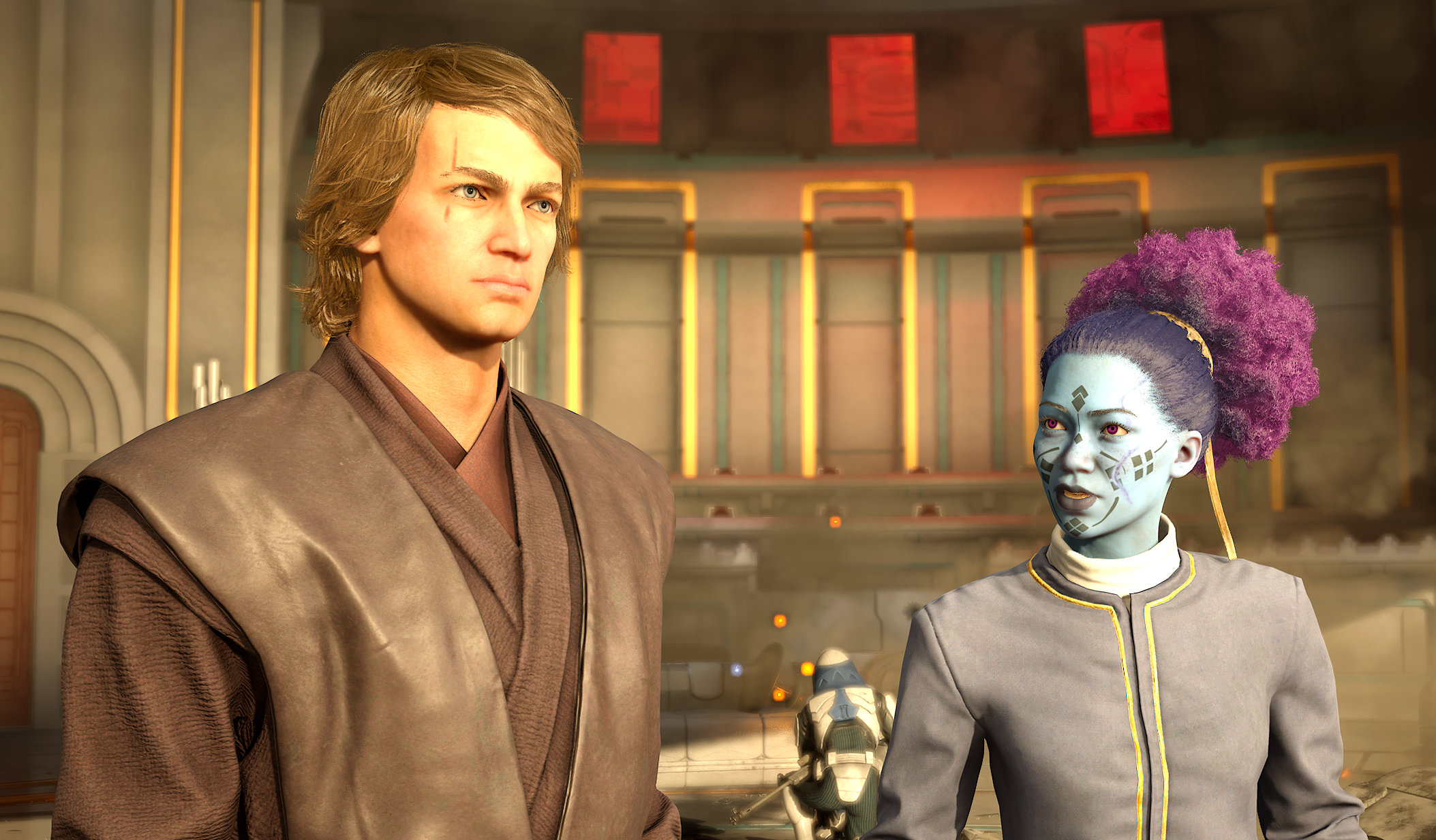
Greg Foertsch loves turn-based strategy games. He loves them so much that he wants them to be completely different. Instead of the dull-looking map painting and dice rolls of your dad’s old faves, he wants epic production values: the kind of absolute cinema that big-budget adventure and roleplaying games typically revel in.
Foertsch left strategy game developer Firaxis after serving as art director for the much-loved XCOM games and the sadly overlooked Marvel’s Midnight Suns. He set up a new company, Bit Reactor, when he got the call from industry legend Vince Zampella, then CEO of Respawn, to bring his vision to the Star Wars universe. It didn’t take him long to say yes.
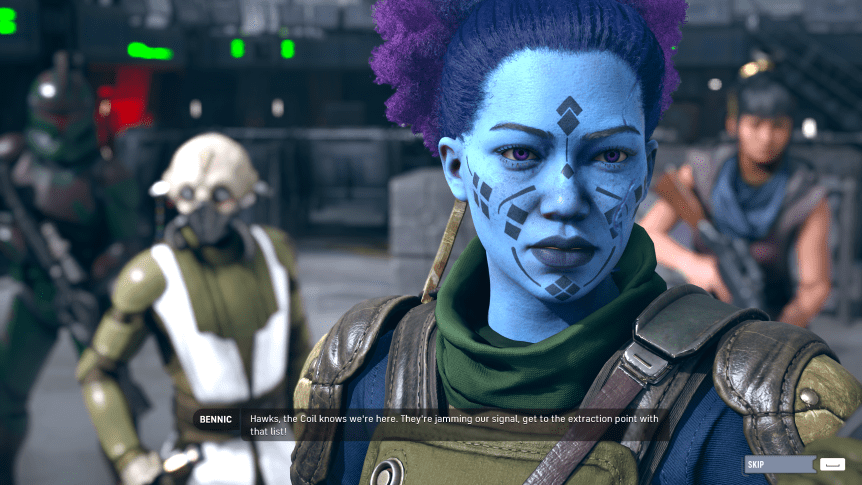
The result is Star Wars: Zero Company, a turn-based strategy game with every ounce of polish and atmosphere that you’d expect from a more popular genre. It has character creation tools that would do credit to a big RPG. It has an epic orchestral score. It has writing and voice acting of a quality that would grace an animated series — in fact, many of the voice actors featured on Zero Company worked on The Clone Wars TV show. And it has a story that starts off with seemingly low stakes but becomes something very grand indeed.
You play Hawks, a somewhat disgraced former Republic officer recruited by an intelligence service to investigate a strange cult, the Infinite Coil. Hawks can be whatever you want — there are six playable species, with only cosmetic differences, so you don’t feel you have to choose the optimal one. The range of hairstyles, tattoos, scars and outfits is wonderfully deep and RPG fans will, I’m sure, spend happy hours customizing their Hawks — and all the other characters.
Hawks is the leader of Zero Company, your standard-issue group of ne’er-do-wells and rogues, dreamers and cynics. Secret agent Jae is trying to prove her worth to her noble family. Clone trooper Trick is searching for his lost brothers and marks for his card game. Astromech BR-1 is all about the beep boop beep. Former prize fighter Kabb Uppercut just wants to listen to some (space) opera.
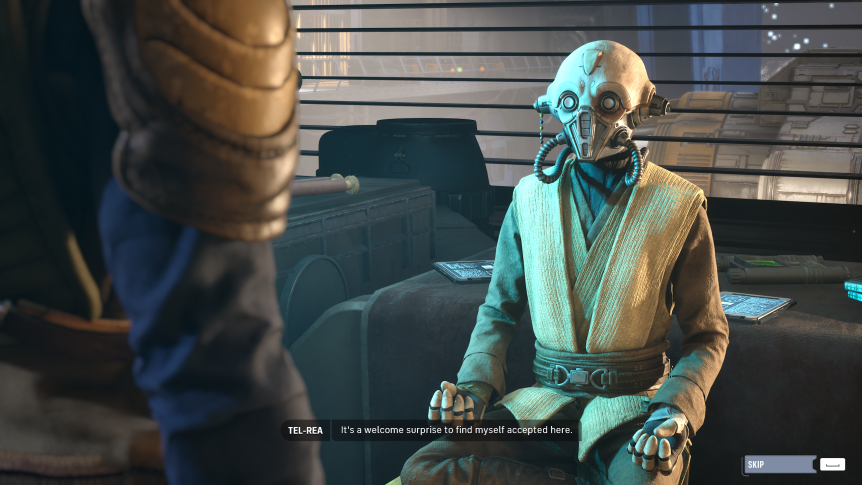
They’re joined along the way by a Jedi and a Mandalorian, and whoever else you want to recruit as random drifters to bring on your crew. There are eight classes — rogue, sniper, assault, medic, etc. — and after a certain point, characters can multiclass. Recruits come with a preset class, but it’s all customizable. Some of the story characters, like the Jedi, have special abilities that are more restricted, but it all adds to the wondrous variety.
You take four characters on each mission, and each has three action points per turn. Like in XCOM and similar games, you see them from an isometric perspective. Each action point lets them move a certain distance, fire a shot, throw a grenade or use a power such as Kabb’s eponymous Uppercut. When you shoot, you see a percentage chance to hit, and XCOM veterans will know in their bones that 95% chances somehow always miss. That’s ZCOM, baby! If a character loses all their energy, they’re downed and must be revived, but will sustain a wound. Three wounds and they’re dead.
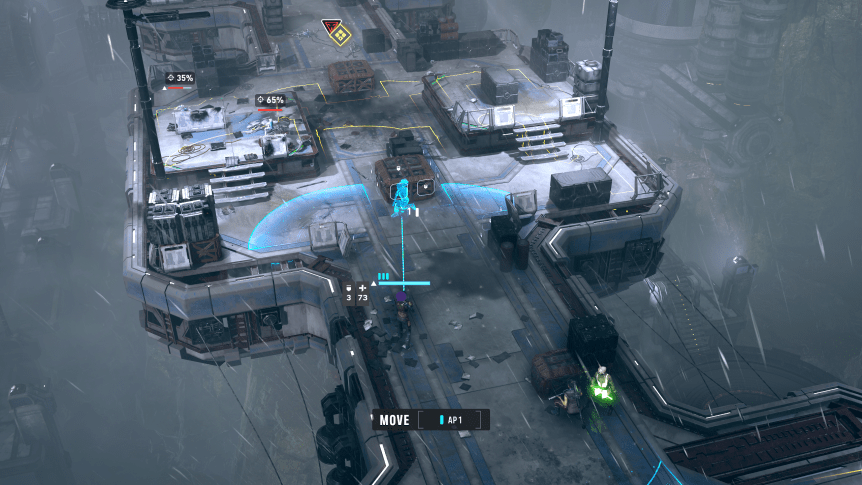
All of the characters, even the main story ones, can die, and the game will continue without them. But if Hawks dies, it’s game over, and you have to reload the mission — although there is an ironman-like Beskar mode where that isn’t an option (so if your Hawks dies, that campaign is over). I played most of the story on Normal, and there were times when my medbay became rather crowded with squadmates injured during missions. When I tried the campaign on Hard, I got stuck at a story mission where I just didn’t have enough firepower and got my whole squad killed multiple times.
Between missions with the misfit crew of Zero Company
Zero Company hangs out in an abandoned cargo ship called The Den, docked in the asteroid station known as the Ring of Kafrene. There you can chat to your pals, buy new equipment, heal wounded characters and invest credits in adding facilities to give your team a range of new abilities — the downtime activities that put the roleplaying in RPG. If you’re not interested in any of that, you can just click through to each menu you need from The Den’s map.
Hawks and co. do a fair amount of skulduggery outside of combat, too. You spend one currency, Intelligence, to do off-screen Operations that lead to new missions or just give you credits or equipment. It’s a fun mechanic similar to XCOM 2 and Midnight Suns that can give rarely used squad members something to do. I found I typically had A and B teams, with the B team doing a lot of the Operations.
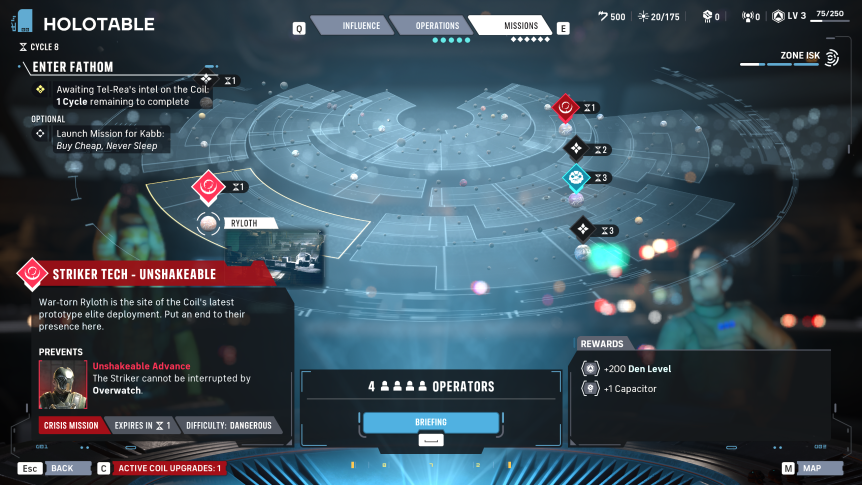
The makeup of the squads you take on missions really matters, and not just because you want a good balance of abilities. Characters working together — healing, rescuing or assisting shots — increase their relationship metric, called Bond, which unlocks small but meaningful bonuses that really add up over time. Characters increase their skills with Focus, earned on missions, but Bond is like a secondary kind of experience points that gives a choice of three upgrades each time it levels up. And because Bond levels up fast at the beginning, you really want to take rookies out with you to help level up Hawks alongside your main guys.
How to win in Zero Company: Pumping out game-changing Advantage moves
The pace of missions starts off quite slow, and I worried in my preview that the game wouldn’t provide enough real tactical depth for XCOM diehards. I really hope those veterans stick with it, because once Zero Company hits its stride, there’s so much to enjoy. Expand your squad a bit, and there are so many cool abilities and combinations of characters that time flies. I found myself “just one more mission”-ing way past midnight on more than a few occasions.
The key to succeeding in combat is mastering the game’s Advantage system. On top of regular action points for basic stuff such as moving and shooting, your characters can spend Advantage to perform special moves such as firing a bazooka, using the Force or flying across the map.
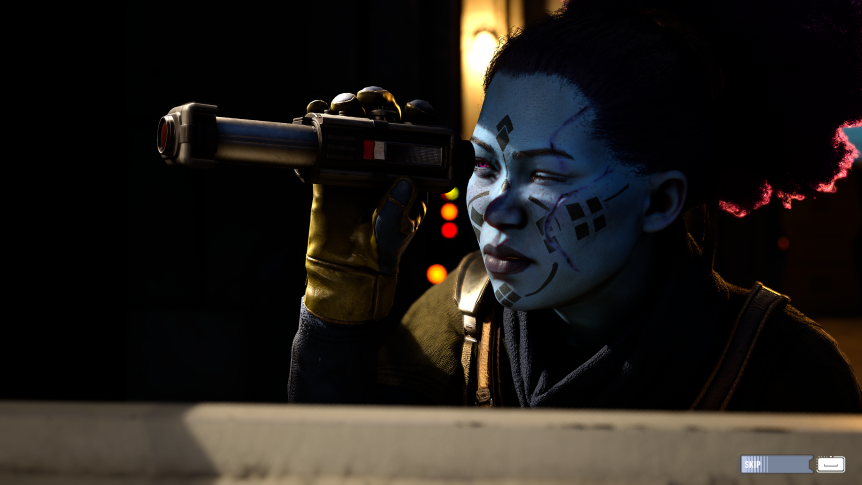
Once you unlock more characters, and get more ways of generating Advantage as well as spending it, each fight becomes a really fun evolving puzzle of how to best spend your action points so you can earn Advantage and do some real damage. Cly Kullervo, the Mandalorian, has such an effective shock ability that she’s a genuine game changer.
Long term, I think there’s a lot of replay value here. I definitely want to play through as a male Hawks to see and hear that performance. And I want another crack at Hard now that I get the Advantage system and know what to look out for. Bit Reactor has said it won’t officially support mods made by the community (likely for licensing reasons) but I suspect mod-makers will find a big enough audience to make it worth their time.
For what it’s worth ahead of the game’s release, I played on a pretty beefy desktop PC on ultra settings, and there were a few animation glitches and one crash where I had to reload. Bit Reactor promises a Day Zero patch to improve stability. The game is also available on Xbox Series consoles and PlayStation 5, and launches on Aug. 27.
I don’t think my hugely positive experience will be by any means an outlier. The previews published earlier this month (including mine) were largely positive and there seems to be a decent amount of buzz about it on Reddit and social media. I think it’ll build up a strong word of mouth because it’ll appeal to all kinds of players, not just tactics nerds. If you love the Clone Wars era of Star Wars, it has so many deep cuts; and if you like CRPGs such as Baldur’s Gate 3, you should definitely check it out. Greg Foertsch wanted to get more players hooked on turn-based strategy games, and I think he’s gone the right way about it.
