

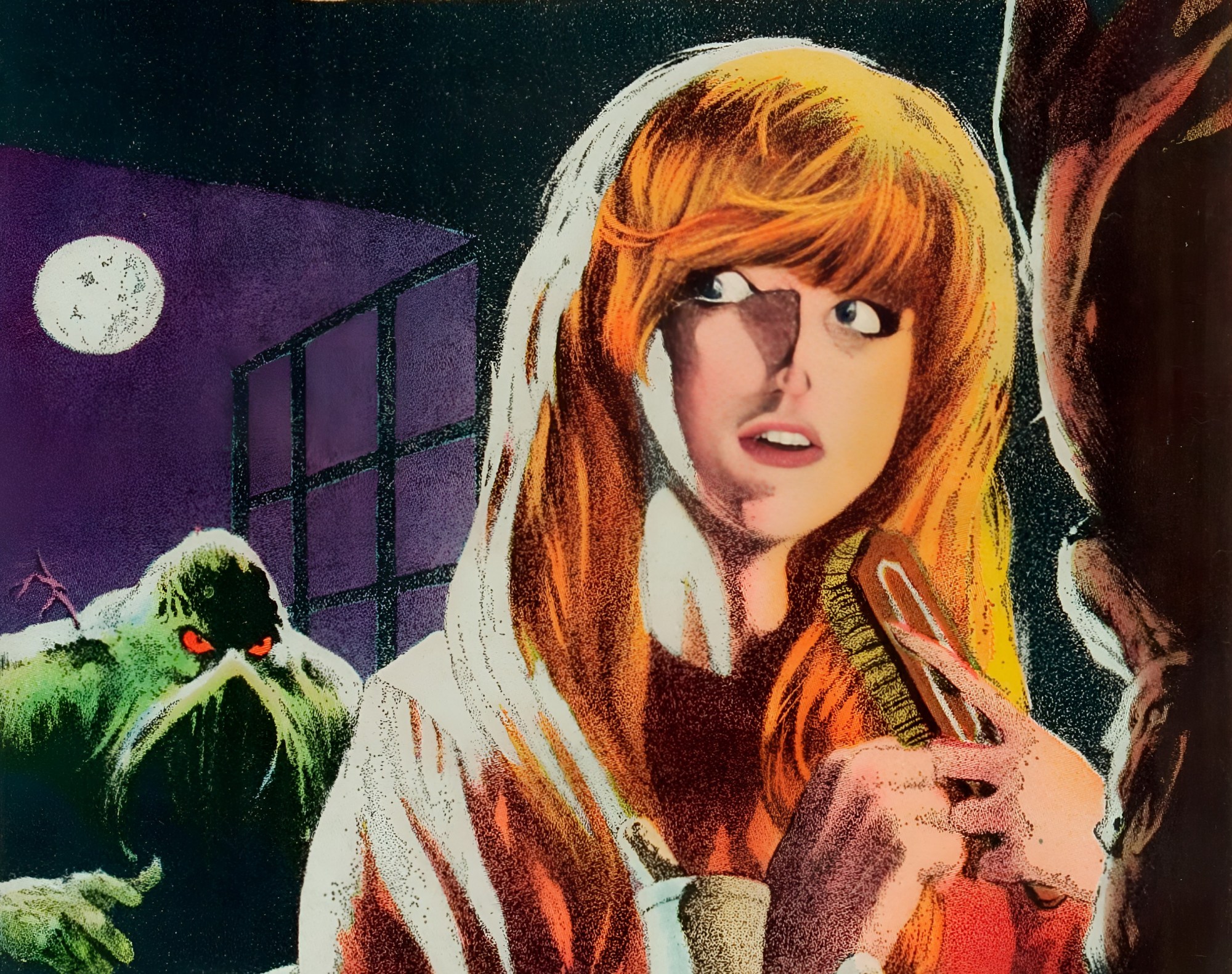
Before the Flash, Green Lantern, or even Wonder Woman graced the silver screen, this cult classic DC Comics hero had them beat by decades. Though far from DC’s only horror-tinged hero, Swamp Thing emerged from unlikely origins to become the best-loved of DC’s supernatural characters, spawning two movies and two separate television series. On the page, the character’s complex lore and tragic backstory have brought out the best in some of the comic book medium’s best talent. Both Len Wein’s 1972 Swamp Thingand Alan Moore’s 1984 Saga of the Swamp Thing issues are upheld as some of the best DC ever published. It’s no wonder then that House of Secrets#92, the comic that introduced the character’s concept, look, and name is a holy-grail issue for DC fans, one of the single most prized comics published in the last six decades.
Videos by ComicBook.com
As of writing, House of Secrets#92 is not only the most valuable DC Comic of the bronze age (1970-1983), but the fifth most valuable comic published during that span. A CGC (Certified Guarantee Company)-graded 9.8 near-mint copy sold for a staggering $90k figure, higher than the record price for a copy of Giant-Size X-Men#1 or Amazing Spider-Man#129 in the same condition. The value of House of Secrets#92 is driven by its scarcity, with the CGC population report estimating only around four thousand graded copies in existence — if that sounds like a lot, keep in mind that the CGC estimates there are north of fifteen thousand copies of Giant-Size X-Men#1. That makes a high-grade copy like this one on auction at Goldin next month a coveted rarity for collectors, as the already four hundred dollar bidding price can attest. However, most Swamp Thing fans can tell you that House of Secrets#92 comes with an interesting caveat: while it’s the first appearance of aSwamp Thing, it isn’t really the first of appearance of theSwamp Thing.
Why House of Secrets#92 Is Only Technically Swamp Thing’s First Appearance
Everything about the comic book industry changed in the mid-fifties. In 1954, a long-simmering moral panic over violent horror and crime comics exploded into a literal federal case, leading to the adoption of a self-created censorship board by publishers. This “Comics Code Authority” imposed harsh strictures regulating content and messaging, targeted especially at horror comics with rules like “Scenes dealing with … walking dead, torture, vampires and vampirism, ghouls, cannibalism, and werewolfism [sic] are prohibited” and a ban on “lurid, unsavory, gruesome illustrations.” This sounded like a death-knell for publishers like EC, who were forced to cancel their full range of infamous, gruesome horror titles like Tales from the Cryptand The Vault of Horror. For others, like DC and a small publisher called Atlas Comics, it meant a gradual pivot back to the super-hero character of the forties, beginning with a revival of DC’s the Flash in 1956.
As the super-hero boom continued into the sixties, DC and Marvel tested the waters of Comics Code censorship with supernaturally-tinged heroes like Deadman and Doctor Strange. In 1968, Deadman co-creator and DC Comics editorial director Carmine Infantino hired friend and former EC Comics creator Joe Orlando to serve as editor on sixteen DC titles, including former horror anthologies House of Mysteryand House of Secrets. Orlando decided to revert these titles to their original horror format, skirting the Comics Code by referring to them as “supernatural mysteries.” Both were anthology titles, with the only running character being the brothers Cain and Abel, “hosts” who introduced each story. Joined by titles like The Witching Hourand The Unexpected, these titles were anthologies in the tradition of the late EC horror comics of the previous decade, for spine-chilling, hyper-stylized ghost stories and murder mysteries.
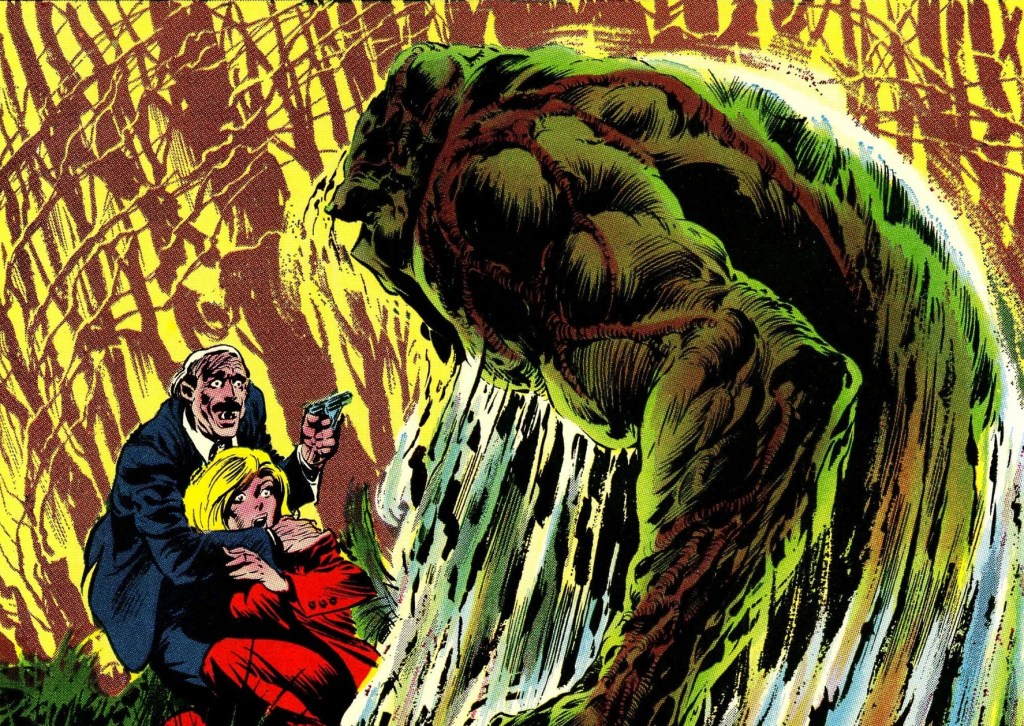
Len Wein and Bernie Wrightson’s story “Swamp Thing” for House of Secrets#92 didn’t look to be any different. It followed turn of the century scientist Alex Olsen, tragically killed when his laboratory is engulfed in a violent explosion. His assistant and best friend, Damien Ridge, marries his widow, Linda. Slowly, Wein and Wrightson reveal two gruesome truths: the first was that Damien conspired to steal Linda from Alex for years, and caused the explosion to rid himself of his friend and rival; the second was that though Alex Olsen was killed, his body and mind survived, becoming a “Swamp Thing,” wandering the marshes, tortured by half-formed memories of his former life. As months pass, Damien is overcome with the creeping dread that Linda suspects him of Alex’s murder, and decides she must die too. On the night that he moves to put this plan into action, the Swamp Thing breaks into their home, killing Damien and saving Linda before vanishing back into the mire.
The above synopsis will sound pretty familiar to any Swamp Thing reader, even if they’ve never read the issue itself. Wein and Wrightson updated it for 1972’s Swamp Thing#1, electing to change the setting to the present day and alter a few key details. Alex Olsen became Alec Holland, working to combat world food hunger with a “bio-restorative formula” capable of making plants flourish in virtually any environment. After refusing to give over the formula to criminal Nathan Ellery and the business interests he’s been hired to represent, Holland’s lab is sabotaged in a violent explosion. Holland’s body is flung into the swamp, reacting with the bio-restorative formula to resurrect him as the plant-creature Swamp Thing. This origin may also sound naggingly familiar to Marvel Comics readers, as it is near-identical to the origin of Marvel’s Man-Thing.
Man-Thing debuted just a month before Swamp Thing in 1971’s Savage Tales #1, though publishing timelines mean that there’s no way House of Secrets#92was written after it. How did it happen? Simple: Len Wein and Man-Thing co-creator Gerry Conway were roommates at the time. In an interview with Alter-Egomagazine, Marvel editor Roy Thomas speculates that the similarities occurred because Wein and Conway lived together and probably discussed the projects at some point, then forgot they had done so. Thomas contends Swamp Thing is a rip-off, and has some grounds to: while the House of Secretsversion debuted simultaneously with Man-Thing, the modernized version didn’t come until 1972, well after Man-Thing’s debut and origin. Then again, both characters owe an evident debt to a golden age character called “the Heap,” suggesting that it may be best not to throw stones at glass houses.
The DC Comics Legacy of House of Secrets#92
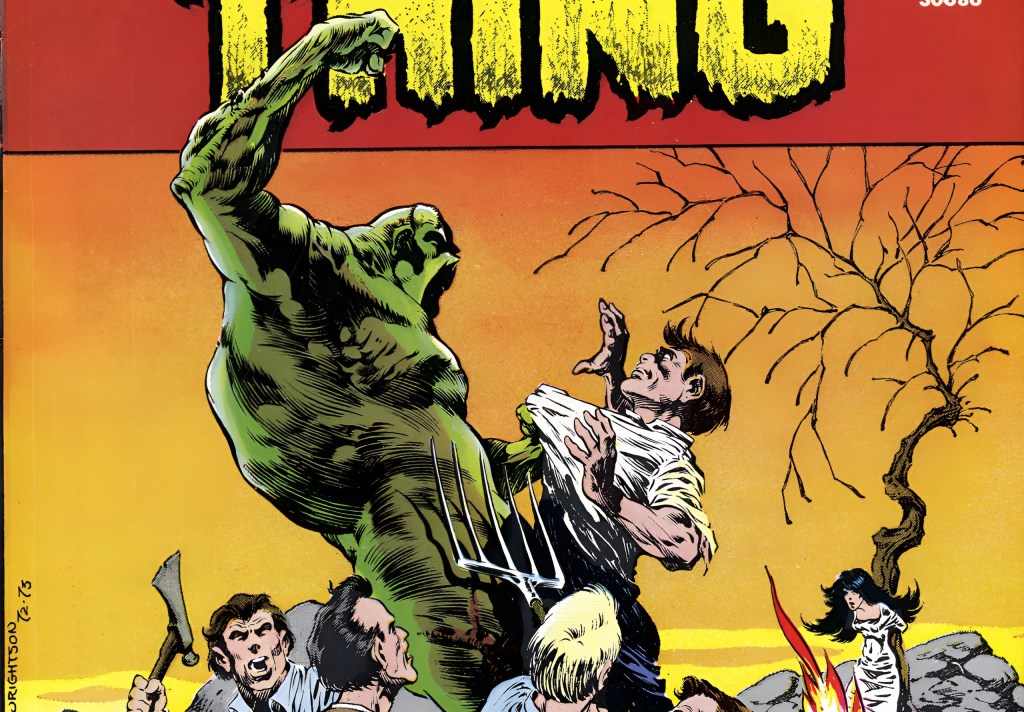
Volume one of Swamp Thingran for twenty-four issues from 1972 to 1976. Len Wein wrote the first thirteen, while Bernie Wrightson penciled the first ten. Wrightson worked predominantly as a cover artist and on short stories (like the original “Swamp Thing” story) for DC’s horror anthology titles, and didn’t care for the deadlines and creative constraints of a regularly-published running series. Wein left the title to succeed Roy Thomas as editor-in-chief at Marvel. Despite the best efforts of their successors (Gerry Conway and Dave Michelinie writing; Nestor Redondo drawing), the comic suffered in the original creative team’s absence, running out of steam in its final issues, exacerbated by declining readers interest in horror titles. Swamp Thing made sporadic appearances as a guest character in titles like Challengers of the Unknown through the late seventies, but otherwise looked like he’d be joining Adam Strange or the Sea Devils as a relic of a bygone comic book era.
Though the film they ultimately produced is somewhat maligned by fans of Swamp Thing, producers Michael Uslan and Benjamin Melniker saved the character by bringing him to the screen. Ahead of Swamp Thing‘s February 1982 release, DC elected to revive the Swamp Thing comic, with Saga of the Swamp Thing#1 hitting newsstands that same month. The title was a modest success, though sales began to flag in 1984, leading DC’s editors to make the risky decision to hand the title over to untested talent: a maverick English writer named Alan Moore. Starting with Saga of the Swamp Thing#21, Moore turned the comic on its head, beginning with the continuity-redefining idea that Swamp Thing wasn’t actually Alec Holland, it was sentient muck that thoughtit was Alec Holland. Later issues would introduce anti-hero John Constantine, arguably DC’s best-loved supernatural character besides Swamp Thing. Saga of the Swamp Thing became the first mainstream comic to be published regularly without Comics Code Authority approval, helping launch DC’s Vertigo imprint and spur a movement away from the Comics Code as a regulatory body.
House of Secrets#92 is at the precipice of all that history, a single issue that can claim a literally medium-redefining legacy. In eight pages, Len Wein and Bernie Wrightson told a story so evocative and striking that it became the first and only anthology story DC published to break out into a recurring character. Today, that character still appears regularly in comics, action figures, and trade paper headlines, with a Swamp Thingreboot in development as part of James Gunn’s cinematic DC Universe. Though a potential return to live action may bolster the value of the issue, comic collectors prize House of Secrets#92 on its own merits, with Bernie Wrightson’s cover alone reason enough for the book to fetch top dollar. With over two weeks left to bid, the final price for the sample on auction at Goldin is sure to reach a price worthy of the issue’s legend and legacy.
Is Swamp Thing your favorite supernatural DC hero? Leave a comment below and join the conversation now in the ComicBook Forum!
This Golden Age Batman Key Issue Looks Perfect, But There’s a Catch
More Collectibles
-

Collectibles
2 days agoSomeone Turned The Force Into a Vintage Kenner Action Figure, and It’s Hilarious
-

Collectibles
2 days agoThis Vintage Marvel Toy Set Could Give Daredevil Fans One Last Reason to Hope for Avengers: Secret Wars
-

Courtesy The Walt Disney Company Collectibles
3 days agoThe Closure of a Beloved Disney World Ride is the Only Reason Someone Now Owns This Iconic Muppet Statue
-

Collectibles
3 days agoOne of the Earliest Superman Collectibles Is the Ultimate Superhero Grail (And It’s Going Up For Auction)
-

Images Courtesy Fanatics Collect and The Pokémon Company Collectibles
4 days agoFive Gold Star Pokémon Cards Stay Golden, Fetch Sparkling Record Prices at Auction
-
Collectibles
4 days ago45 Years Ago Mattel Finally Gave an Iconic Creator an Epic Toyline Just in Time For His Final Film
-

Courtesy of The Pokemon Company Gaming
4 days agoPokemon Fans Can Now Claim a Free Pikachu Promo Card (Here’s How to Get It)
-

Courtesy of The Walt Disney Company Collectibles
4 days agoDarth Vader and Luke Skywalker’s Latest Showdown Ended Just Like Their Iconic Empire Strikes Back Duel
