

Adam Fortier, a comics industry veteran whose career has included publisher roles at Boom! Studios and Joe Books, currently stands accused of two simultaneous instances of unsound business practices and unmet financial obligations.
In one case, which has resulted in an ongoing lawsuit from former business associates at Macroverse Media, Fortier is alleged to have received $600,000 in payments from Macroverse while secretly negotiating his own business deals with Marvel and DC Comics without the company’s knowledge.
In a separate, unrelated venture, Fortier left eight veteran comics artists and one former Marvel Comics editor unpaid after hiring them to work on a sports trading card set in 2025. Fortier continues to owe more than $9,000 in unpaid invoices to the artists and editor for work delivered to him throughout that project.
The Toronto-based Fortier started as a publishing consultant with Dreamwave Productions in 2002 before moving on to Udon, IDW, and Boom. In the interim between the stints at Dreamwave and Udon, he ran two publishing operations of his own: Speakeasy Comics in 2004 and Joe Books in 2014, the latter of which was notable for publishing Disney-licensed comics until it ceased operations in 2019. Fortier founded his current LLC, Portmanteaux Publishing, in 2018 (rendered as “Portmanteau Publishing” in Fortier’s own lawsuit filing, though Fortier toldthe Comics Journal he is not involved with any entity under that spelling).
The Authentic Editions Project
Of the two ongoing business conflicts currently facing Fortier, the more public involves a lawsuit from his former business partners at the digital entertainment company Macroverse Media Inc., who claim that he and his business partners accepted more than $1.8 million between them for a high-profile vintage comics reprint venture, and failed to deliver the promised work. At the same time, according to Macroverse’s suit, Fortier used his position within the project to pursue independent licensing deals with Marvel and DC Comics without Macroverse’s knowledge, and “attempted to convert those opportunities to his own competing vehicle.”
The dispute emerged publicly as a result of two lawsuits the two parties filed against each other. First, in August 2025, Fortier and Portmanteau Publishing sued Macroverse on nine charges claiming misuse of the trademark for “Authentic Editions,” of which both Fortier and Macroverse assert ownership, and seeking damages for Macroverse’s alleged misuse and an injunction against their further use of the trademark.
The allegations against Fortier are more extensive, and laid out in a counterclaim filed by Macroverse co-founders Adam Martin and Eben Matthews in October 2025. Court filings reviewed for this article, as well as interviews conducted with current and former workers on the project, paint a picture of a production operation that was far less developed than Fortier had represented to Macroverse, as well as multiple unpaid collaborators.
Macroverse, a Los Angeles-based company co-founded by Martin, Matthews, and a third partner, Ricky Rua, began as a digital comics reading platform before pivoting to physical reprints. The company’s flagship product line, marketed as “Authentic Editions,” proposed to reproduce rare vintage comics — including golden age Timely Comics titles such as Captain America Comics, early Archie Comics publications, and pre-Code horror books — using production techniques designed to replicate the look and feel of the originals.
According to Martin and Matthews, they met Fortier in 2023, when he was introduced to them through Macroverse’s then–head of business development. Fortier represented himself, in Matthews’ account, as “a 20-year veteran of the industry” with extensive publishing contacts, citing his prior work as a vice president at Boom! Studios and his tenure at Joe Books.
Macroverse and Fortier arranged to collaborate on a project under the branding “Authentic Editions.” These were to be facsimile reproductions of vintage comic books, both from the public domain and, they hoped, licensed from major publishers.
In July 2024, the two parties both signed a memorandum of understanding (MOU), laying out Fortier’s role in the project, which was to be twofold. First, he would develop and create technology to scan and produce replicas for the Authentic Editions line. Second, under the title “Head of Publishing,” he would create and produce printed replica editions, and would also manage new and existing relationships with licensees.
Macroverse, for their part, would be responsible for distribution and marketing of the Authentic Editions line, and would become the legal owner of all intellectual property created over the course of the project: not the only scanned comic files, but also any patents, copyrights, and trademarks that resulted from the scanning technology Fortier was to create.
The legal authority of the MOU has since become a key point of contention in the parties’ dueling lawsuits. The document itself stipulates that it would be the basis of a business relationship while the parties engaged in good faith efforts to arrive at a long-form contract.
Eben Matthews, in an interview with the Comics Journal, said that Macroverse presented Fortier with three separate contract drafts between October 2024 and February 2025, none of which were ultimately signed. Matthews conceded that he does believe Fortier was initially negotiating in good faith over a long-form contract, but said that “in a much shorter period than was initially obvious, that changed for Adam.” Fortier, in his legal filings, says that he was operating in good faith throughout the relationship.
Matthews said that the company paid Fortier a total of $600,000 for his services, as claimed in their countersuit. Additionally, he said that the company also paid Fortier in excess of $45,000 for an initial consulting engagement, which is not currently included in their legal claims. Reached by the Comics Journal, Fortier did not provide his own accounting of precisely how much he had been paid by Macroverse, but strongly contested their claims.
“I was paid a per page rate for work on Pre-Code Horror and Archie, and what I used those payments for was all both legitimate and accurate,” Fortier said. “Any payment that was given to me in order to acquire comics was used to acquire comics only.”
According to the Macroverse suit, as well as two associates who worked with Fortier on the project, the large expense line for scanning equipment was because Fortier claimed to have developed a proprietary scanning technology that could authentically replicate the pre-digital printing and coloration of vintage comics. Fortier was to have used the earmarked money to build the custom equipment necessary for the process.
Additionally, Macroverse claims to have made separate payments to several other contractors engaged for the project. Approximately $900,000 was earmarked for the purchase of source comics through a prominent dealer named Harley Yee, who was introduced to Macroverse by Fortier; an unknown amount went toward licensing fees for an Archie Comics Kickstarter; and additional sums went to monthly consulting fees of $10,000 each to two people brought into the project by Fortier: Danny Saeva, enlisted to pursue licensing deals with larger publishers like Marvel and DC; and Ross Richie, the former CEO of Boom! Studios. In total, Macroverse claims to have paid approximately $1.8 million to the contracted parties on the project.
The Authentic Editions books were to be funded through individual Kickstarter campaigns, two of which (for Archie Comics and pre-Code horror books) were launched in 2024. Both campaigns were plagued by repeated delays, with backers questioning Macroverse’s failure to deliver fully on the promised comics by the end of 2025.
Martin, who sees Fortier’s suit as a preemptive attempt to establish legal priority in what was by then a growing dispute, takes issue with Fortier’s claim that the MOU was not binding. “Once we began paying hundreds of thousands of dollars to operate under the terms of the MOU,” Matthews told the Journal, “California law creates specific obligations to perform the things that you’ve been paid to do.”
What Fortier actually delivered, as investigation byThe Comics Journal has confirmed, is a story of its own.
What the production looked like
While Macroverse’s investment assumed a professional production infrastructure, multiple people who worked directly on the project describe a far more improvised operation, run largely out of Fortier’s home in Pickering, Ontario.
Kim Stahl, who worked as Fortier’s nanny beginning in 2022, was recruited by him in September 2024 to serve as the primary graphic designer and photographer on the Authentic Editions project, despite having, by her own account, almost no prior experience with either comics or Photoshop. “When I was brought into the project,” she said, “I had little to no experience with Photoshop. I had taken a singular class in college … and I was brought into it and told, ‘Figure it out.’”
Stahl described the “scanning” setup as “two pieces of styrofoam with tape” holding a photo camera in place — a phrase that also appears, attributed to her, in Macroverse’s counterclaim. Stahl told the Comics Journal that the camera used was a Pentax model that she considered unsuitable for the project. “I went to school for photography and videography, so I know that world a little bit, and it was definitely not the camera that I would’ve picked for the project,” she said.
Although such a setup would technically constitute photography, rather than scanning, Matthews and Martin told the Journal that the two words were used interchangeably in their dealings with Fortier, and that they were aware at the time of the MOU that a photo camera would be used. “We do not believe the distinction is material in regards to the countersuit,” Matthews said.
A core pitch of the Authentic Editions had been a specialized process that could replicate the Ben Day dot printing of Golden and Silver Age comics. But according to Stahl, the process involved her manually altering pages in Photoshop, with no established workflow or methodology. “Things like that took many hours of trial and error,” she said. “I don’t know if we ever fully got to the result that they were looking for.” Stahl said she was promised $10,000 per month for her work. Over the twelve months she worked for Fortier, she says she received payment for only three months, leaving some $90,000 unpaid. Reached by the Journal, Fortier declined to comment on this claim.
Stahl also claims that Fortier explicitly asked her to keep files from the Captain America project hidden from Macroverse-controlled Dropbox accounts, without explaining why. “I was explicitly asked by Adam to not tell them, or upload files from the Captain America stuff into certain Dropbox accounts that Macroverse would have access to,” she said.
A second source who worked as a project manager for Fortier on the venture, and who asked to remain anonymous pending potential legal proceedings against Fortier, confirmed the ad hoc nature of the photography operation. Both this contract employee and Stahl describe Fortier as increasingly absent from the project the further it progressed, and, for contractors awaiting payment, increasingly difficult to get hold of, with several contract employees recalling that emails and phone calls went unanswered for extended periods of time.
Speaking to the Journal, Fortier denied having received any separate payment from Macroverse for the purchase of scanning equipment. He does not deny that the photography setup was as described by Stahl and othertahl’s departure, would have involved more sophisticated technology
“The description you’ve been given [of the photography setup] reflects an early prototype,” Fortier said. “In the initial phase we needed a setup configured that way in order to measure and categorize the material and establish the layout requirements. To present that as the whole of the scanning operation is a mischaracterization, and it has the effect of minimizing work that Macroverse itself accepted, approved, and delivered to its backers.”
Fortier did not provide additional information to the Journal about any subsequent scanning work that may have taken place.
Fortier also contested Macroverse’s claim that the technology he provided for the project belongs to Macroverse under the terms of the MOU. “Macroverse didn’t bring up the ownership of the scanning equipment in their countersuit, as they have always been fully aware that what I spend the money on that is paid to me as a contractor is under my purview to spend as I wish, provided I do the required work,” Fortier said. “If they expected to manage the expense for scanning equipment, the MOU would have contained that language. The attempt to argue how much was spent on scanning equipment and technology is an obfuscation and distracts from the core of what the disagreement is about: they failed to make good on what the MOU laid out, and worked very hard to sabotage any ability I had to generate revenues in a space I have existed in for decades with a great deal of success.”
Despite this claim, the MOU signed in July of 2025 does stipulate that “Adam will document, disclose, and deliver all technology, processes, and methods needed to create Authentic Editions to Macroverse, which will be considered the sole owner of these elements,” and that “Any patents, copyrights, trademarks, etc., related to Authentic Editions are granted to Macroverse, with Macroverse as the sole owner and the only party able to exploit these assets.”
The parallel entity
The central allegation in Macroverse’s counterclaim is that, while still collecting fees from Macroverse, Ross Richie formed a separate LLC (initially called Authentic Editions LLC, later renamed Archival Comics LLC), and that he and Fortier then entered into separate negotiations for licensing deals with Marvel and DC Comics that competed with work being done for Macroverse.
Adam Martin told the Comics Journal that Macroverse first learned of the LLC’s existence “on or around May 28th” of 2025, when they discovered that communications to Marvel and DC had been routed through an “@authentic-editions.com” email address they had not previously known about.
“We realized that there had been draft agreements shared that we had not initially been privy to,” Martin said. “Fortier and Richie had been communicating with Marvel and DC Comics for some time about potential license deals, and received a draft agreement containing deal terms that had never been previously agreed with or shared with us.”
It was Fortier’s involvement in these alleged negotiations that raised concerns for Macroverse. While Richie’s Macroverse consultancy did not entail work with licensees on Macroverse’s behalf, Fortier’s MOU did. Moreover, Fortier’s MOU included a broadly-worded clause stating, “Adam will not develop, create, produce, print or market any technology, material or content that is any way competitive with the contemplated Authentic Edition product line or the technologies to be developed by Adam.” It also stipulated that the trademark for the “Authentic Editions” line was the sole property of Macroverse. Richie subsequently changed the name of his company to Archival Comics LLC.
Reached by the Comics Journal, neither Fortier nor Richie would comment publicly about any negotiations with Marvel and DC. Marvel and DC did not respond to requests for comment on this article, nor did Daniel Saeva.
Martin said it was at that moment, combined with Macroverse learning that Fortier had misrepresented his production setup, that their business arrangement “fell off a cliff.” According to Macroverse’s Eben Matthews, once Macroverse informed Marvel and DC that it was not the same entity as Authentic Editions LLC, Fortier’s discussions with the two publishers were immediately halted. However, at least one prospective business partner approached by Fortier in early 2026 told the Journal that Fortier was still presenting himself as having licensing arrangements with both Marvel and DC more than six months later.
A window into the
The name “Archival Comics” did not disappear when the Macroverse relationship collapsed. In July 2025, Fortier began a series of conversations — first by email and then in private Discord chats — with an individual going by the name of Mark Bowen.
Bowen, whose name is a professional pseudonym, is part of a close-knit and largely insular community of collectors who photograph and share high-resolution images of Golden and Silver Age comics, and his particular value, he explained, was his access to people and <a href="https://comicvibe.com/ranking-rogues-galleries-10-superheroes-with-the-best-collection-of-villains/” title=”Ranking Rogues Galleries: 10 Superheroes With the Best Collection of Villains”>collections that Fortier could not have reached on his own. “I was uniquely qualified to do this [sourcing and scanning of vintage comics], as I already had a lot of experience photographing Golden Age comics at [local archives],” Bowen told the Comics Journal. “Plus I’ve got access to all my scanner buddies, most of whom are totally inaccessible to the layman.”
In October 2025, five months after the falling-out with Macroverse, Fortier sent Bowen an email using the Archival Comics name and offering $3,000 per month tonning, “with a travel budget provided by Archival Comics.” Bowen accepted the deal
During the months he worked for Fortier, Bowen says the project priorities shifted constantly. “When I started, he told me he had deals with the rights holders of basically every Golden Age comic that wasn’t already in the public domain — Marvel, DC, Archie, and EC — although later he told me that he never actually secured a deal with EC,” Bowen said. On any given day, the focus could change entirely: “On Monday, he might tell me, ‘Our set of Captain America reprints for Marvel will be our first release.’ Then on Tuesday, it might be, ‘Actually, prioritize Batman now, DC wants to move that release up.’”
The Discord exchange between Bowen and Fortier’s operation, which has been viewed by theComics Journal, illustrates this dynamic in action. In those conversations, a person operating as Fortier’s representative, and using the screen name “Defaulteduser,” solicited Bowen’s help locating “community scans” of Timely Comics issues, specifying Captain America Comics #1–78, All Select #1–11,All Winners #1–20, and Young Allies #1–20. In the same exchange, Fortier’s representative also described obtaining 1,200 dpi scans of covers from the comics grading company CGC, and discussed the preference for raw, unprocessed image files.
Bowen’s formal role under his contract was to compile a comprehensive database of rare comics holdings in publicly accessible university library collections across the United States, with the intent of eventually scanning those holdings directly. Though Bowen says he spent months on this work, and provided Fortier with both a spreadsheet and several page files scanned personally during his archive visit, the project seemed to not have gone anywhere.
Consistent with other Fortier contractors, Bowen says he was not paid. Payment under his agreement was to be no later than one week after the end of each month; Bowen claims that no payments were received. The one financial obligation Fortier did eventually honor was the reimbursement of Bowen’s out-of-pocket travel expenses from a library scanning trip, which Bowen had borrowed from his father, but Bowen said that required months of sustained pressure in order to get paid. “I had to flat out tell him, ‘Dude, I’m an anxious mess and need to pay my dad back already,’” Bowen said.
Reached by the Comics Journal, Fortier would not comment on any of Bowen’s claims.
The trading card plans
Glenn Greenberg is a veteran of the comics industry and broader media: over the past three decades, his resume includes six years as an editor and writer at Marvel, freelance credits at DC, IDW, TwoMorrows, and elsewhere, and editorial positions at Scholastic and Time Inc. In late March of 2025, Greenberg said that he was working as a copywriter for an e-learning firm when he was approached by Ross Richie, an old professional acquaintance through comics circles.
“Hey, did you have anything to do with trading cards when you were at Marvel?” Greenberg recalls Richie asking him. When Greenberg said he had, Richie told him that “a friend named Adam Fortier” was working on a project and looking for an editor. Richie sent a three-way email introducing the two, and then, by Greenberg’s account, stepped away from the project.
The project Fortier described involved creating an expansion card set based on a property called “Bo Jackson Battle Arena,” a sports-themed trading card game based on the two-sport athlete who made headlines in the late ’80s. Greenberg’s role was to recruit artists, establish guidelines, manage approvals, and serve as a go-between for the artists and Fortier.
Fortier sent Greenberg samples of existing cards from the set, but never disclosed who the client behind the project was, saying simply that Fortier was acting as a middleman. At the same time, Fortier specified that the art itself would become the property of Fortier’s own company, Portmanteau Publishing.
“How would Adam end up owning the artwork if he’s only working for a client?” Greenberg remembers wondering. He asked Fortier directly for more information about Portmanteau Publishing, but Fortier never responded to that query.
In actuality, Bo Jackson Battle Arena was the project of a gaming firm called Blokpax, in partnership with a Canadian card publisher, Imagination Mining Company. Unbeknownst to Greenberg, it was Blokpax that had engaged Fortier to provide artwork for the card set. According to a representative from Blokpax, Fortier was paid for this assignment, but has not to date provided any usable artwork for the card set.
Greenberg formally accepted the job on April 4, 2025. No formal contracts were signed: Fortier told Greenberg that his invoice would serve as the contract. According to Greenberg, artists were to be paid a flat fee for the artwork, and paid within 30 days of turning in approved work. Fortier encouraged all artists to wait and invoice once a full set of five pieces was complete, to minimize international wire transfer fees.
Greenberg recruited 11 artists, most of them veterans of his time at Marvel: Bob Budiansky, Pat Olliffe, Denys Cowan, Al Milgrom, Gordon Purcell, Tom Morgan, Tom Derenick, Mike Collins, Jeff Johnson, Nicholas Gurracino, and Rebekah Isaacs. Each was to be paid $200 per illustration, with a $50 bonus for pieces that included a detailed background. Artists were assigned athletes to illustrate in themed costume variants (ice, fire, steel, etc,), and submitted pencil sketches for approval before proceeding to final art.
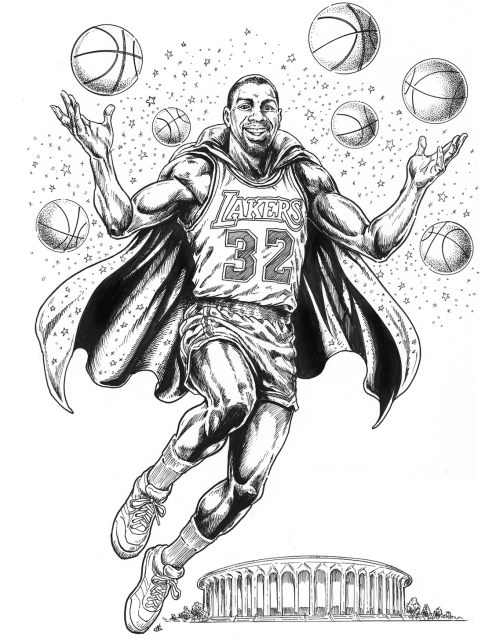
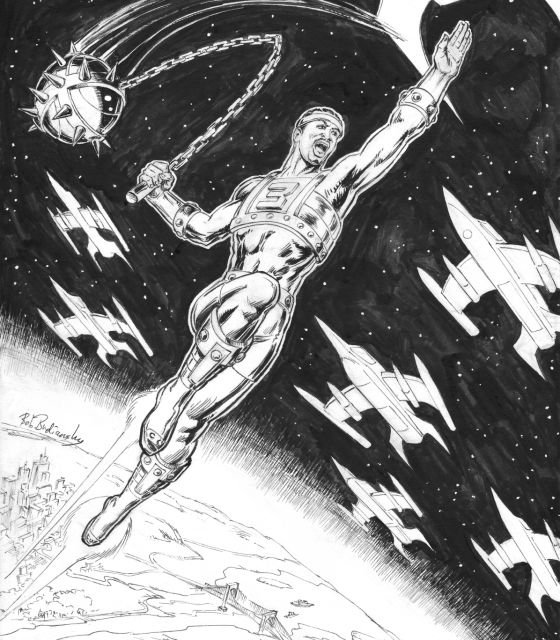
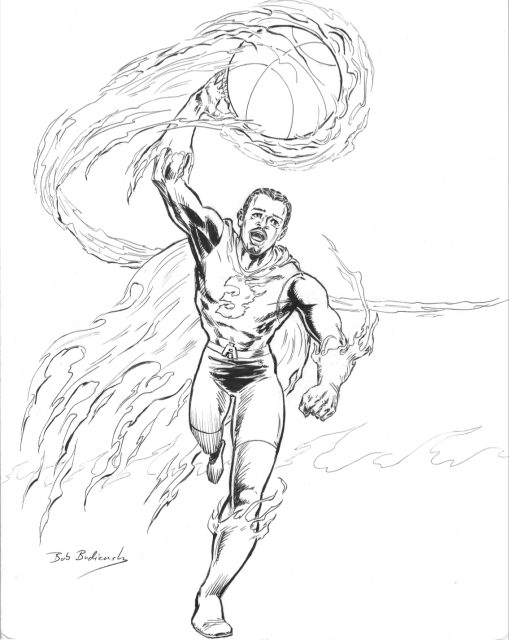
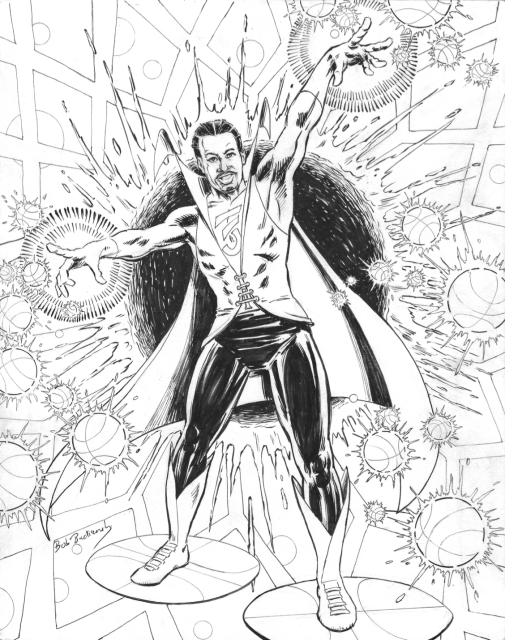
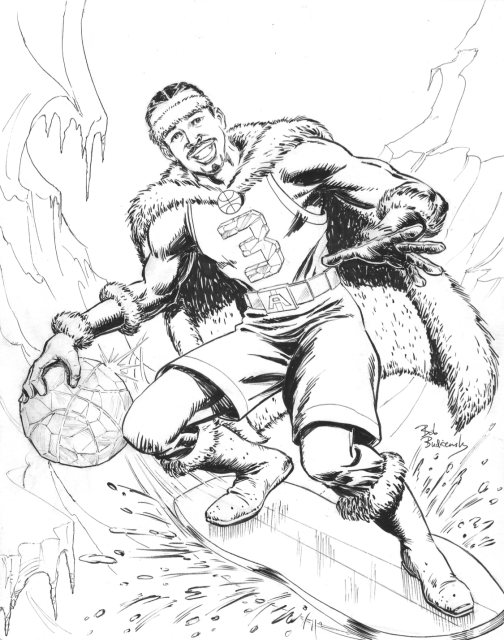
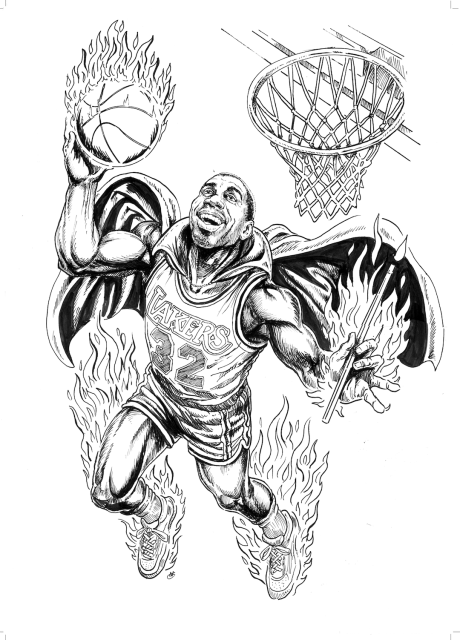
Over the next four months, as artists turned in their work to Greenberg, it became apparent that payment would not be readily forthcoming. In a series of emails among Greenberg, Fortier, and Fortier’s assistant, Ella Coutts, which have been obtained by the Comics Journal, Greenberg became increasingly concerned as Fortier presented one delay and obstacle after another to explain why invoices were not being paid.
The first invoice submitted was Rebekah Isaacs’ on May 27 for five illustrated cards depicting athlete Brandi Chastain. As the 30-day payment deadline approached, Greenberg began pressing Fortier for assurances, and was met with a series of apologetic emails citing Fortier’s health concerns as a reason for the delay in payment.
Payment to Isaacs was finally processed on June 27 (the last day of the contractual deadline), after which Isaacs withdrew from the project out of an abundance of caution. “I’ve had several really bad experiences with small press [publishers] constantly chasing payments and being given every excuse in the book,” she wrote to Greenberg. Her instincts proved correct: she would be one of only two artists paid over the course of the project (the other, who preferred that details of the payments be kept private, received a reduced payment as a result of what Fortier explained was currency conversion from Canada, though Fortier had not conveyed to Greenberg that artists would be paid in Canadian dollars).
Fortier’s emails to Greenberg reveal a growing list of excuses for delayed payments over the weeks that followed: Fortier cited the death of his mother, followed by a trip to Florida to close her estate. He also alluded to ongoing hospital visits for medical tests. In July, Fortier’s assistant Coutts asked Greenberg to resend banking information for the remaining artists (information that had already been included on the invoices) and Greenberg dutifully complied, compiling account numbers, routing numbers, SWIFT codes, and bank addresses for nine artists representing $9,900 in outstanding payments. No money was transferred, according to Greenberg.
The lowest point came on July 2, during a phone call in which Greenberg pressed Fortier directly to pay artists. According to Greenberg, Fortier lost his temper with Greenberg, and declared: “I’ll pay everybody. What are you going to do? Go ahead, sue me.” He later apologized in an email, which has been seen by theComics Journal, attributing the outburst to anger management issues and taking incorrect medication.
On Aug. 18, Fortier emailed Greenberg: “I was away most of last week closing down my mother’s estate in Florida, but my wife is home now. So, we are sending out payments this week!” No such payments were received.
Ten days later, on Aug. 28, after receiving no further response from Fortier, Greenberg sent an email to Fortier withdrawing from the project, then a separate message to all the artists disclosing what had happened. For many of the artists, this was the first time they learned of the full extent of the payment issues, as well as the last significant update they were to hear. Greenberg has since tried to contact both Fortier and Richie. Richie replied, claiming no knowledge of what had happened. Greenberg told the Journal that he never heard back from Fortier.
The Comics Journal has since confirmed this scenario with all 11 of Greenberg’s contracted artists, 8 of whom have still not received any payment at all. Most have simply resolved to move on. Bob Budiansky, the veteran Marvel artist and writer who co-created many of the Transformers characters, turned in his five completed illustrations by late June 2025, and submitted his invoice the following day. He says he is owed $1,200, which he has never received. “I’m not going to chase down somebody in Canada for $1,200,” he said. “I have better things to do with my life.”
Gordon Purcell, another Marvel veteran, was similarly recruited by Greenberg based on his prior work at the company. He began work on April 24 and completed six illustrations – a set of Picabo Street cards – submitting his invoice in June 2025. He, too, says he was owed $1,200 and received nothing. “Once I got screwed by this guy, I just moved on to other work,” Purcell said. “This happens a lot with artists.”
Currently, Greenberg is still owed the $3,500 for which he has invoiced Fortier. He remains hopeful for an acceptable resolution. “I’d like him to find the humanity that may lurk inside of him, and do what he assured me, and promised me, and insisted to me that he would do, which is pay everybody for the work that they did,” Greenberg said. “And then I never want to hear about him or even think about him ever again.”
Reached by the Journal, Ross Richie downplayed his involvement in the project, on which he says he was involved only informally. He also expressed strong disapproval of Fortier’s failure to pay the artists involved.
“My friend Adam asked for an editorial recommendation,” Richie said. “I’ve never met Glenn but he seemed qualified and was a Facebook friend. I was not paid by Glenn. I was not paid by Adam. I suggested a direction for a friend. It wasn’t my project. It’s upsetting to learn Adam didn’t pay the folks involved with this. That’s not okay and everyone should be paid, full stop.”
Shortly after providing these comments to the Journal, on Aug 13, Richie posted a public message on Facebook beginning “I owe Glenn Greenberg a public apology,” and further stating his disapproval of Fortier’s actions. Richie’s post concluded, “This sucks and this is not okay. I’m sorry I pulled you into that, Glenn, I had no idea Fortier would not pay you or others. If I knew you and these artists would get stiffed I never would have connected you. Everyone who worked on this project should be paid for their work on it. Just to be clear, I was not paid by anyone and performed no work and this was not my project. Again, Glenn, I am sorry.”
Reached by the Journal, Fortier did not contest Greenberg’s and the artists’ account of the scenario or the amounts currently owed to them, but declined to comment further on the record.
Patterns and questions
Fortier’s long career in comics has involved him in many tangled business ventures, although many seem to have been outside his control. DreamWave, which came to prominence publishing Transformers comics by Pat Lee, ended in bankruptcy, though by then Fortier had distanced himself from the company and Lee, whom he had helped to secure the Transformers license. Fortier then founded Speakeasy Comics in 2004, one of a number of periodical comics publishers that sprang up in the rebounding comics market of the early aughts. Although their titles gained some acclaim, the company shut down in 2006 amid the usual reports of non-payment and low sales.
Fortier immediately moved to Boom!, where he served as vice president of publishing and new business for six years, negotiating licenses with major companies, including Disney, according to his LinkedIn bio. Boom! also picked up projects that had been planned at Speakeasy, including Yoshitako Amano’s Hero.
In 2013, Fortier took on the job of Publisher at Joe Books, a Canada-based company founded by producers Jay Firestone and Jody Colero, that specialized in Disney properties, including Frozen, Darkwing Duck, Disney Princesses, Star Wars, and Marvel Avengers. The company had success with the then-red-hot Frozen books.
Fortier stepped down from Joe Books as publisher in 2016, three years before that company filed for bankruptcy in 2019, leaving behind another array of unpaid artists and creditors. Former Joe Books employees TCJ spoke with described Fortier’s tenure as being somewhat disorganized: bills were paid, but often slowly, and the chain of command wasn’t always clear.
In all of these ventures, aside from Speakeasy, where he took a very public role at conventions and doing press, Fortier’s role remained out of the public eye, but he continued to attempt to make deals behind the scenes.
In accounts gathered from people involved in both the Macroverse arrangement and the trading card venture over the period reported by the Comics Journal, Fortier’s associates describe certain similarities in his operating method. Fortier presented himself to Greenberg, Bowen, and Martin and Matthews at Macroverse as a well-connected industry veteran, with existing business deals and a production operation already in place. Neither Bowen nor Greenberg, nor any of the trading card artists contracted by Fortier were given contracts for their work; rather the terms were offered informally via email. While Macroverse arranged an MOU, Fortier would later claim in his lawsuit that this, too, was a nonbinding agreement.
Several sources (including Glenn Greenberg, the artists contracted for the Bo Jackson Battle Arena projects, and Mark Bowen) noted that irregular partial payments, often extracted only after sustained pressure by those awaiting money, appeared to be a feature of those times when Fortier did pay invoices. In several cases (including that of Bowen and Fortier’s employee Kim Stahl), the associates worked with Fortier longer than they would otherwise have been inclined to in the hope of eventually receiving payment.
Similarly, there is a broad overlap in the nature and timing of the reasons Fortier gave for delayed or missing payments and deliverables over the course of the past year: according to multiplet rationale for delayed or missing payments. And in each case, Fortier was said to have become increasingly absent, and his communications more infrequent, over the span of his business relationships
For the moment all of these controversies surrounding Fortier remain unresolved. The Comics Journal will continue to report on this story as new information emerges.
