

1982: Steven Spielberg and Jack Kirby Talk Comic Book Evolution
04:09
Welcome inside the TODAY Vault, where we revisit memories from our show when celebrities and newsmakers started discourse, made us laugh or shaped our culture. This latest installment, highlighting the growth of movies based on comic books, is from June 11, 1982.
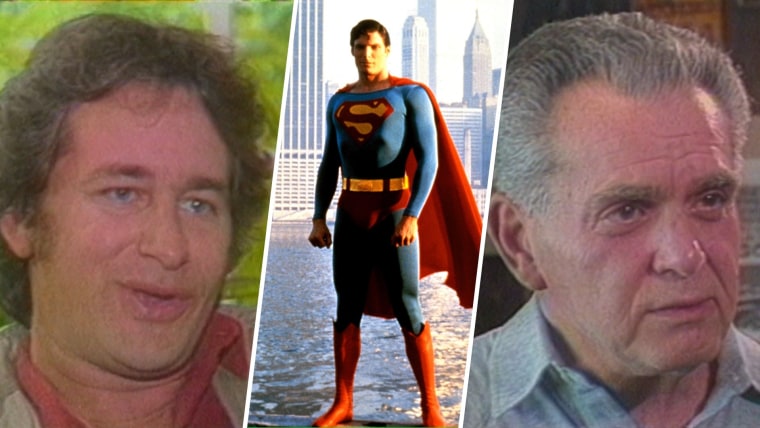
Films based on comic books go together like popcorn and coming attractions. It’s a combination that seems made for each other, and one that TODAY spotlighted back in 1982, an era when comic book characters like Superman, Popeye and Little Orphan Annie graced the silver screen.
And while Popeye and Annie are hardly superheroes like we’ve come to know in recent years, they did spring from the pages of comic books and provided fans entertainment with their escapades. The comic book superhero movie movement shows no signs of slowing down and will keep going when “Spider-Man: Brand New Day,” starring Tom Holland, slings into theaters on July 31.
What Did TODAY Say About Comic Book Superheroes in the Movies in 1982?
“Comic book heroes have been showing up on movie screens pretty regularly of late,” former TODAY co-host Jane Pauley said as she introduced the segment.
“It’s a trend that is likely to continue,” she added.
That was an understatement. We live in a golden era of comic book adaptations, but in 1982 the trend was really just getting underway. Comic book movies, from “Batman” and “Superman” to “Black Widow” and “Captain America,” are as much a staple of films today as end credit scenes.
“It’s not surprising that the movies, since their inception, have robbed the comic books of their heroes,” NBC’s Jim Brown said in his story.
“Few characters in literature have endured as well as the fantasy figures from pulp literature,” he added. “And nothing seems to diminish the popularity of comic books and comic book heroes.”
Comic Book Veteran Jack Kirby on the Need for Heroes
The late Jack Kirby, a legend in the comic book field known for creating or co-creating iconic characters and franchises like Hulk, Captain America, the Fantastic Four, Avengers and X-Men, felt audiences longed for superheroes.
“We’ve always needed them. We’ve always had them,” Kirby said.
“That’s good for us. I think it balances life. It gives us a kind of balance we need. If we had reality all the time, I don’t think we could take it,” he added.
Steven Spielberg Sensed the Value in Bringing Comic Book Characters to the Big Screen
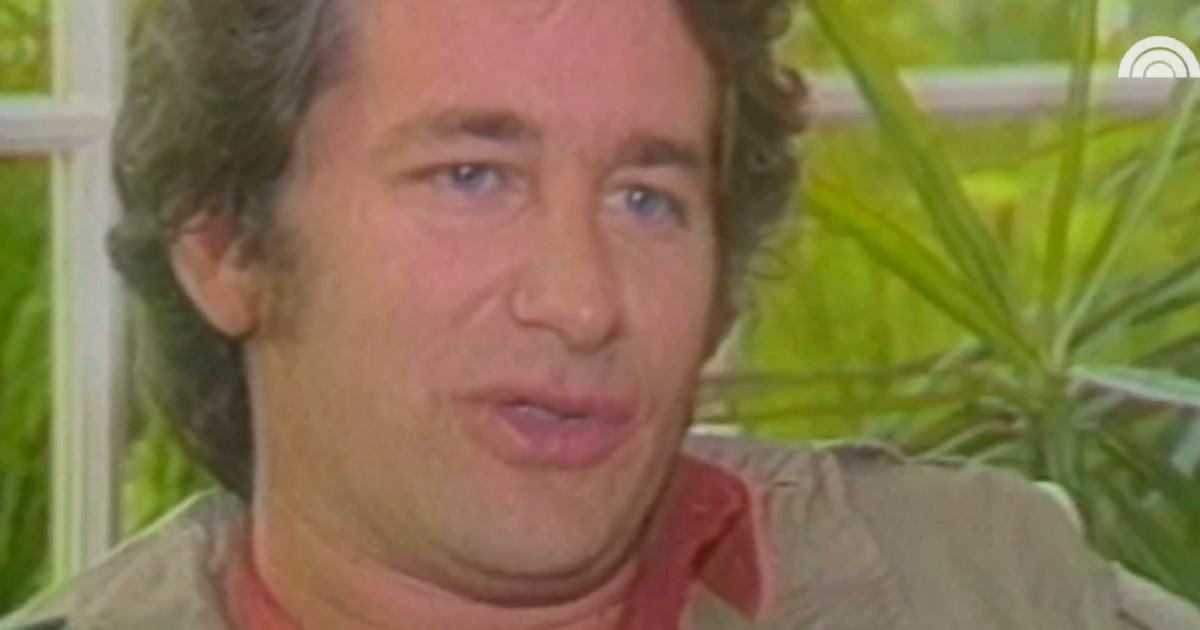
Legendary director Steven Spielberg had a watershed year in 1982, with the releases of his non-comic book associated films “E.T.” and “Poltergeist.” Still, he understood why comic book heroes appealed to moviegoers.
“More things happen to heroes in one two-hour movie than happens to 100,000 people in all of their combined lifetimes,” he said.
“And that’s just the state of the art in the motion picture business, that you’re able to take all those frustrations … you take all those fantasies and you put them all together in a big melting pot and you say, ‘This is my view of the world’ and ‘These are my fantasies I’ve always had about what I’ve wanted to become’ — now you be that person.”
The Idea That Comic Books Could Lead to Big Bucks at the Box Office Was Blossoming
Movies based on comic books are big business today. In 1982, Kirby could see what was on the horizon.
“The creative people are on a certain plane, and the publisher is on a certain plane. He lives with his lawyers and accountants, and he says, ‘Well, let’s get toys out of this. Let’s get films out of this. Let’s get sweaters out of this.’ And he’s only adhering to a commercial generation,” he said.
