

Published July 29, 2026 at 5:01 AM EDT
Pam McClung
/
Ohio State
Cartoons have been around centuries. In more modern days, they fill our newspapers and bookshelves, showcasing both artistic and written talent.
Cartoons, comics and graphic novels have all found their way into our lives, tackling tough subjects or just providing a good laugh.
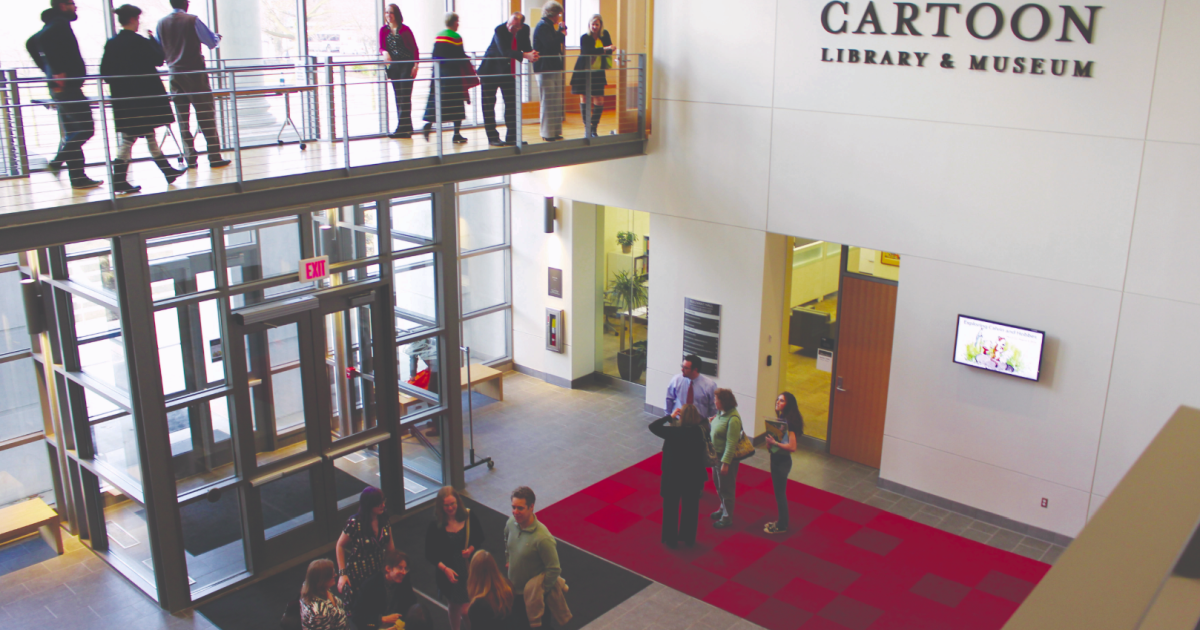
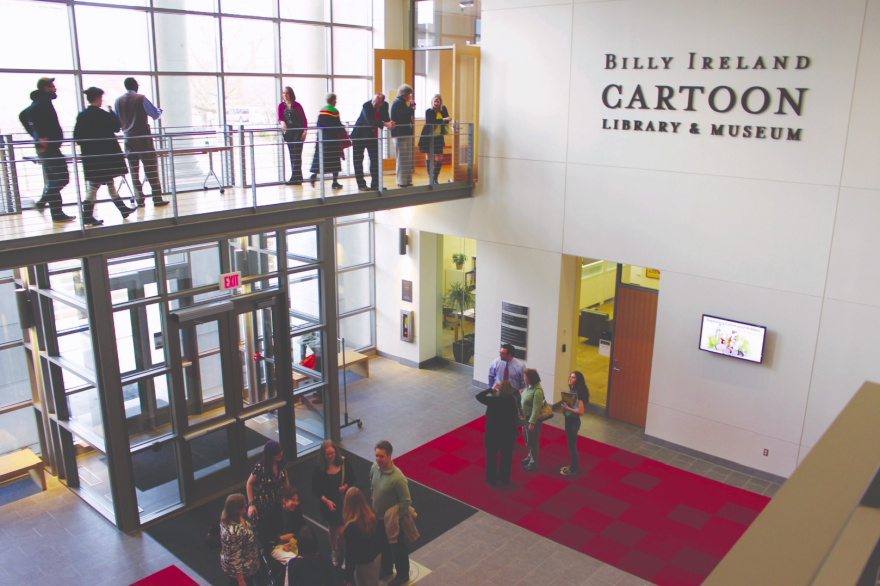
On Aug. 8, the Billy Ireland Cartoon Library and Museum at Ohio State will be holding the National Cartoonists Society Showcase, bringing many popular cartoonists to the Buckeye State.
We will hear from the head curator of comics and cartoon art at the museum, the creator of the Cathy comics which is celebrating its 50thanniversary and the cartoonist behind the New York Times-bestselling book Smile.
- Jenny Robb, head curator of comics and cartoon art/associate professor, Ohio State University’s Billy Ireland Cartoon Library & Museum
- Cathy Guisewite, creator of the “Cathy” comic strip
- Raina Telgemeier, cartoonist/author of the graphic memoir Smile
Transcript
This transcript is generated with AI. To ensure its accuracy, review the audio file.
Amy Juravich: Welcome to All Sides with Amy Juravich. Many people remember the days of flipping through the newspaper and finding your favorite cartoons. Many kids nowadays are turning to comic books or graphic novels, reading each book in a very compelling series. But whatever media you choose to dive into, comics provide incredible illustrations and stories that range from pure fun to great importance. The Billy Ireland Cartoon Library Museum in Columbus This is hosting the National Cartoonist Society Showcase. Bringing everyone’s favorite cartoonists right to your own backyard. And here to tell us about this event and all things cartoon is Jenny Robb, head curator of comics and cartoon art and an associate professor at Ohio State University’s Billy Ireland Cartoon Library and Museum. Welcome to the show, Jenny. Thank you. So the Billy Ireland Library and museum houses the world’s largest collection of materials related to comics and cartoons. You’re the curator, so you must really love this. I do? Yeah, I just wanted to start with Were you always drawn to comics and cartoons? Was it always a part of your life growing up?
Jenny Robb: Absolutely, I always read the Sunday comics. I read every single comic strip. My parents, I actually grew up in Cincinnati, Ohio, and my parents got The Enquirer. So I used to read all the comics, including the ones that I didn’t quite understand, like the soap opera comics, like Apartment 3G, and things like that. I just always had an affinity for them.
Juravich: Why do you think so many people are drawn to this type of art? I mean, you know, reading the Sunday Funnies was just what everybody did, yeah.
Robb: Well, I think, one, people want to laugh. A lot of comic strips are very funny, not all of them. But also they come to be almost friends with the characters. The characters are very relatable, and they’re reflecting what’s going on in their own lives. So I think people can really engage with that and with the stories that are told.
Juravich: Now, you’re here today to talk about a big event you have coming up, but before we talk about that event, I wanted to ask you about your recent renovations. The Billy Ireland went through, was closed for a little while, now you’re reopened. Tell me about the new highlights of these renovations?
Robb: Yeah, we’re so excited. We were able to completely refresh our permanent collection exhibition. And we went from showing about 100 pieces from our permanent collections to over 500. And the exhibit is called The Story of Comics. And we basically look at the entire evolution of comics over centuries, basically, and made sure that we have a lot of works showing everybody’s favorite comics and cartoons, things people remember from their childhood. So there’s a lot of nostalgia in the new exhibition, but it also really tells the stories of how comics are created and how we can read and understand and analyze comics and how comics have changed and developed over the decades.
Juravich: Yeah, this new permanent collection, The Story of Comics, is 400 years of cartoon art history. I mean, what are people gonna see? What’s 400 years ago? What does that look like 400 years?
Robb: Well, we actually start even further back than that. If you think about it, humans have been telling stories with images, you know, since the dawn of time. So you think of cave paintings and the Bayou tapestry. Technically comics, I guess, you know, I don’t. You know, they’re storytelling, probably, things like stained glass and cathedrals. So we sort of start with that, but then we look at when comics in the 18th and 19th century started to look more like what we understand as comics and cartoons today. And so that’s political and social satire and telling stories with sequential images and text. You know and we go through all the major developments, It’s the birth of the newspaper comic strip in the 1890s. The birth of the comic book, the Golden Age, starting in 1938 with Superman. So we look at all of those developments and show how really important comics and cartoons are as popular culture.
Juravich: And if I was reading correctly, you have a section, or at least a gallery, I don’t know what word to use, dedicated to Calvin and Hobbes too. That’s right. That’s right.
Robb: So we house the Calvin and Hobbes collection by Bill Watterson, which is almost all of the original art for the strip that ran from 1985 to 1995. And it’s definitely one of our most popular collections. It’s one of the most popular strips ever created. And we have dedicated a gallery to showing that so people can come and check out Bill Watterson’s Act.
Juravich: Drawings. This is All Sides on 89.7 NPR News and we are talking about the upcoming National Cartoonist Showcase, National Cartunist Society Showcase with Jenny Robb, head curator of comics and cartoon art at Ohio State University’s Billy Ireland Cartoon Library and Museum. Alright, so the big event that we’re talking about here is the National Cartonist Society Showcase. It will be on August 8th. What is the national Cartoonist Society and slash showcase.
Robb: So, the National Cartoonist Society is an organization of professional cartoonists. It was founded in 1946. It was basically a group of guys that was, you know, kind of a male-dominated industry. But they used to do entertainments as part of a USO tour for the troops in World War II. And they decided they wanted to keep that community alive. And so, they founded the National Cartoona Society 80 years ago, so they’re celebrating their 80th anniversary this year. And I should add that it was only four years later that the women cartoonists pointed out to the men that either they should change their name to the National Men’s Cartoonist Society or they should start admitting women. And so we get our first women members in 1950 and that included a pioneer female cartoonist who was based in Columbus, Ohio. In the 19 teens, Edwina Dumb with the political cartoonist for a newspaper here. One of the first staff political cartoonists who was a woman. Wow. All right.
Juravich: All right, so the society must have meetings or showcases, I guess you’re calling it. So what is the event you’re having on August 8th?
Robb: Well, they have an annual conference where they have programs, but it is closed to the public. They also have an awards dinner where they give out the Rubin Award, which has nothing to do with the sandwich. It is an award for the Outstanding Cartoonist of the Year, and it’s named after the first president of the society, who was Rube Goldberg. I don’t know if you will remember the Rube-Goldberg Machines, yes, exactly. So he was the first president of a society, and the award is named after him. And it’s been won by many people, I’m sure your listeners will recognize, people like Charles Schultz of Peanuts, Bill Watterson, who we mentioned, Matt Groening of the Simpsons, and of course, Kathy Guisewhite. And your other guest, Reina, is actually a nominee this year for the Outstanding Cartoonist of the Year. So we decided, since we were gonna have so many cartoonists in town, hundreds, that we wanted our community to be able to meet them. And so, We created this public event that’ll happen at the Billy Ireland Cartoon Library and Museum on August 8th, and we’re also having some events at Mershawn Auditorium in partnership with the Wexner Center for the Arts. So it’ll be a really fun, interesting opportunity to meet cartoonists, to get signatures, to get drawings, and to see some programs.
Juravich: Okay, so name drop, who are some of the cartoonists? If people get, you have to get tickets, right? So if you get tickets who are you gonna be able to see on this day?
Robb: So the tickets are for the specific event, which is at the Mershawn Auditorium. And that is a showcase of Scholastic Kids Graphic Novelists. And this is an amazing lineup of folks. We have Dave Pilkey, of course, of Dog Man and Captain Underpants fame, Raina Talgemeier, who we mentioned, Jamar Nicholas, who has a series called Leon the Extraordinary, Maria Skravan, whose series is not enough, and Jim Benton, who many, many different books, but the one that my son loves the most is Catwad, about a best friend, a cat, two different cats. It’s very, very funny. Are they each doing like a talk?
Juravich: Or is it more of a meet-and-greet?
Robb: They’re all going to be speaking. The presentation will last about an hour and 15 minutes, an hour-and-a-half, and that one is ticketed. So you do have to go to the Wexner Center for the Arts website and purchase tickets for that. Also in the lobby, before and after, we have other National Cartoonist Society kids, cartoonists, who will be signing and sketching. And after the presentation, Dave Pilkey, Reina Telgemeier, and all the authors will also be doing meet and greets and signing.
Juravich: Oh, wow, how fun. And then next up in the show today, we have Cathy Guiseway to the cartoonist of Cathy, which is celebrating its 50th anniversary. Tell me about a long standing cartoon like Cathy and how it has shaped the world of cartooning.
Robb: Well, Kathy launched in the 1970s in the middle of the women’s liberation movement. And women were starting to move into the workforce. They were starting to move up in companies. And she really captured what it was like to be a young woman in that time period. She was in her 20s. She was an executive at a marketing firm. And she started doodling and realized that she had a voice that wasn’t represented on the comics page. And so I think a lot of women readers, especially, just really related to her character, Kathy. You can be a single career woman, but you can also be worried about looking good and the fashions and your weight and finding love. I think she really resonated with so many people. And that’s why people remember having comic strips cut out and put up on refrigerators and pinned to offices.
Juravich: Cubicles. So we’re celebrating 50, the 50th anniversary of Kathy and Kathy will be a part of your event as well.
Robb: Yeah, so over at the Billy Allen Cartoon Library and Museum, which is just across the plaza from Murchon Auditorium, we will have many cartoonists from the National Cartoon Society signing and sketching. But also, we’ll have two events. At 5 PM, Kathy Geisweit will be speaking. And then at 1 PM, we have another cartoonist, Colleen Durant, who’s an amazing comic book artist known for a graphic novel called A Distant Soil and collaborating with authors like Neil Gaiman and others. So she’s in the in the comic book world where Kathy is in the newspaper comic strip world And I should mention clarify that both of those events are free And you can come to the museum and see the exhibits for free You can you know get get signatures and sketches from the over 30 cartoonists who will be over at the Billy Ireland so that it’s really a pretty diverse and incredible event with lots of
Juravich: different parts. And then we also mentioned we’ll be joined later in the hour by Reina Telgemeier, the author of many graphic novels. Newspaper comics, unfortunately, are a less common practice than they used to be. So talk to me about graphic novels, like from your place as the curator of this are graphic novels the future of comics.
Robb: Well, certainly newspapers have been in decline. So obviously newspaper comic strips aren’t as popular as they used to be. Although I will say there’s still lots of fantastic ones in the newspaper. I still get the Columbus Dispatch. But we are seeing an amazing explosion of interest in graphic novels. And Reina Telgemeier is one of the people largely responsible for that. She really created a new genre, which is graphic memoir for kids with her. Best-selling graphic novel, “Smile,” and then she has done other one, “Sisters,” and “Drama.” So she really is an important and pivotal figure in the graphic novel history.
Juravich: Before we end here, I wanted to just pivot back to the museum because in addition to this big event and bringing in all of these wonderful cartoonists, you also have a special exhibition going on right now. It’s on display until January. It’s called Life is Complicated by cartoonist Chris Ware. Can you tell me about this? Because I mean, people can come see it any time between now and January, right? Yes.
Robb: Chris, this is an amazing exhibition. It’s actually curated and designed by Chris himself. And if you know his comics at all, they’re very meticulous. They’re designed very precisely, crafted very precisely. And they delve into serious topics, things like loneliness and social isolation, but also memory and identity. And he’s designed this exhibit to be an of experience. So it’s almost like you’re walking into his brain and there’s There’s original art, but he’s also sort of blown up the original art that’s all over the walls. It’s really an incredible…
Juravich: Experience. So give us a quick pitch for people listening. Maybe they’ll come August 8th for your big event, but maybe they just didn’t know the Billy Ireland Cartoon Library and Museum existed on Ohio State’s campus and need to come visit. Give me the pitch for your newly renovated space.
Robb: It will definitely come on August 8th between 1 and 6. We’re going to have hundreds of people from the National Cartoonist Society who will be, many will be tabling and signing and sketching. You can see exhibits. You can attend great presentations. The only ticketed event is the Scholastic Showcase of Kids Graphic Novelists at Marshawn Auditorium. The other events are free. And if you can’t make it on August eighth, please come back where the museum is open to every day except Monday. From one to five. All right
Juravich: We have been talking with Jenny Robb, head curator of comics and cartoon art, also an associate professor at the Ohio State University’s Billy Ireland Cartoon Library and Museum. And we’ve been talking about the upcoming National Cartoonist Society Showcase. Thank you so much for your time, Jenny. Thank you. And coming up, we are gonna talk about the 50th anniversary of the Cathy comics with Cathy Guisewhite. That is when All Sides continues on 89.7 NPR News.
Juravich: You’re listening to All Sides. I’m your host, Amy Juravich. For over three decades, readers flipped through the pages of the newspaper to find the Cathy comics, stories of struggle, love, work, and what it’s like being a woman, and so much more came to life through the form of the comic strip with the main character Cathy. Cathy Guisewhite will be one of the many featured cartoonists at this year’s National Cartoonist Society Showcase, happening on August 8th at the Billy Ireland Cartoon Library and Museum in Columbus. And here to talk about all things Cathy is the creator of Cathy, Cathy Guyswhite. Welcome to the show.
Cathy Guisewite: Thank you so much, happy to be here.
Juravich: So, Cathy, the Cathy comic ran 365 days a year, from 1976 to 2010, and it drew in millions of readers. Was this always the career you planned for yourself growing up?
Guisewite: This was the last thing on earth I ever thought I would be doing. I was a writer at an advertising agency after college and I loved it and that’s what I plan to do. I was raised by a woman, people who read my strip, well, no mom and no, a little bit pushy. I was raise by a women who taught me to write about my feelings instead of talking to people. You know, when you’re upset, don’t, you know. Yell write a write about it in your journal when you’re embarrassed or lonely write about it don’t share your feelings so when I was feeling the full frustration of being a new career woman in the late 70s and uh overweight and had with a miserable love life I wrote about it in my journal and one day it was just depressing to write so I kind of scribbled the picture of what I look like what eating everything in the kitchen waiting for the wrong guy to call. And I sent the drawings home to my mom to let her know I was coping with life without speaking to anybody. And my mother saw these little scribble, humiliating scribble drawings. And she said, well, this woman who spent my lifetime telling me to keep my feelings private, she said these humiliating little drawings could be the, a comic strip for millions of people to enjoy. So mom went to the library, research comic strip syndicates. Type me up a list of who I should approach, in the order I should have approach it. And then she, just to get mom off my back, I sent my drawings to the name at the top of her list, which was Universal Press Syndicate.
Juravich: Wow, so were you always into drawing though or was you you’re describing them as little doodle You’re describing the little doodles, but did you like hone your craft then?
Guisewite: Yeah, I never doodled. I never drew my older sister was a beautiful artist and I I never went to art class I never did anything. So the first things I drew were just like anybody who can’t draw when would draw they were just Pals a passionate scribbles. And in fact when the syndicate sent me a contract to do Kathy With which they did immediately. They said we love the writing and the honesty of the writing and we’re confident you will learn how to draw if you have to do it 365 days a year. Wow. And so then I did.
Juravich: So talk to me about why it was important to you to show people, especially women, about struggles and achievements. Just talk to be about being vulnerable. What did that mean to you?
Guisewite: The So I never did the comic strip with any intention. I did the comics strip always from day one until the end of the comic strips as a way to personally vent what I was going through or what I heard other women going through. But I never, it wasn’t to be a voice for anybody. It was just to get it out of me and onto paper. In the late 70s, when I started the comic script, The world was exploding with change for women. Men were fighting with women. Families were arguing. Women. Women, it’s incomprehensible how different it is. Women had to argue whether or not we could get a job, whether we deserve to have a career. If you wanted to date, you had to pretend your job wasn’t important. You always had to have to pretend you made less money. The guy had to be king. Our dating pool grew up, and we did, watching the TV show, “Father Knows Best,” and that was the mentality. At that time, there really were two role models impacting me, Betty Crocker, both named Betty, Betty Croker of the homemaker, but self homemaker and Betty Friedan, who were at the liberated manifesto that helped define feminism for a lot of us. And I was literally stuck between two Bettys. I gained about 40 pounds on one Bettys chocolate. Fudge layer cape while I was trying to digest the other betty’s liberated speeches And and that’s what got dumped on the page
Juravich: Your comics tackled what we would have been called the four main guilt groups, food, love, mother and family relationships, and career. When you think back to these comics and the 50th anniversary, which of those four guilt groups stick with you the most?
Guisewite: The most, my favorite strips to write were always the ones about mom, possibly because I didn’t have to change anything. I could just write about mom. And I could do that because my own mother in real life has such a rock-solid ability for complete denial, you know, that it had anything to do with her. I wrote one strip, I wrote Cathy says, I love you, mom, but I will never be like you. I’ll never think like you, look like you or act like you and mom says, oh, I know, sweetie, I used to say the same thing to my mom and I wound up thinking just like her, looking just like and acting like just like her senior just like me already were exactly alike and Cathy runs from the room screaming. Mom says, Oh, isn’t that cute? That’s just what I used do. It’s the response I got from the mom strips. Was also the most meaningful because a lot of women wrote to tell me their My strip helped their daughters and mothers You know communicate over the years my own mother used to cut out my comic strip and send it to me Sometimes and I go mom. I know. Oh That’s hilarious Yeah
Juravich: This is All Sides on 89.7 NPR News. We’re talking about the Cathy comics with curator and cartoonist Cathy Guys-White. And I have to say that I grew up with Cathy comic strips cut out of the newspaper by my mother, hung on our refrigerator all the time. My whole childhood, I remember Cathy. Mostly I remember ones hanging on our refrigerator about dieting because it was in the kitchen and the mom guilt trips. Do people tell you that often that Cathy was hung up on their fridge?
Guisewite: Absolutely, hung on the fridge, posted on the file cabinet. And the most touching ones though, of course, are the women who have written to tell me, they still find Cathy comic strips tucked away in their diaries or tucked in drawers. It was a time where admitting you were vulnerable or admitting you had confusion was not sort of okay. And I think the comic strip expressed that for a lot of women. And so it was especially meaningful to me to know that women would relate to my strip and go, oh, thank God somebody else feels just like I do. And then cut off the strip and kind of tuck it away in a secret place because we, you know, we were all kind of soul sisters going through this, these decades of enormous change.
Juravich: You’re one of the people who is going to be speaking at the National Cartoonist Society Showcase on August 8th here in Columbus. And I read online that you were born in Dayton, so you’re coming home to Ohio?
Guisewite: Yeah, coming home to my roots, to my, my roots. My family, yeah, I was born in Dayton. My grandparents lived in Cleveland and Youngstown. So, you know, Ohio is home sweet home in a way.
Juravich: What can guests expect from seeing you on the 8th? What do you have planned?
Guisewite: Well, I want to talk about what happened in 50 years since I started this trip. The world changed so dramatically in so many ways for women. And yet when I went to, I did this extremely happy.
Juravich: Listen, she’s picking up a giant book. Yes. Okay.
Guisewite: Okay. 50Th anniversary collection. And it has, I, this came out this year, celebrating the 50th strip, the 50 anniversary of the strip. But to create it, I had to go back and reread everything from the beginning, which was more painful than you can imagine. Because it was like reading. It was like reading the diary you hope nobody will ever see and then voluntarily sending it to a publisher to be published for the world. The first years of the strip especially were wrenching to read and reread because they were filled with such, well. Particularly stupid relationships with men. Okay, let’s just say that. And extremely bad relationships with food. But over the course of the, what I want to talk about in my talk, which is free, please come. It is sort of what happened to women and women sensibilities and the world for women from in the 50 years since I started the strip. And what I found doing, going through all the strips from the beginning. Was that so much has changed, and so little has changed. And a whole bunch of it got worse. I mean, when I was growing up, you know, the, okay, I wrote about fashion a lot, but. And I was criticized for writing as a woman who was obsessed with fashion. But truthfully, for a lot of the world, what a woman wears, how she presents herself, defines her to the world. You see that? And it defines who we see ourselves as. And it was fascinating to me to look at, think about, you know, when I was growing up, the horror of having a tiny white bra strap show. Our mothers, I grew up where our mothers sewed little clips inside our clothing so that no underwear could possibly ever show. Versus today, we’re pretty much, I mean, I live in Los Angeles, people just walk around in bras outside with bootie shorts on and it’s very different. My generation fought so hard for respect in the workplace and never look sexualized at all because you don’t wanna encourage the male eyeball judging you. And now, even work clothes are very provocative, tiny skirts, see-through tops, God forbid naked dressing. That world has changed, but it’s. In the big picture, it’s changed the sensibility of how women are presented and how young women think they have to look.
Juravich: Well, before we run out of time, I did want to ask you, because you’re going to share the stage with a couple graphic novel authors. They’re also a part of the showcase. I wanted to get your take on what you think of this transition away from traditional newspaper comic strips and the rise in popularity of the graphic novel. Up next, we’re going talk to Reina Telgemeier. She’s known for her book “Smile.” What do you think of the popularity of graphic novels now?
Guisewite: I’m thrilled that other cartoonists have found a way to get their work and their voices in and tell bigger stories than you could ever tell them in a four panel comic strip. So I’m through that that that’s happened because as the newspapers declined and the comic strips have declined, it’s become really hard for cartoonists to get an audience and be able to share their share their take on the world. So I love graphic novels. I could never create one. Way too much drawing for me. But I love looking at them. I love reading them.
Juravich: Do you lament the change in the traditional newspaper? Do you wish we could go back in time and I don’t know if the save newspapers or anything like that. So comic strips were still as popular nowadays as they used to be.
Guisewite: If I had my way, there would be, we would get rid of the internet, we would got rid of cable, we would just have three channels on the TV, we would have phones attached to cords on the wall. And absolutely, all the comics would be in the newspaper that landed on everybody’s front porch every single day and the families would gather around and read the papers. And when you traveled from city to city, you would find your friends, your beloved comic strip friends in the newspapers wherever you went. Yeah, I’m really sad. About the demise of comic strips, demise of newspapers.
Juravich: And you, you decided, I mean, you ended Kathy, not because necessarily the demise of newspapers, but in 2010, you wrote that you were at a place in your life and this was, you were gonna close a chapter. So you kind of, you kind of ended Kathy before newspapers totally went away, right?
Guisewite: Yeah, I ended Cathy because I had three big deadlines that suddenly were worse than my comic strip deadlines. I was turning 60. My daughter was starting her last year of high school and my parents were heading into their 90s. And I felt like if I didn’t stop the daily grind of newspaper deadlines, I was gonna miss my kids last year at school. I was not gonna be able to fly to Florida to help my parents. And you know, I was running 60 and I wanted to do other creative things. So.
Juravich: If you were to give Cathy your character, if she was here today and you were still doing the strip daily, what advice would she give people, especially women? What would you say to Cathy right now?
Guisewite: What would I say? I would say just What’d I say? Well, my personal motto has probably not changed in life, which is give up the quest for perfection and shoot for five good minutes in a row. Oh, I like that. That’s as true today as it was way back then. Oh, okay. Yeah, so you know, for women don’t feel good enough about themselves to get out the front door, there’s no chance we’re gonna go out and change the world or make things better.
Juravich: Well, as someone who speaks on live radio every day, I’m gonna remember that. Shoot for five good minutes in a row. Yeah.
Juravich: That’s a good one. And so earlier, you held up this big collection. So it was a box that had four books inside of it, and it’s a collection of 50 years of Kathy. I’m sure people can buy that wherever they get their favorite books. But what do you want people to know about 50 years of Kathy if someone goes out and wants to own this collection? What do you want them to remember 50 years later?
Guisewite: That we all went through the same stuff together and that we are bonded by the hopes and dreams and aspirations of our time. And I’ve heard from a lot of daughters and granddaughters of women who grew up reading my strip. And they’ve told me that they love looking at at the strips and knowing what they’re, learning what their moms and grandmothers went through. I feel this collection is, I’ll show you what. So it’s very heavy.
Juravich: She’s trying to pick it up. Yes, she’s going to hurt herself.
Guisewite: The four books, it’s in chronological order and like this is book one and it starts with the very, very, very beginnings of that.
Juravich: Yeah, for our radio or late radio listeners, Cathy’s flipping through the book and it’s just it’s strip after strip, some in color, some black and white. Yeah, well,
Guisewite: And I wrote introductions to each of the each of the books within the giant collection, kind of defining, you know, what the times were about. And at the August 8th event at the Billy Ireland Cartoon Museum and Library, which is free, I will be talking for a while and then we’ll have questions and answers and also I’ll be signing book plates for people. Whether or not they want to order the book, we’ll have a QR code. You can order the books from there.
Juravich: All right. Great. Well, thank you so much for your time today. We have been talking with Cathy Guisewhite about the 50th anniversary of Cathy, and we’ve been talking about the National Cartoonist Society Showcase, which is taking place here in Columbus. Cathy, thankyou so muchfor joining us today.
Guisewite: Happy to be here, thank you.
Juravich: And coming up, we’re going to talk with the creator behind a collection of graphic novels that tackles the struggles many kids and young adults face. That is when All Sides continues on 89.7 NPR News.
Juravich: You’re listening to All Sides, I’m your host Amy Juravich. Bookstores, libraries, and homes are filled with graphic novels. No matter the age of the reader, people are drawn to these types of books. In fact, in 2026, the estimated revenue from comic books and graphic novels will reach $2.8 billion in the United States. The New York Times bestselling graphic novel, “Smile,” spent more than 240 weeks on the New York times bestseller list. It’s a graphic novel that shows the struggles of growing up. It is relatable, funny, heartfelt, and kids are reaching for it on the shelf day after day. Here to talk to us about graphic novels, “Smile,” and the future of comics and graphic novels we have Raina Telgemeier. Welcome to All Sides, Raina.
Raina Telgemeier: Thanks Amy, good morning.
Juravich: So you have quite the impressive list of accomplishments. It’s not just “Smile.” I mean, you have many books, the follow-ups to “Smile,” you have four adaptations of the Babysitter’s Club books. Was being a graphic novelist always your dream?
Telgemeier: You know, there was really no such thing as graphic novels when I was a kid. I started reading comics in the 1980s. And the only thing that was really available to me then was funnies in the newspaper. And so I grew up with Calvin and Hobbes and for better or for worse, and Peanuts and Luann and Garfield. And so at the time I thought I either wanna be an animator or I wanna be a comic strip artist. And then as I grew I discovered comic books sleep. Superheroes and I discovered alternative comic books and comic different forms and then eventually web comics and I started making many comics and zines and sort of found my community. And then eventually people started publishing comics in book format and so I sort of found my way eventually and graphic novels became my format. Yeah.
Juravich: Um, did you go to school to be an artist or like, you know, did you learn to draw, did you learn to draw just on the side for fun?
Telgemeier: I’ve always been an artist. I’ve been drawing since I was born, really. And my parents handed me crayons and paper and colored pencils and stuff. But I did go to art school eventually. I went to School of Visual Arts, which is in Manhattan. And I got an illustration degree. They have a cartooning department there. So I was able to really practice my craft. But then once I graduated, that was really when I started doing it in earnest. And I was lucky to be in New York City anyway. And that’s just. Kind of where the comic scene always was and the publishing scene. And so I started working at a book publisher. And then shortly thereafter, I met the editors at Scholastic Graphics, who were starting up a comic book imprint. And they invited me to pitch my work to them. So that was how I got to be a part of Scholastic and work on the Baby-Sitters Club series. Hmm. Well-
Juravich: The Babysitter’s Club is near and dear to my heart, so I’m glad that you brought those back for a new generation as well. But talking about your 2010 graphic memoir, “Smile,” it is a bestseller. My daughter’s read “Smile” and all of the subsequent ones. But for someone who’s listening who hasn’t read “Smile,” can you just give me a synopsis a little bit about what the book is about?
Telgemeier: Yes. So when I was 11 years old, I had this big dental accident. I tripped and fell and knocked out my two front permanent teeth. And it left me with basically I had four years of braces, headgear surgery to kind of have a normal smile again. And so I had been thinking about that story and basically telling people that story for years and years and years. And I’m a cartoonist. So I was like, at some point, I’m just going sit down and put that story on paper. And so I started doing it. In 2004, I put it online, just one page a week, and just tossed it up on the internet. Didn’t think too much about it. In 2010, Scholastic collected the whole thing into a graphic novel. And then all of a sudden, kids had access to it. So it turns out lots of kids have been through braces, headgear.
Juravich: Oh my goodness, there’s so many, yeah, there are so many braces now.
Telgemeier: Yeah. And because this story is sort of centered around my middle school experience and a little bit of my early high school experience, it’s not just about braces. It’s about self-esteem. It’s all about friendships. It’s the changing nature of how you see yourself as an adolescent and how other people see you and sort of where the value lies. And so I think it just made a connection. And what was fascinating was that kids were reading it and not only were they telling me, oh, I liked your story. They were saying things like. I relate to your story so much and now I want to tell you my story.
Telgemeier: And all of a sudden they were also drawing their own comics about their dental experiences and their self-esteem experiences. And so it was like this conversation that went two ways. So it just, it became kind of a phenomenon.
Juravich: Your books touch on important topics, self-esteem, anxiety, fringe problems, braces, you know, much more. Are these books you wish you had as a kid growing up, but you know to process feelings?
Telgemeier: Absolutely. I mean, I was a fan of writers like Judy Blume and Ann M. Martin. And I loved the comics of Linda Berry when I was teenager. And so I was really seeking out specifically female voices that were writing about real kids having real issues with their friends and with their own, you know, bodies and minds when I that age. And so. If I had had more comics that looked like that when I was a teenager, I think I really would have appreciated. So these really absolutely are books for nine to 12 year old Reina.
Juravich: Yeah, yeah, and another graphic novel you have is called “Guts.” It touches on anxiety and also a specific phobia of throwing up.
Juravich: Yeah, why was it important to you to bring up mental health issues in your graphic novels too?
Telgemeier: That was my third memoir. I wrote “Smile,” and then I wrote one called “Sisters,” which was about my relationship with my siblings and my family and going on road trips. And by that point, I felt like my readers knew me. I knew my readers. And I had had, excuse me, a metaphobia, which is kind of a really serious fear of throwing up since I was nine years old. And it sort of led to a lot of issues with me being afraid of food, end. Having chronic stomach aches, I’ve had IBS for a really long time, and just sort of generalized anxiety. And it’s colored pretty much my whole life. And I was like, this is a really big part of my life. But I don’t know if it’s something I really want to write a book about because it’s it’s gross. It’s weird. It is uncomfortable. But kids kept asking me for more memoirs and Well, what happened to you before? Your story and smile and what happened to you after your story in sisters and and tell us more about yourself and I actually wrote a fictional book called “Ghosts” and in it one of the characters has anxiety and I would talk about that book and they would ask me if there was any parallel to my real life and I Would say well this character has anxiety in this story and that’s something that I suffer from too and kids seemed really interested in that but also their parents seemed extremely interested. And so they all said to me. Could you maybe write a book about that? Because I think we’d like to read that and I think some kids could really relate to that. So I was like, okay, I think I just have to do this.
Juravich: Wow, it sounds like you have kids asking you really good questions. These are some smart kids. I do.
Telgemeier: I do. I have an incredible relationship with my readers. They’re so intuitive, they’re so smart, they really get it. So I thought, all right, I’m going to at least try this. And yeah, it’s going to have some, you know, it’s gonna have some poop in it. It’s gonna have some bloating and some gas, but that’s something that everybody deals with. And so, I mean, one of the nice things about comics and comic books and comic strips and graphic novels is, especially for kids, they’re funny. Funny medium. It’s a funny format. You can do a lot with the humor in them. So I was, I was aiming to make this a funny book. And so I went for it. And I drew this story about anxiety and about stomach aches and about feeling nauseous and feeling scared and phobias. And I tried to make it as funny as possible. And. I have gotten the most incredible response from my readers. Of course, I’ve gotten a few people going, I don’t get it, it’s a book about gas, about feeling anxious about stuff. But the ones who see themselves in it have said things to me like, I thought I was the only one.
Telgemeier: So thank you for making me realize that I am not the only one. And I’ve even had kids say to me things like, I think I want to be a therapist now after reading your book.
Juravich: Yeah, yeah.
Telgemeier: Others talk about it.
Juravich: Yeah, that’s my favorite response ever, I think. This is All Sides on 89.7 NPR News, and we’re talking about comics and graphic novels with the best-selling author of “Smile,” among other books, Reina Telgemeier. So you’re going to take the stage on August 8th at the Billy Ireland Cartoon Library and Museum for the National Cartoonist Society Showcase. What can visitors expect if they come see you?
Telgemeier: Oh my gosh, it’s not just me. It’s a bunch of other graphic novelists. One by one we’re going to get up, we are all going to give short presentations, we are going to be signing books afterwards, taking photos with our guests. But I’m going to talk about my work. I always show pictures of myself as a kid, and importantly I like to show drawings that I made as a as a kids. Because I think kids in the audience are like, well, how do I begin to draw and how do I become a cartoonist and how I, you know, how I improve my work? And I think it’s important to show that as a kid, you know, as a nine-year-old kid, my drawings look like kid drawings. And there’s not that big of a jump between who I was as a nine- year-old and who I am now, except for many, many days of practice. You practice every single day, you get better. Um, and I’ve just, I’ve just worked every single Okay. So I love to show my kid art. I love show my kids comics that I used to make. Sometimes I do live readings of my work. I’ll give it a little bit of a sneak peek at the book that I have coming up in September. So yeah, it’s gonna be pretty fun.
Juravich: Um, you’ll, you will share the stage with many others, as you mentioned, um, one of them being Cathy Guisewhite, who we just talked to before you came on the show. Uh, was the Cathy comic strip an influence for you?
Telgemeier: Of course. Yes, it was. All of these comics were on the funny page. It’s a little early for me here in California. Yes. The funny papers. It was just one page in my hometown paper in the San Francisco Chronicle. But yes, we had Cathy. It always nice to read that women were making comics because it was predominantly men when I was a kid. So I’m so glad that that has changed.
Juravich: How do you view the transition from traditional comic strips and the Sunday paper, you know, reading the Sunday funnies, to this rise of graphic novels? Because graphic novels are so popular right now, but when you think about the transition, what do you think of?
Telgemeier: Um, I just, I love that there’s variety. I love that, you know, it used to be that there were only, you maybe got to read 15 comics at a time and it was just limited to what was in your, your hometown newspaper. And now you can go to a bookstore and I mean, oh my goodness, there’s, there’re hundreds, there are thousands of things to choose from. And they make comics and graphic novels in every single genre for A three-year-old can find a graphic novel that they like. An 83-year old can find a graphic novels that they liked, and they probably can find one that they can share together that they’re both going to like. I mean, I buy them for my dad for his birthday. I buy for friends. I buy the for my friend’s kids. So, and you can get them at the library. It’s just, yeah, it’s just so much more accessible than it used to be. They just, I think there was probably, some bias at the time that I was a kid, that nobody was interested in reading them.
Juravich: Mmm.
Telgemeier: So that has definitely changed.
Juravich: But media is also becoming more and more digital. What do you think of people actually holding your book in their hand versus maybe reading a digital form of it? I mean, do you prefer that they hold the book itself?
Telgemeier: I have no preference. I mean, the nice thing about digital is that it’s easy to get your hands on the next one. If you finish one, it’s like, oh, OK, download the next ASAP so you can quickly binge a series or if you’re reading something online, you can just go to the next chapter right away and read just like thousands of pages of something in a short period of time. I do love to see a paper book. I love a new book because I love the new book smell when you flip through it and you get that sort of waft of the ink off of the pages, but I have to say my favorite is a book that has been read dozens of times and you can see that the pages are like dog-eared and the ink is falling off the cover and maybe it’s kind of bent and kids are like, I’m so sorry, this book looks terrible and it’s been shoved into my backpack and I’m like, no. Nothing an author likes better than seeing a book that has clearly just been loved and loved and loved.
Juravich: So if they bring you a book to sign and it looks like it’s been through a lot, you love that.
Telgemeier: I love a book that’s clearly trashed. Oh, yes. Yes.
Juravich: Well, we’re down to about two minutes left. You mentioned that you’re going to tease at the event on August 8th that you are working on a new project. Can you share a tiny bit with our listeners or do you want to save it for August 8?
Telgemeier: Oh, no, it’s publicly available. So at the first part of my career, I adapted four of Ann M. Martin’s Baby-Sitters Club graphic novels. Let me rephrase that. Four of Ann and Martin’s Babysitters Club books into graphic novels, and I stopped doing that because I was working on original books. So the last of my graphic novels came out in 2008, and there have been a bunch of other artists that have done. Adaptations of her work. They’re up to number 19 in the series. And I came out of retirement because it is the Babysitter’s Club 40th anniversary. It’s also been 20 years since my first graphic novel was published. So I’m doing something called a super special, which means that the babysitters go on a big vacation and every every character in the series narrates chapters. And so I co-illustrated a Babysitters Club super special. With Gail Galligan, who illustrated Baby-Sitters Club graphic novels, numbers four through, or five through eight. This sounds like mumbo jumbo, but if you’re a big fan, you are like, oh my gosh, what?
Juravich: I know all about the super specials, so I’m excited, yes. And so, and we’re gonna have to leave it there, but we’ve been talking with Raina Telgemeier, New York Times bestselling author of many graphic novels, including “Smile,” and an upcoming super special from Baby-Sitters Club. And Raina will be in Columbus on August 8th for the National Cartoonist Society Showcase. Thank you for your time today, Raina.
Telgemeier: Thanks, Amy.
Juravich: This has been All Sides on 89.7 NPR News. Thanks for joining us.
