


Financially-troubled board game publisher CMON has terminated its planned $2.1m investment in NFT video game maker Blissful Link, three months after pinning its future on a push into digital game development and blockchain-based projects.
CMON’s board had planned to transition the company’s titles such as Massive Darkness and Super Fantasy Brawl Reborn into “high-quality digital assets” through the investment, saying the move was necessary for it to “continue to be relevant in the games industry and to expand the group’s revenue stream”.
But the board game publisher has now terminated the deal according to a new filing it submitted to the Hong Kong stock exchange, saying the conditions necessary to complete the investment had not been fulfilled.
CMON did not disclose which conditions had not been satisfied, nor whether it intends to pursue alternative investments as part of the announced digital strategy.
The conditions of the deal included CMON being satisfied with the results of due diligence of Blissful Link’s finances, assets and legal structure – particularly around its Capverse game – approval of both parties, and warranties related to the agreement “remaining true and accurate and not misleading at completion”.
Capverse is a play-to-earn video game built on blockchain technology, in which players buy NFT ‘Sumer’ characters to battle with online.
The proposed investment would have valued Blissful Link at more than $95m. Blissful Link made a loss of about $197,000 in 2024, on revenues of just over $408,000, and had net liabilities of about $889,000, according to unaudited figures provided by CMON in April. It did not include finances for 2025.
CMON was mocked in multiple places online after it announced the NFT deal in April, with commentors largely expressing that they believed the deal was not financially sound, and questioning CMON’s decision to bank on NFT and web3 technology to fix its financial problems.
The veteran crowdfunding giant’s $23m losses across 2024 and 2025 were almost 5.5-times larger than its profits from the preceding nine years combined, and have pressed the company into a string of asset sales as it attempts to fulfill more than $14.3m of as-yet-undelivered crowdfunding campaigns.
Those IP sales included parting with its most famous and profitable title Zombicide – which has raised more than $40m on Kickstarter since its 2012 launch – to Asmodee, as well as Blood Rage, Rising Sun and Ankh to Tycoon Games.
It followed those by selling the IP for former Mythic Games titles Anastyr and Hel: The Last Saga to Don’t Panic Games in September, and parting with the lucrative Cthulhu: Death May Die IP to Asmodee a month later – the latter a series which has raised almost $10m from backers to date.
Earlier this year an independent auditor hired by the company questioned whether it CMON had the re publisher’s $19.9m annual loss, its net liabilities of more than $3.5m and contract liabilities of over $7.5m “indicate a material uncertainty which may cast significant doubt about the group’s ability to continue as a going concern.”
CMON’s directors had a different view, however, saying in the company’s 2025 financial report that it “should be able to continue as a going concern” thanks to a trio of factors.
They include financial support from some of the directors “sufficient to finance CMON’s working capital requirements”, the roughly $2.4m proceeds from selling its Singapore office that it received in January, and about $1.25m of gross proceeds from a successful share sale in February.
CMON’s hefty liabilities are largely due to its eight undelivered crowdfunding campaigns, which are not recognised as revenue on the company’s books until they are fulfilled to backers.
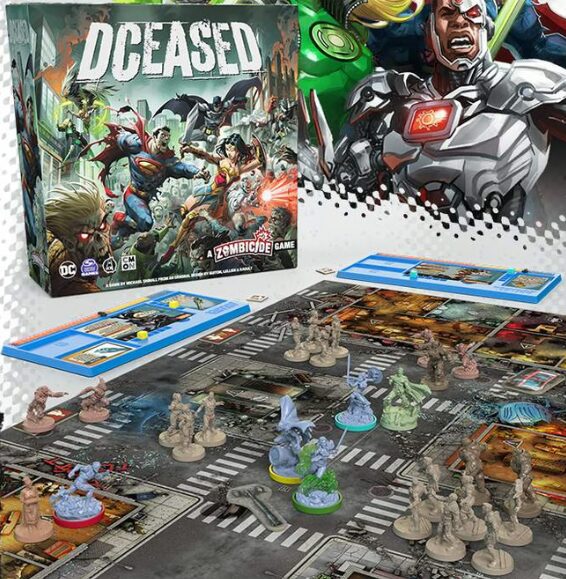
They include DC Super Heroes United, which raised more than $4.4m, and DCeased, which brought in over $2.5m. Both campaigns were initially due to be delivered last year, but are now expected to be delivered in Q4 of 2026, according to CMON’s latest estimates.
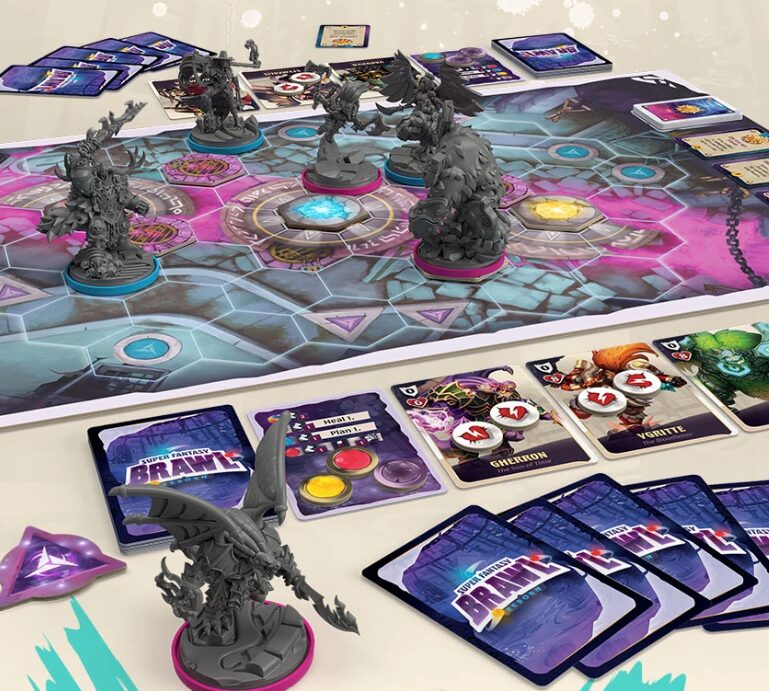
CMON also has several undelivered pre-order campaigns on its books, including Super Fantasy Brawl Reborn and the Assassin’s Creed Role Playing Game. The company is currently in the process of fulfilling a trio of other pre-orders including Dune Desert War, Cthulhu: Dark Providence and Marvel United: Witching Hour.
The company pulled the plug on crowdfunding launches and new game development in April 2025, citing the economic uncertainty created by US tariff hikes – which at the time had reached 145% for China, where the vast majority of hobby board games are manufactured.
But CMON announced in March this year that it plans to relaunch its halted crowdfunding operations later in 2026.
NFTs, which emerged out of cryptocurrency technology such as Bitcoin, exploded into the public eye in 2021 thanks to big-money speculative purchases – such as an NFT of Twitter founder Jack Dorsey’s first tweet selling for $2.9m.
That speculative bubble had already burst a year later, however with many of the digital assets involved losing more than 90% of their peak value. The Dorsey tweet NFT, for example, received a high bid of $6,800 when it was put back on the market in April 2022.
Other board games that have pushed into NFTs are few and far between, with one of the highest profile examples being SolForge Fusion, which allows players to mint decks as digital assets in addition to playing the game in physical form.
Two years ago CCG project Wonders of the First had to pull a $1.4m campaign from Kickstarter after falling foul of the crowdfunding platform’s ban on NFTs. The game went on to raise about $1.2m after relaunching without NFT content.
And if you’ve found our reporting interesting or useful, please consider a paid subscription to help support our journalism!
