

Salvador Dalí: The Surrealist Who Became a Pop Culture Icon | HISTORY
Salvador Dalí: The Surrealist Who Became a Pop Culture Icon
Long before artists became brands, Dalí used film, television, advertising and his larger-than-life public persona to bring Surrealism far beyond the museum.
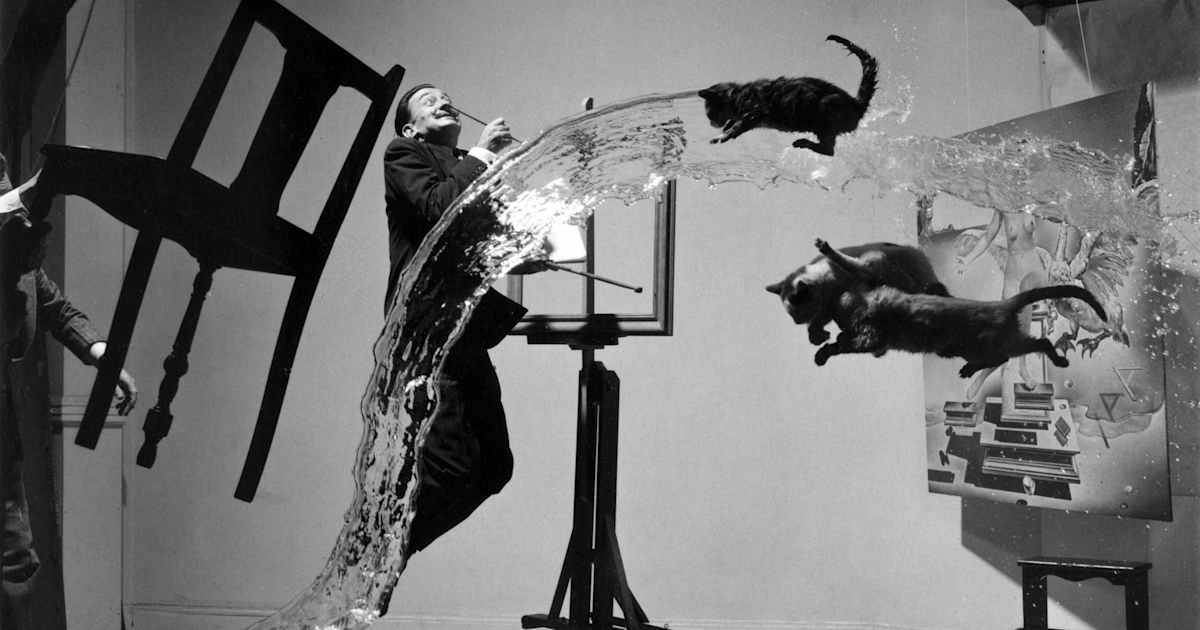
Philippe Halsman, ‘Dalí Atomicus,’ 1948. This dreamlike photo of Surrealist Salvador Dalí appeared in ‘Life’ magazine, helping popularize the artist. It took 28 takes to achieve the playful sense of weightlessness.
Alamy Stock PhotoPublished: July 23, 2026Last Updated: July 23, 2026
Few artists are as instantly recognizable as Salvador Dalí. The melting clocks from his 1931 masterpiece “The Persistence of Memory” have become shorthand for Surrealism—the avant-garde movement inspired by dreams and the unconscious. The Catalan painter remains far better known than other figures in the movement, like René Magritte or Max Ernst, who often enjoy greater art world prestige.
But Dali’s greatest accomplishment may not have been painting at all. He helped reinvent the role of the modern artist, transforming Surrealism into a pop culture phenomenon through film, fashion, advertising, television and his own carefully cultivated public persona. Along the way, he designed window displays for New York department stores, created a Surrealist funhouse for the 1939 New York World’s Fair, collaborated with Alfred Hitchcock on film sets and even starred in an Alka-Seltzer commercial.
Much of Dalí’s success came from treating himself as part of the artwork. “The creation of a character helped him promote [himself] and break down the barriers between high culture and mass culture,” says Montse Aguer, director of the Dalí Theatre-Museum in the artist’s hometown of Figueres, Spain. Long before performance art entered the cultural vocabulary, he staged elaborate spectacles that made publicity an extension of his artistic practice—a template later embraced by artists like Andy Warhol, who also blurred the line between avant-garde art, celebrity and popular culture. “Dalí,” Aguer notes, “was ahead of his time.”
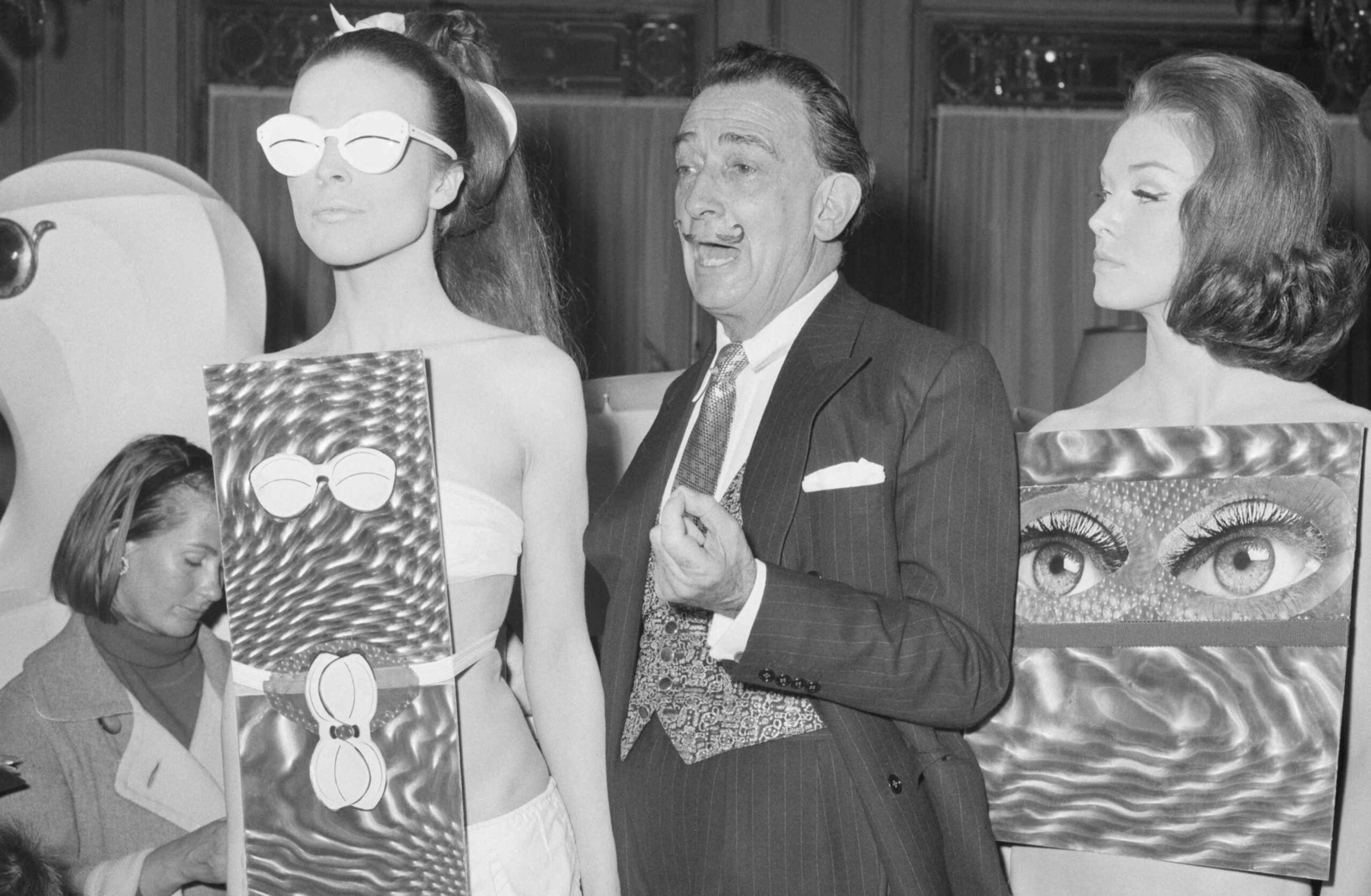
1965: Salvador Dalí holds a fashion event with models wearing Surrealist-inspired outfits.
Inventing the Salvador Dalí Persona
Dalí today is synonymous with his long, upturned waxed mustache, the ocelot he kept as a pet, his flamboyant outfits and his outrageous pronouncements. Early in his career, he moved beyond galleries and museums, bringing his art—and himself—to less rarified spaces.
Collaboration became one of Dalí’s most effective tools for reaching wider audiences. In 1929, he teamed up with Spanish filmmaker Luis Buñuel on the short film Un Chien Andalou, famous for its shocking sequence in which a man’s razor appears to slice open a woman’s eye—a startling illusion created by cutting the eye of a dead calf. The following year, they reunited for L’Age d’Or, a savage satire of bourgeois society that provoked riots at an early screening.
In 1934, his growing appetite for self-promotion—and his ambiguous comments about fascism—sparked a bitter rupture with the Surrealist movement. Its founder, French poet André Breton, even staged a mock trial that year accusing Dalí of supporting fascism. The group formally broke with him in 1939, after which Dalí famously quipped, “The only difference between the Surrealists and me is that I am a Surrealist.”
Turning Publicity Into an Art Form
Dalí always had an instinct for generating publicity. But after being expelled from the Surrealists and going into exile in America the following year, he began diversifying and multiplying his media appearances. “He appears on popular television programs and wants to relate to Hollywood, ballet, theater, fashion, jewelry and social parties,” says Aguer. “He wants to expand his field of creation.”
At the 1936 International Surrealist Exhibition in London, he arrived to deliver a lecture wearing a deep-sea diving suit, with two wolfhounds on leashes in one hand and a pool cue in the other. (The stunt nearly turned disastrous when he began to suffocate inside the helmet before assistants pried it off.) By the end of that year, Dalí’s fame had grown so great that he appeared on the cover of Timemagazine. He later became one of a handful of major artists to have an entire American museum dedicated to their work.
When Walt Disney and Salvador Dalí Created Surreal Animation
Did you know that Disney and Dali created an animated short together? See more in this scene from Season 23, Episode 5, “Everything from Pawn to Nuts.
In 1936, Surrealism itself entered the mainstream when the Museum of Modern Art mounted the landmark exhibition “Fantastic Art, Dada, Surrealism.” To capitalize on the excitement, luxury department store Bonwit Teller invited Dalí and other Surrealists to design its display windows. “It was Dali’s display that caught the public imagination,” writes biographer Ian Gibson in The Shameful Life of Salvador Dalí, “the crowd standing six-deep in the street to gape at his inventions.” His designs featured a mannequin with a head of roses and a version of his famed sculpture “Lobster Telephone,” with a plaster crustacean affixed to a working phone.
The Arrest That Made Headlines
Another Bonwit Teller window commission three years later created an entirely different kind of spectacle. Hoping to recreate the buzz generated by Dalí’s earlier display, the department store unveiled a new installation featuring, among other things, a mannequin in a negligee. When management deemed it too provocative and removed it, Dalí erupted.
Storming into the window display to make his own changes, he accidentally sent a water-filled bathtub crashing through the plate-glass window onto the sidewalk below, prompting his arrest. The incident generated exactly the kind of publicity Dalí relished. Timemagazine dubbed him “the Surrealissimo,” and Dalí later “deemed it ‘the most magical and effective action’ of his entire life.”
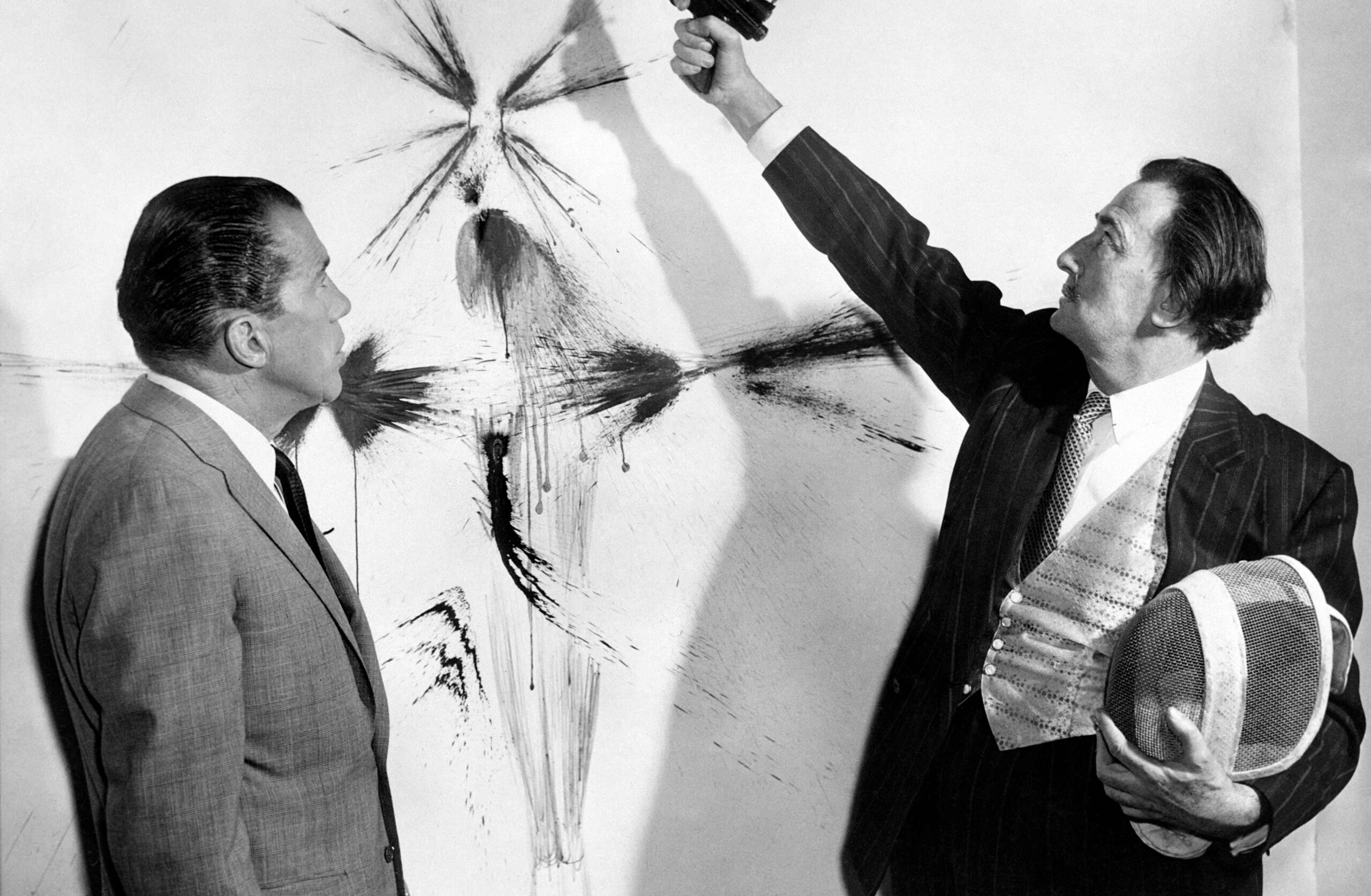
January 29, 1961: TV presenter Ed Sullivan, left, looks on as Surrealist Salvador Dalí, holding a fencing mask, demonstrates ‘bulletism,’ or painting with a gun. Stunts like these helped make Dalí a household name.
Dalí Brings Surrealism to TV
Dalí’s embrace of mass media continued into the television age. In 1961, he appeared on the popular “Ed Sullivan Show,” where he transformed live TV into performance art by firing an arquebus—a centuries-old firearm modified to shoot paint capsules—at a canvas in front of the live audience.
More than a decade later, he turned advertising into another Surrealist spectacle. In a 1974 Alka-Seltzer commercial, he transformed a fashion model into a living canvas, painting her robed torso in vivid reds and yellows to symbolize stomach distress before spraying it blue to represent relief.
Through it all, Dalí helped reinvent what it meant to be an artist in the modern age. His paintings may have become icons of Surrealism, but his performances, publicity stunts and embrace of mass media introduced avant-garde ideas to millions who would otherwise have never set foot in a museum.
Advertisement
Advertisement
Advertisement

HISTORY EducationHISTORY Vault™HISTORY AppsHISTORY en Español®Military HISTORY®Newsletter Sign UpShare Your OpinionsFAQ / Contact UsAdvertise with UsA+E Factual Studios™A+E Studios®Employment OpportunitiesAccessibility SupportTV Parental Guidelines


Advertise with UsA+E Factual Studios™A+E Studios®Employment OpportunitiesAccessibility SupportTV Parental Guidelines
Terms of UsePrivacy PolicyCopyright PolicyCookie NoticeAd Choices
Advertisement
Advertisement
Advertisement
