

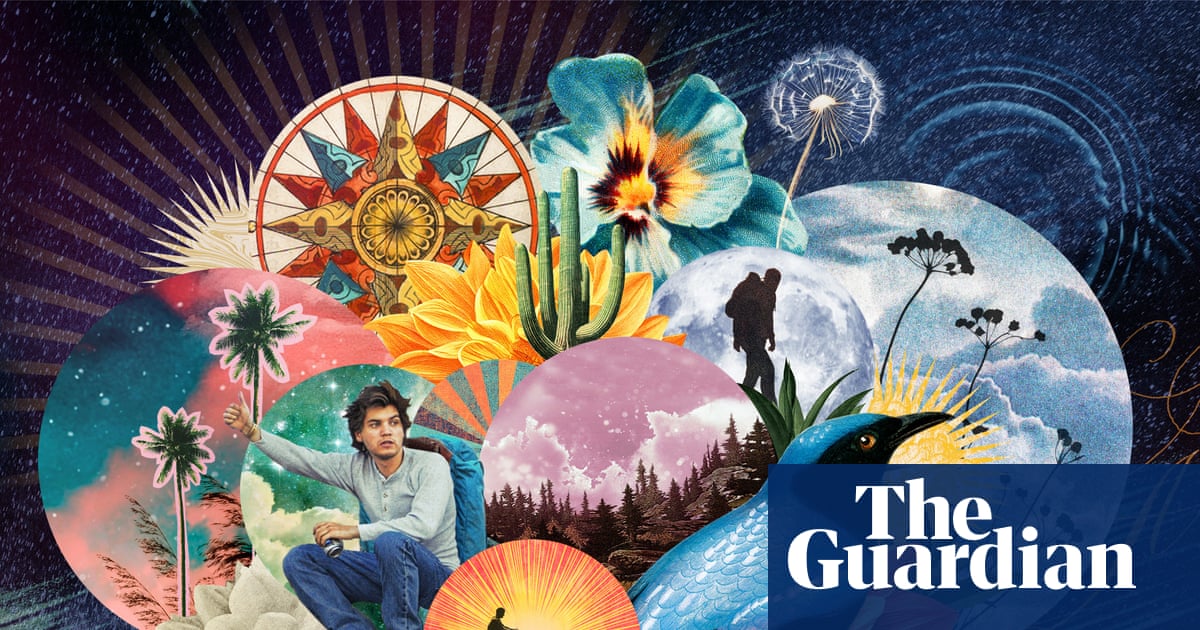
The film helped me realise that getting out into nature would also allow me to escape my anxieties, but I started to see the costs of constant escape
It’s 5.30am, and I’m waking up on a granite slab overlooking the Domeland Wilderness, with nothing but forest, stone and silence for miles. I am 44 days into hiking the Pacific Crest Trail – a journey of about 2,650 miles from the Mexican border to Canada through desert scrubland, pine forests, deep valleys, volcanic terrain and alpine mountains. Each day, I walk about 20 miles with everything I need for the next four months on my back.
I was 16 when I first watched Into the Wild, the film telling the true story of Christopher McCandless, an adventurer who gave up his middle-class life to live in the wilderness. I’d always had a sense of adventureand was enticed by the idea of breaking away from expectations and moving through the world on my own terms. I began to fantasise about escaping my north London bubble to live somewhere as remote and unknown as the wild American landscapes in the film.
Over the next 20 years, that itch took me all over: three months in India, four months in Nepal, five months in Brazil. In between jobs and studies, whenever I felt stuck, I’d set off on an adventure, hoping it might help me understand who I was and what I wanted from life. Those trips shaped me, but I was always chasing the next place, the next view and the next experience, worried I was missing something and believing freedom was still out of reach.
That changed with time, and I even began to see Into the Wild differently. At 16, I was in awe of Christopher’s rejection of a life that felt prescribed. But as I got older, I stopped admiring his abandonment of society and started noticing the cost of doing so. I began to understand what the older characters in the film had warned him: that freedom means little if it comes at the expense of the people you leave behind.
Then one evening, in my late 20s, while living in Los Angeles, I was walking home one night when I realised how lonely I felt in a city of millions. I missed my family and friends, so I moved back to London and put down roots, nurturing relationships instead of looking for the next escape.
This year, when I finally set out to hike the Pacific Crest Trail in April, an adventure I’d fantasised about for almost two decades, it wasn’t because I wanted to run away from my life. It was because I wanted to move towards something: to have a deeper connection with nature and trust in myself. Hiking has become a kind of walking meditation for me, a way to deal with my anxiety when my thoughts get too loud.I find myself constantly stopping in awe of the immense beauty around me: cactus flowers, desert bluebells, the incredible sunsets.
The biggest thing the trail has taught me is to take life step by step. It sounds simple, and it’s often said, but it’s come to mean something much more to me. I feel a huge sense of gratitude – not just for the extraordinary landscapes, but for being able to experience life one day at a time. There’s a peace in not needing to have everything figured out, and instead trusting the next step, then the next one after that.
Alone on the side of a mountain, I never feel lonely. I’ve learned that loneliness and isolation aren’t the same thing. If anything, I feel comforted by the isolation, especially knowing I have those roots back home. I’ve realised now that the freedom I was looking for all those years ago was a freedom of the mind, rather than a physical escape. And that, I’ve discovered, can be found anywhere.
skip past newsletter promotion
- Culture
- My cultural awakening
- features
