

Marcus Chen
July 17, 2026
23 min read
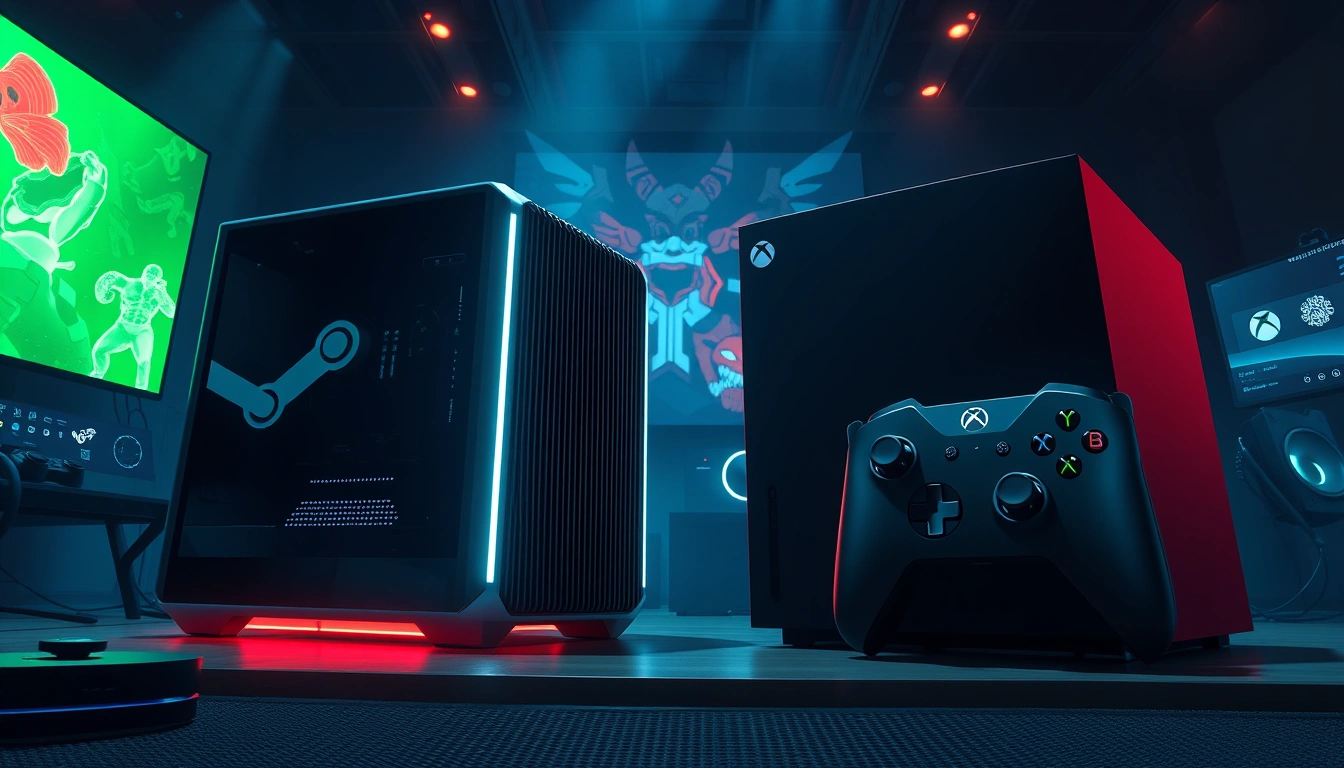
Valve’s new Steam Machine started shipping on The Steam Machine officially launched on June 30, 2026, with units shipping that day, dropping a $1,049 living-room PC into a market Microsoft’s Xbox Series X has owned since November 2020. The base Steam Machine costs $399 more than a Series X disc console today, and that gap is about to shrink. Microsoft confirmed on June 25, 2026 that Xbox Series X prices rise again on August 1, pushing the disc model to The Steam Machine’s base price is $1,049; the $799 figure incorrectly applied to the Xbox Series X disc model in the original text, which actually rose to $799 later.
This comparison breaks down the CPU, GPU, memory, pricing, and real benchmark data behind both systems, plus where the base PS5 and Nintendo Switch 2 fit into the decision. Every spec below comes from Valve, Microsoft, or verified hands-on testing published around the Steam Machine’s June 2026 launch.
Don’t miss new tech stories on Google
Add Tech Insider once in the Google app and our stories appear in your news suggestions.
Steam Machine vs Xbox Series X at a Glance
Both machines target the same living-room slot, but they start from opposite philosophies. The Steam Machine is a shrunken gaming PC that happens to run a console-style interface. The Xbox Series X is a fixed-spec console that happens to run a closed operating system underneath. Here’s what separates them before the deep dive.
- Price: Steam Machine starts at $1,049. Xbox Series X starts at $649.99 today, rising to $799.99 on August 1, 2026.
- Compute units: Xbox Series X’s GPU has 52 compute units on RDNA 2. Steam Machine’s GPU has 28 compute units on the newer RDNA 3 architecture.
- Storage: Steam Machine ships with swappable NVMe storage in 512GB or 2TB. Xbox Series X ships with a fixed 1TB drive, expandable only through Microsoft’s proprietary cards.
- Library: Steam Machine runs your existing Steam library plus desktop-mode access to Epic, GOG, and Battle.net. Xbox Series X is locked to the Xbox ecosystem and Game Pass.
- Availability: Steam Machine sold through a randomized reservation lottery that closed June 25, 2026, with the next window expected in September.
What Is the Steam Machine? Valve’s Return to Living-Room Hardware
Valve announced the Steam Machine on Valve unveiled the Steam Machine on November 12, 2025, eleven years after its first attempt at a living-room PC collapsed in 2015. This version shipped. Reservations opened The reservation window closed on June 25, 2026, at 1 PM ET (or 10 AM Pacific).m. Pacific, capped by a randomized queue instead of a first-come sprint, a design Valve built specifically to blunt bots and scalpers. Anyone with a Steam account in good standing and a purchase made before To qualify for reservations, users must have made a Steam purchase before April 27, 2026.
Units started shipping June 29, 2026 to buyers in the US, Canada, UK, EU, and Australia direct through Steam, with Japan, Taiwan, and Hong Kong served through distributor Komodo. Demand outstripped the first allocation. Valve has already scheduled additional reservation windows for September 2026, December 2026, and into 2027, and online chatter around the queue reportedly grew longer between rounds.
Inside the box sits a semi-custom AMD chip pairing a Zen 4 CPU with an RDNA 3 GPU, the same architecture family powering Valve’s other 2026 hardware push alongside the Steam Frame VR headset and a new $99.99 Steam Controller. The whole unit measures roughly 162 by 156 by 152 millimeters and weighs 2.6 kilograms, putting it in the same footprint class as a Series S or a slim PS5. Valve’s own marketing claims the Steam Machine delivers six times the horsepower of the Steam Deck, a figure the company has repeated across its store page and press briefings but hasn’t broken into a teraflops rating. For the full spec reveal and early pricing context, see our original Steam Machine coverage.
That omission matters for anyone trying to build a clean spec sheet. Valve has published compute unit counts and clock speeds for the GPU, not a TFLOPS figure, so any teraflops number attached to the Steam Machine online is an outside estimate, not an official spec.
Running underneath all of it is SteamOS, Valve’s Linux-based operating system that boots into a console-style interface but drops into a full Linux desktop on demand. That desktop mode is what lets the Steam Machine install the Epic Games Store, GOG Galaxy, and Battle.net alongside Steam itself, something no console in this comparison can do natively.
Buyers who wanted the redesigned Steam Controller alongside their console paid $1,128 for the 512GB bundle or $1,428 for the 2TB bundle, a built-in $20 discount off buying the $99.99 controller separately. Anyone who skipped the controller can still use existing DualSense, Xbox, or Steam Deck-style pads over Bluetooth, since SteamOS supports standard controller pairing out of the box. Full details on the reservation process and shipping timeline are in our Steam Machine pre-orders breakdown.
Xbox Series X in Mid-2026: Price and Position
Xbox Series X launched at $499.99 in November 2020 and has climbed twice since. Microsoft raised the price to $599.99 in May 2025, citing tariffs and component costs, then pushed it again to $649.99 in October 2025. That $649.99 disc price is what the console has carried through mid-2026, alongside a $599.99 digital-only edition.
On June 25, 2026, the same week Steam Machine reservations closed, Microsoft announced a third increase. Effective August 1, 2026, the Series X disc console rises $150 to $799.99, and the digital edition climbs to $749.99. Series S pricing rises too, and Microsoft is discontinuing the 2TB Series X configuration as part of the same announcement. Full details on the timeline and regional rollout are in our Xbox price increase coverage. Cumulatively, that puts the Series X $300 above its 2020 launch price, a There is a 6x (600%) increase in power over the Steam Deck, as the Steam Machine offers six times the Deck’s performance.
Hardware-wise, nothing about the Series X itself has changed since launch. It still runs a custom AMD Zen 2 processor with eight cores and sixteen threads clocked up to 3.8GHz, paired with a 52-compute-unit RDNA 2 GPU rated at 12.15 teraflops. Sixteen gigabytes of GDDR6 memory serve as a unified pool for both CPU and GPU tasks, and a 1TB custom NVMe SSD handles storage, expandable only through Microsoft’s proprietary Storage Expansion Cards or a standard USB drive for older titles. Full specs are listed on Xbox’s official product page.
What keeps the Series X competitive in 2026 isn’t new silicon, it’s the software layer wrapped around it. Xbox Game Pass Ultimate, currently priced up to $22.99 a month, bundles day-one first-party releases with a rotating third-party catalog and cloud streaming. For buyers who play a handful of games a year rather than building a permanent library, that subscription math can undercut the cost of buying games outright on either platform.
The console also carries six years of backward compatibility and a certified performance target that every Xbox developer optimizes against directly, something SteamOS’s Proton compatibility layer approximates but doesn’t guarantee game by game. That certainty is a real selling point for buyers who want a system that behaves the same way every time they turn it on. None of that changes the math on August 1. A buyer sitting on the fence today saves $150 to $200 by ordering before the increase lands, and that timing pressure is arguably the single biggest variable in this entire comparison.
Full Specs Comparison Table
Here’s every core spec side by side, pulling only from Valve’s official announcement, Microsoft and Sony’s published documentation, and cross-checked tech press reporting. Where a manufacturer hasn’t published a number, that’s marked explicitly rather than estimated.
| Spec | Steam Machine | Xbox Series X | PS5 |
|---|---|---|---|
| Starting price | $1,049 (512GB) | $649.99 (disc) | $649.99 (disc) |
| CPU | AMD Zen 4, 6-core/12-thread, up to 4.8GHz | AMD Zen 2, 8-core/16-thread, up to 3.8GHz | AMD Zen 2, 8-core/16-thread, up to 3.5GHz |
| GPU architecture | AMD RDNA 3 | AMD RDNA 2 | AMD RDNA 2 |
| Compute units | 28 CUs | 52 CUs | 36 CUs |
| GPU clock speed | 2.45GHz max sustained | 1.825GHz | 2.23GHz |
| GPU TFLOPS | Not disclosed by Valve | 12.15 TFLOPS | 10.28 TFLOPS |
| System memory | 16GB DDR5 (288GB/s bandwidth) | 16GB GDDR6 (unified) | 16GB GDDR6 (unified) |
| Video memory | 8GB GDDR6 (dedicated) | Shared from unified pool | Shared from unified pool |
| Storage | 512GB or 2TB NVMe, user-swappable | 1TB NVMe, proprietary expansion | 1TB or 825GB NVMe |
| Resolution target | 4K/60 with FSR upscaling | Native 4K, up to 4K/120 | Native 4K, up to 4K/120 |
| Operating system | SteamOS (Linux-based) | Xbox OS | PS5 system software |
| Form factor | 162 x 156 x 152mm, 2.6kg | Tower design | Slim upright design |
| Rated power draw | 30W CPU / 110W GPU | Combined figure not published | Combined figure not published |
A few things jump out immediately. Xbox Series X and PS5 both carry higher raw compute unit counts than the Steam Machine, but Steam Machine’s RDNA 3 architecture is two generations newer and clocks substantially higher per unit than either console’s RDNA 2 silicon. Compute units alone don’t settle a performance argument, and Valve’s decision not to publish a TFLOPS figure means there’s no official apples-to-apples number to lean on.
CPU and GPU Breakdown: Zen 4/RDNA 3 vs Zen 2/RDNA 2
On paper, the CPU race isn’t close. Xbox Series X and PS5 both use AMD’s Zen 2 architecture, first released in 2019 and already a generation old when both consoles launched in late 2020. Steam Machine’s Zen 4 chip is two full architecture generations newer, built on a smaller process node with higher per-core efficiency and a boost clock of 4.8GHz against the Xbox’s 3.8GHz. Where the consoles pull ahead is core and thread count: Xbox Series X and PS5 both run 8 cores and 16 threads, while Steam Machine’s chip has 6 cores and 12 threads.
For gaming specifically, that trade tends to favor Steam Machine. Most current games don’t scale meaningfully past 6-8 fast cores, so the newer, higher-clocked Zen 4 chip should handle CPU-bound scenes, physics, and background OS tasks with more headroom than the aging Zen 2 parts, even with two fewer cores. Where the extra Xbox and PS5 threads help is heavily multithreaded background work, like simultaneous game installs, streaming, or state-management features tied to fast resume.
The GPU picture flips the compute-unit comparison. Xbox Series X’s RDNA 2 GPU carries 52 compute units against Steam Machine’s 28, and PS5’s RDNA 2 chip sits in between at 36 CUs. Raw compute unit count isn’t a clean proxy for performance across GPU generations, though. RDNA 3 improved per-CU throughput over RDNA 2 through a redesigned compute unit and higher clocks, which is why Steam Machine’s GPU can run at 2.45GHz sustained against the Xbox’s 1.825GHz, a real clock advantage that partially offsets the compute unit gap.
Neither Valve nor independent labs have published an official teraflops figure for the Steam Machine’s GPU, so this remains the one spec where a direct numeric comparison against Xbox’s confirmed 12.15 TFLOPS and PS5’s 10.28 TFLOPS isn’t possible using verified data. What benchmarks do exist, covered in detail further down, put real-world Steam Machine performance in Cyberpunk 2077 and Red Dead Redemption 2 in a similar tier to PS5 at comparable settings, which suggests the architecture advantage roughly cancels out the compute unit deficit in practice, even without an official TFLOPS number to point to.
Power budgets tell a related story. Valve rates the Steam Machine’s CPU at 30 watts and its GPU at 110 watts, figures aimed at fitting inside a small console-sized enclosure with a single internal fan. Microsoft has never published equivalent per-component TDP figures for Series X, only a combined system power draw, which makes a direct efficiency comparison another spec Valve’s disclosures don’t fully support.
Memory, Storage and Expandability
Both platforms land at 16GB of RAM, but the way each system uses that memory differs. Xbox Series X and PS5 use unified GDDR6 memory shared dynamically between CPU and GPU tasks, a design inherited from a decade of console architecture. Steam Machine splits its memory instead: 16GB of DDR5 handles general system and CPU workloads, while a separate 8GB pool of dedicated GDDR6 serves as video memory, a more PC-like split that mirrors how a discrete graphics card works inside a desktop tower.
That 8GB VRAM ceiling is worth flagging directly, because it’s lower than the effective graphics memory available to either console’s unified pool at peak allocation, and it’s a number PC gamers who’ve shopped for a discrete GPU in 2026 will recognize as tight for native 4K textures. It’s part of why Valve leans on FSR upscaling to hit 4K/60 rather than targeting native 4K rendering the way PS5 and Series X do at their upper resolution settings.
Storage is where Steam Machine pulls ahead on flexibility. Both the 512GB and 2TB configurations use a standard M.2 2230 NVMe slot that owners can open and swap themselves, plus a microSD slot for additional storage. Xbox Series X ships with a fixed 1TB custom NVMe drive that can only be expanded through Microsoft’s proprietary Storage Expansion Cards, which typically carry a premium over standard NVMe pricing, or through a slower external USB drive limited to older-generation titles. PS5 follows a similar model to Xbox, with a user-replaceable but PCIe 4.0-spec-locked internal slot.
Valve also lists the Steam Machine’s system RAM as upgradeable through a standard SODIMM slot, at least on paper, which would put it well ahead of both consoles on long-term serviceability if borne out in practice. Neither Sony nor Microsoft offers user-upgradeable system memory on their current consoles. That upgrade path arrives at an awkward moment for memory pricing. DDR5 costs have climbed sharply through 2026 as AI infrastructure demand competes for the same fabs, and that pressure has already pushed handheld gaming device makers to delay or reprice hardware. A user-upgradeable Steam Machine is a genuine advantage on paper, but the DRAM market it’s launching into makes that upgrade pricier than it would have been two years ago.
Pricing Breakdown: Today vs After the August 1 Xbox Price Hike
Price is where this comparison gets time-sensitive. Every figure below reflects US pricing as confirmed by Valve, Microsoft, and Sony through their most recent 2026 announcements.
| Configuration | Price | Notes |
|---|---|---|
| Steam Machine 512GB | $1,049 | Ships from the reservation queue |
| Steam Machine 2TB | $1,349 | +$300 over the base config |
| Steam Controller (standalone) | $99.99 | Optional add-on |
| Steam Machine 512GB + Controller | $1,128 | $20 bundle discount |
| Steam Machine 2TB + Controller | $1,428 | $20 bundle discount |
| Xbox Series X Digital (current) | $599.99 | Rises to $749.99 on Aug 1, 2026 |
| Xbox Series X Disc (current) | $649.99 | Rises to $799.99 on Aug 1, 2026 |
| PS5 Digital (current) | $599.99 | Set after Sony’s 2026 DRAM-driven hike |
| PS5 Disc (current) | $649.99 | Set after Sony’s 2026 DRAM-driven hike |
| PS5 Pro (current) | $899.99 | Raised from $699.99 on April 2, 2026 |
Run the math on the base configurations and the gap between the cheapest Steam Machine and the cheapest current-gen console is smaller than it looks at first glance, and it’s about to get smaller still. Today, a 512GB Steam Machine costs $399 more than an Xbox Series X disc console, or $449 more than the digital edition. After August 1, those gaps shrink to $249 and $299 respectively, simply because Microsoft is raising Xbox prices while Valve has given no indication Steam Machine pricing will move.
PS5 sits in a similar band to Xbox Series X on price, currently $649.99 for the disc edition and $599.99 digital, after Sony’s own price increase earlier in 2026 tied to the same DRAM cost pressure hitting memory across the industry. PS5 Pro, Sony’s premium tier, costs $899.99, which places it $150 below the base Steam Machine and squarely between the two Steam Machine configurations on price if you’re weighing raw sticker cost alone.
None of these numbers include games, subscriptions, or accessories, and that’s where the comparison shifts again. Xbox Series X owners chasing the full Game Pass Ultimate experience pay up to $22.99 a month on top of hardware cost. Three years of that subscription runs approximately $827, which pushes the effective cost of a digital Series X plus three years of Ultimate past $1,400, higher than a base Steam Machine bought outright with no ongoing subscription required for online multiplayer. Steam has never charged a separate fee for online play, a structural difference from Xbox Live’s subscription-gated multiplayer that’s easy to miss when comparing sticker prices alone.
Operating System and Game Library: SteamOS vs the Xbox Ecosystem
The software layer is arguably a bigger differentiator than any single spec. SteamOS is Valve’s Linux-based operating system, built around the Proton compatibility layer that translates Windows-native game code to run on Linux. It boots into a console-style, controller-friendly interface by default, the same one Steam Deck owners have used since 2022, and drops into a full desktop environment with a couple of button presses.
That desktop mode is the practical difference. From it, Steam Machine owners can install the Epic Games Store, GOG Galaxy, Battle.net, and other PC storefronts alongside Steam itself, along with a genuine web browser and community-built mods and tools. Xbox Series X offers none of that. Its OS is locked to the Xbox ecosystem, Xbox Game Pass, and Microsoft’s own storefront, with no path to install Steam, Epic, or any third-party launcher natively.
Here’s the kind of terminal command SteamOS’s desktop mode allows, useful for confirming your GPU driver is running as expected right after first boot.
# From SteamOS Desktop Mode, open Konsole and run:
inxi -G
glxinfo | grep "OpenGL renderer"
# Confirms the RDNA 3 GPU and current driver are both loaded correctly.
Compatibility is the open question mark. Valve hasn’t published a specific percentage of the Steam library confirmed to run well on Steam Machine specifically, though the company has expanded its long-running Deck Verified program to cover the new hardware. Steam Deck’s own Verified rate has historically landed in the 70 to 80% range of actively-rated titles, and Steam Machine’s more desktop-like power budget should clear more of the remaining titles than the handheld does, but that’s an inference from the Deck’s track record, not a confirmed Steam Machine figure.
Xbox’s ecosystem trades that open-endedness for certainty. Every game sold as Xbox Series X compatible is certified to hit a specific performance target on that exact hardware, with no Proton-style translation layer between the code and the silicon. Backward compatibility reaches across four console generations for the games Microsoft has enabled, a library depth that no SteamOS device can touch since it’s Xbox-specific by design.
For anyone who already owns a Steam library, this section is close to the whole decision by itself. Rebuying a 100-plus game collection on a new platform costs real money no spec sheet captures, and Steam Machine is the only device in this comparison that sidesteps that cost entirely.
Benchmarks and Performance: What’s Verified and What Isn’t Yet
Independent benchmarks of the Steam Machine started appearing around its June 29, 2026 launch, and the picture they paint is more nuanced than either a flat “matches PS5” or “matches a gaming PC” claim suggests.
Digital Foundry’s hands-on testing found the Steam Machine running Cyberpunk 2077 at 1440p and 60fps with upscaling enabled “fairly easily,” a number that held up across normal play. Turn on ray-traced sun shadows and reflections, though, and frame rate dropped to 30fps, a steep enough cut that it’s clearly a setting worth toggling off for anyone prioritizing smoothness over lighting fidelity.
Separate testing from PCGamesHardware.de measured Cyberpunk 2077 directly against the Steam Deck at matched settings. At 720p, the Steam Machine averaged around 142fps against the Deck’s roughly 50fps. At 1080p, the gap widened further, Steam Machine near 133fps against the Deck’s 31fps. Those numbers land close to, though not exactly at, Valve’s own “6x the Steam Deck” marketing claim, and they’re the closest thing to an independent check on that figure published so far.
At more demanding settings, Cyberpunk 2077 ran between 70 and 85fps at 1080p Ultra with FSR set to Auto, and averaged around 72fps at 1440p Ultra with FSR on Balanced, though frame rate dipped below 60fps in the game’s more demanding scenes at that setting. Push to native 4K at Ultra or High settings with ray tracing off, and performance fell under 30fps, a result multiple outlets flagged as not realistically playable at that resolution tier. GamingBolt’s testing of the same title at upscaled 1440p/60fps described performance as reportedly near PS5, one of the more direct console comparisons published so far.
Notebookcheck’s independent test of Red Dead Redemption 2 found the game performed impressively at 1440p, while noting compromises elsewhere in the settings needed to hit that result, consistent with the pattern across other outlets: strong at 1440p with upscaling, rough at native 4K.
What’s still missing, as of this writing, is a direct frame-rate-matched benchmark pitting Steam Machine against Xbox Series X in the same titles at the same settings from a major outlet. Every comparison published so far measures Steam Machine against either the Steam Deck or PS5, not the Xbox. That gap matters because Series X’s 52 compute units and PS5’s 36 sit on the same RDNA 2 architecture, which makes cross-referencing PS5 benchmarks against Xbox’s known spec advantage a reasonable estimate but still an estimate. Readers who want a definitive Steam Machine vs Xbox Series X frame-rate chart will have to wait for outlets to publish one directly.
Real-World Buying Scenarios
Spec sheets rarely match how people actually decide. Here’s how the tradeoffs above play out in specific situations.
- The existing Steam library owner: Consider someone who’s spent eight years and roughly 200 games building a Steam library. Buying an Xbox Series X means starting that collection over at full price. Buying a Steam Machine means those 200 games install the day the console arrives, with existing saves, achievements, and community mods intact. This scenario alone explains a large share of Steam Machine’s reservation demand.
- The August 1 deadline shopper: A buyer with no existing library on either platform, comparing sticker prices in July 2026, faces a hard deadline. Ordering an Xbox Series X before August 1 locks in $649.99. Waiting even a week past that date means paying $799.99 for the same box, a $150 jump that erases most of the price advantage Xbox held over Steam Machine.
- The Game Pass household: A family that plays a rotating mix of new releases rather than replaying a fixed library leans Xbox by design. Game Pass Ultimate’s day-one first-party catalog, currently priced up to $22.99 a month, is built for exactly that usage pattern, and Steam Machine has no equivalent subscription that bundles day-one PC releases the same way.
- The DRM-averse buyer: Someone burned by a storefront removing purchased content, or who wants games playable offline indefinitely, gravitates toward Steam Machine’s desktop mode, which opens the door to GOG’s DRM-free catalog on top of Steam itself. That’s simply not available inside Xbox’s closed ecosystem.
- The upgrade-path planner: A buyer thinking three years ahead has to weigh Steam Machine’s swappable NVMe storage and SODIMM-upgradeable RAM against Xbox Series X’s fixed 1TB drive and proprietary expansion cards. If DRAM and NVMe pricing eases from 2026’s elevated levels, Steam Machine’s upgrade path could age noticeably better.
- The PC builder comparison shopper: Anyone who already owns a desktop with a discrete GPU in the RTX 5060 class, currently priced around $350 to $370, should benchmark that existing hardware against Steam Machine’s specs before buying anything. A machine built around a similarly priced GPU plus existing peripherals can match or beat Steam Machine’s 28-compute-unit RDNA 3 GPU for comparable or lower total cost, without the reservation queue. Our 2026 GPU pricing guide tracks where RTX 5060-class cards sit month to month.
None of these scenarios has a universally correct answer. They’re a starting point for matching the hardware to how a specific household actually plays, which matters more here than any single benchmark number.
Pros and Cons
Steam Machine Pros and Cons
Pros: full access to an existing Steam library with no rebuying, desktop mode unlocks Epic, GOG, and Battle.net alongside community mods, a newer Zen 4 CPU and RDNA 3 GPU architecture, swappable NVMe storage and SODIMM-upgradeable RAM, no subscription fee required for online multiplayer, and 4K/60 gaming with ray tracing support
Cons: a $1,049 starting price that’s $399 more than Xbox Series X today, limited initial availability through a randomized reservation queue, no official GPU TFLOPS rating an 8GB dedicated VRAM pool that’s tight for native 4K textures, Proton game compatibility that isn’t guaranteed title by title, and no first-party console exclusives
Xbox Series X Pros and Cons
Pros: $649.99 today, still the cheaper box until August 1, 2026, a massive Game Pass Ultimate day-one catalog for a monthly fee, every game certified to a fixed and predictable performance target, backward compatibility spanning four console generations, and a simple, mature, plug-and-play interface with no OS tinkering required.
Cons: price rises to $799.99 on August 1, 2026, a $150 jump, a closed ecosystem with no access to Steam, Epic, or GOG, storage expansion locked to expensive proprietary cards, a full Game Pass Ultimate experience that adds up to $22.99 a month on top of hardware cost, and fixed hardware with no user-upgradeable RAM.
Who Should Buy Which: Use-Case Recommendations
Matching hardware to how you actually play matters more than chasing the highest number on a spec sheet. Here’s a direct recommendation for seven common buyer profiles.
| Buyer Profile | Recommended Pick | Why |
|---|---|---|
| Owns 50+ games on Steam already | Steam Machine | Instant access to an existing library, no rebuying |
| Xbox Game Pass subscriber wanting day-one exclusives | Xbox Series X | Day-one first-party catalog built into the subscription |
| Budget-conscious buyer shopping before Aug 1, 2026 | Xbox Series X | $399-$449 cheaper than Steam Machine today |
| Wants to mod games or run non-Steam launchers | Steam Machine | Open Linux desktop mode with Epic and GOG access |
| Wants a preassembled living-room PC with zero building | Steam Machine | SteamOS handles drivers and setup automatically |
| Casual or family gamer prioritizing plug-and-play | Xbox Series X | Mature UI, controller included standard, no OS tinkering |
| Already owns a PC with an RTX 5060-class GPU | Neither, keep the PC | Existing hardware likely matches or beats Steam Machine |
Where PS5 and Switch 2 Fit Into the Decision
This comparison centers on Steam Machine and Xbox Series X because they’re the two systems most directly competing for the same $650-to-$1,050 living-room budget in mid-2026, but they’re not the only options.
PS5 Pro is the closest thing to a direct power rival to Steam Machine among consoles, at $899.99 after Sony’s price increase from $699.99 took effect April 2, 2026. Its GPU is rated at 16.7 TFLOPS, a published Sony figure, well above Xbox Series X’s 12.15 TFLOPS and the closest thing to an official high-end target in this entire comparison. For a full breakdown of that specific matchup, see our Steam Machine vs PS5 Pro coverage, which digs into Sony’s premium tier in detail.
Base PS5 sits almost exactly where Xbox Series X does on price, $649.99 disc and $599.99 digital, making it functionally interchangeable with Series X for anyone deciding purely on console-vs-Steam-Machine budget grounds rather than which console ecosystem they prefer. Our PS5 vs Xbox Series X vs Switch 2 comparison covers that three-way console matchup on its own.
Nintendo Switch 2 plays a different role entirely. Priced at $449.99 today and rising to $499.99 on September 1, 2026, it’s cheaper than every device in this comparison and built for portability first, not living-room power. It’s not a real alternative to either Steam Machine or Xbox Series X for anyone prioritizing 4K output or top-end frame rates, but it’s worth naming because it’s the only current device pulling budget-conscious buyers away from this entire price bracket rather than choosing between machines inside it.
For anyone still undecided among all four, the practical filter is simple: SteamOS or an existing PC library points to Steam Machine, subscription-driven day-one gaming points to Xbox Series X or PS5 depending on exclusives preference, raw published GPU power points to PS5 Pro, and budget or portability points to Switch 2. It’s also worth remembering that three of these four devices, Steam Machine, PS5, and Switch 2, have all raised prices or seen memory-driven cost pressure at some point in 2026. Xbox Series X’s August 1 increase isn’t an isolated event, it’s the latest entry in an industry-wide pattern tied to DRAM and NAND flash costs climbing across every hardware category this year, gaming included.
Migration Guide: Switching Ecosystems Without Losing Your Library
Anyone moving from an existing Xbox or PlayStation setup to a Steam Machine, or the reverse, needs to plan around a few practical realities before hardware arrives.
- Audit save data before switching. Steam Cloud saves transfer automatically between any device running Steam, including a new Steam Machine, but Xbox and PlayStation cloud saves are locked to their respective ecosystems. Games with cross-save support, checked individually per title, are the only way to carry progress across platforms.
- Check Proton compatibility for non-Steam-native titles. Before assuming every game in a Steam library runs well on Steam Machine, check ProtonDB or Valve’s own Deck Verified ratings for each title. Ratings that applied to Steam Deck’s more limited hardware should improve on Steam Machine’s higher power budget but aren’t guaranteed to flip from unplayable to verified automatically.
- Move controllers over deliberately. SteamOS pairs with Xbox, DualSense, and Steam-native controllers over Bluetooth, so existing controllers don’t need replacing immediately, though DualSense and Xbox pads won’t support Steam Input’s full remapping depth the way a Steam Controller does.
- Reinstall storefront clients through desktop mode. Epic Games Store, GOG Galaxy, and Battle.net all need manual installation through SteamOS’s desktop mode. They’re not preloaded, and each keeps its own separate save and achievement system apart from Steam’s.
- Budget for the subscription math, not just hardware. Anyone leaving Xbox Game Pass behind should factor in the cost of individually buying any games they’d been playing through the subscription, since Steam Machine has no equivalent all-you-can-play tier bundled in as of 2026.
- Expect a learning curve if you’ve never touched Linux. SteamOS’s console-mode interface hides most of this, but anything requiring desktop mode, driver troubleshooting, or manual mod installation assumes at least basic comfort with a Linux-style file system, a real difference from Xbox’s fully closed, zero-maintenance approach.
None of these steps are difficult individually, but they add up to real setup time that a fresh-out-of-the-box Xbox Series X simply doesn’t require. Anyone weighing the two shouldn’t discount that first-weekend friction against the long-term library and cost advantages Steam Machine offers.
The Verdict: Which Should You Buy in 2026
Strip away the marketing and the decision comes down to three numbers: $399, the current price gap, $249, the price gap after August 1, and whichever library you’ve already spent years building.
Buy the Xbox Series X if you’re shopping before August 1, 2026, want a guaranteed, zero-maintenance plug-and-play console, or you’re already paying for Game Pass Ultimate and plan to keep doing so. At $649.99 today, it remains the cheaper, simpler, more predictable box, and four generations of backward compatibility plus a certified performance target are real advantages no Steam Machine spec sheet matches.
Buy the Steam Machine if you own a meaningful Steam library already, want the option to install Epic, GOG, or Battle.net alongside it, or you’d rather pay once for hardware and skip a recurring online-play fee. Its Zen 4 CPU and RDNA 3 GPU are architecturally newer than anything inside Xbox Series X or PS5, its storage and RAM are more upgrade-friendly on paper, and early Digital Foundry and PCGamesHardware.de benchmarks put its real-world performance in Cyberpunk 2077 and Red Dead Redemption 2 close to PS5 territory at 1440p with upscaling, even without an official TFLOPS figure to point to.
Neither machine wins cleanly on specs alone. Xbox Series X has more compute units. Steam Machine has the newer architecture and higher clocks. Xbox has a confirmed 12.15 TFLOPS rating. Steam Machine has none published at all. What tips the decision, in practice, is less about raw silicon and more about which ecosystem a buyer is already inside, and how much the August 1 price jump changes the math for anyone still on the fence.
For most buyers without an existing Steam library, the safer near-term move is locking in Xbox Series X’s $649.99 price before it disappears. For buyers with years of Steam purchases already paid for, Steam Machine’s $1,049 starting price is easier to justify than it looks on a spec sheet alone, because it’s replacing a library cost that would otherwise need paying twice. Whichever box wins out, both are shipping into a hardware market where DRAM costs, tariffs, and component shortages have made 2026 an unusually volatile year to buy gaming hardware, and neither price is guaranteed to hold through the rest of it.
Frequently Asked Questions
Is the Steam Machine more powerful than the Xbox Series X?
It depends on which spec you weigh. Xbox Series X has more GPU compute units, 52 against Steam Machine’s 28, and a confirmed 12.15 TFLOPS rating Valve hasn’t matched with an equivalent Steam Machine figure. Steam Machine’s RDNA 3 architecture is two generations newer and clocks meaningfully higher, which narrows the real-world gap. Early Digital Foundry and PCGamesHardware.de testing puts Steam Machine’s performance in the same tier as PS5 at 1440p with upscaling, but no outlet has published a direct Steam Machine vs Xbox Series X frame-rate benchmark yet.
How much does the Steam Machine cost compared to Xbox Series X?
Steam Machine starts at $1,049 for 512GB. Xbox Series X costs $649.99 today, a $399 gap. That gap narrows to $249 once Microsoft’s confirmed August 1, 2026 price increase pushes the Series X to $799.99.
Can I use Xbox Game Pass on a Steam Machine?
Not natively as a console experience. The Game Pass PC app can technically be installed through SteamOS’s desktop mode, but it won’t integrate with the console-style interface or guarantee controller support the way it does on actual Xbox hardware.
Does the Steam Machine play Xbox or PlayStation exclusives?
No. Steam Machine runs SteamOS and the Steam library, plus desktop-mode access to Epic, GOG, and Battle.net. It can’t run Xbox or PlayStation console-exclusive titles, which are built for those platforms’ specific hardware and operating systems.
When exactly does the Xbox Series X price increase take effect?
August 1, 2026. Microsoft announced the increase on June 25, 2026. The disc console rises from $649.99 to $799.99, and the digital edition rises from $599.99 to $749.99.
Is the Steam Machine worth it compared to building a gaming PC?
It depends on what you’re comparing against. A discrete GPU in the RTX 5060 class costs roughly $350 to $370 in mid-2026. Anyone who already owns a PC with a comparable card, or is willing to build one, may match or beat Steam Machine’s specs for similar money, without a reservation queue. For buyers starting from zero, Steam Machine’s $1,049 all-in price avoids the time and guesswork of sourcing individual parts. Our gaming PC build guide walks through that DIY path step by step.
Can I upgrade the Steam Machine’s storage and RAM later?
Storage, yes, definitely. Both configurations use a standard, user-swappable M.2 2230 NVMe slot plus a microSD slot. Valve has also listed the system RAM as SODIMM-upgradeable, which would put it ahead of Xbox Series X and PS5, neither of which offers user-upgradeable system memory.
Should I wait for the next Steam Machine reservation window?
Valve has scheduled additional windows for September 2026, December 2026, and into 2027. Waiting avoids the initial queue’s randomness, but it also means shopping after Xbox Series X’s price has already risen to $799.99, which changes the price-gap math in Steam Machine’s favor by the time a later window opens.
