

Posted in: Comics, Heritage Sponsored, Vintage Paper | Tagged: dr fate, Lamont Larson
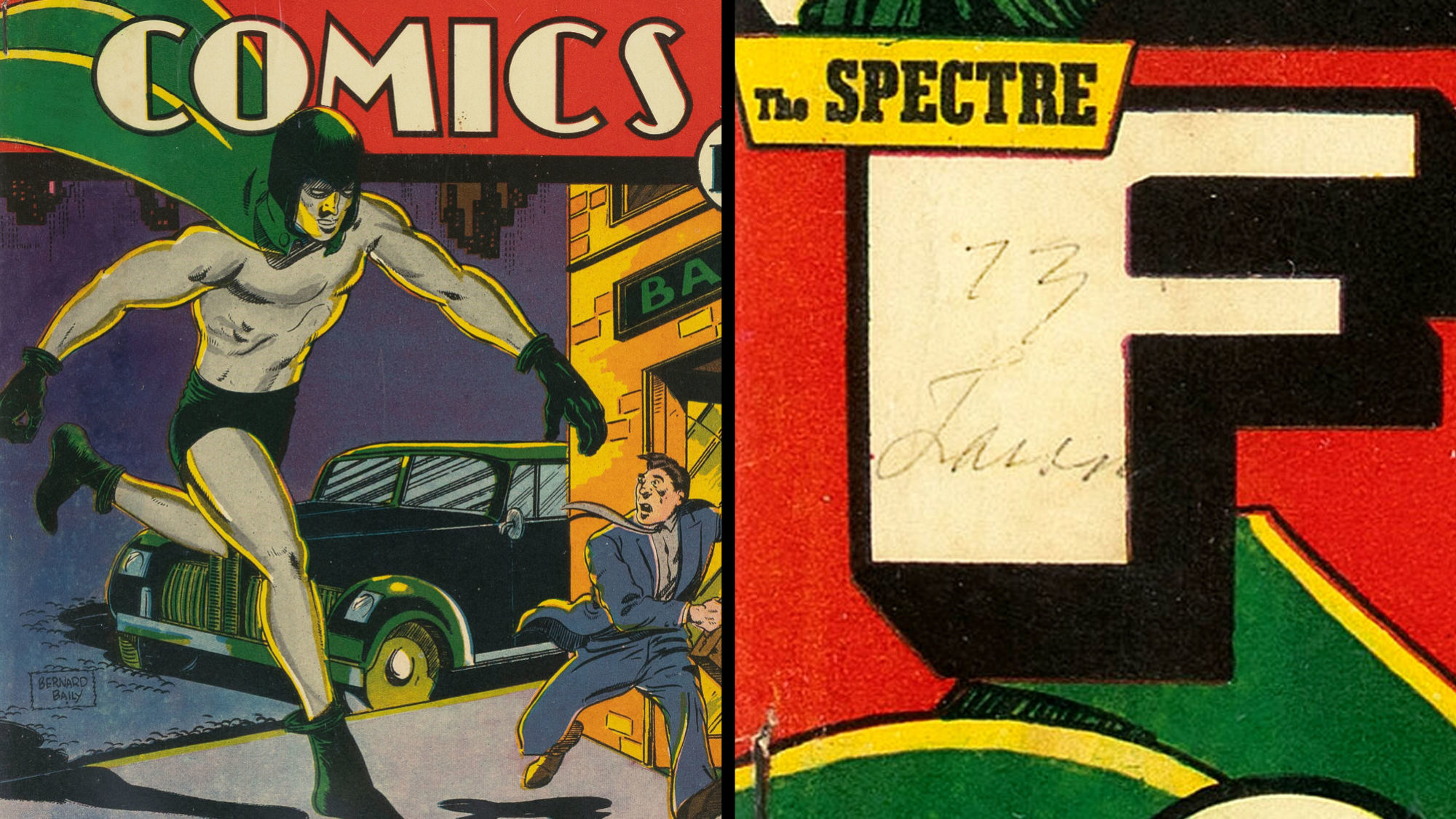
Lamont Larson’s Copy of More Fun Comics #67, Up for Auction
There’s a rare chance to get an early key More Fun Comics issue from Lamont Larson’s now-legendary and historically important collection
Published Fri, 10 Jul 2026 16:03:10 -0500
by Mark Seifert
|
Article Summary
- Larson pedigree comics remain elite collectibles, tied to Lamont Larson’s remarkably preserved Wausa, Nebraska finds.
- More Fun Comics #67 is a key Larson issue, featuring the first full origin of Dr. Fate in DC’s Golden Age.
- Gardner Fox and Howard Sherman expanded Dr. Fate’s myth, tracing Kent Nelson, Nabu, and the hero’s mystical rise.
- With a Bernard Baily Spectre cover and the Larson provenance, this 1941 DC classic holds lasting collector appeal.
Provenance has always been important to serious comic book collectors, and the Lamont Larson Pedigree is one of the best examples of why this is true. Lamont Larson (1927-2020) purchased more than 1,000 comic books at Creutz Drug Store in Wausa, Nebraska, from 1936 to 1941, and his collection has subsequently become one of the most famous, sought-after, and historically important comic book pedigree collections ever assembled. Larson comic books often reside in private comic book collections for years if not decades, and are always highly sought after when they do hit the market. There’s a rare chance to get a key DC Comic issue from this revered collection featuring the Origin of Dr. Fate in More Fun Comics #67 Larson Pedigree (DC, 1941) CGC Apparent VF/NM 9.0 Slight (P) Off-white to white pages copy up for auction in the July 9 – 11 Comic Books Signature Auction #7467 at Heritage Auctions.
Brought to market by dealer Joe Tricarichi in the 1980s, Lamont Larson’s collection became famous and recognizable because his name was written on the cover of many of his comic books. The collection became even more historically important when historian and collector Jon Berk was able to track down Larson based on a coupon filled out in Larson’s copy of All-Star Comics #1 which gave an address of Wausa, Nebraska. Berk eventually spoke to Larson and wrote an article about him and the place where he got his comics in Overstreet’s Gold and Silver Quarterly #6 (Oct.-Dec. 1994). From this starting point, the vintage comics community was able to connect with the historical details of this collection and to Lamont Larson himself, who was a guest of honor at San Diego Comicon in 2005.
From the information Larson provided, a universe of details unfolded regarding the context of his purchase of the comic books in this collection. For example, he bought these books at the Creutz Drug Store in Wausa, Nebraska. According to the Nebraska Historic Buildings Survey, Creutz Drug Store was established in Wausa in 1889 and apparently it was run by successive generations of the Creutz family for over a century. There is still a Creutz Drug Store in Wausa to this day, it appears. The family took the drug store business very seriously over the decades, and various members of the Creutz family were noted to be attending industry conferences or otherwise garnering mentions in trade journals such as The Northwestern Druggist. It was Fred Creutz, the son of founder P.G. Creutz, who was running the business in Lamont Larson’s day and who suggested to Lamont that they develop what today we would call a pull box system of sorts. According to Berk, Larson recollected that Creutz told him, “Well, I tell you what. We’ll put them away and put your name on them…and when you want to come in and get them, they’ll be here.”
Fred Creutz was known to be an advocate of just that kind of service over the years to his small-town customers, whom he considered his personal friends. Furthermore, The Northwestern Druggist quoted Creutz as noting that the shorter hours of small-town business life “proved a factor in enabling him to get and keep good clerks.” Such was certainly the case for longtime Creutz Drug Store clerk Tryg Hagen (sometimes also spelled Tryge or Trygve), who listed his occupation as clerk in a drug store for United States Censuses from 1920 to 1940. When Berk talked to later-generation Creutz Drug Store operators Norman and Bob Creutz, they indicated that it was Hagen who wrote the familiar flowing cursive “Larson” which appears on many of the copies of this collection that have the name on the cover. This is the handwriting present on the
Also according to Norman and Bob Creutz, clerk Cecil Coop helped out in the drug store after Tryg Hagen died in 1940, and would have been the other person responsible for writing on the covers to save Lamont Larson’s comics for him — but this may be a case of mistaken recollection. Records show that Tryg Hagen actually died in 1942, and a quick browse through the Heritage Archives seems to confirm that Hagen’s flowing cursive remains consistent (for those copies that have Larson’s name on the covers) through the collection’s endpoint in 1941. This would also seem to eliminate the alternative possibility that Hagen retired in 1940-41.
Did Cecil Coop help out here and there before Hagen’s death? Very possible, though there may also be another answer. This Action Comics #16 clearly does not have the flowing cursive Tryg Hagen handwriting, and the only other Larson I can find with this same handwriting at a glance is this Amazing Mystery Funnies V2#9 — which likely came out in the same week as Action Comics #16. From newspaper notices, it appears that a man named Melvin Rosen was known to help out in the store at times when Hagen was out for a few days, so it’s possible that this is his handwriting as well. It’s also worth noting that this person used the full “Lamont Larson” when Hagan often stuck to “Larson”, “L. Larson”, or sometimes “Lamont”. The full usage might indicate a clerk temporarily filling in who was less familiar with the store’s regular routines and customers and had been told to “mark these down for Lamont Larson” perhaps.
Created by writer Gardner Fox and Howard Sherman, with pulp influences from the likes of H.P. Lovecraft and Clark Ashton Smith, Dr. Fate’s genesis was largely just alluded to through his earliest appearances in More Fun Comics and All-Star Comics. A year after his debut, the character finally got a proper origin moment in More Fun Comics #67, cover-dated May 1941. Exploring Mesopotamia with his archaeologist father, Kent Nelson brought the cosmic being named Nabu the Wise back to life while inadvertently setting off events that killed his father Sven Nelson. Nabu raised and trained young Kent to wield incredible powers, and gave him his distinctive helmet, cloak, and amulet.
This origin moment also seemed to represent a level-up for the importance of the character at DC Comics. Starting with the next issue, Dr. Fate came to dominate the covers of More Fun Comics for the next several issues, until Green Arrow finally took them over with More Fun Comics #77. While not a Dr. Fate cover, More Fun Comics #67 features an iconic Spectre cover by Bernard Baily. An important moment for a character whose star continues to rise even today, there’s a rare chance to get a key DC Comic issue featuring the Origin of Dr. Fate from one of the most sought-after pedigrees in all of comics collecting in More Fun Comics #67 Larson Pedigree (DC, 1941) CGC Apparent VF/NM 9.0 Slight (P) Off-white to white pages copy up for auction in the July 9 – 11 Comic Books Signature Auction #7467 at Heritage Auctions.
Enjoyed this? Please share on social media!

Stay up-to-date and support the site by following Bleeding Cool on Google News today!
