

Creating a brand new take on a classic character who has literal decades of history to their name is no simple task. No one knows this challenge better than folks who’ve made writing comic books their career, as so many characters have histories and continuity that are so long and complex they practically make new stories almost prohibitive. To help with this issue, major comic labels such as Marvel and DC Comics introduced the concept of retroactive continuity, which began as a way of allowing writers to subtly shift around previously established lore (or, alternatively, introduce new elements that already took place). Given that characters like Spider-Man and Batman have been around for close to 100 years now, this concept of retconning eventually expanded to include the idea of a fully rebooted or an entirely separate, parallel continuity.
That latter example is what writer Brian Michael Bendis attempted with Spider-Man in the fall of 2000, with the series “Ultimate Spider-Man” (which just ended!). Presented as a way of modernizing the character while reintroducing and remixing his history, supporting cast, and rogues gallery, the series served as both summation of the character up to that point as well as a new beginning. This month’s “Crystal Lake” series essentially does the same thing to “Friday the 13th” and Jason Voorhees. Almost as if to prove the similarity, the reaction to “Crystal Lake” has been as passionate and polarizing as the fan reaction to “Ultimate Spider-Man” was. While the two projects share a lot in common creatively, the key difference is that “Ultimate Spider-Man” was always presented as separate from the main “Amazing Spider-Man” continuity, while it remains to be seen where “Crystal Lake” intends to position itself in “Friday the 13th” lore.
Crystal Lake and Ultimate Spider-Man reap the benefits of lore without having to conform to it
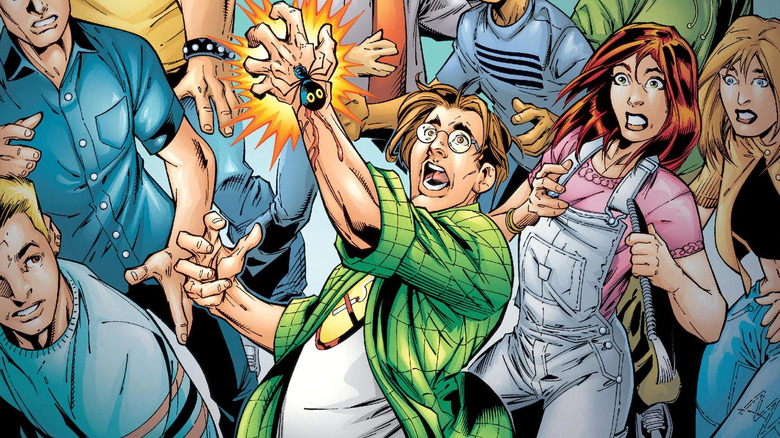
While neither “Ultimate Spider-Man” nor “Crystal Lake” would have been worthwhile if the writing had been subpar (or the artwork/performances of the cast had been bad, respectively), by far the most exciting aspect of both projects is the way they took the elements and histories of their respective franchises and examined them anew. In “Ultimate Spider-Man,” bringing the character to a then-modern era did a lot of the heavy lifting in making the Spidey mythos feel fresh. Yet on top of that, Brian Michael Bendis added some wrinkles to the mythos which ended up influencing future Spidey adaptations. He came up with the idea of a genetically modified spider as opposed to a radioactive spider that delivers the fateful bite to Peter Parker (which appeared in Sam Raimi’s “Spider-Man”), and later the development of Peter’s Aunt May discovering his secret identity as Spider-Man, as seen in the final moments of Jon Watts’ “Spider-Man: Homecoming.” Yet even with these new elements, “Ultimate Spider-Man” retained the core tropes and flavor of “Spider-Man.”
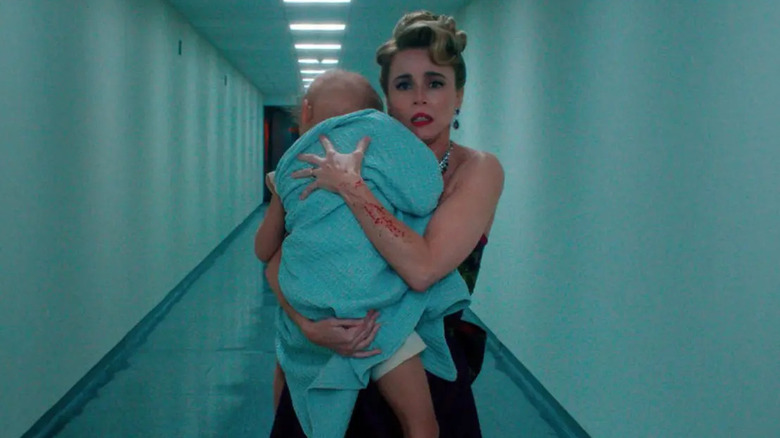
In a similar fashion, “Crystal Lake” showrunner Brad Caleb Kane has allowed his series to reap the benefits of “Friday the 13th” lore without having to conform to it. Unlike Bendis, Kane did not modernize the Voorhees mythos and instead sets the series in the early 1970s, which is ostensibly the correct time period (more on this in a bit). The legend of Jason (Callum Vinson), his accidental drowning through negligence, his mother Pamela (Linda Cardellini) turning to madness through her grief, and the death curse on Crystal Lake are all present. Yet there are various twists, turns, and expansions on the characters and story which feel fresh, including a new concept for Jason’s origin which has already become hotly debated.
Is Crystal Lake the Ultimate Spider-Man of Friday the 13th?
A big part of why “Ultimate Spider-Man” and Brian Michael Bendis got to enjoy such creative freedom is due to the comic being part of Marvel’s “Ultimate” line, which allowed their various creative teams to essentially make an adaptation of the Marvel Universe. That’s because the general idea with the “main” Marvel Universe is that it’s on a vague sliding scale of continuity. That’s also generally been the idea with the “Friday the 13th” films so far, with even the one remake in the series, 2009’s “Friday the 13th,” being so close to the core elements of the character that some fans see it as more of a sequel. This is because Jason and his mythos already went to some wacky, improbable places before that film. This dubious veracity was established in the very first few “Friday the 13th” movies, in which Jason is explicitly said to have died in 1957, yet turns out to still be alive somehow.
All this raises the question: Is Brad Caleb Kane’s “Crystal Lake” an adaptation of the “Friday” mythos, akin to “Ultimate Spider-Man,” or is it intended as a loosely related entry in the main franchise? Though there is much in the “Friday” films which seems to contradict plot points in “Crystal Lake” (like the aforementioned time period change), the show could be establishing a new retconned backstory in a similar fashion to something like what “Freddy’s Dead” did for the “A Nightmare on Elm Street” series. Whatever ends up being the case, it’s been a treat to see Kane get to play around with Jason, Pamela, and the “Friday” lore, and while it may be upsetting the more literal-minded horror fans, for us longtime comic book nerds, it’s all gravy, baby.
