

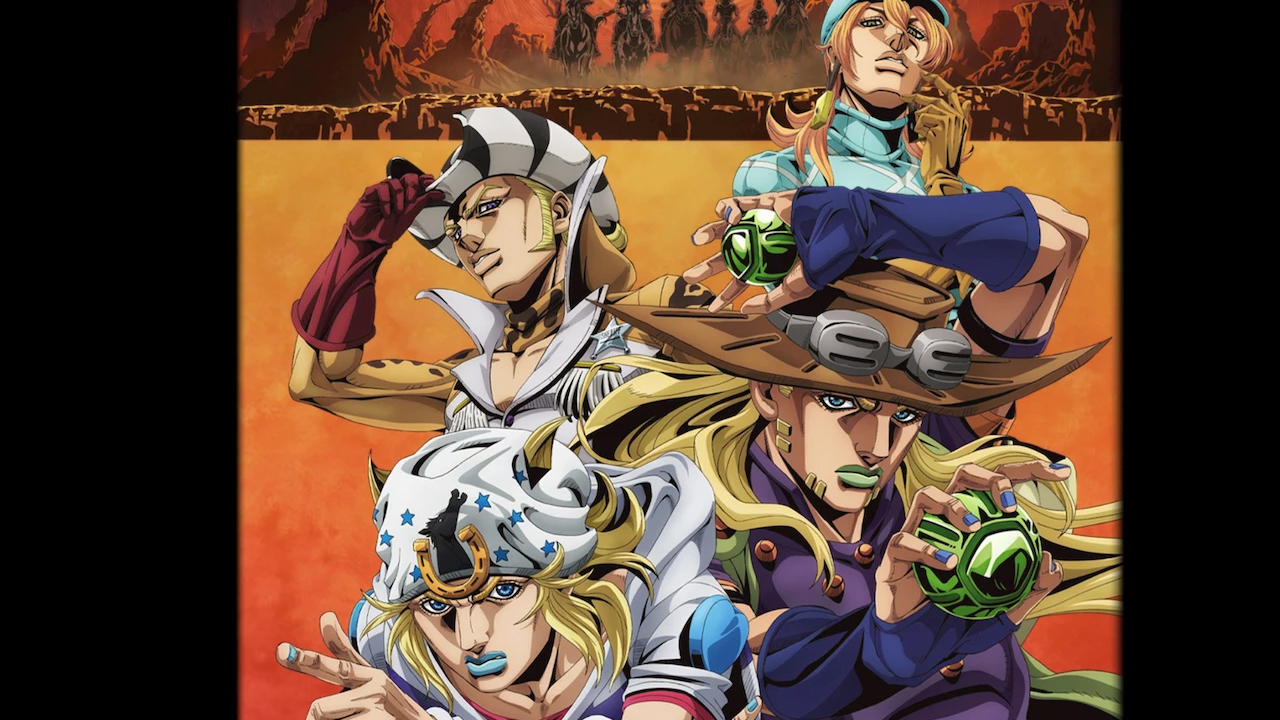
Just when the release schedule controversy had finally settled, a new ending track produced by Dr. Luke has sparked a fresh wave of outrage across the JoJo fandom, and Netflix is in the firing line given that they distribute the show, but do they deserve the wrath of the fans?
If you’ve been following our coverage of JoJo’s Bizarre Adventure: Steel Ball Run, you know the road to release hasn’t been completely smooth. JoJo fans are incredibly passionate, and they haven’t been shy about letting Netflix know when they aren’t happy. After a massive fan campaign earlier this year, Netflix “responded” to the backlash and finally brought weekly episodes of Steel Ball Run to the service, starting on September 25th.
Fans thought the drama was over. But when viewers sat through the credits of Episode 2, they were met with a brand new controversy—one that is currently flooding Netflix’s social media replies all over again with the same picture albeit with a new caption: “change the outro.”
Here’s a breakdown of why Steel Ball Run fans are demanding a change to the new ending theme, and why Netflix’s hands might actually be tied.
A Break in a Beloved Tradition
Initial criticism focused partly on the song itself. Historically, JoJo’s Bizarre Adventure is famous for its unique ending themes. Rather than commissioning original J-pop or J-rock tracks, creator Hirohiko Araki and the anime’s production team have a long tradition of licensing iconic music from outside of Japan to close out their seasons.
Previous endings have included:
- Phantom Blood / Battle Tendency: “Roundabout” by Yes
- Stardust Crusaders: “Walk Like an Egyptian” by The Bangles
- Stardust Crusaders – Battle in Egypt: “Last Train Home” by Pat Metheny Group
- Diamond Is Unbreakable: “I Want You” by Savage Garden
- Golden Wind: “Freek’n You” by Jodeci & “Modern Crusaders” by Enigma
- Stone Ocean: “Distant Dreamer” by Duffy
Fans naturally expected Steel Ball Run—which is set during an 1890 cross-country American horse race—to continue this tradition with a period-appropriate classic rock or folk track. Instead, Episode 2 introduced an entirely original song: “Shinukaikiruka” (“Dead or Alive”) by Japanese rapper Yuki Chiba.
The change was an immediate culture shock. Within hours of the episode dropping, fans were already uploading edits to X (formerly Twitter) and YouTube, swapping out Chiba’s track for fan-favorite predictions like America’s “A Horse With No Name” or Fleetwood Mac’s “The Chain.”
However, the genre shift is only half of the problem.
The Dr. Luke Controversy
While some fans were simply disappointed by the departure from tradition, the outrage expanded significantly when attention turned to the producer behind “Shinukaikiruka”: Lukasz Gottwald, far better known as Dr. Luke.
The backlash stems from Dr. Luke’s highly publicized legal history. In 2014, pop star Kesha accused the producer of sexually assaulting her in 2005. Dr. Luke vehemently denied the allegation and filed a defamation lawsuit against her in return. Their bitter legal dispute spanned nearly a decade before finally ending in a settlement in 2023, with neither side admitting wrongdoing.
Due to the severity of the allegations, many viewers are heavily criticizing the decision to hire him for the project, arguing that his name shouldn’t be attached to the beloved franchise at all on moral grounds.
Directing Frustration at Netflix (When It’s Actually WB Japan)
The result of this double-controversy looks all too familiar to anyone managing Netflix Anime’s social media accounts.
Just like the coordinated reply-spamming that followed the initial single-episode drop earlier this year, Netflix Anime posts that have absolutely nothing to do with Steel Ball Run are being hijacked. The replies are currently filled with demands to change the outro, fan-made music replacements, and heavy criticism of the Dr. Luke credit.
But are fans yelling at the right company?
As a recent PSA on the Stardust Crusaders subreddit pointed out, aiming your frustration at Netflix over animation or music choices is largely misplaced. As we covered previously and can reiterate here, Netflix has zero creative control over Steel Ball Run—they are strictly the distributor. Like all Netflix anime acquisitions, creative decisions such as the choice of ending theme are handled entirely by the production committee. In this case, that responsibility falls essentially on Warner Bros. Japan.
Because Netflix is the global face of the series, they are once again taking the brunt of the fandom’s frustration. Whether Warner Bros. Japan and the rest of the production committee will bow to international pressure and swap the track in future episodes remains to be seen. Licensing a major Western song post-release would be a massive logistical hurdle, but the fandom has made it abundantly clear: they want the credits to feel like JoJo again.
What do you think? Are you hoping Warner Bros. Japan steps in to change the ending theme for Steel Ball Run, or does the new original song work for you? Let us know in the comments down below.
