

It’s Emmys season in TV land, which means there’s hardly a better time to look at the best shows coming out of networks and streamers across Hollywood. While HBO Max, Netflix, and Apple TV have proved that streamers still dominate prestige television, Prime Video has hardly made a mark in major, to-be-televised categories this year – it received only two major nominations and isn’t favored to win either of them.
Historically, the streamer has been carried by a single major effort — they’re still looking for their next “Transparent” or “Marvelous Mrs. Maisel.” Is Prime Video really not producing TV worthy of the medium’s highest honors? We’ll let readers debate in the comments. But it’s instructive to look at what they’ve been putting their weight behind recently — costly live-action superhero dramas with inconsistent writing, unconventional comedies without strong fanbases, and exceptional adult animated programs that don’t fit the expected sitcom mold. They also make “Reacher” which is… well, “Reacher.”
Whether or not they truly were snubbed in your eyes, these are the 10 best Prime Video TV shows of 2026 so far.
Spider-Noir (Season 1)
Half-spun out of the critically acclaimed “Spider-Man: Into the Spider-Verse,” “Spider-Noir” swung in on expectations that were either unfairly lofty or apprehensively pessimistic. It doesn’t come close to the level of emotional complexity of the Academy Award-winning film – but it’s far from a disaster.
The main selling point of “Spider-Noir” is by far its aesthetic. The series was released in both black and white and color. In black and white, “Spider-Noir” mostly lives up to its title with well-lit, monochromatic visuals that are striking and immersive. At the same time, while the color version betrays some of the budgetary constraints around the VFX (the lightning bolts in particular are a little distracting), it does showcase the gorgeous costume and production design that is frankly hidden in some shots of the black-and-white edition.
The fact that neither version offers a holistic viewing experience is certainly disappointing, but these flaws are hardly enough to take away from what is, in either version, one of the best-looking superhero shows of the past decade. As a result, it became Prime Video’s most Emmy-nominated series of the year with 11 Creative Arts nods — it won five, including Outstanding Cinematography for a Series (One Hour) and Outstanding Special Visual Effects in a Single Episode (the latter for the skin-crawlingly arachnophobic “Nightmare on a Gurney”). Nicolas Cage’s committed (and affected) leading performance as hard-boiled private-spider Ben Reilly will win over the actor’s fans, even if the character-writing is paper-thin. We aren’t surprised it didn’t get a second season — but we’re genuinely grateful for what we got.
Young Sherlock (Season 1)
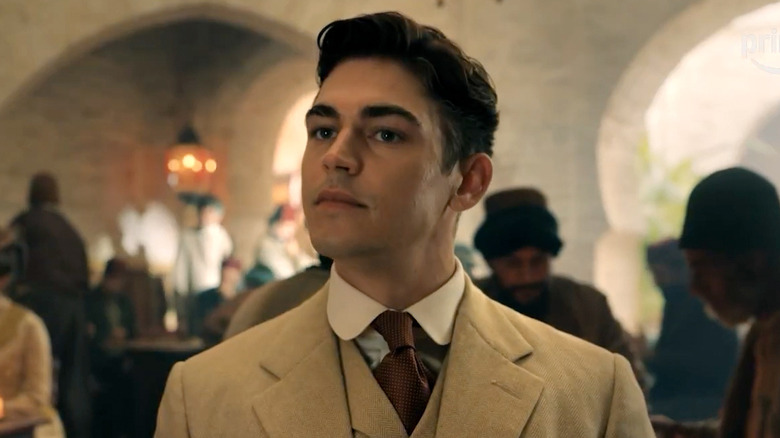
“Young Sherlock” ironically only suffers in comparison to the two blockbusters directed by one of its own executive producers. Hero Fiennes Tiffin’s take on the greatest literary detective of all time could only be contemporaneously definitive by default. Whether that’s because it’s constrained by the actor, the script, or the setting, we’ll leave that up to the audience — it’s a far cry from what Robert Downey Jr. accomplished in the Guy Ritchie films.
That being said, “Young Sherlock” is fresh, bombastic, and effectively cinematic enough to make it a worthy adaptation of Sir Arthur Conan Doyle’s work. Ritchie’s style continues to translate well to the world of prestige TV. He overloads the first two episodes with the same concoction of explosive action and intellectual cunning that made his “Sherlock Holmes” duology memorable. As for the series overall, it actually has a stronger narrative spine than those films, and a more intriguing dynamic than other “Sherlock” series. Instead of Dr. Watson, Fiennes Tiffin’s teenage Sherlock is paired with Dónal Finn’s Moriarty, an Oxford student who is entranced by his scrappy new friend. Finn is undeniable in this iconic role — charming with just enough of an edge to tease his coming criminality.
It has some first-season flaws — unconfident characterization of the lead, inelegant plotting (particularly damaging for a mystery series), and poor pacing. There are other anachronistic Victorian series that “Young Sherlock” could learn from. If Season 2 refines its writing and sustains Ritchie’s style, it could become Prime’s next blockbuster series.
The Boys (Season 5)
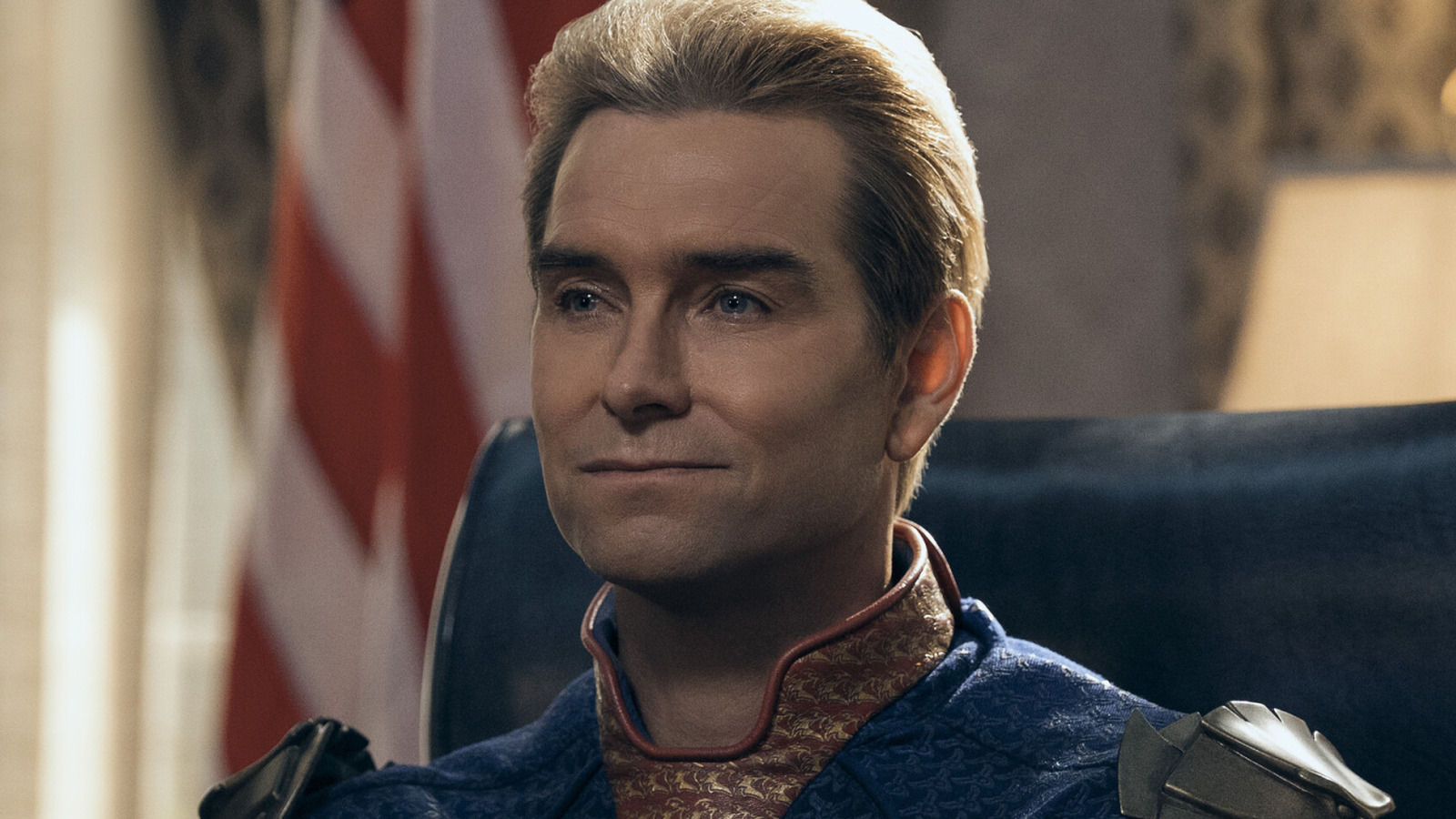
In its heyday, “The Boys” had the potential to become the flagship series of Prime Video. It broke into the Outstanding Drama Series category at the Emmys in its second season, and fans were especially eager to see Antony Starr earn a nod for subsequent seasons. That never happened. The series’ prestige patina dulled with each new outing, ending with a fifth season that is underwhelming to say the least.
The flaws have been thoroughly discussed at this point (the noticeable budget constraints, lack of narrative focus, rushed series finale, etc.). That being said, we’ll give credit where it’s due — even at its worst, “The Boys” is decently entertaining, thematically ambitious, and fully committed to being what it is. Starr’s Homelander is given precisely the ending he deserves, his frantic, season-long search for immortality ending in a humiliating (and nationally televised) beatdown. Satirically, it isn’t subtle, elegant, or particularly illuminating — but “The Boys” is pretty openly trading all of that for visceral, cathartic brutality that lands. Overall, it’s enough for Starr and Homelander to maintain their place among the all-time greatest TV villains (though they won’t be as high on that list as we once expected).
Elsewhere, the cast puts in solid work to land their individual endings throughout. Karl Urban’s heroic salvaging of his 11th-hour heel turn; The Deep (Chace Crawford) and A-Train (Jessie T. Usher) meeting their inevitable ends; the escalating gross-out kills — moments like these keep Season 5 from being totally unworthy of what came before.
Reacher (Season 4)
On the other hand, if Prime Video does have a flagship series currently ongoing, it’s “Reacher.” It’s the only long-running show being produced by the platform right now that simultaneously has broad popularity, proven franchise potential, and a primary brand association with the streamer despite being an adaptation. It’s also consistently improving in quality — that is, if you’re tuned into its frequency.
It’s not the smartest, best-acted, or most insightful drama on TV, but that’s not the point. In a TV landscape where audiences are largely fed psychological thrillers and genre dramas that just so happen to be peppered with garden-variety action set-pieces, it’s honestly a bit disorienting to watch a show that truly fits in the action genre. The point of “Reacher” is to engineer as many moments of Alan Ritchson improbably pummeling bad guys as possible, and to make those moments as impactful as possible. “Reacher” excels in this endeavor, full stop.
The fight choreography is excellent and electrically captured, the variation of weapons and environments keeps things interesting (props to the stunt team for devising a more brutal library-based kill than “John Wick”), and the enemies are crafted (in characterization, casting, and staging) to make their defeat immensely satisfying, whether they’re an unnamed goon or a major baddie. Ritchson and his stunt partners are doing fight work that is as expert and fully realized as the satire of “Succession” or the comedy of “Hacks.” Aside from the criminally under-discussed “Gangs of London,” it is far and away the best action series currently running.
Deadloch (Season 2)
There’s a solid chance you haven’t seen “Deadloch” yet — which is a real shame, considering how exceptional it is at accomplishing a specific brand of dark comedy that seems to be in vogue right now. The Australian series, now in its second season on Prime Video, is basically a cross between the dreary, gritty, coastal murder-mystery vibes of “Broadchurch” and the offbeat small-town humor of “Letterkenny.” In the first season, quiet Deadloch local Sergeant Dulcie Collins (Kate Box) is forced to work with Detective Eddie Redcliffe (a brash and eccentric out-of-towner, played by Madeleine Sami) to solve a murder. Now true partners, they are thrown into another murder investigation that seems to be linked to the high-stakes world of crocodile tourism.
In the same way “Widow’s Bay” never allows itself to become a horror show that has a few jokes, “Deadloch” is first and foremost a comedy. Every element of the mystery (even the more grisly aspects) structurally exists in support of the show’s sense of humor. And yet, the fact that you always know a joke is on the way never undercuts the tension or the tragedy inherent in a story about people killing each other. Box and Sami are responsible for holding this delicate balance of comedy and drama in front of the camera, creating a relationship that’s as reliable in generating hilarious chaos as it is worthy of investing in emotionally. Luke Hemsworth (yes, the original Hemsworth, from “Westworld”) is the Season 2 scene-stealer as a small-town croc celebrity.
The Legend of Vox Machina (Season 4)
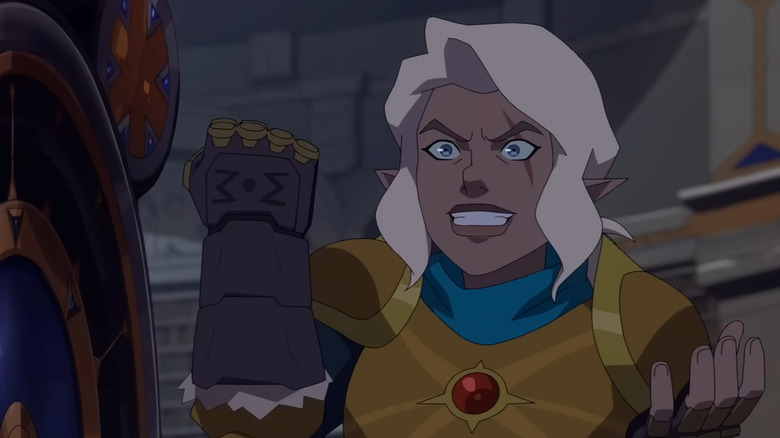
“The Legend of Vox Machina” is no longer the little show that could. Seven years after a Kickstarter campaign sought to turn the Critical Role actual-play “Dungeons & Dragons” livestream into an animated series, “Vox Machina” is without a doubt some of the best fantasy entertainment of the decade.
All four seasons of the series have drawn consistent praise. What sets Season 4 apart is how seriously it’s able to take its story. The chaotic, comedic vibe from the podcast is still carried over, and remains the defining characteristic of “Vox Machina” for most major outlets. But that tone is now balanced with a feeling of narrative gravity as the series approaches its final season. Season 4 is the “Empire Strikes Back” of “Vox Machina” — and, more laudable even than its willingness to kill its darlings and leave audiences on a gutting cliffhanger until Season 5, it actually earns the dark depths to which it plunges. It doesn’t sacrifice one thing for the other — the return of Sam Riegel’s Scanlan Shorthalt, for example, is all at once a serious character beat and an excuse for an awesome and objectively goofy battle of the bards. Moments like that only work because “Vox Machina” took its time getting there emotionally.
“The Legend of Vox Machina” is on the cusp of completing a multi-season fantasy epic with no low points. Season 4 perfectly sets it up for an epic finale.
Jury Duty Presents: Company Retreat
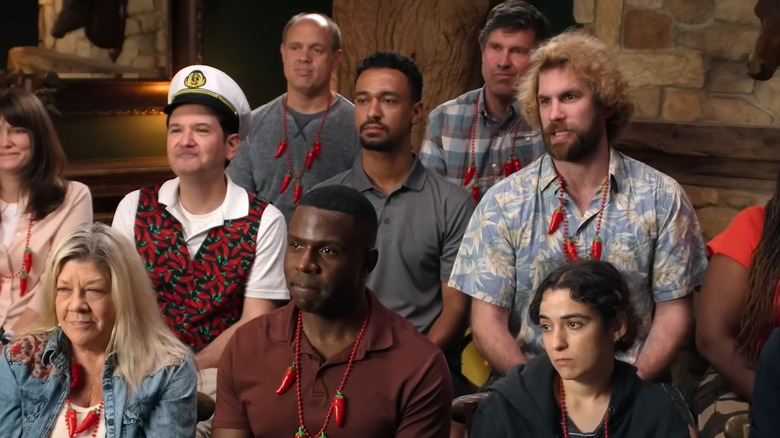
Speaking of Amazon success stories, “Jury Duty” has successfully made the jump from Freevee to Prime Video for Season 2 (after the shocking Emmys run of its sleeper-hit first season). The formula is the same; the setting is brand new — an ensemble of unknown actors and one oblivious, average dude, all thrown together for a company retreat where every moment is caught on camera.
“Company Retreat” is a repeat success because the producers deeply understand the delicate vibe that made the original “Jury Duty” a hit. Some readers might remember “The Joe Schmo Show” on Spike TV (R.I.P.), which originally aimed to turn its unsuspecting participants into cringe-comedy stars. It was ethically awkward at best and mean-spirited at worst. In contrast, “Company Retreat” maintains its wholesome framing — like Ronald Gladden, incoming everyman Anthony Norman is not the butt of the joke, but an audience surrogate empowered to be the hero of his own story.
Some may find the lack of real conflict in a reality-adjacent series to be less engaging the second time around (there was, after all, a certain amount of meta-conflict for those anxious that “Jury Duty” would at any moment devolve into a “Joe Schmo”-like disaster). On the other hand, “Company Retreat” is a spectacularly produced and well-written comfort comedy supported by an ensemble of delightful new faces, Norman included. It’s the only Prime Video show to earn a writing nod from the Emmys this year.
Fallout (Season 2)
“Fallout” is arguably the greatest live-action video game adaptation of all time. “The Last of Us” is the only thing realistically in the same conversation — HBO’s series is an adaptation so faithful it borders on being unnecessary; Prime Video’s is a canonical extension that stylistically, narratively, and aesthetically earns its place in one of video games’ most beloved universes.
It’s the pinnacle of the exemplary production design that can be found in many of the shows on this list (the creatives responsible for actually bringing these fictional worlds to life are the ones keeping Amazon relevant during awards season). Season 2 expands its territory to New Vegas, a locale that’s as visually iconic as it is narratively charged — it even forces the series to confront the novel challenge of handling the deliberately non-definitive multiple endings of the classic RPG.
Ella Purnell and Walton Goggins continue to be perfect in their respective roles. Season 2’s parallel past-and-present timelines give the latter the range to do his best work yet as both Cooper Howard and the Ghoul (why he was excluded from the Emmys this year is frankly beyond us). Meanwhile, newcomer Justin Theroux makes an absolute meal out of the fan-favorite character Robert House, yet another example of the series tying itself closer to the games without losing its authority. The writing is the only aspect of the series that shows any decay — otherwise, “Fallout” is on track to be remembered as one of the great sci-fi shows of the 2020s.
Invincible (Season 4)
“Invincible” is the most consistently excellent thing Prime Video produces. Aside from wavering criticisms of fluctuations in its animation, it is essentially perfect season-to-season. Season 4 produced the first episode that a loud section of the fanbase meaningfully disliked (“Hurm”) — it also produced many of the most widely praised episodes of the series overall. “Don’t Do Anything Rash,” “Give Us a Moment,” and “I’ll Give You the Grand Tour” all rank within the top 10 episodes of “Invincible” on IMDb as of writing. Some may claim recency bias — we’d argue it’s because these episodes helped pack “Invincible” Season 4 with impactful, status-quo-changing action and drama that was earned, cathartic, and stylistically thrilling.
Just think about everything that happens this season — the rematch between Mark (Steven Yeun) and Conquest (Jeffrey Dean Morgan), Nolan’s (J.K. Simmons) return to Earth and his reunion with Debbie (Sandra Oh), the arrival of the series’ overarching big bad, Grand Regent Thragg (a pitch-perfect Lee Pace), and the Viltrumite War (the climax of which was so exhilarating and painstakingly executed that it might’ve created one of the most iconic single impact frames in modern Western animation). And rather than using them as stock comic-book melodrama, Robert Kirkman takes these narrative developments seriously, and uses them to refine his commentary on power, leadership, and humanity.
It’s no surprise that Prime Video is poised to make “Invincible” one of its longest-running series ever. What is somewhat disappointing is that the series continues to be snubbed by the Emmys’ main animation category. If any series deserves the nod, it’s “Invincible.”
We’ve talked a bit about confusing Emmy absences so far. But if there’s one 2026 series that proves Amazon needs to take a hard look at its marketing and awards strategies, it’s “Bait.”
Riz Ahmed created, executive produced, co-wrote, and starred in this miniseries, in which he plays an up-and-coming British Pakistani actor who is desperate to keep himself in the running to be the next James Bond. Ahmed — largely known for gritty dramas like “Rogue One,” “Sound of Metal,” and “The Night Of” — has written himself into what seems to be the funniest and most personal role of his career. That combination of talent and passion is evident in every single episode.
There isn’t a scene that drags in any of the show’s six episodes. Directors Bassam Tariq (who previously directed Ahmed in “Mogul Mowgli”) and Tom George perfect the seductively hectic rhythm of entertainment-industry satires like “Birdman” or “The Studio,” in part by using it in deliberate contrast with quieter moments in the protagonist’s escalating identity crisis. Together, the series doesn’t just argue that someone like Ahmed’s Shah Latif might be the best choice for James Bond — it asks whether or not that matters given the cost of metabolizing the role, the industry, and the life they both demand.
It’s a one-of-a-kind dramedy about what Hollywood does to an actor’s sense of self. For that level of vulnerability, “Bait” received an Emmy nod for Ahmed’s performance, and nothing more.
