

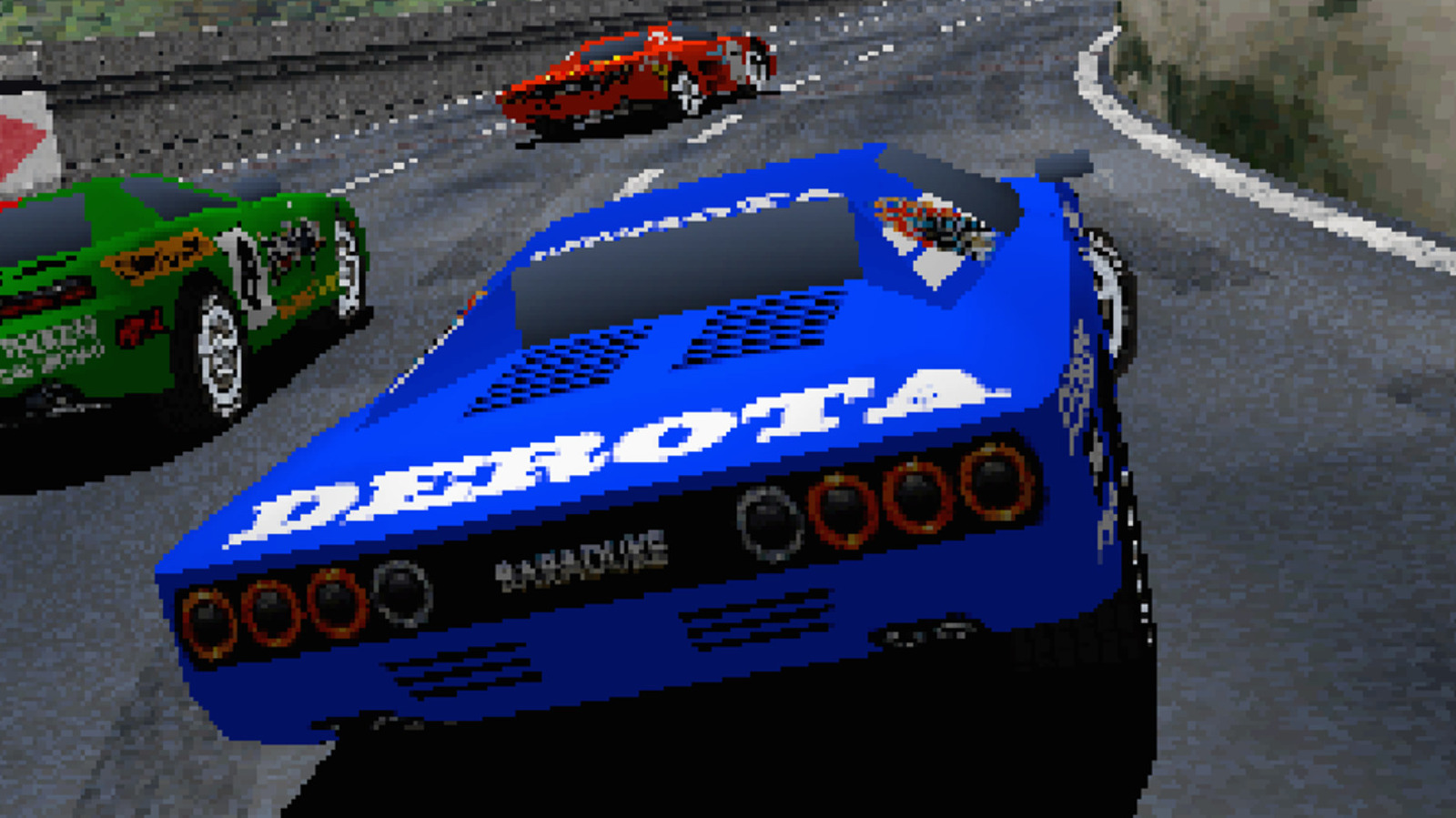
The racing genre has been a staple in the video game industry ever since its earliest days in the ’70s. Several of the best retro racing games of all time started out as arcade titles before being ported to home platforms. Titles like “Cruis’n USA” and “Hydro Thunder” kept the genre alive in arcades and helped pioneer the entire racing beyond its roots. But for every big arcade racing game like “Star Wars Episode I: Racer” and “Ridge Racer,” there are plenty of fan-favorites that aren’t as widely known by modern gamers.
It’s those arcade racing games that aren’t as readily recognizable that we’re highlighting with this particular article. But we’re not looking at obscure racing games that deserve a second look. Rather, we’re examining games that were successful in their own right before being forgotten over time. More specifically, we’re looking at games that were successful in the arcade scene but just didn’t quite have the same staying power as their contemporaries. These are five hit arcade racing games no one remembers today, overshadowed by more enduring titles as the arcade scene fell into decline.
Pole Position
Unless you grew up in the ’80s, there’s a good chance that you have no idea what “Pole Position” is, despite its line of sequels. Debuting in arcades in 1982, the game places players in control of a Formula One car as it drives around the Fuji Speedway in Japan. After successfully completing a qualifying time trial, players go up against seven computer-controlled competitors in a multi-lap race. Namco developed the original version of the game, with its North American version, including its home console port, published by Atari.
“Pole Position” was a game from 1982 that completely took over arcades, receiving a sequel the following year with the aptly titled “Pole Position II.” But by 1987, Namco rebranded its Formula One arcade racing series as “Final Lap,” which it retained for the rest of its run. That makes those two original “Pole Position” something of an overlooked arcade classic for anyone who wasn’t present at the time. A hit ’80s video game that no one remembers today, “Pole Position” was groundbreaking for its time.
Virtua Racing
Sega only expanded its arcade racing presence in the ’90s while honing what the genre could be with more advanced technology. One of its early 3D racing titles was 1992’s “Virtua Racing,” which revolved around Formula One-style races. Though players only had one car to choose from in initial versions of the game across three tracks of varying difficulty, its 3D presentation was revolutionary. Sega produced a dual-cabinet for the game, allowing players to go head-to-head in competitive gameplay while the title was ported to Sega’s home consoles.
Looking back, “Virtua Racing” is an arcade game from 1992 that was way ahead of its time. The game’s use of early 3D models was more than visually impressive, but its handling is also relatively intuitive. Sega doubled down on 3D technology moving forward, not just for subsequent racing games, but also for titles like “Virtua Fighter.” Sega moved on from the “Virtua Racing” brand, rather than building it out into a series, but its influence remains strong.
Rave Racer
Not about to let Sega dominate the arcade racing space without a challenge, Namco launched its own 3D racing series with “Ridge Racer” in 1993. While “Ridge Racer” remains a 1993 arcade game that still holds up today, its 1995 rebrand as “Rave Racer” isn’t as widely remembered. The game feels like a continuation of features and gameplay present in the preceding year’s arcade title “Ridge Racer 2.” The game improves the overall technical presentation and gameplay handling, while featuring a mix of new and returning tracks to test your skills.
“Rave Racer” holds a strange place in its overall series, with the franchise resuming to its “Ridge Racer” branding for subsequent installments. However, the game itself was a strong commercial performer into 1996, even with its standalone title change. In the grand scheme, though, this rebranding makes this particular release less recognized than other games in the series. “Ridge Racer” maintains brand recognition over 30 years later, but its one-off title change to “Rave Racer” in 1995 is an admitted oddity.
Scud Race
If it wasn’t clear already, Sega absolutely ruled the arcade racing game scene throughout the ’90s. Another title to include here is 1996’s “Scud Race,” which was retitled “Sega Super GT” for its initial North American release. Depending on how many arcade cabinets are interfaced, the game also offers eight-person competitive multiplayer across four different tracks. Players are presented between a choice of standard grand prix mode or an endurance mode, providing a noticeably longer racing experience.
A big part of the reason that “Scud Race” or “Sega Super GT” has been forgotten is because it never received an official console port. Neither the Sega Saturn nor the Dreamcast received versions of the game, meaning it only lives on through unofficial emulations. The game itself feels like the spiritual successor to “Daytona USA,” refining the technical presentation and drifting mechanic. Hopefully, some day “Scud Race” gets an official re-release or remaster on modern platforms, reintroducing it to a new generation of racing game enthusiasts.
Daytona USA 2
This may be a bit of a controversial inclusion but we’re going to bet that most people don’t know that the popular “Daytona USA” received a direct sequel. No, we’re not talking about “Daytona USA: Championship Circuit Edition,” the 1996 update to the 1994 original game, but “Daytona USA 2.” Released in 1998, this game gave players the option not to only select their car but their driver, each with their own distinct stats. The game features three tracks that can also be played in reverse, while allowing up to 16-person multiplayer if enough arcade cabinets are interfaced.
From a technical standpoint, “Daytona USA 2” is an all-around improvement from its predecessor, though it may not quite have the original’s charm. The game went on to receive an arcade update of its own later in 1998, gaining the subtitle “Daytona USA 2: Power Edition,” adjusting the in-game physics. This version was later included as a playable title within later “Like a Dragon” games, albeit retitled “Sega Racing Classic 2” after its access to the NASCAR license expired. This rebrand, along with the fact that “Daytona USA 2” never received a standalone home version, makes it far more obscure than its predecessor.
