

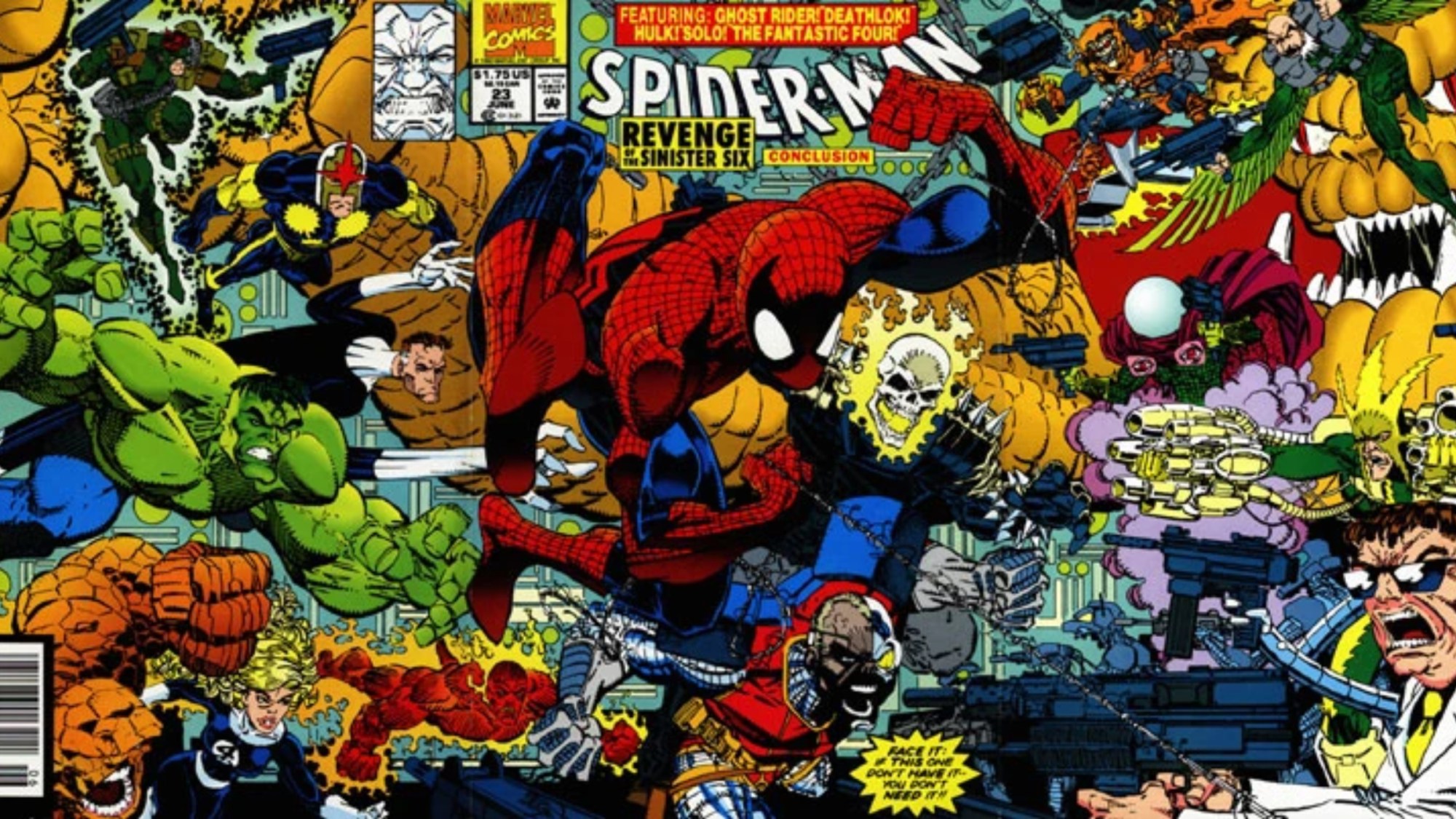
Spider-Man is back in the spotlight and there’s a good reason for that. Spider-Man: Brand New Day was one of those MCU events that showed that the movies still had gas in the tank, especially ones starring the icons. On top of all of that, it’s a pretty great movie to boot, setting up the films for their next big phase. Meanwhile, Marvel Comics has been taking advantage of the film, putting out numerous series starring the Wall-Crawler, Punisher, and the Hulk. It’s always great when Spider-Man is successful; every Marvel creator has a Spidey story and when his stuff is selling, they get to tell them. This happened numerous times over the years, but one of the most notable periods of Spider-growth was the early ’90s.
Videos by ComicBook.com
Marvel hit new levels in the ’80s, with a new generation of superstar creators coming to the fore, including Todd McFarlane and Erik Larsen. Both of them were amazing Spider-Man artists and fans loved their work. McFarlane was the one who got most of the praise, but Larsen is the one who probably should have. While taste in comic art is subjective, Larsen’s art was honestly on par when it came to detail and energy with McFarlane. However, there’s one place where we can all agree that Larsen beats the pants off the Toddfather (yes, he was called that in the ’90s at times) is in the writing department. Marvel was all about letting artists write in the early ’90s, with McFarlane eventually being given his own Spider-Man title, and Larsen would soon get his turn as a scribe. During this short period before the Image exodus, Larsen gave readers a forgotten classic, one that should be ranked among the best Spider-Man stories ever.
“Revenge of the Sinister Six” Finally Made The Team Truly Dangerous
Spider-Man has some of the greatest villains in comics; when it comes to solo heroes, it’s basically him and Batman neck and neck. In the early days of The Amazing Spider-Man, six of his villains came together – Doctor Octopus, Electro, Kraven the Hunter, Vulture, Sandman, and Mysterio. They were more of a threat to the Wall-Crawler together, but as the years went by, as often happens in superhero comics, they got stagnant. While sometimes different members would join up to replace others – which started to happen way more after the death of Kraven the Hunter – it was always the same basic kind of stories.
Larsen worked with David Michelinie on “Return of the Sinister Six” in 1990, a story which brought the team back together. Larsen’s pencils were outstanding, really bringing the villain team to gorgeous, kinetic life. Larsen, in a lot of ways, reminds me of Spidey legends Steve Ditko and John Romita Sr. mixed; Ditko characters could be kind of ugly and angular with amazing action sequences bringing it all together, something that Larsen did beautifully, all while adding the beauty that Romita Sr. imbued all of the characters he drew with (seriously, Romita Sr. made everyone so hot after years of Ditko). His action scenes were some of the best you’d ever seen, capturing the kinetic feel that makes Spider-Man such an exciting character. He was the perfect contrast for McFarlane, whose style had its own unique design language, a classic style that still felt modern.
McFarlane got all the attention and credit for those blockbuster issues of Amazing, but Larsen’s art kept butts in the seats when McFarlane couldn’t hit deadline. They were both stars, but McFarlane was the one who got this own book first. Spider-Man (Vol. 1) was the “cool” Spider-Man book, and it’s success would make Todd even bigger. His last issue on the book would issue #17, with Larsen taking over for “Revenge of the Sinister Six”, before the two of them both left Marvel.
Early ’90s Marvel was all about the trends of the day and the Sinister Six were the least cool villains out there. This was the era of Venom and Carnage; even old villains like Lizard and Hobgoblin were pushed to the extreme to fit this new paradigm, both of whom would appear in “Revenge of the Sinister Six”. Larsen had to take a team of villains that current fans thought was lame and make them cool again. He did this by starting at the top with Ock, giving him his adamantium arms and positioning him not as the hyperbolic supervillain, but the more suave and dangerous evil scientist he had become. This made the group way more powerful, with Ock also using his tech to enhance the powers of the other members of the team, amping up Electro and Mysterio, and introducing a new member – the Thor villain Gog. He made the team dangerous to readers and it worked.
If you look at the covers of the issues, it’s the most ’90 stuff you can imagine. There’s popular grim and gritty characters like Ghost Rider and Deathlok, the mercenary Solo, and the Hulk all making appearances. We get Spidey getting a cybernatic makeover, seeming to poke fun of fellow Image founder Rob Liefeld’s penchant for that sort of thing. The covers made the story look like a stereotypical ’90s romp, but on the inside, you got classic Spidey goodness. In fact, the whole point of the story was Larsen showing Spidey didn’t have to play to the trends; while the story used the language of the ’90s to hook you, it was old school to its core, showing that the classics could still be, well, classic and modern at the same time. It’s a gorgeous example of a Spider-Man story done right in every way.
There’s Not Much Better Than “Revenge”
Spider-Man in the late ’80s and early ’90s was one of the hottest characters in comics, but nowadays, you don’t get too many people recommending individual stories from this period. Sure, some people will tell you to read the first Venom issues, but other than that, most of this period has been lost to the fog. The art was spectacular, but the stories just didn’t have staying power. However, “Revenge of the Sinister Six” is able to standout, a story that mocks the direction comics were going at the time, all while giving readers a fantastic Spider-Man story.
Erik Larsen is a creator who is a legend but never really gets the praise he deserves. He’s an excellent writer on top of being one of the best artists you’ll ever read (even if you don’t like his style, his fundamentals are out of this world) and he used “Revenge of the Sinister Six” to not only show off just how great he really was as a creator, but also to talk about what superhero comics were becoming. For years, I only looked at it as a fun action story, pitting Spider-Man and a bunch of popular ’90s heroes against amped villains, but taking a closer look reveals that it was always more than it appeared on the surface. It’s an unsung classic and it’s long past time for fans to take notice of it.
7 Times Spider-Man Proved He’s the Most Relatable Hero in Comics
More Comics
Image Courtesy of Marvel Comics Comics
1 day ago10 Years Ago, Marvel Sabotaged Their Biggest Star With This Disastrous Event and the MCU Is to Blame
Image Courtesy of Marvel Comics Comics
2 days ago55 Years Ago, Marvel Made the Avengers Cosmic and the MCU Should Take Notes
-
Image Courtesy of Marvel Comics Comics
2 days agoCaptain America Makes a Choice No Hero Should Make, and Spider-Man Knows Exactly Why
-
Image Courtesy of Marvel Comics Comics
2 days agoSpider-Woman Took a Huge Gamble and She’s Already Paying the Price
