

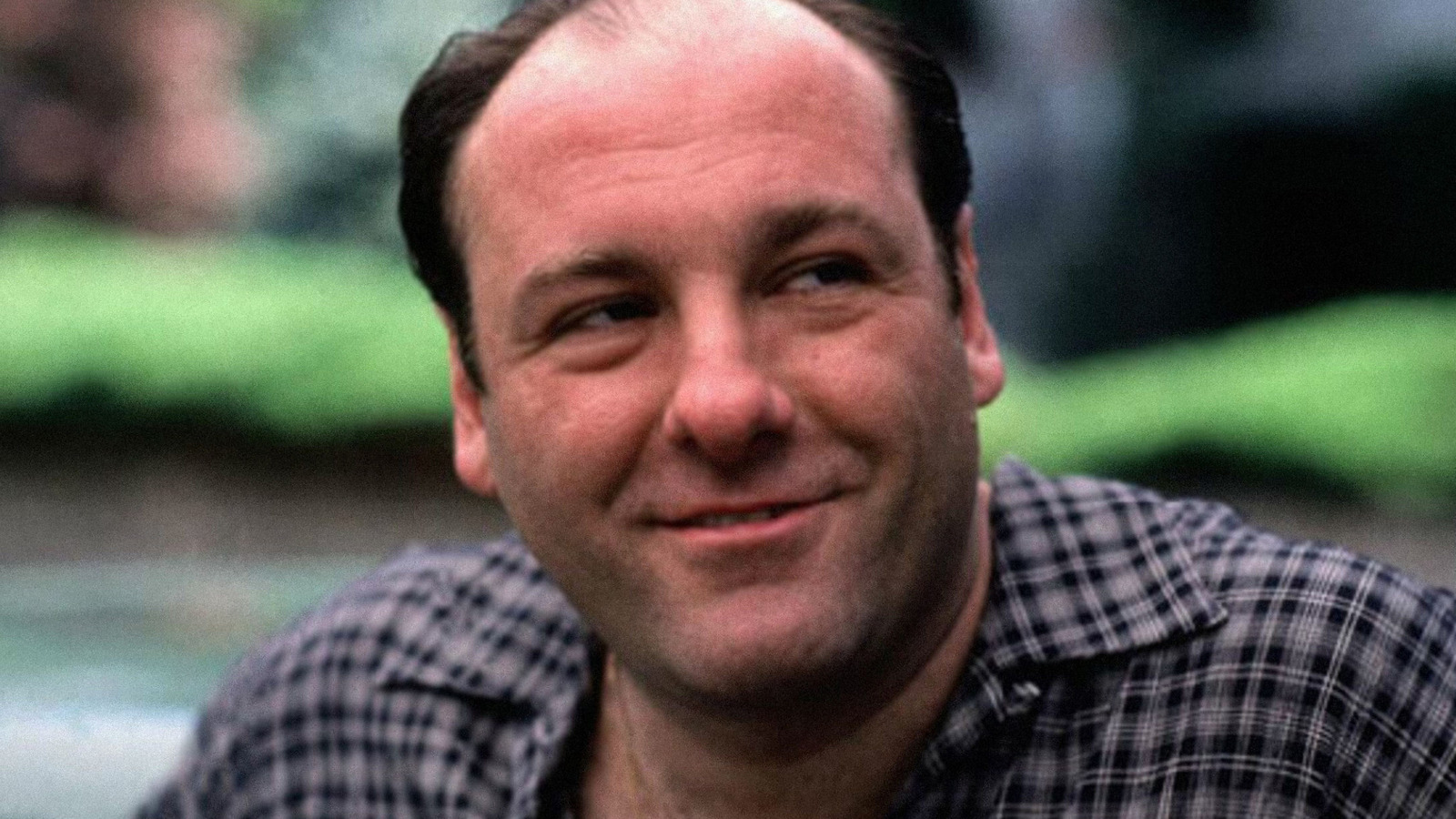
So, you’ve finally finished “The Sopranos.” If you’re not still trying to make sense of the finale that broke the internet, you’re probably trying to figure out what — if anything – could possibly live up to the series you’ve just experienced. Few television dramas have managed to match its combination of sharp writing, morally complicated characters, and an unsettling ability to make audiences sympathize with terrible people.
Whether you’re staring at the black screen for the first time or have just completed your latest rewatch, the cure for this post-“Sopranos” malaise might be closer than you think — perhaps even on HBO. Many of the series listed below feature psychologically complex protagonists who lean more toward villain than antihero, with criminal activities that threaten to consume their personal lives and families. Others share “The Sopranos'” grim sense of humor or skepticism about the innate goodness of humanity. These aren’t happy watches by any means — but if you woke up this morning craving cannolis and crime, we’ve got a few shows for you.
Barry
No series on this list sits more directly in conversation with “The Sopranos” than “Barry.” At times, the latter HBO series can feel like it’s riffing on its predecessor. Where “The Sopranos” asked if therapy could heal a mobster, “Barry” asks if art can heal a killer — and reaches its answer so quickly that it seems to find both attempts at change laughable.
This isn’t to say that “Barry” is attempting to disrespect or correct “The Sopranos” — rather, it’s trying to ask the audience what happens after someone definitively refuses to change. Morally, Tony’s fate is sealed sometime in the final season, potentially as late as Dr. Melfi’s (Lorraine Bracco) realization in the penultimate episode that Tony might be functionally immune to therapy. In “Barry,” Bill Hader’s hitman-turned-aspiring-actor reaches this point by the first-season finale. From that point on, it becomes an exploration of self-denial, escalation in the absence of accountability, and the ways people perform versions of themselves for others.
On that last note, “Barry” is at its funniest and most distinctive when it leans into its satire of the entertainment industry. Even as the comedy largely evaporates in the final season, Hollywood inspires a few bleak but brilliant bits of humor.
Better Call Saul
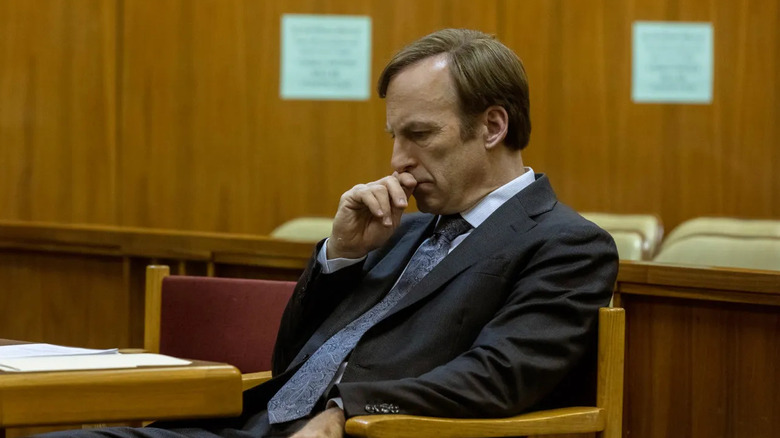
It’s hardly a secret that the entire “Breaking Bad” universe exists because of “The Sopranos.” Tony Soprano changed what viewers broadly were willing to accept from their antiheroes, paving the way for Walter White’s breakneck transformation from high school teacher to meth kingpin. Yet, it’s that addictive pace and sense of moral certainty that make “Breaking Bad” feel so different from “The Sopranos” that you’d be doing yourself a disservice by expecting the same experience from both.
That said, “Better Call Saul” might be the perfect follow-up series for someone who’s just finished “The Sopranos” — even if they’ve never seen “Breaking Bad.” It’s one of the few shows that’s as meditative in its psychological storytelling as “The Sopranos.” Rather than ponder whether or not a person is capable of change from “good” to “bad,” “Better Call Saul” asks who a person is at the core of their being, how they got to be that way, and what it would take for them to finally come to terms with the truth, no matter how ugly. Its restrained approach to the “Breaking Bad” mythos is brave — but where that may have alienated some fans of the mothership series, it’s precisely what should attract fans of “The Sopranos.”
Bloodline
Several of the shows on this list were chosen because they share not only key dramatic elements with “The Sopranos” but also creative DNA. In the case of “Bloodline,” that DNA is Todd A. Kessler, who co-created the Netflix series with Glenn Kessler and Daniel Zelman. Kessler worked as a writer and producer on “The Sopranos” and co-wrote the Season 2 finale, “Funhouse,” with David Chase.
“Bloodline” is also a great pick for anyone who enjoyed HBO’s recent DC Comics hit “Lanterns.” Kyle Chandler stars alongside Ben Mendelsohn, Linda Cardellini, and Norbert Leo Butz in this slow-burn crime drama about a respected family in the Florida Keys rotting from within. The themes of buried trauma, complicated parents, and complicity between blood relatives carry over from “The Sopranos,” while Chandler’s troubled lawman resembles a less inspiring Hal Jordan. The series was never a runaway hit, and critics were honestly split over whether the first two seasons were boring or brilliant. What was rarely in question was the acting — even critics who took issue with the story or pacing praised the performances, particularly those of Kyle Chandler and Ben Mendelsohn.
Boardwalk Empire
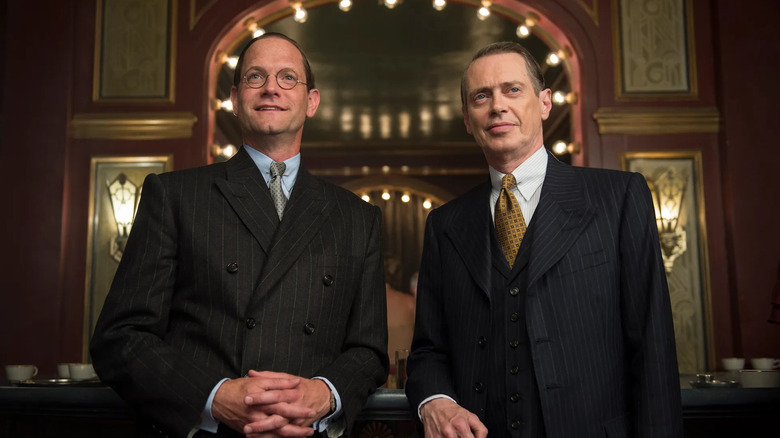
In terms of creative DNA, few series have stronger ties to “The Sopranos” than “Boardwalk Empire.” They are to each other what “Succession” is to “Veep” — same network, same sense of drama and humor, similar thematic interests, and some of the former show’s writers, directors, and producers. These include defining “Sopranos” director Tim Van Patten and writer Terence Winter, the latter of whom served as the series’ creator and showrunner.
It’s essentially “The Sopranos” in the 1920s. “Sopranos” actor and occasional director Steve Buscemi stars as Nucky Thompson, a corrupt politician in Prohibition-era Atlantic City. He spends the series navigating and profiting from the criminal underworld of Atlantic City and beyond. The show is loosely set in the actual historical past, meaning Thompson experiences historical events as they were and encounters real figures from the American criminal underworld, such as Lucky Luciano (Vincent Piazza) and Al Capone (Stephen Graham). It’s one of the best historical series HBO has ever made.
“Boardwalk Empire” tends to be overshadowed by “The Sopranos.” Despite lacking the same lasting cultural impact, it’s still a truly great work of television.
Dexter
At first glance, there are significant differences between “Dexter” and “The Sopranos” that need to be addressed right away. For starters, the Showtime series is way less subtle in every way, to the point that it borders on camp frequently throughout its run. Tony Soprano is a killer who sometimes expresses remorse for his actions — Michael C. Hall’s Dexter Morgan is a serial killer who follows a strict code while making dry puns to himself whenever he gets a chance.
Before you let the specific flavor of “Dexter’s” antihero turn you away, however, consider first that James Manos Jr. developed the series after writing “College” for the first season of “The Sopranos.” It’s arguably the best episode of the show’s first season — and it’s where “The Sopranos” first homes in on one of its most compelling themes: the person you are in private can undermine the person you want to become in public. The simultaneously thrilling and tragic drama of Tony trying to chase down a rat while taking his daughter on college tours is the very engine that drives the best episodes of “Dexter.” Any “Sopranos” fan with a sense of humor owes it to themselves to make it through at least Season 4.
Fargo
Every season of FX’s star-studded “Fargo” anthology series will have something for a fan of “The Sopranos.” They’re all smart and surprisingly funny crime dramas about memorable communities in crisis. Each boasts Emmy-worthy performances, gorgeous cinematography, and tightly written scripts with deep philosophical underpinnings. The most obvious choice is Season 2, which follows a gang war between rival Midwestern crime families in 1979. There’s plenty there for someone who wants to dive right back into a mob story.
Season 1 will scratch another itch. In addition to its mid-2000s setting, which offers a similar sense of nostalgia, Season 1 of “Fargo” has a decidedly more surreal feel. Like “The Sopranos,” it has this quality of feeling gritty and intimately dangerous in one scene, and almost supernaturally malevolent in another. The vessel for this mood is Billy Bob Thornton’s Lorne Malvo, a villain fit for a Cormac McCarthy novel who stands among the best characters created for the small screen. He’s as menacing as he is mesmerizing to watch.
Lilyhammer
As diehard fans of “The Sopranos” might already know, James Gandolfini almost wasn’t cast as Tony Soprano. Originally, David Chase offered the role to first-time actor Steven Van Zandt, who — after being turned down by HBO — went on to play Silvio Dante. It would’ve been a completely different show — and if you’re curious what a Van Zandt-led Mafia series would’ve looked like, look no further than “Lilyhammer.”
This is the biggest swing on this list, so treat it as a bit of a flyer. The Norwegian-American series, often credited as Netflix’s first original series, stars Van Zandt as a New York mobster who enters witness protection in Norway after testifying against his boss. It’s like “Ted Lasso,” if instead of importing Kansas charm he brought in skeezy New Jersey rackets. Van Zandt helped score and co-wrote the episodes, for the most part with co-creators Anne Bjørnstad and Eilif Skodvin. It’s more comedic than “The Sopranos,” but that’s what makes it a perfect star vehicle for Van Zandt.
Mad Men
One of the first people to understand the greatness of “Mad Men” was David Chase. After reading creator Matthew Weiner’s script for the “Mad Men” pilot, Chase hired him as a writer and producer on “The Sopranos,” where he contributed to pivotal episodes such as “The Test Dream,” “Kennedy and Heidi,” and “The Blue Comet.” Weiner is credited on eight of the episodes in the show’s final season — if you want that claustrophobic and fatalistic exploration of success, morality, identity, and the American dream, it’s on full display in “Mad Men.”
“Mad Men” was also pitched to HBO, but the network reportedly wasn’t interested in moving forward without Chase’s involvement. They’ve had almost two decades to regret their decision. “Mad Men” is regarded as one of the greatest television shows ever made, on the same level as “The Sopranos.” It ranked third on the recent New York Times survey of the Top 100 TV Shows of the 21st Century. Along with “Breaking Bad” and “The Walking Dead,” it helped establish AMC as a serious contender in the world of prestige television.
Ozark
“Ozark” is more commonly thought of as a spiritual successor to “Breaking Bad” than to “The Sopranos.” While “House of Cards” brought criminal ambition into the White House, “Ozark” took viewers to the Midwest for a story about a seemingly unassuming financial adviser using his white-collar skills to launder money for a cartel and protect his family. Especially after the first season ends, however, it gets an identity of its own that’s much harder to define in either camp — yet nonetheless appealing for fans of “The Sopranos.”
Both “Breaking Bad” and “House of Cards” explored how criminal behavior could endanger the people closest to their protagonists. By Season 2, “Ozark” has drawn the Byrde family deeper into Marty’s (Jason Bateman) relationship with the cartel, making the consequences of his criminal activities increasingly difficult for them to escape. It’s hard to explain exactly without spoiling key moments, but suffice it to say, “Ozark” is much closer to “The Sopranos” in its commitment to the total corruption of the human spirit in the name of greed. Not for nothing, the two also share an affinity for sudden, shocking deaths that often lack the drama or ceremony of normal TV death scenes.
The Penguin
Currently, the strategy at HBO seems to be letting DC repackage its greatest hits for comic-book fans. Will it get out of hand? Eventually. For now, it’s giving us genuinely solid dramas like “Lanterns” and “The Penguin.”
From the moment “The Penguin” was announced, comparisons to “The Sopranos” were difficult to avoid. Colin Farrell reprises his role as Oz Cobb, the gregarious Gotham City mobster first seen up against Robert Pattinson in Matt Reeves’ “The Batman.” Here, he’s an ambitious career criminal looking to capitalize on the dysfunction of the Falcone crime family, aiming to go from capo to kingpin through a series of Machiavellian schemes. It also draws comparisons to Shakespeare’s “Richard III” and “The Godfather,” but the grimy metropolitan setting and Oz’s complicated relationship with his mother (Deirdre O’Connell) make the similarities to “The Sopranos” especially apparent.
And, to its credit, “The Penguin” holds its own. It’s psychologically rich and full of captivating performances, in particular from Cristin Milioti in the role of Oz’s rival. It’s certainly one of the best gangster shows in recent memory.
Ray Donovan
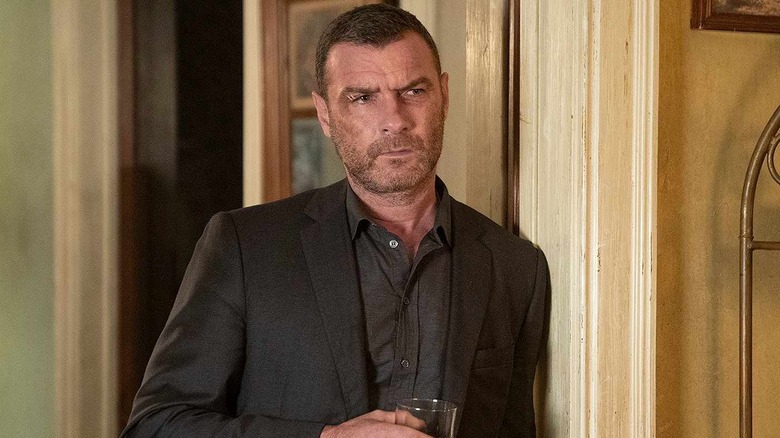
In spite of its 2022 film finale, “Ray Donovan” remains one of the more overlooked prestige dramas of television’s Golden Age. Liev Schreiber stars in the Showtime drama as the titular character, a Hollywood fixer from South Boston who deserves more recognition among television’s great antiheroes. He isn’t as irredeemable as Tony Soprano, but the show paints Ray as every bit as toxic. It locks into the same parent-child relationship as well, with Jon Voight’s Mickey Donovan filling the void of Nancy Marchand’s Livia Soprano. After so many shows about bad men with mommy issues, it’s refreshing for “Ray Donovan” to mix it up a little.
Beyond that, this dynamic is just part of the series’ overarching commentary on masculinity. The way Ray’s profession impacts his relationship with his family is presented as a conflict between what Ray has been taught a man should be and what the people around him actually need him to be. That, combined with its ultimate examination of how traumatized people reckon with their own legacies of violence, makes “Ray Donovan” a perfect post-“Sopranos” watch.
The Shield
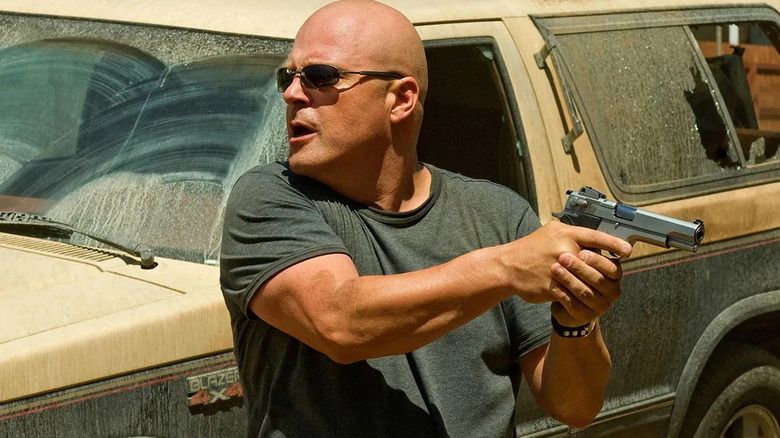
Speaking of overlooked prestige dramas, “The Shield” remains one of the best dramas to ever come out of FX. With HBO cornering the market on antiheroes and crime dramas, rival networks sought to break in with morally bankrupt protagonists of their own — and FX’s came with a badge and a gun.
Michael Chiklis plays Vic Mackey, an LAPD detective who runs an anti-gang task force like the mob. He’s willing to torture, lie, steal, intimidate, and murder to protect his own interests and has convinced himself that his efforts are somehow aligned with keeping the streets of Los Angeles safe. Most of this is established in the pilot episode.
Why “The Shield” so rarely gets the credit it deserves is beyond us. The quality remains remarkably consistent across its seven-season run, aside from a dip in Season 6, and its series finale is indisputably incredible. It’s easily in the same conversation as “Made in America.” Perhaps likable drug dealers, sympathetic mobsters, and imperfect officers suffering under corrupt institutions were more digestible for broader audiences than a band of irredeemable cops.
Sons of Anarchy
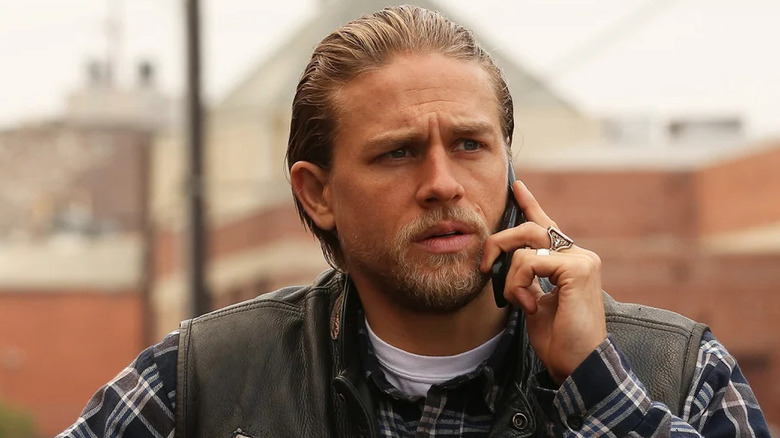
“The Sopranos” feels like the biggest thematic influence on “Sons of Anarchy,” aside from William Shakespeare. Created by longtime “The Shield” writer Kurt Sutter, the FX crime drama frequently walked the line between prestige greatness and “Yellowstone”-level soapiness. The series also featured Taylor Sheridan in a recurring role before he became a major television creator.
“The Sopranos,” “Sons of Anarchy,” and Shakespeare’s “Hamlet” all explore men whose family obligations conflict with their personal ambitions and moral choices. Charlie Hunnam’s Jax Teller, the vice president of the titular motorcycle club, has a complicated relationship with his parents that recalls both Tony Soprano and Hamlet. With his late father’s legacy looming over him, he’s torn between mythologizing a man who’s no longer there and turning to a mother (Katey Sagal) who has her own best interests at heart. “Sons of Anarchy” is ambitious in its darkness but is at its best when it tries to find some inroad toward humanity.
Tulsa King
Whether you love or hate Taylor Sheridan’s work, the writer-producer has become one of television’s most prominent creators of crime and family dramas. There are likely more than a few “Sopranos” fans who went on to fall in love with “Yellowstone” and its various spinoffs. They aren’t a bad choice at all, just not as fitting for our purposes as “Tulsa King.”
Created by Sheridan — and with Terence Winter serving as a showrunner — “Tulsa King” is probably the clearest successor to “The Sopranos” currently on TV. Sylvester Stallone plays Dwight “The General” Manfredi, a recently paroled Mafia capo who is sent to Oklahoma to establish a new foothold for the family. It’s similar to “Lilyhammer” in that way, mining the fish-out-of-water setup for more obvious comedy than you’d find in an entire season of “The Sopranos.” If you’re looking for lean-back entertainment with mob flavor, this is the pick.
The Wire
Few HBO dramas can rival the legacy of “The Sopranos,” but “The Wire” makes a particularly strong case. Nearly two decades later, the argument still doesn’t feel totally settled.
Ranked second behind “Breaking Bad” in a recent New York Times survey of the best television shows of the 21st century, “The Wire” has a reputation that precedes it. Notably, the survey excluded “The Sopranos,” which premiered in 1999. It helped change television in ways distinct from “The Sopranos,” pushing the boundaries of serialized storytelling through its structure, pacing, and exploration of institutions. The clearest argument for this being your next watch is that it’s the closest thing you’ll get to “The Sopranos'” nostalgic prestige charm.
“The Wire” also explores themes that receive less attention in “The Sopranos,” including political corruption, institutional distrust and decay, and the impact of organized crime on vulnerable communities. If you haven’t seen “The Wire” yet, it’s another compelling reason to make use of your HBO subscription before it merges with Paramount.

1 Comment
Pingback: Marvel just did one of the worst things possible to Spider - Comic Vibe