

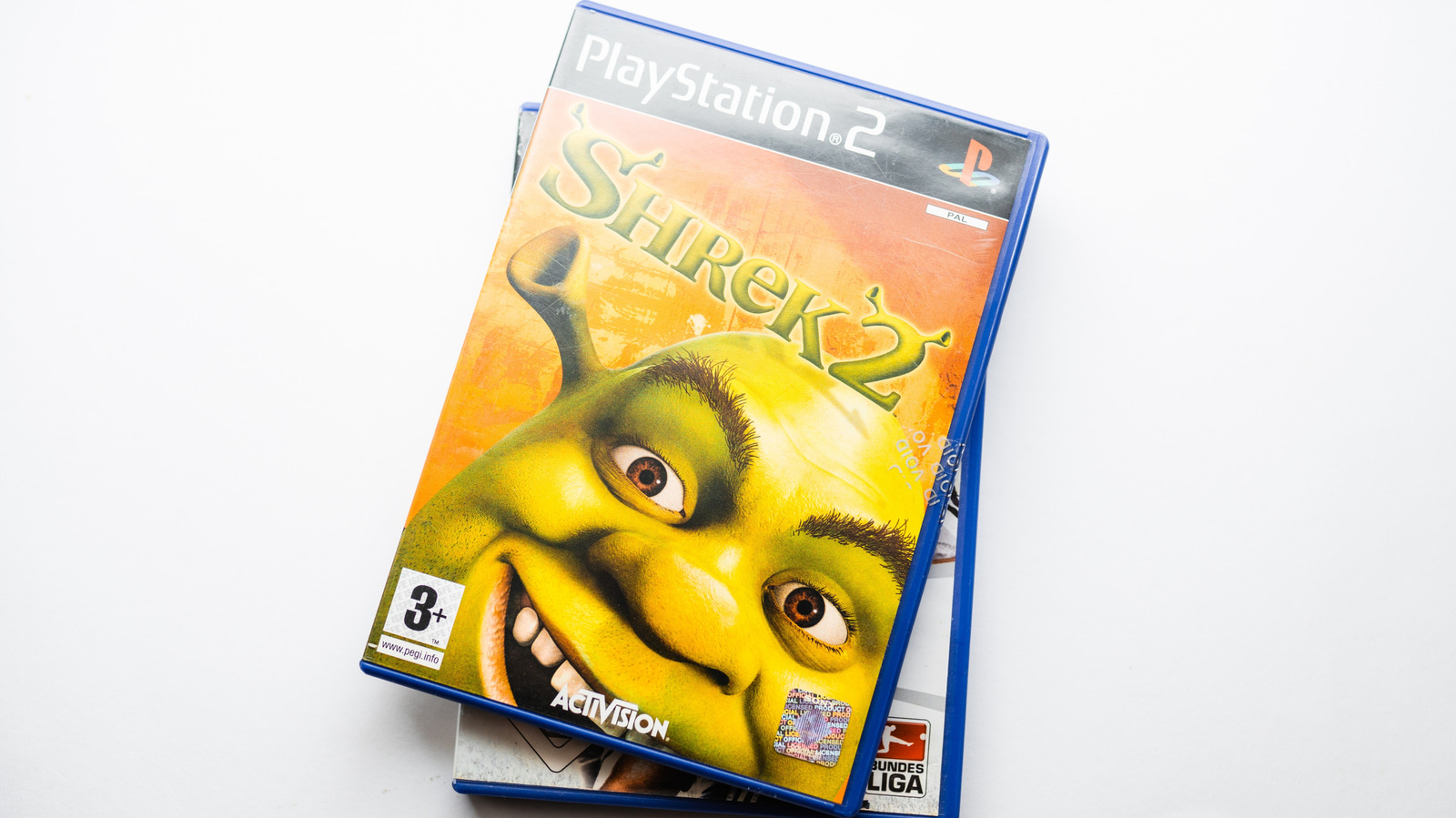
Licensed games for movies like Shrek 2 and Ratatouille were everywhere for a while, but have mostly gone extinct.
Until the early 2010s, it was almost a guarantee that any blockbuster movie would get an accompanying video game. These were often critically panned, but every now and then produced a gem like Spider-Man 2 (2004) or X-Men Origins: Wolverine (2009). Though the production of movie tie-in games hasn’t completely ceased — the Lego adaptations are still going strong, for example — it’s nowhere near the release rate of a few decades ago.
In 2007, over 30 licensed games based on movies were released. In 2025, the closest we got were in-game additions connected to movie releases, like a dedicated event server in Minecraft for its movie or Fortnite skins for The Fantastic Four: First Steps. But a few recent happenings have revitalized nostalgia for this bygone gaming era. We’ve recently seen the shadow-dropped Lord of the Rings: War in the North, a remaster of a 2011 game largely inspired by Peter Jackson’s trilogy. There’s also the upcoming dual release of Toy Story: Retro Roundup! and Toy Story 3: Complete Edition, a revitalized compilation of the titles based on the classic films.
But what killed move tie-in games, and could we ever see them return?
Why did they stop making movie tie-in games?
The biggest driving force behind licensed games’ decline comes down to one aspect: money. The overall cost to make a game has massively ballooned over time: in 2004, it cost $40 million to produce Half-Life 2; nearly two decades later, Marvel’s Spider-Man 2 cost approximately $300 million. With the continuing advancements in hardware, there’s been a sort of technical arms race, where every AAA game produced faces mounting pressure to maximize scope and graphical fidelity. In turn, the budgets allocated to team size and technology have increased exponentially.
Movie tie-in games also come with additional costs. Before a project even gets off the ground, there’s the matter of a licensing deal with the film company. These numbers are typically not published, and vary widely depending on the IP, but to give a ballpark idea: in 1982, Atari paid $22 million for the licensing rights to E.T. — with inflation that’s a bit over $75 million today. These deals aren’t always just a flat fee, either. They can also take the form of a revenue share, where the IP holder gets a portion of all profits from the game. On top of all this, game publishers and developers must contend with potentially paying to utilize the likenesses of a film’s stars in the game.
With rising budgets comes increased risk for every new project. The threat of layoffs and entire studio closures are a constant sword of Damocles over every game produced. Developer Supermassive Games recently faced significant layoffs following the release ofDirective 8020, and the incredibly short life cycle of Concord and its developer Firewalk Studios remains a harsh reminder of the consequences of poor numbers. In the current landscape, it’s hard for any studio to justify taking a risk on a multimillion dollar movie licensed game.
Development length is another licensed game killer

Aside from rising expenses, today’s games also take significantly longer to produce, which is antithetical to taking advantage of a film release. Most movies take a maximum of around two and a half years to produce, while the average AAA game takes five to seven. In 1982, the Raiders of the Lost Ark game adaptation took only 10 months to produce, which would be impossible today. Because the publicity of each is linked to the other, if a tie-in game doesn’t align with the film’s release, it’s almost always a pointless endeavor (with a few rare exceptions like GoldenEye 007).
Even if such a short timeline was remotely possible, changes in the film industry have also made preemptive development more difficult. When tie-ins first started to take off, some developers (like Ocean Software, the company behind the 1987 Platoon adaptation) would receive entire scripts for films very early in their life cycle. As the era of hotly-anticipated film franchises began alongside the rise of the internet, however, filmmakers became much more concerned about potential leaks.
In an interview with Film Stories, Traveller’s Tales developer Andrew Burrows recalls that during the design of 2007’s Transformers: The Game, director Michael Bay was “deeply suspicious” of game companies, refusing to share any robot designs. “We didn’t know what the plot was,” Burrows said. “We were quite a way into development before we even started getting assets.” With little to no information for developers to utilize, these adaptation timelines become even more insurmountable.
Why not indie tie-ins?
If AAA budgets and development cycles are such a large part of the problem, why hasn’t there been a shift to indie development studios for movie tie-in games? While this is a fair question, its answer is the same as the first issue raised: money. The average budget for an indie game can range between approximately $10,000 and $300,000, leaving very little room for the aforementioned licensing costs. Even if a small team did have enough money to get the license, the chances of a large film studio wanting to take a chance with their beloved IP on a likely less-proven development team are slim, especially given increased fandom scrutiny.
Games and their consoles are expensive, so the bar is now much higher for what players expect in a title — if it’s accompanying a blockbuster, fans expect blockbuster-level quality. Instead of direct movie tie-ins, the market has shifted to favoring games set within an IP’s universe. There’s been a solid track record for new stories in existing universes executed well, including the strong success of the Batman: Arkham series (the first of which, Asylum, followed on the heels of a canceled The Dark Knight tie-in game that shuttered a studio). And of course, the modern Spider-Man games are some of the best available on PS5.

1 Comment
Pingback: Why AMC Entertainment Holdings (AMC) Is Up 9.4% After Governance Overhaul And Box Office Rebound - Comic Vibe