

As you open multiple tabs searching for the most reliable laptop brands in today’s market, you’ve probably seen Asus mentioned in rankings across user forums and tech blogs. Over the last few decades, Asus has made a name for itself in consumer technology and in the gaming and creative community through its sub-brands Republic of Gamers (ROG), TUF, and ProArt.
Unlike some of its biggest competitors also in the business of high-performance laptops, Asus doesn’t have a single parent company or institutional shareholders taking up a significant chunk of ownership. Instead, it is a publicly traded Taiwanese company also known as ASUSTeK Computer Inc., whose shares are spread across institutional and individual investors plus the general investing public. With public shareholders collectively owning the largest portion of the company, Asus has a more widely distributed ownership structure as compared to companies like Lenovo and Dell, whose stakes are mostly held by anchor shareholders or their founders, respectively.
Although Asus is commonly mistaken for Acer as both companies are based in Taiwan, the two are completely separate businesses. Asus was founded in 1989 by four former Acer engineers: Tzu-Hsien Tung, Ted Hsu, Wayne Hsieh, and M.T. Liao. Today, only one of the founders, Ted Hsu, remains in Asus’ leadership as its vice chairman, and Jonney Shih currently sits as the company’s chairman, while S.Y. Hsu and Samson Hu were appointed as co-CEOs in 2019. While its investor mix has naturally changed over the decades as shares have been bought and sold, Asus has not undergone a takeover or a merger that fundamentally altered who controls the company. It has, however, separated its manufacturing arm, Pegatron, into its own, independent company in 2010 to reduce friction between competing brands in terms of manufacturing hardware components.
Asus was known for its motherboards before gaming laptops
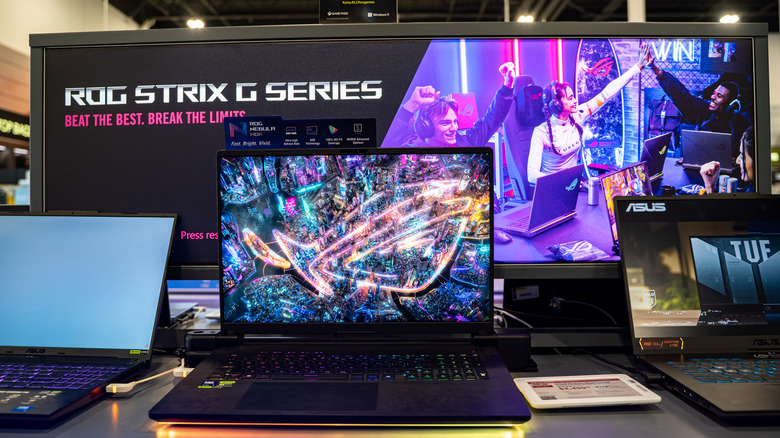
Before Asus became known for its gaming laptops and notebooks for creative professionals or business users, it first built its reputation by producing motherboards. In its founding years, Asus successfully and independently developed the EISA 486 motherboard, which gained popularity at the time and earned Asus a partnership with Intel in 1995 that elevated the company’s reputation as a motherboard maker. From there, Asus expanded into graphics cards, optical drives, monitors, networking equipment, and eventually laptops.
In 2006, Asus launched the Republic of Gamers (ROG) brand alongside its first gaming motherboard, and had already spent nearly two decades establishing itself as one of the world’s leading PC hardware manufacturers, aptly propelling it into the premium gaming laptop market. Even so, Asus’ reputation started to take a hit in 2022 when many gamers urged people to boycott the brand over a series of hardware and customer support controversies. With many users pondering how long ASUS laptops last, some Reddit threads popped up, reporting motherboard failures and overheating issues. Moreover, there were also complaints about the company’s after-sales service, with Reddit user Multisgamers advising others to “generally avoid Asus customer service” and purchase units from stores with good return policies.
In addition, Gamers Nexus posted a YouTube video in May 2024, exposing complications in Asus’ warranty policies that prompted customers to pay for repairs that were supposedly covered under the agreement. A Gamers Nexus post from June 2024 states that Asus has since apologized and revised its North American warranty and repair policies. This year, Asus has announced its discontinuation of budget Android smartphones, shifting its focus to next-generation gaming hardware and enterprise AI solutions.
