

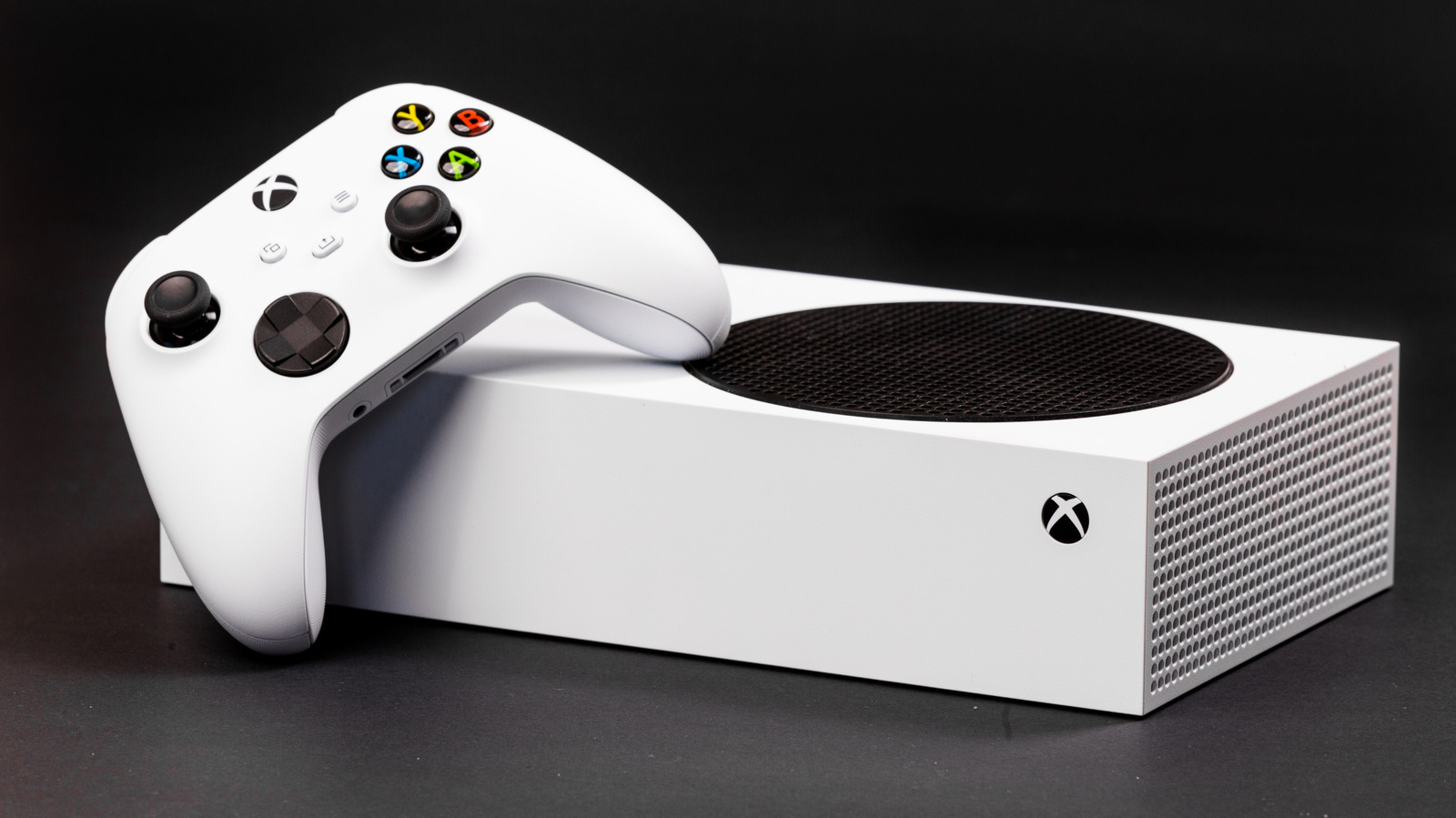
The Xbox Series S is a really interesting console in the current console landscape. Microsoft’s digital-only box is the little brother of the larger, more powerful Xbox Series X, and while far weaker, the Series S can still play all the games that release for the Series X while being much cheaper. And as someone who owns the Series S mostly for Game Pass, I can say that my experience with it hasn’t left me missing out. While the Series S isn’t as powerful as the Series X, just how powerful is it from a technical point of view when compared to PC graphics cards?
This is important information to have, especially if you are looking to build a comparable entry-level gaming PC that can compete with the Series S. The 1650 SUPER from Nvidia’s now discontinued GTX graphics card line comes closest in terms of direct comparison. I know from experience, having relied on that card for several years before it found its way to my fiancé’s gaming PC. Considering that she can play everything currently available on the Series S, it holds up pretty well.
The GTX 1650 SUPER comes closest
The Xbox Series S was designed as a closed environment, meaning everything inside has been optimized to play games. When it comes to a computer, things are far more loose. You might have a great graphics card, but if you have an underpowered CPU and lack the proper RAM, that fancy card does little. And that’s not even talking about the operating system that hasn’t been tailored for gaming, as a computer is designed as a multi-function device.
So, what makes the GTX 1650 SUPER a good equivalent to the Lockhart GPU inside the Series S? The GTX 1650 SUPER slightly beats out the Series S in a couple of areas, including having a higher boost clock and raw computing power. It has a core clock speed of 1530 MHz while the Lockhart GPU goes up to 1565 MHz, but you can boost the 1650 Super up to 1725 MHz. The 1650 also comes out on top with the texture fill rate being 138 versus the Lockhart’s 125.2.
The XSS, on the other hand, has more memory bandwidth and size, featuring 8GB of memory with a bandwidth of 224 GB/s when compared to the 4GB 192 GB/s in the GTX 1650 SUPER. It also has a newer RDNA 2 architecture, allowing the Series S to provide better compatibility with newer games and support for ray tracing, something the GTX 1650 SUPER lacks.
What’s the takeaway
These two GPUs are very different beasts. The Series S is a constant that comes without having to think about anything. It’ll play all the games released for its generation without having to fiddle with settings, drivers, or custom game tweaks. It’s a plug-and-play experience designed primarily for video games. The GTX 1650 SUPER is a capable entry-level card that allows for a wider range of games to be played, without being tied to Microsoft’s ecosystem. It’s a good choice if you want options and enjoy playing older and indie titles, but its 4GB of memory means its future viability will be limited.
My fiancé is currently playing “Red Dead Redemption 2” without issue, giving you a good idea of the games it can handle. The GTX 1650 SUPER is also affordable, selling used for around $100 at a time when Microsoft’s Xbox consoles keep seeing price increases. And because it’s a PC component, you’ll be able to upgrade it down the road without losing access to your games. The Series S is an end-of-the-road proposition, but a PC allows you to keep it alive long after this console generation ends.

4 Comments
Pingback: Emmys 2026 Winners: Full List (Live Updates) - Comic Vibe
Pingback: Bleach: Thousand-Year Blood War anime goes on 1 month hiatus as studio looks to improve animation quality ahead of climax - Comic Vibe
Pingback: Time to Patch: Nintendo Switch Can Be Hacked Using QR Codes - Comic Vibe
Pingback: Art History and Pop Culture Converge in Frederich Kunath's 'The Nearest Faraway Place' - Comic Vibe