

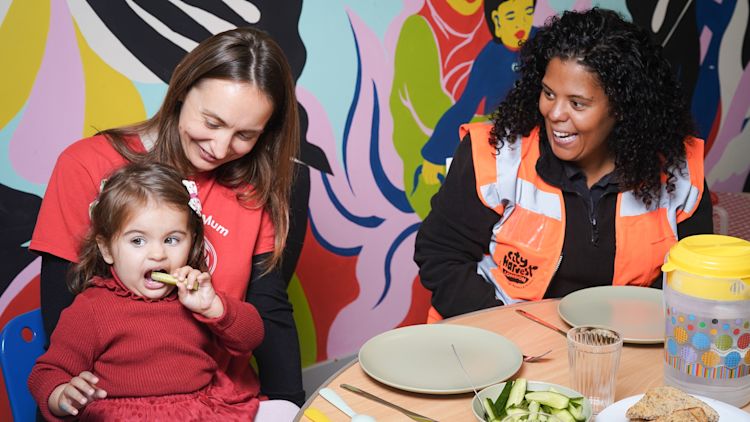
No one should have to choose between paying bills and putting food on the table. Yet for millions of people across the UK, that’s still a daily reality.
At Comic Relief, we believe that everyone deserves access to good, nutritious food – not just in times of crisis, but every day, with dignity and choice. That’s why tackling food insecurity has become a key focus of our work in recent years.
Food insecurity is far more widespread than many people realise. Across the UK, around 1 in 9 households are struggling to afford enough food. Behind this statistic are millions of people cutting back on meals, going without essentials, or relying on food support to get by.
For families already under pressure – from rising living costs, insecure work, ill health or caring responsibilities – even a small, unexpected expense can tip the balance. This often means skipping meals, reducing portion sizes, or choosing less nutritious food.
Some groups are more likely to be affected, including children, single parents and people with disabilities. But food insecurity does not fit a single stereotype. It affects people in every community, including those in work, whose wages simply do not stretch far enough to cover basic living costs or who have little financial buffer when things go wrong.
Our response: supporting communities to lead the way
Since 2022, Comic Relief has partnered with Sainsbury’s to tackle food insecurity in the UK, raising over £26 million. Together, through our partnership, we’ve supported 15 major organisations, who support hundreds of local charities and projects, helping to prevent people from going without food.
These organisations are rooted in their communities. They understand local needs, build trust, and create welcoming spaces where people can access food, and much more.
What we’ve achieved together
Together, we have helped strengthen food security and resilience in communities across the UK by making affordable food more accessible and creating spaces where people can connect and support one another.
Helping people access affordable food through food clubs
-
Supported nearly 600 food clubs, reaching over 295,000 people
-
Enabled access to around 45 million meals
-
Created welcoming, community spaces where people can shop affordably and connect with others
While emergency food aid plays a vital role in responding to immediate need, food clubs provide a preventative form of support that helps households manage food costs, strengthen food security and build resilience to future financial pressures. They combine affordable food access with opportunities for social connection, helping households meet their food needs while strengthening community resilience. Giving children a better start
-
Helped create more than 150,000 places at holiday clubs, providing healthy food and enriching activities, during summer and other holidays when free school meals are unavailable
-
Provided over 1 million meals to children and families during school breaks
-
Supported thousands of families through school-based food clubs
The holiday clubs don’t just provide meals. They give children a safe place to play, learn and build confidence – while easing pressure on parents during the holidays. Supporting people through crisis
-
Helped redistribute more than 13.5 million meals to over 2 million people
-
Strengthened food banks, community kitchens and local support networks
Emergency food remains a vital part of the support system. It ensures people facing the toughest moments – whether due to sustained hardship or unexpected changes such as job loss, illness, bereavement or family breakdown – can still access the essentials they need.
You can read more about our impact to date in our 2022-2026 Impact Report(opens in new window).
Alongside this support, we have been growing our understanding of what works best to help people access affordable food, build resilience and stay connected to their communities.
Drawing on three recent pieces of research – a UK-wide review of food insecurity and community responses(opens in new window) by Nick Hopkins, a study on the role of food clubs(opens in new window) by Dr. Megan Blake, and an independent evaluation of our food clubs programme(opens in new window) by the Tavistock Institute of Human Relations – some clear themes are emerging.
Community-based food clubs work The evidence shows that food insecurity is rarely a one-off crisis. Instead, it’s often the result of ongoing pressures like low income, rising living costs, ill health and caring responsibilities. Food clubs are community-based networks that support people on a regular basis, helping them stay afloat rather than reach breaking point. Taking part over time is linked to better access to food, fewer skipped meals, healthier diets, reduced isolation and improved wellbeing.
Dignity-first approaches are more effective Affordable food clubs, community shops and shared meals offer choice, dignity and connection. Being able to choose food, contribute a small amount, and feel like a customer rather than a recipient of charity makes a big difference. These aren’t just secondary benefits but core mechanisms of impact: they reduce stigma, encourage people to seek support earlier, and help services reach people who might otherwise avoid them, including those in work.
Wraparound support leads to better outcomes Food is often the first step to accessing help. When it’s combined with other support, like regular savings in credit unions, debt advice and benefits guidance, mental health support or social activities, the impact is much greater. Bringing services together in one place helps people build financial resilience and reduces the risk of them falling back into crisis.
Locally-led leadership is key Community organisations understand their local areas and build trust in ways that larger systems often can’t. They can adapt to local needs (whether that’s cultural preferences, transport challenges, or people’s working and caring responsibilities) and create services that feel accessible and welcoming.
Food clubs are also social spaces Food clubs don’t just help people access food: they bring people together. They reduce isolation, strengthen community connections and often create opportunities for people to give back, for example by volunteering. These connections can help protect against the mental and emotional strain of food insecurity.
Surplus food is valuable, but not sufficient on its own Redistributing surplus food can reduce food waste and improve affordability. However, it is most effective when integrated into a wider food support model, where it complements a reliable supply of purchased essentials rather than serving as the primarymodels combine surplus and purchased food to ensure consistent availability and meet community needs
Holiday food programmes support the whole family Holiday activities that include food support do more than just provide meals. They reduce pressure on families, improve children’s diets, and support their health and wellbeing. They also give children a chance to build confidence, learn new skills and make friends.
Learning what works helps improve impact Strong monitoring, evaluation and learning play an important role in improving services. Approaches that involve people with lived experience help capture what really matters – such as dignity, confidence and a sense of connection – and ensure programmes stay relevant and responsive to people’s needs.
We’re proud of what’s been achieved so far – but we know there’s more to do.
Food insecurity is driven by complex, underlying challenges, and addressing it requires long-term commitment. That’s why we’re continuing our partnership with Sainsbury’s, with an ambition of raising a further £30 million by the end of 2030.
Our focus for the future will include:
-
Supporting families and children to access nutritious food year-round
-
Strengthening family resilience to crisis and hardship, through provision of wraparound social and financial support
-
Strengthening community-led solutions that prioritise dignity and choice
-
Expanding support to tackle the wider challenges and shape the systems that affect families’ lives
Towards a more food-secure future
Behind every statistic is a person whose life has been positively impacted – a parent feeling less pressure at meal times, a young person finding confidence again, or a community coming together to support one another.
Because access to affordable, nutritious food is the foundation of healthy lives, stronger communities and lasting wellbeing.
