

After a long, unintended hiatus, You Are Error has returned and is off to an auspicious start: the end of the video game industry.
Welcome back to You Are Error, Aftermath’s podcast about gaming’s greatest misconceptions. For those just joining us, I originally launched this show more than a year ago, inspired by podcasts like You’re Wrong About, Maintenance Phase, and If Books Could Kill. My goal was (and still is) to demystify often-misunderstood elements of video games, whether that means history and culture, the development process, or real-world inspirations that shape what games are about. Previous episodes have covered Arabic, Twitch, horses, and the myth of the solo indie dev, and future episodes will dig into everything from Steam to arms manufacturers to marine biology.
Unfortunately, not long after I launched You Are Error, the daily responsibilities of journalism, another podcast, and running a worker-owned business piled up, and something had to give. That thing ended up being this show. But thanks to Aftermath subscribers and the resources they’ve provided—for example, money to pay our podcast partners, Multitude, for slick video and editing—I’ve been able to revive the show with a more manageable schedule and long-term plan for guests. In short, we’ve never been more back.
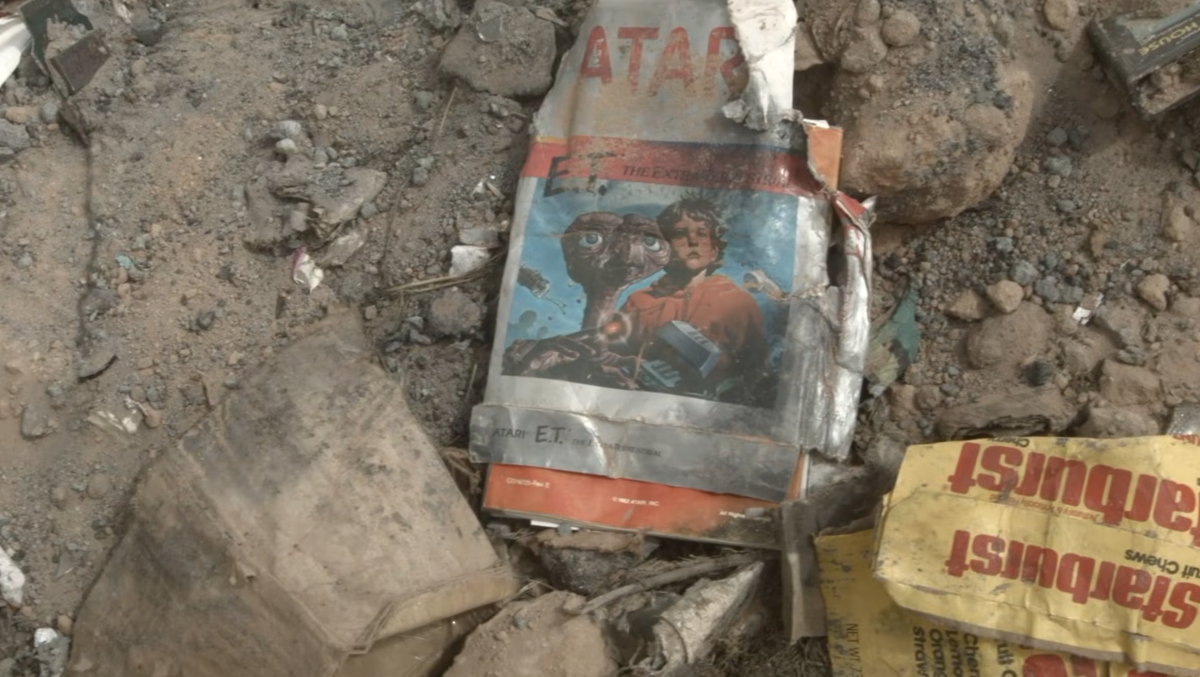
That in mind, I figured we should re-begin on a fitting note: the disastrous conclusion of what was, up to a certain point in the 80s, the video game industry. I didn’t just pick this topic because I thought it’d be funny, though; the video game industry now once again finds itself in a period of existential turmoil, with AI, layoffs, studio closures, and an endless barrage of competing media threatening to crash the traditional games industry as we know it—or at least transform it into something unrecognizable.
So I was curious: Does the video game crash of the 80s provide us with useful parallels? Can we learn from the cultural and economic realities of that moment, even though the games themselves were far more primitive? And of course, what actually happened back then, as opposed to the stories that got handed down via legend and hearsay? Was it really as simple as a bunch of games being so bad that they destroyed the companies that created them? And was the crash so calamitous that people just… stopped liking games? (Hint in both cases: no!)
To answer these questions, I reached out to Alexander Smith, host of video game history podcast They Create Worlds and author of what is perhaps the definitive book on early video game console history, They Create Worlds: The Story Of The People And Companies That Shaped Video Game History. I learned a whole, whole lot from our conversation, and I hope you will too. Enjoy!
You can listen to the episode below or on Apple, Spotify, and pretty much anywhere else podcasts are found. You can also watch it on YouTube.
Here’s an excerpt from our conversation:
Nathan:When people hear about the crash now, the general conception is that the problem was bad games. There were a bunch of them, and they were all kind of terrible—so terrible, in fact, that companies lost a lot of money and pulled out of the games industry or collapsed altogether. But my impression is that it was more complicated than that. So what was the landscape at the time, and why have people come to believe that the issue was simply really bad games?
Alexander: It’s both simpler and more complicated than that. There’s certainly a grain of truth to the idea that some bad games came out of that time because there are some bad games that came out of that time—no question. But the parallel I like to draw there is, those of us that lived through the days of the Nintendo Wii remember the bins and bins of shovelware at Walmart and GameStop of all these cruddy me-too products.
It takes more than bad games, I think, to kill an industry. But when people who lived through it—including the early people who are writing about it, who are also people who lived through it, like Steven Kent—the things that they remember, I think, are those discount bins. They remember getting ETat Christmas and being horribly disappointed. They remember playing Pac-Man and being blinded by flicker. They remember the bins at the front of the store where they were searching through all the games marked down to $5 or $3 or $1.
So I think that’s probably why a lot of that narrative pushed through. Those are the visceral memories of that period. There’s no doubt that that’s part of the situation that occurred. It didn’t help that there were some games out there that were letdowns like ET.
But on the whole, it really wasn’t so much that there were too many bad games; it’s that there were just too many games period. Every last one of them could have been the most amazing games that had ever been created in the history of video games, and if you put out about 200 percent of market demand, that doesn’t matter. You’re still not going to sell them all because you only have so many customers for that product.
Learning from video games’ mistakes
AftermathNathan Grayson

3 Comments
Pingback: Tom Cruise Says He Doesn't Fear Death: 'I Look At Life As An Adventure' - Comic Vibe
Pingback: Demon Slayer Movie That Grossed Over Half a Billion Dollars Is Coming to Prime Video Today - Comic Vibe
Pingback: Man’s Girlfriend Got Upset When He Played Video Games Late at Night—Then They Argued Until 4:00 in the Morning - Comic Vibe