DC‘s Golden Age, lasting from 1938 to 1956, introduced many of its most enduring super-heroes and villains. This Golden Age was kicked off by the almost-mythical Action Comics#1, the comic that introduced Jerry Siegel and Joe Shuster’s Superman, a cultural icon whose selflessness and decency have become the standard against which all other super-heroes are measured. Two years later, Siegel and artist Bernard Baily would devise a character who was almost Superman’s polar opposite, a violent “avenging angel” who has no qualms about killing villains in creative, almost sadistic ways. This prototypical anti-hero was the Spectre, a founding member of the fan-favorite Justice Society of America and one of the most enduring facets of the equally-beloved supernatural corner of the DC Universe. Since his debut, the Spectre has headlined stories written and drawn by some of DC Comics’ best talent, including Neal Adams, Jim Aparo, and Mike Mignola. His dark and violent nature has also been a subject of controversy and debate both in-universe and in real life, with fans and his super-hero colleagues divided on whether the Spectre’s methods go too far.
Videos by ComicBook.com
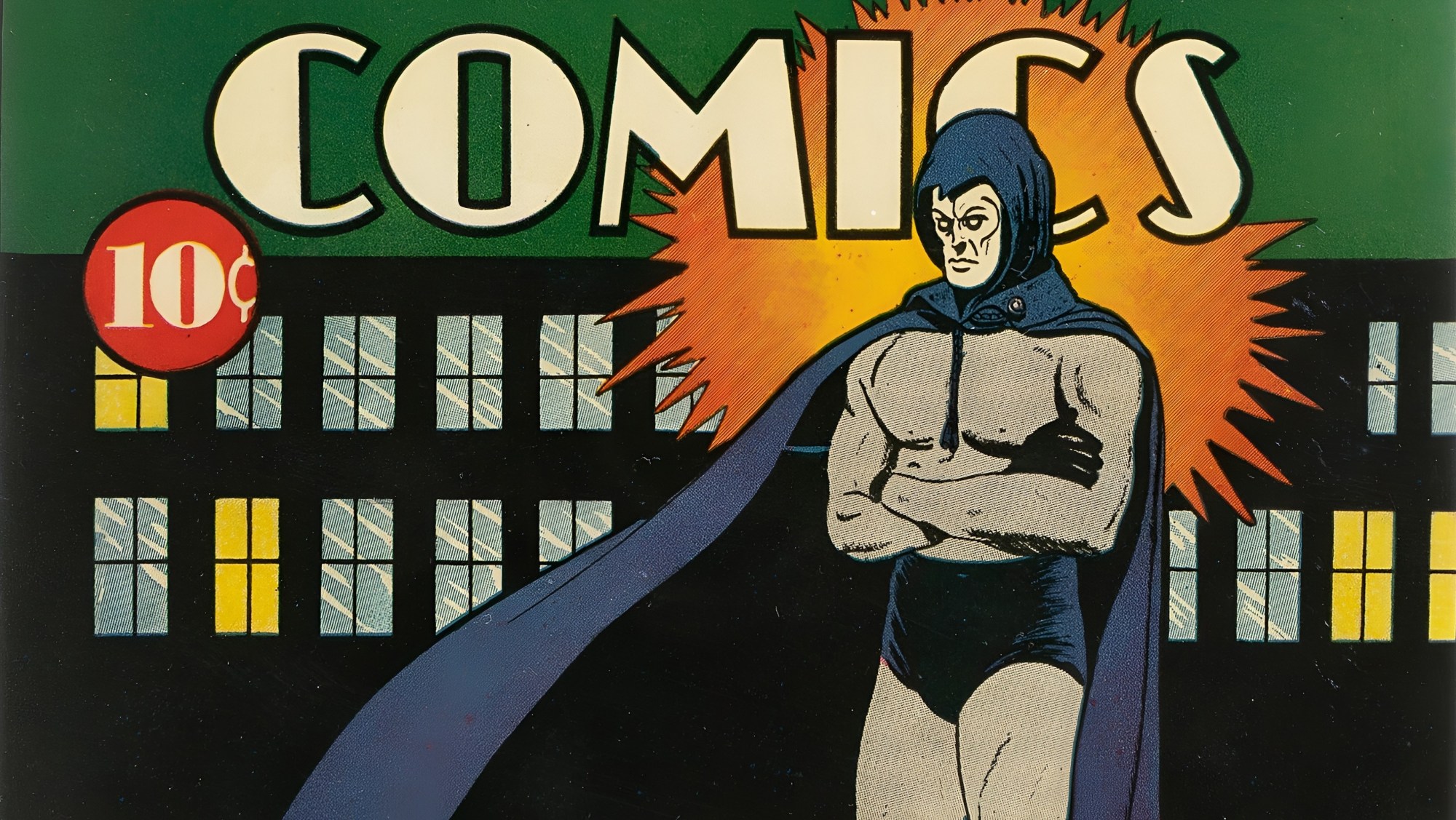
The Spectre’s first appearance, More Fun Comics #52, is one of the rarest comic book issues of the Golden Age. Comic books grading authority the CGC (Certified Guarantee Company) lists only fifty-one graded copies in existence. For comparison, the CGC’s population report lists eighty-eight graded copies of Action Comics #1, making the Spectre’s first appearance is significantly rarer than Superman’s. That means that when a copy comes up for auction, it is an event — let alone when that copy is a CGC-graded 9.4. Next week, Heritage is set to auction this one-of-a-kind copy, but its near-mint condition comes with a major catch: it’s the product of extensive restoration. Comic restoration is a controversial subject among the comic book collecting community, but with an issue as rare as this, it might not matter. At the time of writing, the listings has already realized a price of $7k and climbing with over a week left to bid.
How the Spectre Became DC’s Most Violent Hero
The Spectre’s origin was serialized across More Fun Comics#52-53, with the cover of his first appearance really functioning as a teaser of what was to come in the following issue. In More Fun Comics#52, we see the Spectre’s brutal origin: on his way to his engagement party, Detective Jim Corrigan is ambushed by a gang of criminals who fear Corrigan is getting too close to connecting them with a string of recent robberies. They stuff Corrigan into a barrel filled with wet concrete, drowning him in the concrete before disposing of the barrel at the bottom of a lake. As Corrigan’s spirit approaches the mist-shrouded realm of the afterlife, he is halted by a mysterious voice (later referred to as “the Presence”). The Presence tells Corrigan that his “mission on Earth is unfinished … you shall remain Earthbound battling crime on your world with supernatural powers.” This may also sound familiar to readers familiar with James O’Barr’s The Crow.
But we don’t see Corrigan in action as the ghostly Spectre until the following issue, when the resurrected Corrigan designs his costume to stoke fear in the hearts of the criminals he battles. The Spectre embarks on his crusade by avenging his murder, aging one of the killers to death until he crumbles to the ground as a withered skeleton. These issues set the pace for the rest of the Spectre’s Golden Age adventures, which frequently saw him dispatch his foes in creative, grotesque fashion. Throughout these issues, the Spectre retains the ability to take on the identity Jim Corrigan, and retains his job as a police detective. Later in 1940, the Spectre became a charter member of the Justice Society of America, appearing regularly in the team’s adventures in All-Star Comics.
The popularity of super-hero comics waned as the forties progressed, and the Spectre was one of the first characters DC phased out. Corrigan is resurrected in More Fun Comics#75, and the Spectre becomes a separate entity housed in Corrigan’s body (not unlike Ghost Rider). Corrigan enlisted in World War Two in More Fun Comics#90, and the Spectre’s role in the title was reduced further. The Spectre made his last appearance in More Fun Comics a year later, in #101. Around the same time, he made his last appearance in a Justice Society story, All-Star Comics #23. The Spectre was one of the last Justice Society members to return in the Silver Age, not making another appearance until 1966’s Showcase#60. In his Silver Age appearances, editor Julius Schwartz, along with writer Gardner Fox and artist Murphy Anderson, decided to play up the “avenging spirit” angle inherent to the Spectre’s character. Rather than the gangsters and robbers of the Golden Age, the Silver Age Spectre battles demons, sorcerers, and other mystical threats. Accordingly, he is also portrayed as muchmore powerful than in the forties, with an almost God-like
After three issues in Showcase,the Spectre finally rejoined the larger DC Universe, teaming up with the Justice Society and Justice League in Justice League of America#46-47, as well as with Batman and the Flash individually in The Brave and the Bold. In 1967, he received his first solo title, lasting for ten issues. After The Spectre‘s 1969 cancellation, the character returned in a block-busting pair of Justice Leagueissues (#82-83) that culminated in his apparent demise. He stayed dead until 1973, when editor Joe Orlando was inspired to revive the Spectre once more. Orlando and his wife were the victims of a mugging, its lasting emotional impact on them provided inspiration for a return to the character’s Golden Age roots. Working with writer Michael Fleisher and artist Jim Aparo, Orlando revived the Spectre in the pages of Adventure Comics as a wrathful figure, with Aparo’s arresting artwork depicting criminals transformed at the Spectre’s hands into melting candles or shattered glass. Fleisher’s Spectre was envelope-pushingly grim, and some of its letters to the editor expressed concerns the comic had gone too far. When this run was cancelled, the Spectre faded into the background of the DC Universe once more, returning to prominence only after the company-wide reset of Crisis on Infinite Earths, in which the Spectre had played a prominent role.
How the Spectre Was Redefined For the Modern Age
Image Courtesy of DC
Post-Crisis, the Spectre received his second solo series, lasting from 1987 to 1989. In 1993, Suicide Squadcreator John Ostrander wrote a character-defining run on The Spectre,altering the character’s background and history. Ostrander makes the Spectre into the fallen angel Aztar, earthly agent of the Abrahamic God’s vengeance. Jim Corrigan is a vessel for Aztar, one of many who have assumed the Spectre’s mantle over the millennia. In 1999, Hal Jordan would become the latest incarnation of the Spectre. After Jordan is separated from the Spectre, the Spectre becomes an unstable force of destruction, chronicled in universe-wide crossover Days of Vengeance. The Spectre is later bonded to a new host, Gotham Police Detective Crispus Allen, and played a key part in Blackest Night. Since DC’s New 52 reset in 2012, the Spectre has been kept largely to the background of the DC Universe, appearing in a capacity akin to his Bronze Age guest appearances.
The Spectre’s eighty-six year history has enabled him to cross paths with some of DC’s best characters, teams, and creators. His striking look and unique origin story have inspired those writers and artists to turn the Spectre into one of DC’s most complex, fascinating heroes, earning his place as a firm fan favorite. It’s that fan favorite status, coupled with incredible scarcity, that makes More Fun Comics#52 a Golden Age grail. In 2022, a CGC-graded 8.0, unrestored copy of his first appearance sold for a record-setting $264k. While the current sample on auction at Heritage is much higher grade, its restored condition may prevent it from attaining a comparable price. Despite this, the listing notes that “This artistically accomplished, professionally restored comic book appears to be the product of many hours of intricate artisanship once unseen on the vintage comic book market.” If the restoration does dissuade some buyers, the winning bid might end up well-below unrestored value, giving one lucky fan not only a collection centerpiece, but a bargain.
Collectors Have Chased This Flash Comic For Decades, And Now A Rare Copy Is Up For Auction
More Collectibles
Courtesy of The Walt Disney Company
Collectibles
3 days ago
Captain America and Nick Fury Went Head to Head at a Recent Marvel Auction
Courtesy of The Walt Disney Company
Collectibles
3 days ago
Spider-Man’s First Comic Appearance Just Sold for $10K More Than Normal Thanks to a Marvel Legend’s Signature
Collectibles
3 days ago
Comic Spotlight: Uncanny X-Men #281 Is Flawed Yet Underrated
<img src="https://comicvibe.com/wp-content/uploads/2026/09/Screenshot-2026-09-09-151214.jpg" alt="Star Wars Fan Shows Off Their Vintage Kenner Playset, But Everyone’s Focused On “Sassy” Darth Vader”>
Collectibles
4 days ago
Star Wars Fan Shows Off Their Vintage Kenner Playset, But Everyone’s Focused On “Sassy” Darth Vader
Collectibles
4 days ago
Collectors Have Chased This Flash Comic For Decades, And Now A Rare Copy Is Up For Auction
Courtesy of The Walt Disney Company
Collectibles
4 days ago
A 1977 Topps Star Wars Card With the Highest Grading Was Almost Beaten at Auction By This Unique 2025 Miles Morales Card
Collectibles
5 days ago
This One Of A Kind Vintage Spider-Man Was Mego’s Most Coveted Figure, And Collectors Still Dream Of Finding One
Courtesy of 20th Century Studios
Collectibles
5 days ago
One Marvel Fan Just Scored a Piece of X-Men History, and It Was Practically a Steal