

During COVID in 2021, Thea von Engelbrechten had an assignment due for a course at Dublin City College, a school she’d never even been to in person due to the pandemic that was an hour away from her family’s home in the Irish countryside. The 21-year-old was studying multimedia, which felt safer than majoring in film, but she’d always liked the idea of becoming a director. She hoped to maybe go into advertising, where her command of popular culture might be put to use.
But procrastination is the mother of invention. Under the guise of doing her coursework, the college student brought her old Calico Critters down from the attic, set up a village, and started to play as an adult. She made a few short videos for friends bending the velvety bunnies, beavers, hedgehogs, moles, and meerkats toward soapy theatrics set to excellent soundtracks and posted them to her social media accounts. When they started to get views, she created a dedicated account, titled Sylvanian Drama.
The videos were darkly addictive and beloved, and the young content creator landed a bunch of brand collaborations from Supergoop to Netflix. As a matter of IP, she was sued in April 2025 by the Japanese toy company that owns Calico Critters (most of the world knows them as Sylvanians). The parties settled last summer, but Sylvanian Drama, renamed Moletown Drama, had no real future.
Now 25, von Engelbrechten has a first-look deal with Sony Pictures Television for a new original series in her style, referencing shows like Gossip Girl and Twin Peaks. Hazelwood, out now, features weekly three-ish-minute episodes on YouTube, Instagram, and TikTok. It’s time to get back to your only love them …
Hazelwood is the name of the fictional town you’ve created for this series. What influenced the name?
I love Twin Peaks, David Lynch, and the concept of a small town. There are loads of housing estates here called, like, “Hazelwood” and “Cherrywood.” There’s actually one right beside where my granny lives on the other side of Ireland called Hazelwood, and I thought, That’s a nice name.
And for the town’s look and feel?
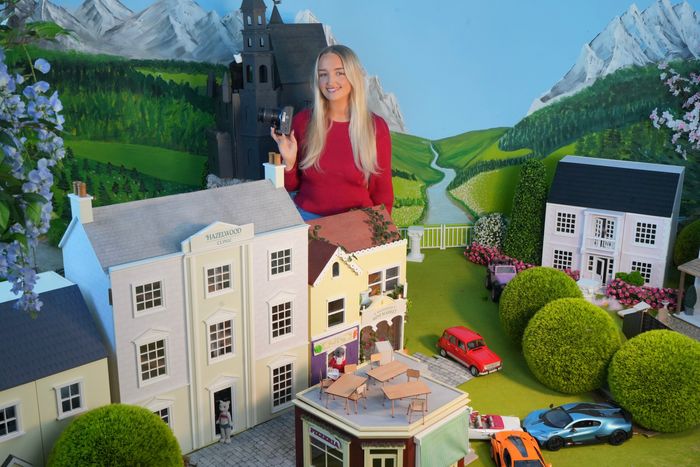
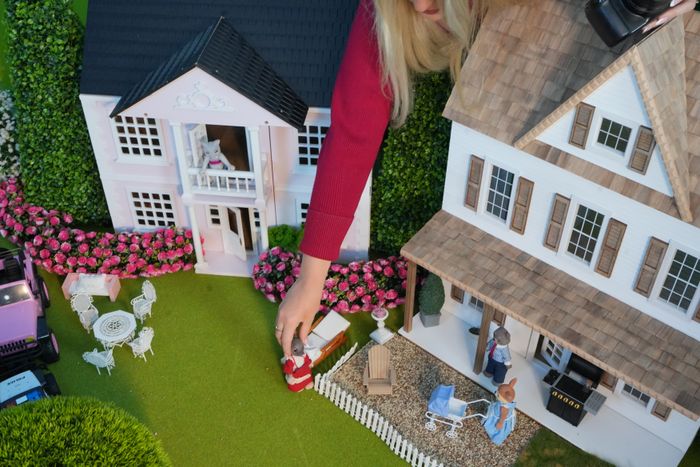
It’s kind of an amalgamation of all my favorite movies and TV shows — a really shitty amalgamation. There would be drama, but they’d have lovely kitchens in gorgeous American suburban houses. I was really inspired by the film American Beauty for the houses and the white picket fences and the roses. For the backdrop, I was inspired by The Sound of Music and its rolling hills and mountains.
My little sister actually painted the backdrop for me. Ruth Woodlock and Jess Sheridan, who are friends and professionals, helped with the model-making and some of the houses and set pieces. Once the daunting-ness of building the set wore off, it was a lot of fun. It’s all upstairs, in the attic, which is now my production studio.
The set is very personal. My Oma — my German granny, who passed away this summer — was creative and collected dolls. The yellow house on the main street in Hazelwood and a little clown doll are some of the things on set that belonged to her.
How would you define theHazelwoodgenre?
I suppose it’s a comedy soap opera. It’s pose-to-pose stop-motion. Nothing is AI. It’s essentially me playing with dolls, but there’s a camera there. And there are errors; sometimes there’s a hair on the camera.
Can you tell us about the main cast?
They’re all quite extreme characters. I wrote the characters before I knew what animals they were going to be. Meadow, a doe, is a stay-at-home mom and an alcoholic, and she’s married to Richard, a dog, who works in private equity and is horrible. He was inspired by American Psycho and The Wolf of Wall Street.
Then there’s their neighbor, who Meadow actually knows from rehab, and her name is Arabella. She’s the epitome of modern girl culture. She’s young and having all these situations with different men. She’s really girly, pop-culture-oriented, and hot. She’s inspired by Paris Hilton and those early 2000s girls, but as a kind of 2026 person who is also a cat.
Pizza Mole is just this lovely guy. He’s probably the only person who is a pure soul in Hazelwood, and he’s kind of the hero. He’s inspired by my cat. He’s completely clueless. He runs a local pizzeria and encounters problems while he’s out delivering.
Beave, who is a beaver, is … If you’ve ever seen Peppa Pig, she’s a bit like Miss Rabbit. She does loads of random jobs. She’s kind of annoying. She’s always around and adding her input to situations that nobody asked for her opinion on, and she just looks crazy. I made her myself with clay. She’s my favorite.
Oh, and Brian. He’s the villain. He calls himself “Scar.” Again, I honed in on the idea of: It’s a villain, but it’s a 25-year-old playing the villain. So he has these moments that are relatable. It’s like me if I were trying to be a villain.
Unlike your previous work, which was episodic, there now seems to be a story arc inHazelwood.
Absolutely. It’s a series-long plot with little subplots. It’s my first time having characters that continue on, and it’s been really fun to do, because it’s like my own little Gossip Girlor Pretty Little Liars.
What’s your process like? Did you have a writers’ room?
I was literally looking up “How to write a series,” because I’d never done this. I have a very low attention span, and if you think about these types of shows, the plot changes so quickly, so it’s about understanding the world and the characters — who they are, knowing how they would react in every situation.
I also think about how, when children are playing with dolls — even though they’re playing the mom and the dad and are different characters with different personalities — it’s still all coming through the lens of a child playing with a doll and what they know about the world or how they see the world. It’s like imagining yourself in those positions. It’s role-play.
Something that’s changed are the music choices. No more “Mr. Brightside,” “Built This Way,” and “Macarena,” for example. Instead, you have instrumental music for the different characters and emotional pitches. What did that decision look like?
Because this is plotted and the characters are so specific, we decided to create our own soundtrack and solely use that. Josh Santos, this young and amazing composer for film and TV, created all these tracks before we filmed, and then I’ve just placed them. He gave us instrumental versions and lyrical versions, and I’m planning to use them on scenes that don’t have dialogue.
What about the dolls, apart from Beave? They’re jointed and flocked?
Yes. We worked with the great puppeteer and model-maker Roos Mattaar. It was something I hadn’t considered, but these figures are different from puppets in that they have to be sturdy. Like, they’re getting run over by cars! In my world, you gotta be really sturdy. They’re actually quite big — 1:12 scale. I was shocked. Like, I can properly hold them in my hand. The dolls’ houses are quite big too. It does make things easier for filming, but I have to get my dad to lift the houses if they need to move up onto a table or something. My cousin Michael McInerney helped with costumes. He just graduated from a fashion design school in Ireland.
In the old series, you often touched on ideas about abusive, toxic, or otherwise bad relationships as well as work woes, body-image issues, drug use, robbery, murder, cults, and guerrilla rebel groups. Is the new series similar?
Absolutely. It’s like every genre is mashed into this messy series. It’s so fun. It’s very silly.
The Sylvanian Drama Universe Expands With Hazelwood
