

Posted in: Boom, Comics, Dark Horse Comics, DC Comics, Image, Marvel Comics | Tagged: Allyn Gibson, bestseller, diamond, marketshare, rob liefeld
The Man Behind Diamond’s Charts Looks At New Comics Bestseller Charts
The man behind those Diamond Comic Distributors Charts looks at the new Comics Bestseller Charts for Bleeding Cool
Article Summary
- Diamond’s old comic charts tracked retailer orders, not reader purchases, making them easy to inflate with variants and bulk deals.
- New Comics Bestseller Charts use POS data from ComicHub, Manage Comics, and others to show what customers actually buy.
- Allyn Gibson, who made Diamond’s charts, says today’s sell-through Comics Bestseller Charts are more useful for the market.
- Current Comics Bestseller Charts draw from hundreds of comic shops, with plans to expand data for a fuller direct market view.
Once upon a time, Diamond Comic Distributors had a monopoly on the direct market for comic book stores in the USA, Canada, the UK, Ireland, and beyond. They also released bestseller sales and marketshare charts on a monthly basis, showing how publishers fared against each other and the best-selling comics of the month, in units shared and dollars charged. However, they never revealed how many copies were actually sold, only how many they sold compared to a fixed title, usually Batman. They also measured only how many copies were sent to retailers, rather than how many they ordered or how many they actually sold to consumers that month. As a result, the charts were also susceptible to being gamed by publishers who would send out more copies than were ordered, or if bulk subscription companies like Loot Crate skewed the figures or if, as with Platinum Studios, when retailers were paid off the books to order copies of the comic, to push it up the charts.
Recently, thanks to retailer services such as Comic Hub, Manage Comics, and Comic Shop Assistant, among others, we have been getting bestseller charts that track how many copies of which comics are actually sold to customers at participating comic book stores. This also knocks out certain ordering skews of retailer-<a href="https://comicvibe.com/absolute-batman-gets-an-exclusive-variant-just-for-indonesia-comic-con/” title=”Absolute Batman Gets An Exclusive Variant Just For Indonesia Comic Con”>exclusive variants, discounts to retailers or ratio deals to encourage retailers to order more copies to get special deals. If a customer doesn’t buy that comic in a shop, it doesn’t get recorded. Some publishers have contacted me to say that the charts don’t fully reflect their own figures. I have pointed out that their figures reflect only what stores order, not what stores sell. Discounts and exclusive variants can encourage higher orders but may not affect actual sales. Rob Liefeld has called them snake-oil salesmen and said they are not comparable to what Diamond used to provide. But thanks to Bleeding Cool comments last week, I get to do my Annie Hall moment. As a certain Allyn Gibsonbroke it down for us;
“I produced Diamond’s sales charts from 2009 to 2022. The unofficial sell-through numbers are, imho, more useful than anything Diamond produced, even though there’s a bit of guestimating that Diamond’s numbers didn’t have. Diamond’s numbers were calculated from retailer orders. Companies could and did pump up their numbers on the charts with variants. I called the numbers a “Potemkin village” from time to time. Sure, publishers might like the PR boost that “Our book sold 250,000 copies on its debut issue,” and then they would watch the numbers of subsequent issues crash to the ground. There were talks in early 2020 of producing sell-through charts based on ComicSuite data. I don’t know for certain, but I imagine the idea was that we would sell the sell-through data to the publishers; monetizing the data that Diamond had been giving away for free was a priority for Stan Heidman’s leadership team.”
“Dan Manser, the Director of Marketing, asked what I thought of sell-through charts. “Why? David Gabriel isn’t going to want this. He cares about is how many copies of a book the retailers buy. The retailers are his customers. He doesn’t care if a store is sitting on two hundred unsold copies of the latest Amazing Spider-Man relaunch. He’s already got his money. Sell-through doesn’t matter to him.” Nothing ever came of this. Even incomplete as they are, these unofficial charts are more useful than anything I made. Publishers and creators can see what people are actually reading.”
“I know the numbers I received from Order Processing. I did have questions at times about how they were generated, and after we lost the person in OP who ran the reports during COVID I wasn’t sure that the numbers were always accurate or the reports run correctly. Pre-2020, I felt the numbers were consistent enough that I didn’t question them, even if there was some unseen magic that went into them, if that makes sense. After 2020, especially as the monopoly fell apart, the numbers weren’t as consistent, and they revealed a little too much about the state of Diamond’s business, which is one reason why we stopped issuing them. I received raw reports into early 2025, but no one internally wanted to look at them, I didn’t have the time (because of writing PREVIEWS, which took a lot of mental time and energy) to work on the spreadsheets, and nothing ever happened with them.”
“The spreadsheets I made from the raw reports that I received from OP had something called the Index Number, which was a percentage of what a book sold in relation to that month’s issue of Batman. There was enough data in that percentage that outlets like ICV2 and Comichron could reverse engineer (or close enough) Diamond’s quantities. I agree, sell-through should matter, but the direct market is a weird place and, I think, incentivizes the publishers to extract as much money as they can from the retailers without regard for the retailers and their health. I quietly raised the issue a few times, asking if Diamond was actually making money on certain variants once our processing costs (data management and handling) were factored in, and I was told that was a bear that was not to be poked. I thought it was a valuable question, Diamond should be smarter about its own business, and data would be useful and powerful.”
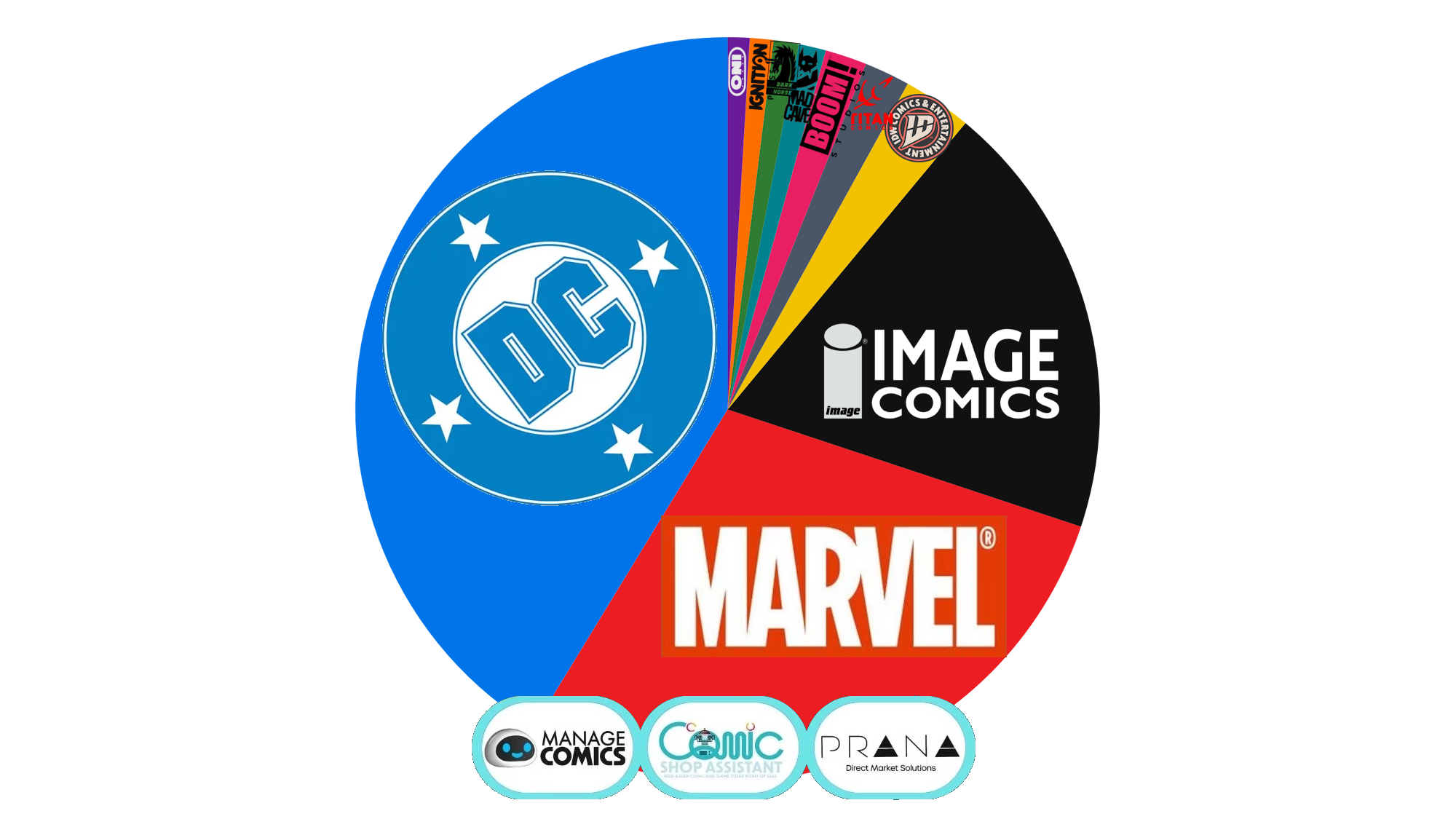
The Wednesday-To-Weekend Bestseller Chart is compiled by over a hundred named direct market comic stores from their sales from Wednesday to Friday, the “Wednesday Warriors” from actual sales data from 120 to 150 comic book stores provided by ComicHub, out of around 1800-2000 direct market comic book shops, which provide POS services for comic book retailers worldwide, mostly in North America and the UK. The Prana Direct Market Solutions provides access to a week’s sales data from comic book stores, Monday to Sunday, based on Point Of Sale data from 600 stores in the Manage Comics and Comic Shop Assistant systems. Bleeding Cool neither receives our hands-out payment for this data; it’s about bringing the information together in one place and then sharing it out. And if Lunar, PRH, Universal, Philbo or Diamond UK, or even Marvel, DC, Image, Dynamite, Dark Horse, would be interested in sharing their data, in a way that I guarantee never to declare it to competitors, but combine it to create a Direct Market Orders chart that reflects the whole market like Diamond used to, I would be down with that as well. But for now, for right now, this is where we are. I will always strive to do better to serve Bleeding Cool readers, whether comic store owners or comic shop customers. And if you have any ideas or suggestions, or would like to contribute additional data, please let me know at richjohnston@gmail.com.
Enjoyed this? Please share on social media!

Stay up-to-date and support the site by following Bleeding Cool on Google News today!

1 Comment
Pingback: JSA #24 Preview: Last Call for the Justice Society - Comic Vibe