

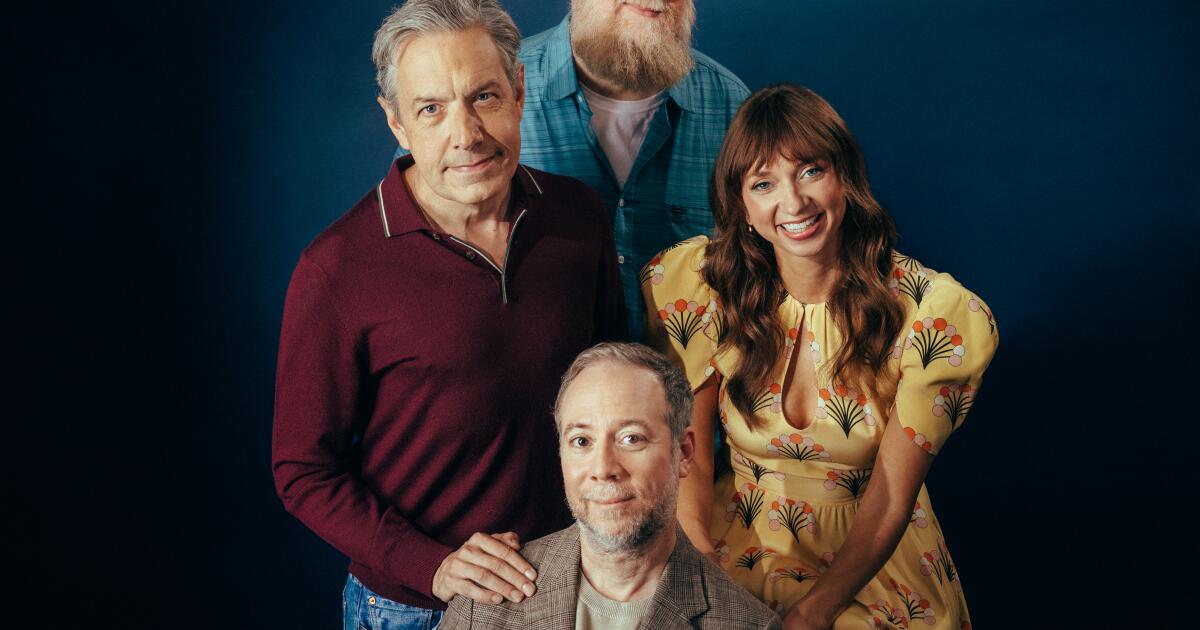
ByJim Halterman
July 13, 20263 AM PT
- Click here to listen to this article
- Share via
0:000:00
This is read by an automated voice. Please report any issues or inconsistencies here
See more from the L.A. Times in Google Search. Set us as preferred
Television characters sitting around having conversations on sofas has served prolific producer Chuck Lorre very well. Starting early in his career, sitcoms such as “Roseanne,” “Dharma and Greg,” “Two and a Half Men” and “The Big Bang Theory” had much of the action happening in the living room
“I had spent almost 40 years writing about people talking on a couch,” Lorre says. With his new series, “Stuart Fails to Save the Universe,” created with Zak Penn and Bill Prady and the latest spinoff in “The Big Bang Theory” franchise, he thought it was time to try something wildly different
“Stuart,” premiering July 23 on HBO Max, is the biggest and most unique swing from the world that began with the hugely popular CBS multi-cam sitcom set in Pasadena, which aired 279 episodes from 2007 to 2019. “The Big Bang Theory” followed nerdy roommates Sheldon (Jim Parsons) and Leonard (Johnny Galecki), both physicists at Caltech; their neighbor Penny (Kaley Cuoco), who later marries Leonard; and friends Raj (Kunal Nayyar) and Howard (Simon Helberg)
The series got off to a slow start — critics gave it mixed reviews and viewership numbers were low — but by Season 3, it was a bona fide hit, typically ranking in the top 10 and hitting No. 1 in its 11th season. The show won 10 Emmy Awards during its run, including four for Parsons for playing prickly Sheldon
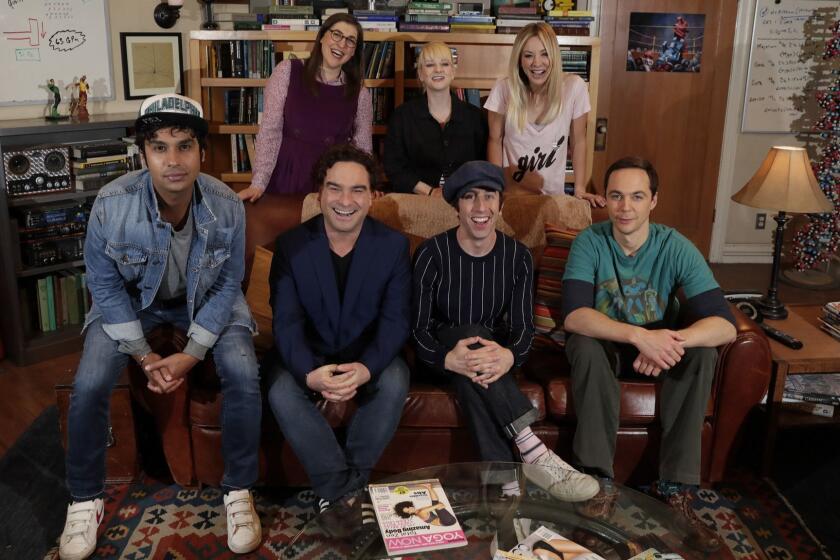
What the remarkable run of ‘Big Bang Theory’ means for Hollywood — and the show’s cast and crew
There’s the Big Bang Theory in science that explains how the universe began from a staggeringly hot, dense point roughly 13.7 billion years ago
May 4, 2018
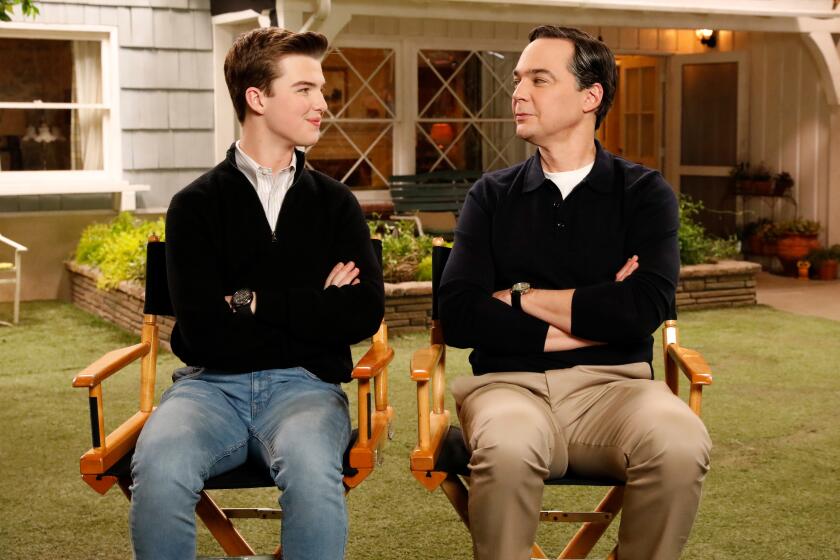
Its success led to two spinoff prequel series that took the traditional sitcom route starting with “Young Sheldon,” a single-cam comedy that aired from 2017 to 2024 and traveled back to the late 1980s to focus on genius Sheldon’s (Iain Armitage) childhood in East Texas. From that series came the multi-cam “Georgie & Mandy’s First Marriage,” centered on Sheldon’s wayward older brother Georgie (Montana Jordan) and his wife Mandy (Emily Osment) in the ‘90s, which begins its third season this fall on CBS.
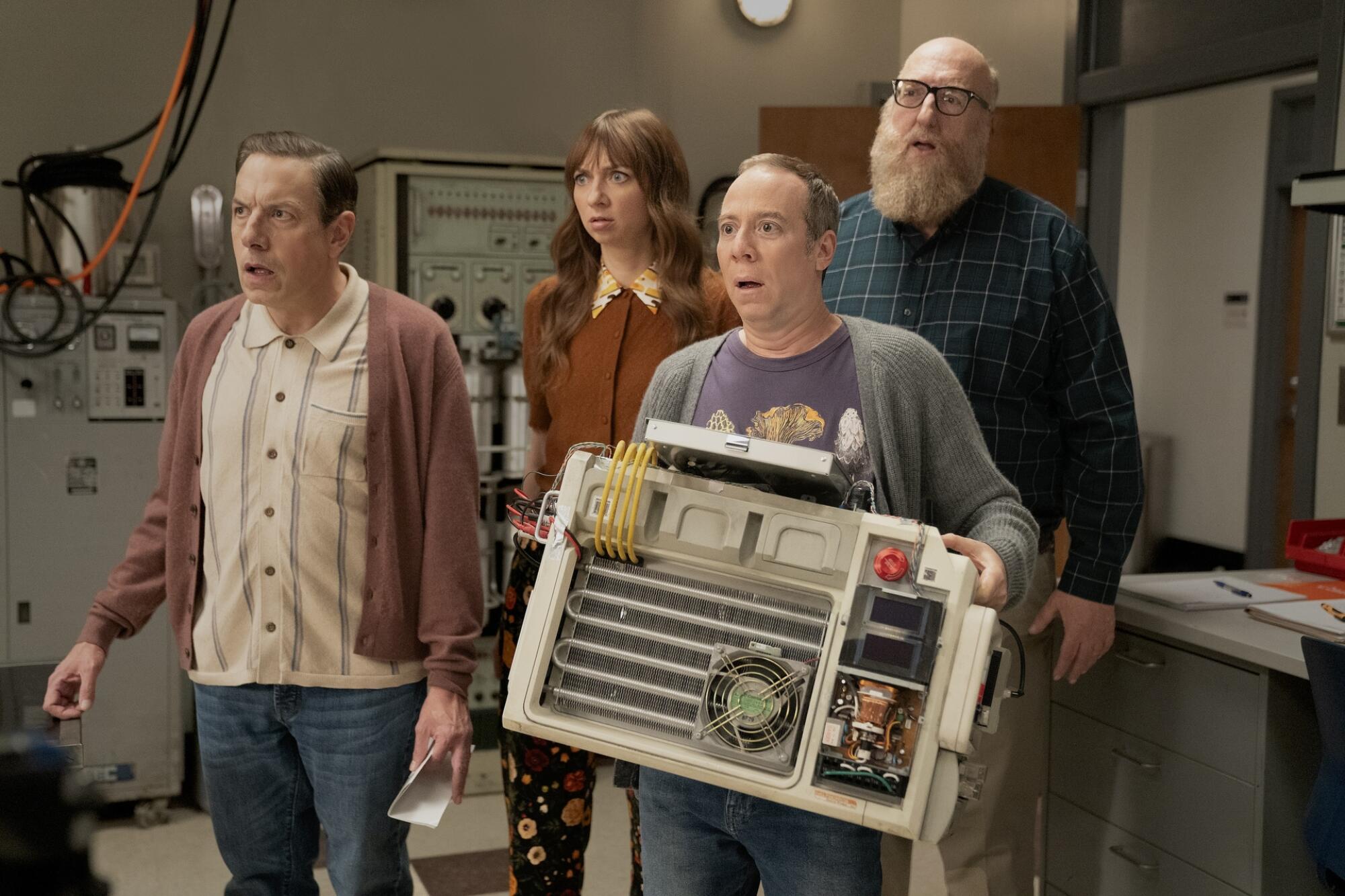
Kripke (John Ross Bowie), Denise (Lauren Lapkus), Stuart (Kevin Sussman) and Bert (Brian Posehn) in a scene from “Stuart Fails to Save the Universe.”
(Colin Remas Brown / HBO Max)
But “Stuart Fails to Save the Universe” is worlds apart from the prequels and the original series — that’s no metaphor. While it’s still a sitcom, the show embraces sci-fi and elevates a quartet of supporting characters from “The Big Bang Theory” for a crazy multiverse ride with callbacks to the original series. “I definitely wanted to paint with a few different other colors than what you generally can do in a four-camera audience show, which has the restrictions of a play, and I wanted to push the envelope a little bit,” Lorre says.
The big swing
The envelope pushing is evident in the first moments, when we find socially awkward Stuart Bloom (Kevin Sussman) at Comic Central, the comic book store he runs, but with one major alteration: He’s now in post-apocalyptic Pasadena, where he trades comic books for canned food to stay alive and survive the many threats around him like giant bugs, wormholes and zombies. Soon, he finds himself face to face with … himself. Actually, it’s Stuart from an alternative universe enlisting him to restore things with the help of a malfunctioned quantum interference device created by Sheldon, Leonard and Howard. (While you’ll hear familiar character names, that doesn’t mean you’ll see them.)
Reluctantly, Stuart accepts the challenge and ventures off with the help of crusty geologist Bert Kibbler (Brian Posehn), Stuart’s ex-girlfriend Denise (Lauren Lapkus) and, eventually, smarmy quantum physicist Barry Kripke (John Ross Bowie), all of whom step into the spotlight as the main cast. “Elevating the supporting cast to the leads just felt like the right thing to do,” Lorre says
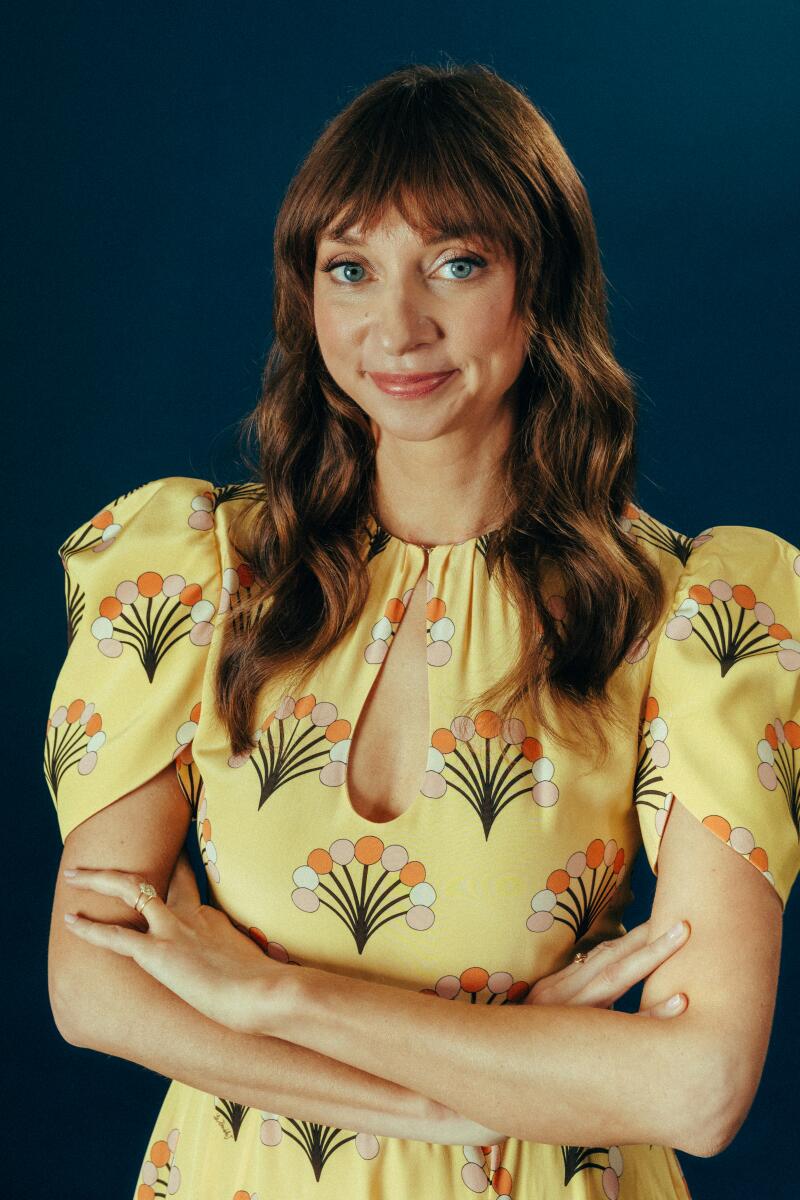
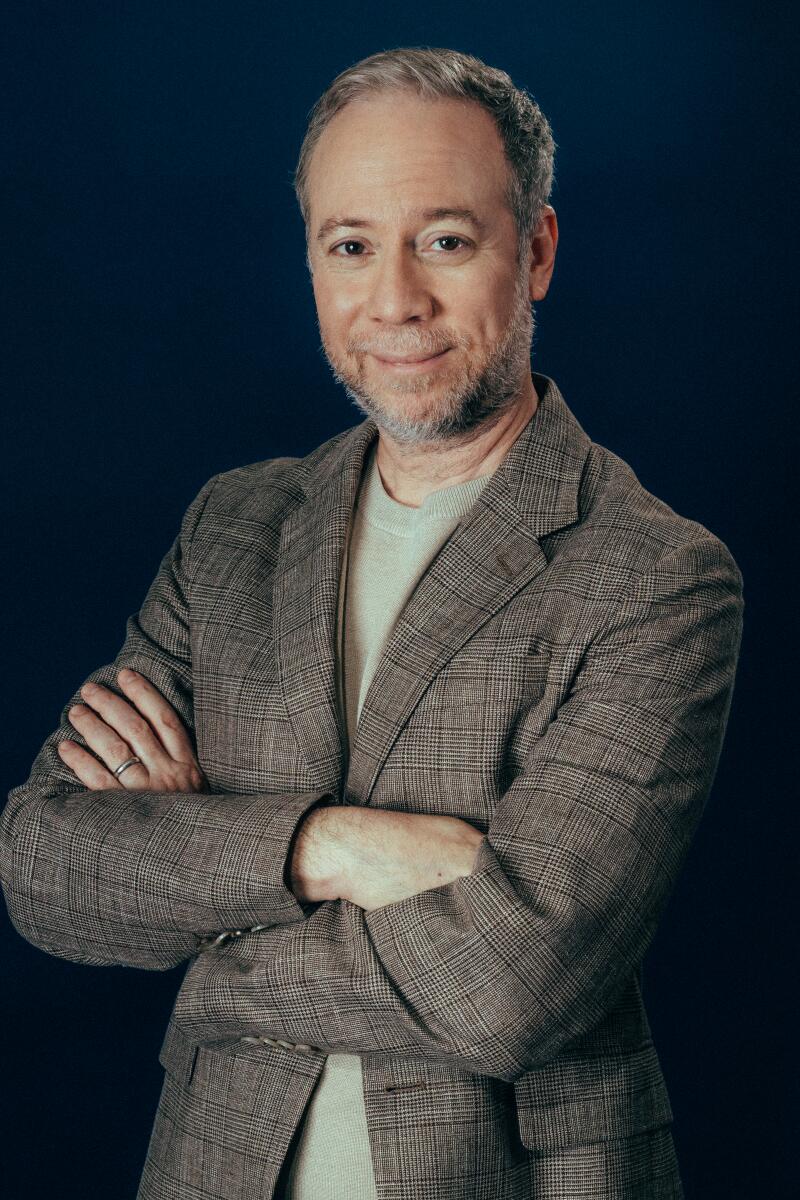
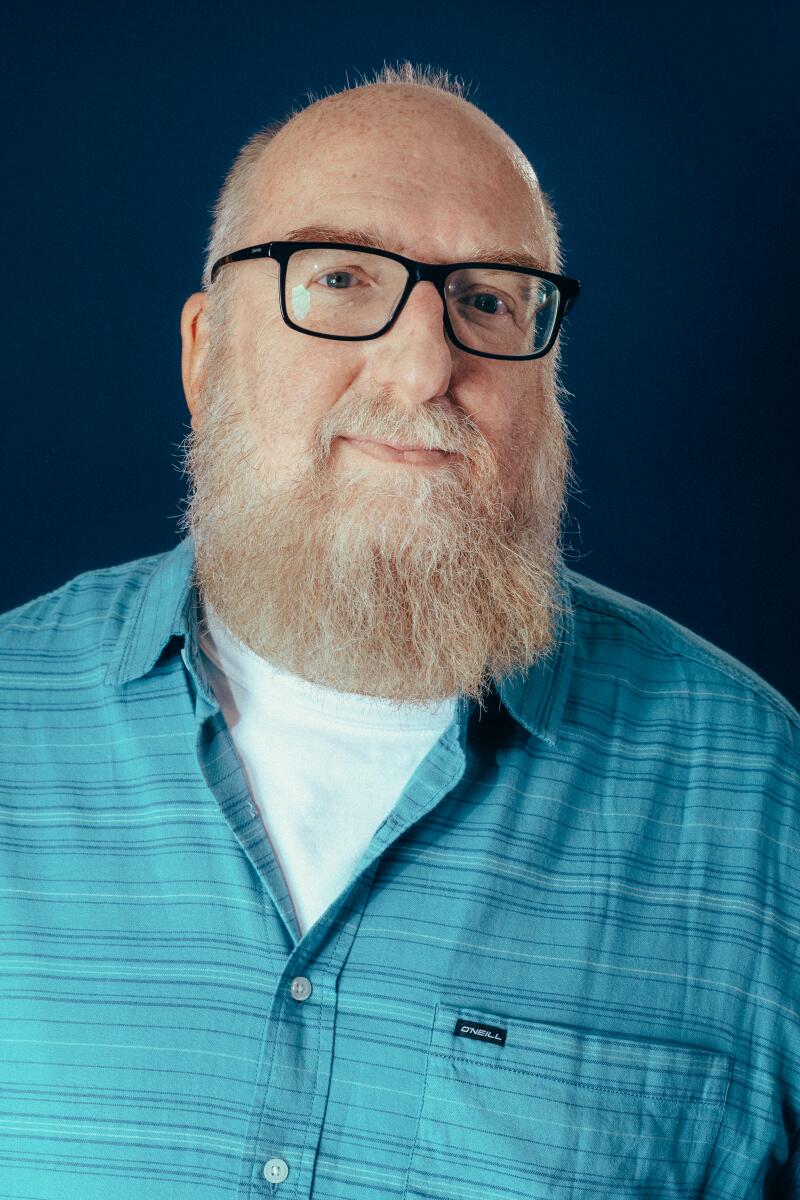
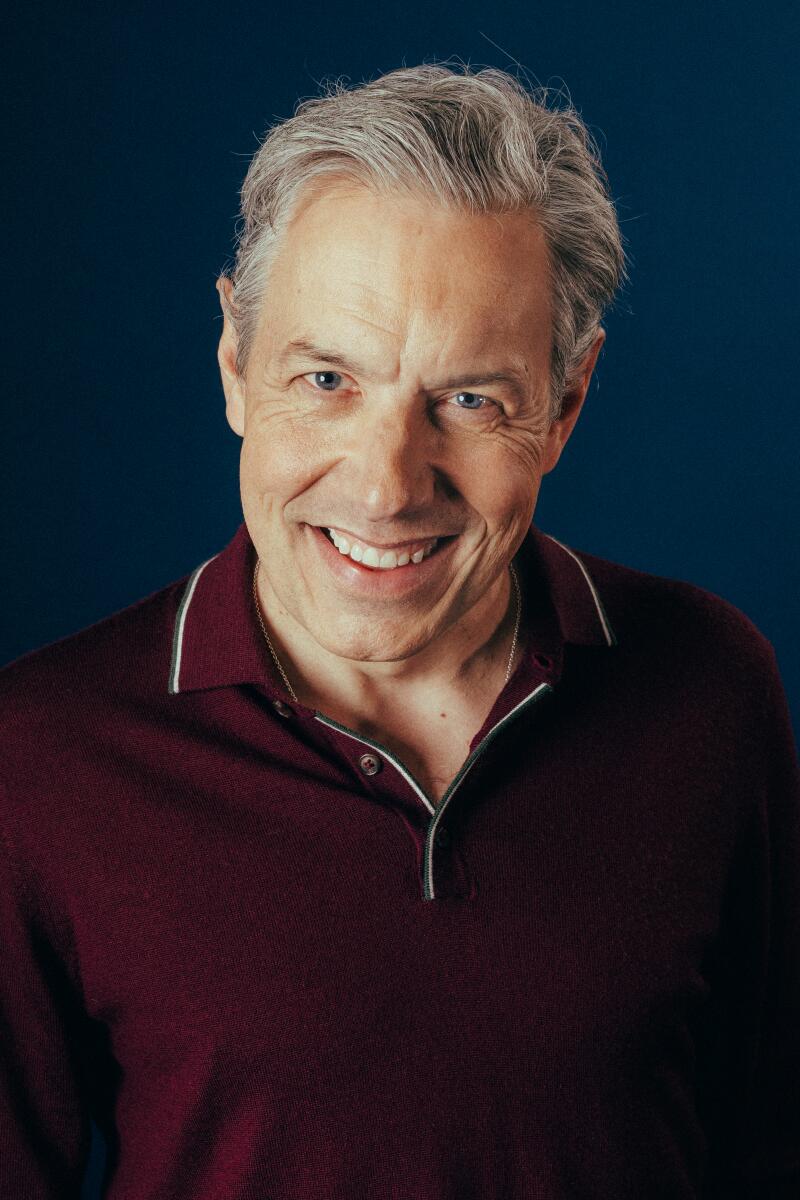
(Ethan Benavidez/For The Times)
While trying to save the world, and facing new problems and threats along the way with pop culture nods aplenty, the quartet wind up in a hybrid genre. “Essentially it’s a sci-fi comedy, which is a show that the guys on ‘The Big Bang Theory’ would be watching and arguing about,” Sussman says
The actor, who first played Stuart in a 2009 episode of “The Big Bang Theory,” says “it’s super exciting and humbling” to be the titular character and No. 1 on the call sheet. But, he quickly clarifies, “at the same time, it’s very much an ensemble show.”
‘Stuart’s’ origin story
The beginnings of “Stuart” trace back to when “Big Bang Theory” was wrapping up its run and Lorre casually asked Sussman to keep him posted on what he was doing next, but didn’t elaborate. “At the time, I thought that he was being polite. He didn’t say that he had anything in mind,” says the actor, who went on to appear in series such as AMC’s “Better Call Saul” and Apple TV’s “Lessons in Chemistry.”
Lorre says that back then, he had a semblance of an idea for a show, but it wasn’t fully formed. “During the last season of ‘The Big Bang Theory,’ I pitched a multiverse comedy adventure thing to Peter Roth at Warner Brothers, starring Kevin Sussman. I think he yawned. No interest,” recalls Lorre, shrugging
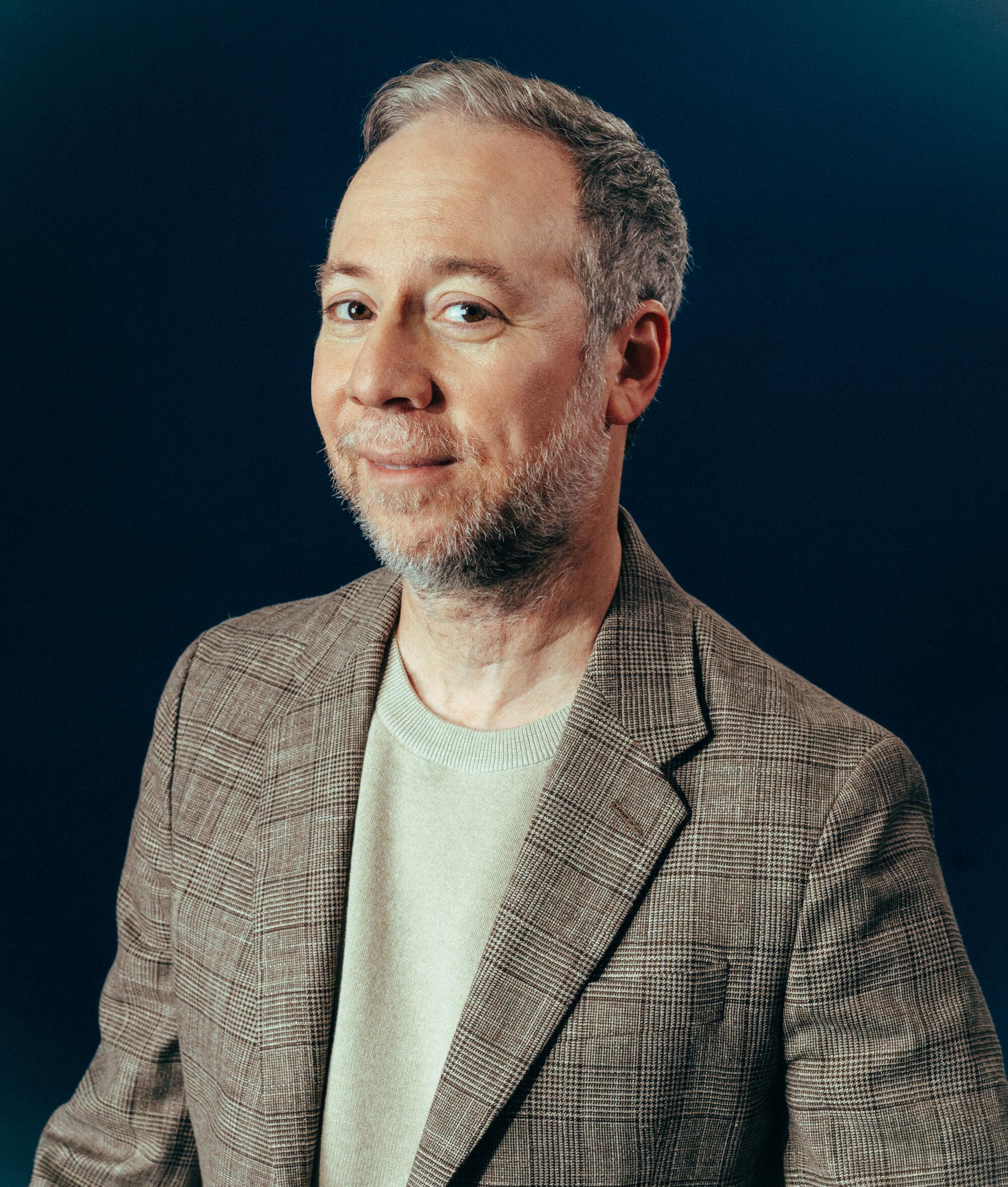
Kevin Sussman plays the titular character in the series and is No. 1 on the call sheet, but he says “it’s very much an ensemble show.”
(Ethan Benavidez/For The Times)
But the idea never left his mind, and Lorre eventually partnered with Penn, a co-writer of sci-films such as “Ready Player One” and “X-Men: The Last Stand” and the TV series “Alphas,” to flesh out the concept before bringing onboard Prady, who co-created “Big Bang Theory” with Lorre
Even without a solid pitch, Lorre, Penn and Prady still met with eager HBO Max executives. “I thought we were making something and then I realized, ‘Oh, wait, we don’t really know what we’re making,’” says Penn. Lorre adds, “truthfully, there were moments we were pitching to the HBO executives where I was absolutely full of s—. I had no idea what I was talking about.”
What helped? The network reallywanted a “Big Bang” spinoff. Sussman recalls the conversation with Lorre: “Chuck said, ‘I have an idea for a ‘Big Bang’ thing and [Warner Bros. Discovery CEO and President David] Zaslav said yes without knowing anything.’”
Thankfully, the multiverse conceit and cast aligned and “Stuart Fails to Save the Universe” was born
Easter eggs galore
Die-hard “Big Bang Theory” viewers will revel in the nods to the original show — it is replete with them. “Literal characters that you know and love appear, so it’s really fun and, for people who are fans of the show, they’ll be excited to see them,” Lapkus says
Trailers for the series show glimpses of actors featured in “The Big Bang Theory” over the years such as Christine Baranski, who played Leonard’s mother, Dr. Beverly Hofstadter; Riki Lindhome, who was Dr. Ramona Nowitzki; and Wil Wheaton as a version of himself. But whothese actors are playing now is a mystery given the wide-open landscape in which the show exists
“You imagine each of these worlds and in each of these worlds, there’s a version of you and me, there’s a version of everybody,” Prady explains. “They just had a different backstory and a different life because the world was different but you can encounter anyone.” For example, Josh Malina is known as Caltech president Siebert on “Big Bang Theory,” but given the various universes, “we come across him in an episode where he’s had a different life and a different career.”
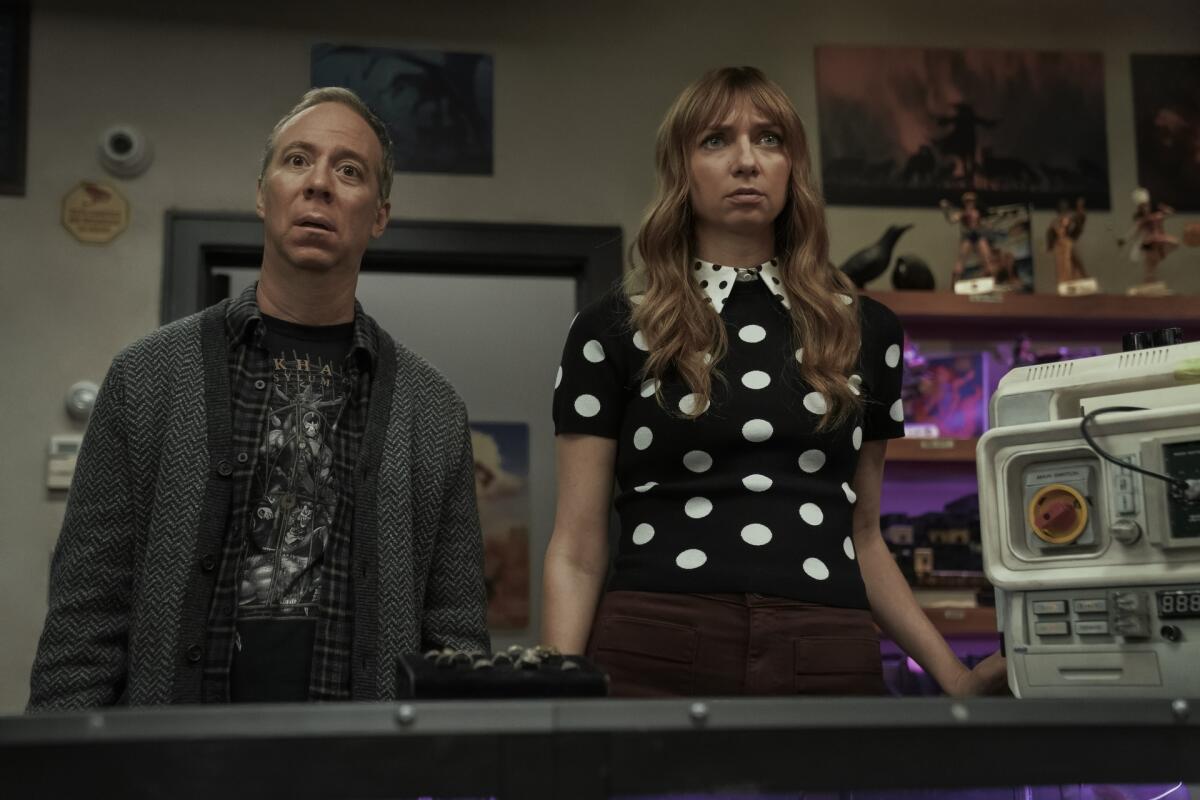
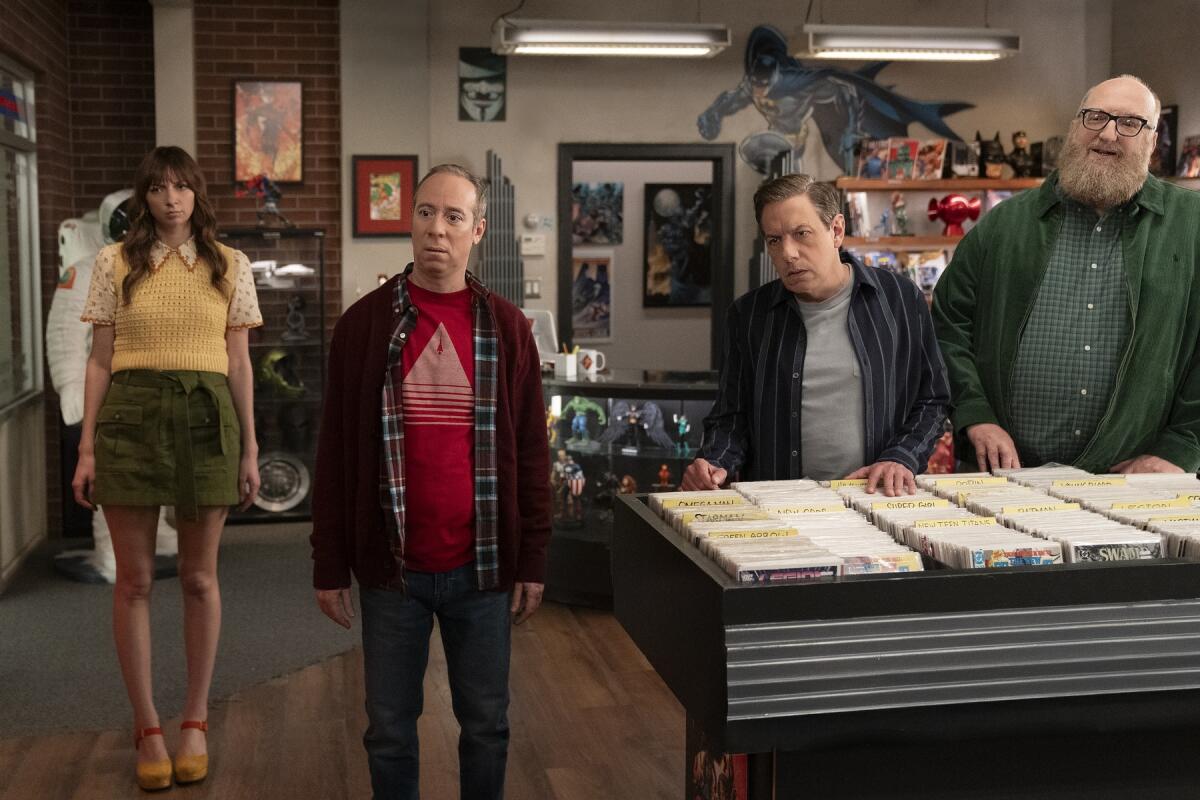
Comic Central, the comic book store that Stuart runs, is in every episode of the show. “The comic book store is our home base for each universe, so every time we were there, you had to feel the old show,” Brian Posehn says.(Colin Remas Brown/HBO Max)
The idea of varied versions of characters (or new personas altogether) existing in the multiverses ended up being a positive. “Without naming any actors, the prospect that you’re going to get to come back to this show but not play the character that you’re so used to playing was definitely an appeal of doing the show,” Penn says
Aside from the familiar faces, one major location featured in every episode is Comic Central, where Sheldon and Leonard often spent time arguing about the merits of comic books and characters. “The comic book store is our home base for each universe, so every time we were there, you had to feel the old show,” says Posehn
However, even the comic book store isn’t exactly as fans may remember it and eagle-eyed viewers will find rewards. “It’s going to be really cool to have the comic book store be more dimensional since in the different universes, the comic book store is different,” says Sussman
That said, viewers with limited or zero knowledge of “Big Bang Theory” won’t feel lost watching “Stuart.” “I don’t think we punish anybody who hasn’t watched the old show,” says Bowie. “There’s plenty to enjoy just with ‘Oh, who are these four dorks in these extreme circumstances? Oh, they’re saving the universe!’”
Why Kripke?
Like any good story, for every group of good guys, there needs to be an antagonist, and the constant nemesis on “Big Bang Theory” was Barry Kripke, the arrogant quantum physicist with a speech impediment who got his kicks undermining Sheldon, Leonard and their group of friends whenever possible. Bowie first appeared as Kripke in Season 2 of the series, returning every season thereafter
“I was an advocate for adding Kripke to this to add an irritant we were all in love with,” says Prady, who likened him to a villain from the 1960s sci-fi series “Lost in Space.” “I went back and I watched some episodes and Dr. Smith [played by Jonathan Harris] is this broad, weird guy who’s off on the side and is constantly causing complications that keep [the Robinson family] lost in space.”
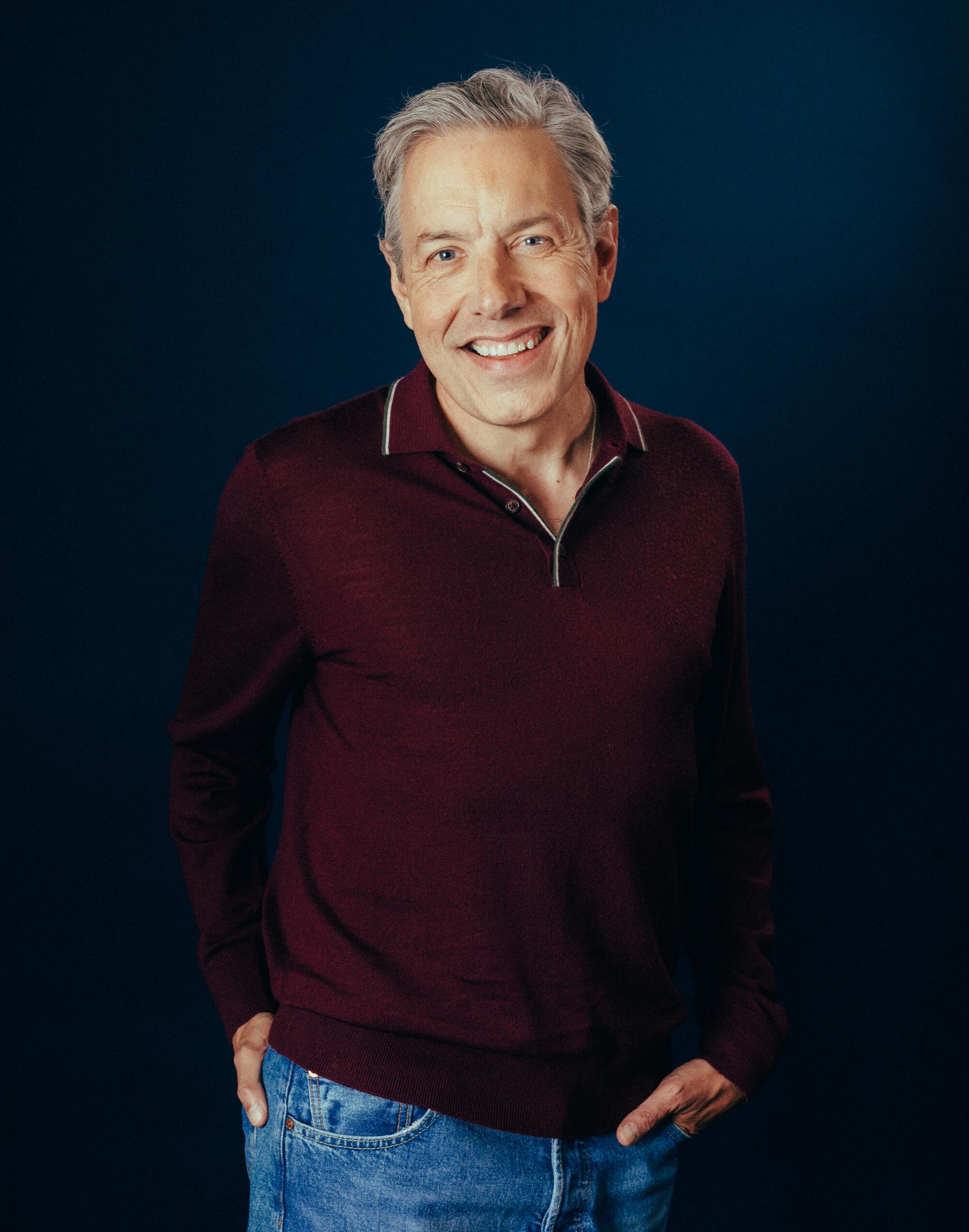
In the series, John Ross Bowie is Barry Kripke, a physicist who was Sheldon’s foil. “I was an advocate for adding Kripke to this to add an irritant we were all in love with,” says Bill Prady.
(Ethan Benavidez / For The Times)
Even though he’s now in the main cast, viewers should keep their expectations low on Kripke suddenly becoming a true ally or friend to Stuart, Denise and Bert. Bowie adds with a grin, “Kripke gonna Kripke!”
Don’t skip the opening titles
The producers delighted in bending and breaking rules of the sci-fi genre throughout the series, but they also shook up one of the most conventional elements of any TV show: the opening title sequence. “Chuck kept saying, ‘Let’s do something that people don’t dare skip, so the first thing is [the opening titles] change because if it’s the same, it’s skippable,’” says Prady
The self-aware opening titles, which are altered with every episode, blatantly urge viewers to not hit the “skip intro” button and offers self-referential messages about the show and the experience of watching it. They also deliver something that has been deemed very, very bad in 21st century television — spoilers. Not here since, as Prady reveals, “the title of each episode is a meaningless spoiler for that episode.”
Television
Iain Armitage was 9 when ‘Young Sheldon’ began. Now, he’s saying goodbye to his biggest role yet
Iain Armitage, 16, talks about the end of “Young Sheldon,” which aired its finale Thursday on CBS, and what’s next for him
May 16, 2024
The show’s theme song, which comes from Emmy and Grammy-winning composer Danny Elfman, who created iconic theme songs for “The Simpsons” and “Wednesday,” was given free rein
“As you watch the series, he kept changing it! It’s not the same song in every episode and he messed with it on purpose,” explains Lorre
There is also an array of music genres heard throughout the show, with artists ranging from the Talking Heads to Willie Nelson
“Danny also recommended the amazing composer who scored the episodes, Joe Laduca,” says Prady. “He adds an amazing color and texture and he’s writing in different genres because the worlds are different. Our music and post production people also suggested some wonderful needle drop music.”
‘Stuart’s’ singular vision
With the show’s upcoming launch, the goal of “Stuart” is not only to entertain audiences, but given its differing terrain from “Big Bang Theory” and its spinoffs, it will also surprise and feel unpredictable
“None of us had really any idea what to expect, but it’s so weird and so fun with such a singular vision,” says Bowie
Adds Lorre, “I think we all hope it stands on its own. People watched ‘Young Sheldon’ who never watched ‘The Big Bang Theory,’ so I don’t think the idea of a sequel show has got to be self-sufficient. It can’t lean on its antecedents forever.”
And sometimes it’s OK to get TV characters off the couch and into new worlds
