

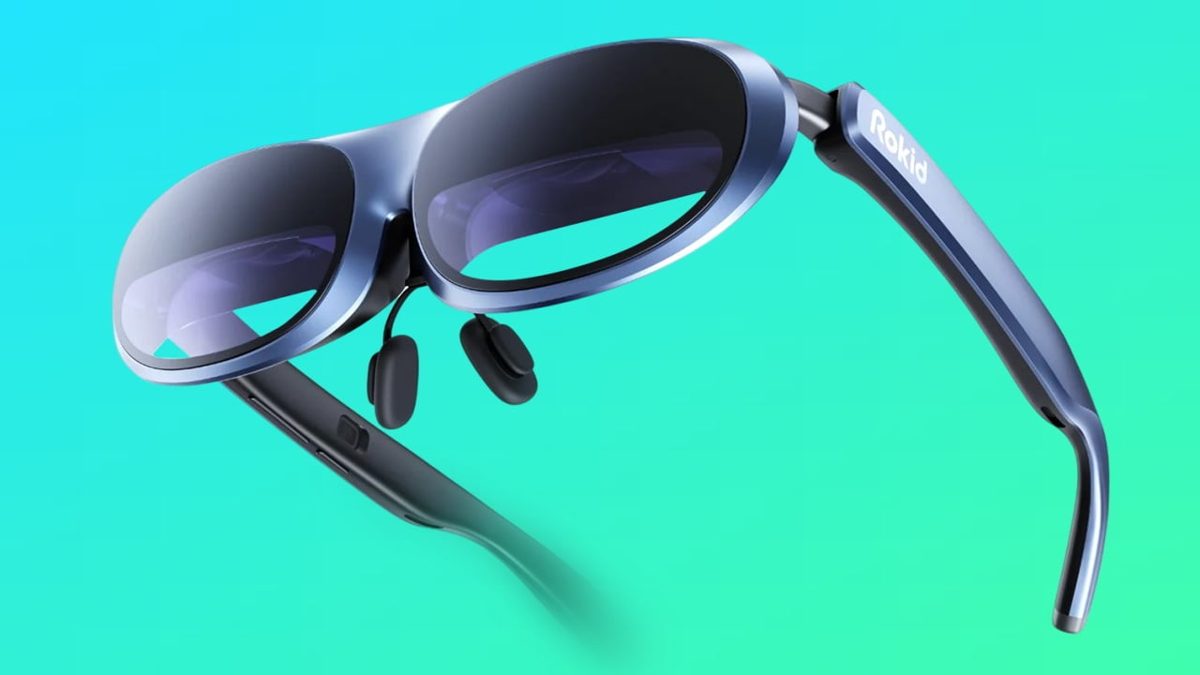
With technology such as cameras, displays, and sensors built into their frames, smart glasses can provide augmented reality (AR) views, AI assistants, and Instagrammable snapshots directly on your face. I’ve been covering smart glasses since they first hit the market and have seen them evolve from basic phone-tethered wearable displays into wireless mixed-reality marvels. They’re still developing, and glasses that can unobtrusively show a map of your surroundings and translate languages are inching forward. The Viture Beast is the best pair of smart glasses I’ve tested, with the most features and the widest field of view. Meanwhile, the Viture Pro 2 is my top budget-friendly recommendation, and both have earned an Editors’ Choice award. Read on for details of all of the best smart glasses I’ve tested, followed by everything you need to know to find the right pair for you.
Overview
- Best Prism Display Glasses Overall
Viture Beast
Jump To Details
Best Entry-Level Prism Display GlassesViture Pro 2
Jump To Details
Most Comfortable Prism Display GlassesX by XReal a01+
Jump To Details
Best Social Media Glasses for Music LoversOakley Meta HSTN
Jump To Details

Most Stylish Camera GlassesRay-Ban Meta Gen 2
Jump To Details
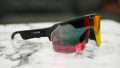
Best Dimmable Smart SunglassesChamelo Music Shield
Jump To Details

Best Smart Glasses for SportsOakley Meta Vanguard
Jump To Details

Most Advanced Waveguide Display GlassesMeta Ray-Ban Display
Jump To Details
You Can Trust Our Reviews
Since 1982, PCMag has tested and rated thousands of products to help you make better buying decisions. Read our editorial mission&see how we test.
Deeper Dive: Our Top Tested Picks
- Best Prism Display Glasses Overall
Viture Beast
4.5 Outstanding
Pros & Cons
-
- Bright, colorful picture
- Very wide field of view
- Built-in head-tracking features
- Ultrawide mode
-
- No focus dials
- Useless camera
Why We Picked It
The Beast is Viture’s top-of-the-line pair of smart glasses, standing above the Luma series thanks to its wide array of features. It’s Viture’s first pair of smart glasses to incorporate built-in head tracking for multiple immersive picture modes. Instead of a fixed picture right in front of your eyes, you can now use a virtual screen that floats in front of you and stays put when you move your head. You can also shrink the picture and put it to the side of your vision so you can keep an eye on what’s actually happening in front of you, or (a personal favorite) switch to ultrawide mode for a virtual 3,840-by-1,200 monitor.
Who It’s for
Power users: I swear by ultrawide mode when I have to get work done on the go. It lets me research, edit, and produce stories while sitting at a coffee shop, giving me a lot more real estate than my laptop’s screen.
Theater fans seeking immersion: Because the glasses can anchor the virtual display in place and keep it there even as you move your head, it can give the impression of sitting in a theater and actually watching a physical screen. The view does cut off at the edges, so it isn’t quite the complete, eye-filling experience you get from a VR headset, but it’s by far the most immersive way to watch a movie on smart glasses.
Specs & Configurations
Camera Connection Wired Field of View 58 Glasses Features 3DOF Glasses Features Camera Glasses Features Dimmable Lenses Glasses Features Display Glasses Features Speakers Glasses Type Prism Display/AR Input Controls Button Integrated Display Type Prism Resolution 1,920 by 1,200 Voice Assistant Compatibility None Learn MoreViture Beast Review
-
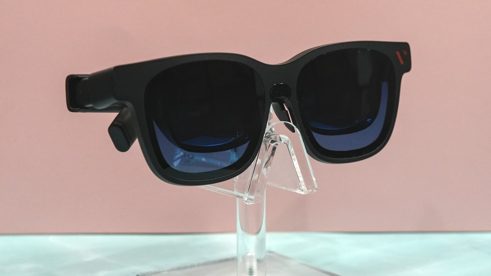
Best Entry-Level Prism Display GlassesViture Pro 2
4.5 Outstanding
Pros & Cons
-
- Incredibly bright, vivid picture with a comfortably wide field of view
- Focus dials render prescription lens inserts unnecessary
- Lightweight, comfortable design
- Affordable
-
- Bare-bones feature set
Why We Picked It
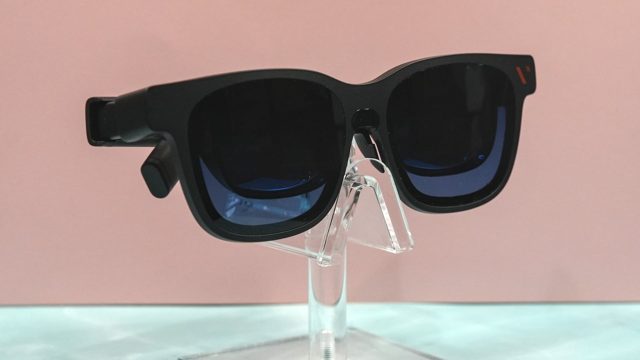
The Viture Pro 2 is the company’s budget-friendly model, without extra features like dimmable lenses or built-in head tracking. That lack of tricks enables a reasonable price and one of the lightest designs I’ve seen at 2.22 ounces. It doesn’t take away from the picture quality either, with a 1,600-nit peak brightness and vibrant colors. On top of all that, it offers one extremely useful feature for anyone who wears corrective lenses: focus dials.
Who It’s For
Nearsighted individuals: Thanks to the Viture Pro 2’s focus dials that can correct up to -5.0D in each eye, those needing vision correction can enjoy a sharp picture without spending additional money on a prescription lens insert.
Everyday work and play: The Viture Pro 2’s 50-degree field of view comfortably provides the equivalent of a 147-inch screen viewed from 13 feet away, giving you a private movie theater screen, TV, or monitor experience wherever you sit.
Specs & Configurations
Connection Wired Field of View 50 Glasses Features Display Glasses Features Focus Dials Glasses Features Speakers Glasses Type Prism Display/AR Input Controls Button Integrated Display Type Prism Resolution 1080p Voice Assistant Compatibility None Learn MoreViture Pro 2 Review: These $299 Smart Glasses Treat Vision Correction as a Feature, Not an Extra Review
-
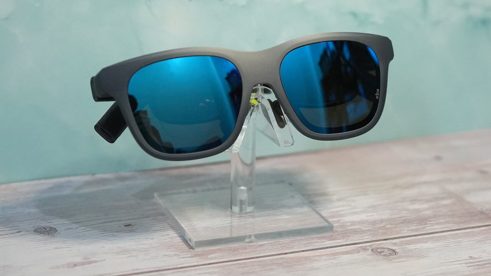
Most Comfortable Prism Display GlassesX by XReal a01+
4.5 Outstanding
Pros & Cons
-
- Very bright picture with wide colors
- Incredibly light frame is comfortable to wear for long periods
- Interchangeable front plates let you change the look
- Affordable
-
- HDR10 doesn’t seem to particularly improve the picture
Why We Picked It
The a01+ is XReal’s first entry in its affordable X by XReal sub-brand. It’s a bit bare-bones, lacking the built-in head-tracking features that make XReal’s flagship One series models so immersive. Even without those tricks, it offers a super-bright picture (1,600 nits) and vibrant colors for a reasonable price. And at 2.19 ounces, it’s the lightest pair of prism-display smart glasses available, making it especially comfortable to use.
Who It’s For
Value shoppers: For less money than most of the other models on this list, the a01+ offers an ultra-bright picture and a satisfying 50-degree viewing angle.
Digital nomads: Whether you’re working at a coffee shop or watching a movie on a flight, the a01+ provides a comfortably large screen for any compatible device you connect.
Specs & Configurations
Connection Wired Field of View 50 Glasses Features Display Glasses Features Speakers Glasses Type Prism Display/AR Input Controls Button Integrated Display Type Prism Resolution 1080p Voice Assistant Compatibility None Learn MoreX by XReal a01+ Review
-
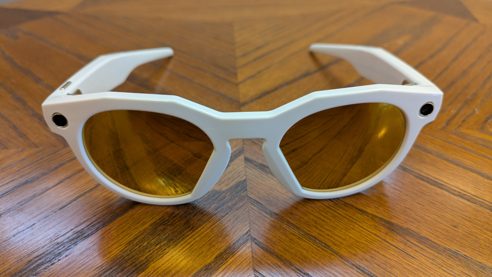
Credit: Andrew Gebhart
Best Social Media Glasses for Music LoversOakley Meta HSTN
4.0 Excellent
Pros & Cons
-
- Shoots videos in 3K
- Longer battery life than the Ray-Ban Metas
- AI assistant provides helpful info
- Minimal sound leakage
- Clear audio quality
-
- Difficult to frame shots
- Limited bass on audio playback
- AI assistant can make errors
Why We Picked It
Oakley’s take on smart glasses is a lot like Ray-Ban’s, as both leverage Meta’s technology. Like the Ray-Ban Meta (Gen 2) smart glasses, the Oakley Meta HSTN features a 12MP camera for capturing content from your point of view, as well as Meta AI to answer your questions. Both pairs supposedly have the same battery life and speakers, but the Oakley Meta HSTN sounds a little better, with less audio leakage, than the second-gen Ray-Ban Meta, and lasted slightly longer between charges in our testing. We prefer the style of the Ray-Bans, but the Oakley Meta HSTN is functionally superior by the thinnest of margins.
Who It’s For
Music fans:While no open-ear speakers offer much low-end bass resonance, these Oakleys make mid- and high-frequency music sound pristine, with clear separation. They produce decently loud audio and minimize sound leakage.
People with small children or pets: All of the Meta smart glasses make it easy to capture impromptu moments, but these have the best battery life of the bunch, so you’re that much more likely to be wearing them when a special moment strikes.
Specs & Configurations
Camera Connection Wireless Glasses Features Camera Glasses Features Microphone Glasses Features Speakers Glasses Type Audio-Only Input Controls Voice Voice Assistant Compatibility Meta Get It Now
Learn MoreOakley Meta HSTN Review-

Credit: Andrew Gebhart
Most Stylish Camera GlassesRay-Ban Meta Gen 2
4.0 Excellent
Pros & Cons
-
- Stylish design
- 3K video capture
- Helpful AI assistant
- Clear audio quality
-
- Difficult to frame shots
- Limited bass and lots of audio leakage
- AI assistant can make errors
Why We Picked It
Like the Oakleys, these Ray-Ban smart glasses utilize Meta’s technology to let you to take photos, shoot videos, listen to music, and make calls. They provide easy access to Meta AI, which can use visual data from the glasses’ 12MP camera to help answer your questions.
Who It’s For
Fashion fanatics: These Ray-Bans have a timeless style with unobtrusive tech cleverly baked into the design. If you want to add smarts to your frames while accessorizing your look, these are the smart glasses for you.
Social media gurus: If you’re looking for a fun new way to share your social media activities, especially on Meta’s platforms like Facebook or Instagram, these are the smart glasses to consider. They make it easy to shoot POV videos without having to hold your phone, and the integrated Meta AI assistant can provide real-time information about your surroundings.
Specs & Configurations
Camera Connection Wireless Field of View 100 Glasses Features Camera Glasses Features Microphone Glasses Features Speakers Glasses Type Audio-Only Input Controls Voice Voice Assistant Compatibility Meta Get It Now
Learn MoreRay-Ban Meta Gen 2 Review-
Credit: Will Greenwald
Best Dimmable Smart SunglassesChamelo Music Shield
3.5 Good
Pros & Cons
-
- Adjustable tint
- Good audio quality
- Light and comfortable
-
- Limited controls
- Mirrored lens makes tint adjustments hard to notice from the outside
- Frame can sometimes squeak
- Not available with prescription lenses
Why We Picked It
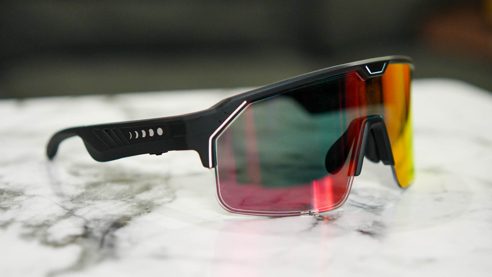
Chamelo makes glasses with adjustable lenses that you can dim or lighten as you want, and the Music Shield is its most sporty option. The big, flaming orange one-piece mirrored lens can be made transparent enough to use comfortably indoors or dark enough to protect your eyes on sunny days—and you can switch back and forth with a simple swipe. These glasses can also play audio from your phone, and they sound better than most competing models. They still don’t beat a decent pair of true wireless earphones in audio quality, but we like the combination of features they provide.
Who It’s For
Budget-minded outdoor fitness enthusiasts: The Music Shield glasses are ostensibly for active users. Their IPX4 rating means they are sweat-resistant, so you should be able to wear them for a jog in most weather short of a downpour. They’re a good choice if you want to listen to music or make calls on the go while still taking in the sounds of your environment.
Specs & Configurations
Connection Wireless Connection Type Bluetooth Glasses Features Dimmable Lenses Glasses Features Speakers Glasses Type Other Input Controls Touch Type Open-style earbuds Voice Assistant Compatibility None Water/Sweat-Resistant Wireless Get It Now
Learn MoreChamelo Music Shield Review-

Credit: Andrew Gebhart
Best Smart Glasses for SportsOakley Meta Vanguard
3.5 Good
Pros & Cons
-
- Waterproof design
- Clear audio quality with good volume
- Fun video recording options
- Customizable action button
-
- Expensive
- Unimpressive battery life
- Limited bass on audio playback
- AI assistant can make errors
Why We Picked It
The Oakley Meta Vanguard are the sportiest smart glasses available, and are designed to keep up with you even when you’re running in the rain. They’re fully dustproof and waterproof with an IP67 rating, making them the most weather-resistant smart glasses on this list, and the only pair you can wash with a good dunk. They otherwise have all the same camera, audio, and AI features as other Oakley Meta smart glasses.
Who It’s For
Outdoor athletes: If you’re big into outdoor sports and want a pair of sunglasses that let you listen to music, take calls, and use an AI assistant, the Meta Vanguard is it. It’s very expensive, though, so you should consider cheaper alternatives if the IP rating isn’t a big deal for you.
Social shutterbugs:Like other Meta models, the Vanguard includes a camera for taking photos and videos, and microphones for making calls and receiving voice commands.
Specs & Configurations
Camera Connection Wireless Glasses Features Camera Glasses Features Microphone Glasses Features Speakers Glasses Type Audio-Only Input Controls Voice Voice Assistant Compatibility Meta Get It Now
Learn MoreOakley Meta Vanguard Review-
Most Advanced Waveguide Display GlassesMeta Ray-Ban Display
3.0 Average
Pros & Cons
-
- Sharp, colorful display
- Neural Band is easy to use
- Good navigation guidance
-
- Mostly locked to Meta’s ecosystem
- Limited push notification support
- Frustrating interface
- Chunky frames
Why We Picked It
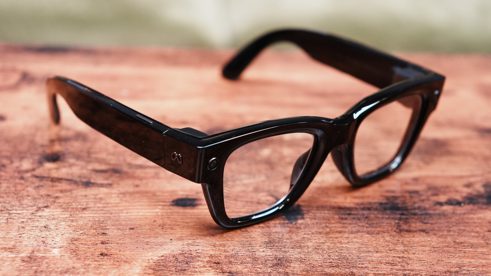
In terms of engineering, the Meta Ray-Ban Display is an incredible package that represents a generational leap for waveguide display-equipped smart glasses you can wear on the go. Its Neural Band controller provides impressive gesture controls, its display is full color rather than monochrome green like most other waveguide glasses, and it’s packed with useful communication and navigation features, including a very helpful map view.
The problem is that the interface and its features are built almost exclusively around Meta services. It can’t show simple push notifications from third-party apps, and outside of basic phone calls and texts, it will only let you know if you get a message through Facebook Messenger, Instagram, or WhatsApp. Its various features and menus are riddled with other annoying limitations beyond notifications, and the frames look pretty chunky, too.
Who It’s For
Meta users:The Meta Ray-Ban Display is designed to connect to Facebook, Instagram, and WhatsApp. If you do your chatting through those services, you’ll be satisfied.
Early adopters: If you want a taste of what the future of go-anywhere smart glasses might be like, this is how you can get it. The Meta Ray-Ban Display has one of the best waveguide displays I’ve seen. Moreover, its Neural Band gestures, while not perfect, are far better than most other waveguide smart glasses, which rely almost entirely on physical touch strips and voice commands.
Specs & Configurations
Camera Connection Wireless Field of View 20 Glasses Features Camera Glasses Features Dimmable Lenses Glasses Features Display Glasses Features Microphone Glasses Features Speakers Glasses Type Waveguide Input Controls Voice Integrated Display Type Waveguide Resolution 600 by 600 Voice Assistant Compatibility Meta Get It Now
Learn MoreMeta Ray-Ban Display Review-
The Best Smart Glasses for 2026
Compare Specs
Select Up To 3Select Up To 2
Your Selections
Viture Beast
Viture Pro 2

X By XReal a01+
Viture Beast
Viture Pro 2
X By XReal a01+


| Our Pick | Viture Beast | Viture Pro 2 | X By XReal a01+ | Oakley Meta HSTN | Ray-Ban Meta Gen 2 | Chamelo Music Shield | Oakley Meta Vanguard |  Meta Ray-Ban Display |
Viture Beast | Viture Pro 2 | X By XReal a01+ |
| Rating | 4.5Outstanding | 4.5Outstanding | 4.5Outstanding | 4.0Excellent | 4.0Excellent | 3.5Good | 3.5Good | 3.0Average | 4.5Outstanding | 4.5Outstanding | 4.5Outstanding |
| Best For | Best Prism Display Glasses Overall | Best Entry-Level Prism Display Glasses | Most Comfortable Prism Display Glasses | Best Social Media Glasses for Music Lovers | Most Stylish Camera Glasses | Best Dimmable Smart Sunglasses | Best Smart Glasses for Sports | Most Advanced Waveguide Display Glasses | Best Prism Display Glasses Overall | Best Entry-Level Prism Display Glasses | Most Comfortable Prism Display Glasses |
| Glasses Type | Prism Display/AR | Prism Display/AR | Prism Display/AR | Audio-Only | Audio-Only | Other | Audio-Only | Waveguide | Prism Display/AR | Prism Display/AR | Prism Display/AR |
| Glasses Features | Display, Speakers, 3DOF, Dimmable Lenses, Camera | Display, Focus Dials, Speakers | Display, Speakers | Speakers, Microphone, Camera | Speakers, Microphone, Camera | Speakers, Dimmable Lenses | Speakers, Microphone, Camera | Camera, Dimmable Lenses, Display, Microphone, Speakers | Display, Speakers, 3DOF, Dimmable Lenses, Camera | Display, Focus Dials, Speakers | Display, Speakers |
| Connection | Wired | Wired | Wired | Wireless | Wireless | Wireless | Wireless | Wireless | Wired | Wired | Wired |
| Input Controls | Button | Button | Button | Voice | Voice | Touch | Voice | Voice | Button | Button | Button |
| Voice Assistant Compatibility | None | None | None | Meta | Meta | None | Meta | Meta | None | None | None |
| Integrated Display Type | Prism | Prism | Prism | Waveguide | Prism | Prism | Prism | ||||
| Resolution | 1,920 by 1,200 | 1080p | 1080p | 600 by 600 | 1,920 by 1,200 | 1080p | 1080p | ||||
| Field of View | 58 | 50 | 50 | 100 | 20 | 58 | 50 | 50 | |||
| Camera |
Buying Guide: The Best Smart Glasses for 2026
What Are Smart Glasses?
Smart glasses are eyewear that includes electronic components and can do more than just correct your vision or protect your eyes. As you can imagine, that covers a wide array of devices that can do completely different things. It’s a complicated enough category that I wrote an entire guide to the different kinds of smart glasses.
To keep it short, we can sort smart glasses into a few specific types, with some overlap. AI smart glasses like the Ray-Ban Meta usually have speakers, microphones, and cameras built into the frames and can provide instant access to an AI assistant to answer questions and perform tasks. They can also usually play music and take calls, too. Waveguide smart glasses are AI glasses with displays integrated into the lenses that display visual information. Most, like the Meta Ray-Ban Display and Even Realities G2, have a variety of uses like displaying notifications, live captioning and translating speech, and even providing navigation directions. Some are much more focused on a specific task, like the Captify Pro, which is built entirely around captioning and translating. That display-equipped sub-category is still evolving, though, and has a lot of wrinkles to iron out in features and usability.

Then there are prism display smart glasses like the Viture Beast and X by XReal a01+, which are often called AR smart glasses. They use bulky prism lenses to project a larger, more colorful, and higher-resolution image into your eyes, giving the effect of sitting in a huge theater. This lets you watch a movie, play a game, or even work as if you had a big monitor or TV in front of you, even when you’re sitting in a coffee shop or on a plane. These usually aren’t AI-powered or even wirelessly connect to anything, and basically work like USB-C monitors you put on your face. I’ve found them very useful, though, and they’re a regular part of my daily gear.
There are some rarer types of smart glasses as well, like Chamelo’s Music Shield and Dusk glasses. They use liquid-crystal lenses to provide an adjustable tint, switching from transparent to sunglasses mode with a tap orle tinted liquid-crystal films to let you cycle through different lens colors. Some prism display smart glasses use similar technology to darken their exterior lenses and block out distractions
While they have strong connections to computers and video games, blue-light-blocking glasses aren’t actually smart glasses. They don’t have any electronics inside and simply rely on lens coatings to reduce exposure to blue light and reduce eye strain. They can be soothing but are not smart in the vein we’re talking about here.
Smart Glasses vs. VR Headsets

We’re still some distance away from AR smart glasses that can, say, recognize a cafe you’re staring at and pop up its customer reviews (though that’s the kind of experience the upcoming $2,200 Snap Specs intend to deliver. In the meantime, if you’d like a taste of true AR with apps and games you can actually use, the Meta Quest 3 is your best bet. It’s a fully enclosed VR headset (meaning you shouldn’t try to use it in public), but its color pass-through cameras let you see the real world well enough to toss images and 3D models around a room. The Meta Quest 3S is a more budget-friendly option to consider and also has color pass-through cameras, but its display isn’t as sharp. For more, check out our comparison of the Meta Quest 3 versus 3S.
Apple doesn’t make smart glasses, but its Vision Pro is the most advanced AR/VR headset available, with support for eye-tracking, hand-tracking, voice control, and seamless mobile app integration, all in one streamlined package. Like the Meta Quest 3 and 3S, though, you shouldn’t wear it outside of the house, and at $3,499, the Vision Pro is out of reach for most people.

Samsung has its own answer to the Vision Pro, the Galaxy XR, and it’s a much more reasonable (but still pricey) $1,799. It’s also the first device to use Google’s Android XR platform, which is designed not just for headsets, but any wearable display. It’s being joined this year by XReal’s Project Aura, the second officially released Android XR device and the first pair of smart glasses on the platform. We’ll have to see how they, and Android XR in general, affect the smart glasses field over this year.
- 5.0 – Exemplary: Near perfection, ground-breaking
- 4.5 – Outstanding: Best in class, acts as a benchmark for measuring competitors
- 4.0 – Excellent: A performance, feature, or value leader in its class, with few shortfalls
- 3.5 – Good: Does what the product should do, and does so better than many competitors
- 3.0 – Average: Does what the product should do, and sits in the middle of the pack
- 2.5 – Fair: We have some reservations, buy with caution
- 2.0 – Subpar: We do not recommend, buy with extreme caution
- 1.5 – Poor: Do not buy this product
- 1.0 – Dismal: Don’t even think about buying this product
Read Our
Editorial Mission Statement
and
Testing Methodologies.
