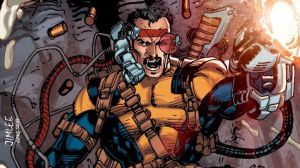
The X-Men became the biggest superteam in the land in the 1980s, thanks to the work of legendary writers like Chris Claremont and Louise Simonson. There are a lot of factors that made this success happen; the artists were a key part of the equation, not only bringing stories to life on the page but bringing a new perspective and novel ideas to the process. Another was the characters, with heroes and villains like Wolverine, Rogue, Storm, Sabretooth, Mystique, Mister Sinister, Nightcrawler, Magneto, Cyclops, and many more all be<a href="https://comicvibe.com/whats-coming-to-netflix-in-november-2026/” title=”What's Coming to Netflix in November 2026″>coming more fleshed out, interesting characters. One of the most important, though, was the stories themselves. You could have the best writers and artists working on the most interesting characters imaginable, but if they aren’t in good stories, nothing is going to work.
Videos by ComicBook.com
Claremont’s time on Uncanny X-Men gave readers brilliant stories, partly because the writer wasn’t shy on putting focus on the central metaphor of the team. The X-Men were a team fighting for their people’s survival in a harsh world where mutant life was cheap. One of the most harsh reminders of this fact came 40 years ago, when a group of mutants found themselves targeted for death. However, this time, it wasn’t humans doing the killing, but their fellow mutants. I’m speaking of the all time classic “Mutant Massacre”, a story that would not only change the X-Men forever, but proved that the team was ready for the biggest spotlight in the Marvel Universe.
“Mutant Massacre” Put the Mutants on Marvel’s Biggest Stage
Image Courtesy of Marvel Comics
The early ’80s were an amazing time to be an X-Men fan. 1980 gave readers “The Dark Phoenix Saga” and “Days of Future Past” was a scant few issues later. Two of the best Marvel stories ever hit readers one after another and no one could look away. Uncanny X-Men became the biggest book in comics. Claremont would team with artists Dave Cockrum, Paul Smith, John Romita Jr., Alan Davis, Barry Windsor-Smith, and numerous others, building the team and their villains into something special.
Claremont did a lot of work to rebuild the central conflict of the X-Men, with human/mutant relations taking center stage. Into this was introduced the Morlocks. These were the ugliest mutants, the one who had no hope of ever fitting in with the surface world, forced to eke out a living in the sewers of Manhattan. They began as enemies of the team, monsters in the sewers paying back a world that cast them out, but as time went on, they became more sympathetic. They were victims of humanity’s racism, and they became a small but integral part of the X-Men’s story in the ’80s.
This is part of what made “Mutant Massacre” such a surprising story. Between 1980 and 1986, Claremont and Simonson had created a good equilibrium for the X-Men, the New Mutants, and X-Factor. It was a fun status quo that allowed them to tell exciting stories. However, one of the best parts of the ’80s X-books was the way that the creators were always willing to smash that status quo, sending the narrative in bold new directions, which is what “Mutant Massacre” did. It was Claremont breaking the X-Men, presaging the bigger changes down the road.
The story saw the Marauders attack the Morlock Tunnels, leading the various mutant teams, Power Pack, Thor, and Daredevil to come to their aid. We got the first major Sabretooth and Wolverine fight from the story, Angel lost his wings, Kitty Pryde was trapped in her phased form, Colossus was injured and left a quadriplegic, and Nightcrawler was left in a coma. It was one of the most traumatic moments in X-Men history, blitzing the team and readers with the darkest story of the decade so far.
The first five years of the ’80s were about building the team up and the last five were about tearing them down. “Mutant Massacre” was the first part of a cycle of stories that would see Claremont and Simonson break everything they had been building. The destruction of the Morlocks were the first major loss for the team in a while and worse than that, it left them and their allies completely broken. They had not only lost the battle, but they had been badly hurt. Colossus, Nightcrawler, and Kitty Pryde would take a backseat, with Kurt and Kitty leaving the team alongside with Rachel Summers and forming Excalibur. Colossus would drop the role of team strong man to Rogue and Psylocke would finally join them full time, with the Havok and Polaris stepping up down the road.
Meanwhile, it would also have major repercussions for X-Factor as well. The loss of Angel’s wings led Warren to the depths of depression, ending with him attempting to commit suicide. He was saved by Apocalypse, and along with the Morlock Plague was transformed into one of the Horsemen of Apocalypse. The Egyptian mutant had been around as the big bad of X-Factor, but it would be the Horsemen of Apocalypse story that would make the villain into a superstar.
Finally, “Mutant Massacre” would become an important part of the next few years of Uncanny X-Men. It would be revealed that the Marauders didn’t just decide to attack the Morlocks out of nowhere. They were working for Mister Sinister, who at the time hadn’t actually appeared yet. To him, the Morlocks were a useless genetic dead end, so they didn’t deserve to live. Sinister and the Marauders would play an integral role in future stories like “Inferno”, making “Mutant Massacre” one of the more important inciting incidents of the decade. It was a turning point for the X-books.
It was also a changing of the guard moment. Crossovers had always been a part of superhero comics, but “Mutant Massacre” was one of the first major summer crossovers, running through Uncanny X-Men, X-Factor, New Mutants, The Mighty Thor, Power Pack, and Daredevil. Stories like Marvel Super Heroes Secret Wars and Crisis on Infinite Earths had done the big event crossover thing before it, but it was one of the first times a continuing narrative would be told across a number of books. It also showed that Marvel considered the X-Men big enough to be the center of a crossover like this. It’s an undisputed classic, one that can have a rich second life thanks to the MCU.
The MCU Could Bring “The Mutant Massacre” to the Masses
Image Courtesy of Marvel Comics
With the X-Men coming to the MCU, we’re going to get a lot of classic X-Men stories and ideas brought to the big screen. The work of Chris Claremont was revolutionary and it’s almost a guarantee that we’re going to see some of the biggest moments in X-Men history in their new films. “Mutant Massacre” is the perfect story to bring to the MCU; it’s a big story with big stakes, but most importantly, it shows just how different X-Men stories can be from the other heroes of the Marvel Universe.
This is a story about a marginalized group within a marginalized group being targeted by their own people. It can be looked at as a metaphor for how internalized racism can be so damaging to a community. It’s about more than just a group of people threatened by a group of villains, it’s a brutal story about the poisoned fruits of bigotry and what they can cause. Bringing “Mutant Massacre” to the big screen would show MCU fans that the X-Men operate on another level, getting them ready for some of the darkest – yet best – superhero stories ever.
What do you think of “Mutant Massacre”? Is it too dark for the MCU? Sound off in the comment section below!
5 New Mutants That Can Be Mega-MCU Stars (Who Aren’t Magik)
More Comics
<img src="https://comicbook.com/wp-content/uploads/sites/4/2026/10/X-Men-107.jpg?w=300" alt="A Forgotten X-Men First Appearance Is Suddenly Worth A Small Fortune (But There’s A Catch)”>
Collectibles
23 hours ago
A Forgotten X-Men First Appearance Is Suddenly Worth A Small Fortune (But There’s A Catch)
Image Courtesy of DC Comics
Comics
1 day ago
The Strangest Supergirl Is Finally Back, and She Shows Exactly How DC’s Perspective on History Has Changed
Comics
1 day ago
Image Courtesy of Marvel Comics
Comics
1 day ago
This Native American Mutant Helped Build the X-Men (and the MCU Could Be the Place That Finally Gets Him Right)


![Charles Soule Teases Venom’s New Era and Romance (Things Heat Up in Our Venom #2 First Look) [EXCLUSIVE]](https://comicbook.com/wp-content/uploads/sites/4/2026/10/venom-2-exclusive.jpg?w=300)