

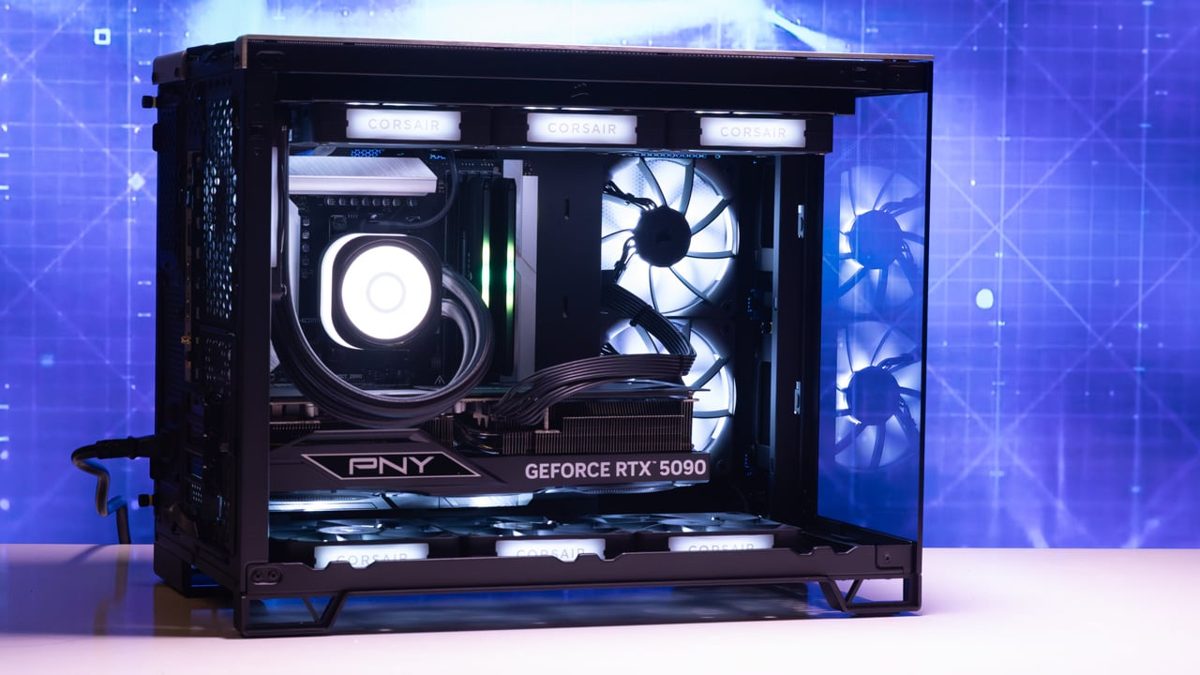
While some hard-core gamers prefer to assemble their own gaming PCs, many seek the convenience and warranty support of a pre-built desktop. At PCMag, we’ve been testing desktops for 40-plus years, benchmarking gaming models since they rose to prominence in the 1990s. Our analysts and editors draw on collective decades of experience to evaluate gaming desktops, using repeatable, standardized benchmark tests and a range of modern games to assess raw performance. We also assess each system on design, usability, connectivity, upgradability, and value to identify the best gaming desktops for the money. Our favorite entry-level gaming PC is the CyberPowerPC Gamer Xtreme, while our current pick for the best gaming PC for mainstream play (at 1440p) is another CyberPowerPC model, the Gamer Xtreme MA-01. Read on for additional vetted picks across different budgets and power needs, a handy spec comparison, and plenty of detailed buying advice.
Overview

Best Budget Gaming Desktop for 1080p PlayCyberPowerPC Gamer Xtreme
Jump To Details

Best Gaming Desktop for Midrange 1440p PlayCyberPowerPC Gamer Xtreme MA-01
Jump To Details

Best Gaming Desktop for 4K PlayVelocity Micro Raptor Z55i (2026)
Jump To Details

Best Ultracompact Gaming PCAsus ROG NUC (2025)
Jump To Details

Best Cost-No-Object Gaming DesktopMaingear MG-1 MK. II
Jump To Details

Best Multipurpose Desktop for Gaming and ProductivityDell Tower Plus (EBT2250)
Jump To Details

Best Plug-and-Play Gaming DesktopValve Steam Machine
Jump To Details
You Can Trust Our Reviews
Since 1982, PCMag has tested and rated thousands of products to help you make better buying decisions. Read our editorial mission&see how we test.
Deeper Dive: Our Top Tested Picks

Credit: Joseph Maldonado
Best Budget Gaming Desktop for 1080p PlayCyberPowerPC Gamer Xtreme
4.0 Excellent
Pros & Cons
-
- Impressive price-to-performance ratio
- Solid value for the component mix
- Sleek glass design
-
- Fans can get loud
- Power supply wattage may limit future upgrades
- Side glass panel is tricky to seat
Why We Picked It
CyberPowerPC’s newest affordable gaming desktop offers an incredible configuration at its price through an exclusive listing at Costco; it’s such a sweet deal you’ll want to sign up for a membership just for it. The Xtreme has double the memory and storage of similarly priced gaming rigs, all crammed into a beautiful glass-sided frame with ample lighting and thermals. Given how much RAM and storage cost in 2026, it won’t be easy to match this desktop’s value likely for some time, so the Xtreme is our top budget pick of the moment for PC gamers.
Who It’s For
Cash-strapped PC gamers: If you’re a budget-conscious gamer, then begin your search with this gaming PC. The price has fluctuated a little, but it will be tough to find this much RAM and a 2TB SSD paired with a contemporary entry-level CPU and GPU at anyprice in that zone. Jump on it while you can, if you are tempted.
A kid’s first gaming PC:This gaming rig is also an easy choice to buy for your kid joining the pursuit. It’s an affordable tower that gives up nothing in terms of performance, with resolution upscaling and frame-generation features that elevate it in many mainstream games. That low price is crucial, too, when buying for your child whose interest in gaming may fade; as desktop gaming PCs go, it’s a low-risk bargain.
Specs & Configurations
Boot Drive Capacity (as Tested) 2 Boot Drive Type SSD Desktop Class Gaming Graphics Card Nvidia GeForce RTX 5060 Operating System Windows 11 Home Processor Intel Core Ultra 5 225F Processor Speed 3.3 RAM (as Tested) 32 Get It Now
Learn MoreCyberPowerPC Gamer Xtreme Review-
Best Gaming Desktop for Midrange 1440p PlayCyberPowerPC Gamer Xtreme MA-01
4.0 Excellent
Pros & Cons
-
- Attractive, fun case design
- Fast 1080p and 1440p gaming
- Speedy overall performance
- Highly configurable
-
- Even more potent GeForce RTX 5070 Ti systems aren’t much pricier
Why We Picked It
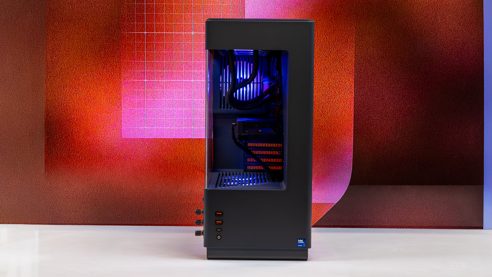
Beyond full-HD gaming is notably more demanding than targeting a more mainstream 1080p resolution, but CyberPowerPC’s Gamer Xtreme MA-01 is more than up to the task. It’s more expensive than our entry model, but that’s a given for more demanding 1440p play. The model we tested includes an Intel Core Ultra 7 270K Plus processor, an Nvidia GeForce RTX 5070 graphics card, 32GB of memory, and 2TB of storage. This setup will ensure sky-high frame rates at 1080p and 1440p, and it can support 4K in some titles. It’s all packed into a luxe-look, original-design case, and it’s highly configurable if you want a different loadout.
Who It’s For
Mainstream and enthusiast gamers: This tower will appeal regardless of whether you’re an entry-level or hard-core gamer, depending on the configuration. Its standout design, excellent performance, and wide range of options will satisfy gaming needs from 1080p to 1440p.
Gamers seeking a unique design: If you want a distinctive-looking desktop, this is an appealing tower. It doesn’t necessarily scream “gaming” in a way others do, but it will catch the eye with its wraparound glass panel and physical RGB-control knobs.
Specs & Configurations
Boot Drive Capacity (as Tested) 2 Boot Drive Type SSD Desktop Class Gaming Graphics Card Nvidia GeForce RTX 5070 Operating System Windows 11 Processor Intel Core Ultra 7 270K Plus RAM (as Tested) 32 Learn MoreCyberPowerPC Gamer Xtreme MA-01 Review: A Marvelous Midrange PC in a Slick, Glassy Chassis Review
-

Best Gaming Desktop for 4K PlayVelocity Micro Raptor Z55i (2026)
4.5 Outstanding
Pros & Cons
-
- Blistering performance
- Surprising value for a top-tier gaming rig
- Ample airflow
- Highly customizable
- No bloatware
-
- No options for a PCI Express 5.0 SSD
- Limited USB-C ports
Why We Picked It
Gaming at 4K with a smooth frame rate is no easy task, even with today’s super-powerful graphics cards, but the Raptor Z55i is up to the challenge. While expensive, this system is a rare legitimate valuein the high-end tier, versus just throwing money at the problem. (Our cost-no-object pick is even more capable for 4K, but consider this a more reasonably attainable option.) Its Intel Core Ultra 7 270K Plus processor and Nvidia GeForce RTX 5090 GPU are key to achieving fast frame rates at high settings, as is its 64GB RAM. With that much power and a roomy 2TB SSD, this system can be more than a gaming PC, a real muscle machine for creative work. It also comes in an understated case with fantastic airflow, ready to fit into any environment.
Who It’s For
Enthusiast gamers with big budgets: As a deep-pocketed enthusiast who wants to play games at 4K resolution and high settings, you’ll appreciate this Velocity Micro box. Pushing games to 4K resolution requires top-end components with ample cooling, and the Raptor can deliver that experience, for a price.
Demanding media pros: This desktop is also excellent if you’re a content creator, a media professional, or a live streamer. Gaming is the most obvious way to leverage the graphics card’s muscle, but strenuous workloads are another fitting task; it even looks the part of a workstation, unlike most gaming desktops.
Specs & Configurations
Boot Drive Capacity (as Tested) 2 Boot Drive Type SSD Desktop Class Gaming Graphics Card Nvidia GeForce RTX 5090 Operating System Windows 11 Processor Intel Core Ultra 7 270K Plus RAM (as Tested) 64 Learn MoreVelocity Micro Raptor Z55i (2026) Review: A Low-Key Little Gaming Leviathan Review
-

Credit: Joseph Maldonado
Best Ultracompact Gaming PCAsus ROG NUC (2025)
4.5 Outstanding
Pros & Cons
-
- Impressive gaming performance
- Ultra-compact footprint
- Excellent port selection
- Customizable RGB light panel
-
- Pricey upgraded configurations
- Fans grow loud under load
- Limited options for self-upgrades
Why We Picked It
Sure, you can find compact gaming desktops smaller than a tower. But you won’t find many gaming-focused truly ultracompactmini PCs. The latest Asus ROG NUC delivers impressive gaming and all-around performance from its super-trim chassis, powered by an Intel Core Ultra 9 275HX CPU and a laptop-grade Nvidia GeForce RTX 5070 Ti GPU. (The use of these laptop parts is what makes its extra-trim size possible.) It’s expensive, but you’re looking at a space-saving solution with real graphics and gaming chops capable of high frame rates at 1080p and 1440p, and even 4K resolution in some scenarios. The possibility for upgrades is limited by the form factor and the laptop parts, but the ROG NUC certainly has gaming power to spare if small comes first and frame rates second on your hit list.
Who Its For
Space-strapped gamers:This mini desktop is the one to beat if you’re seeking an exceptionally compact option. The smallest traditional towers might work for you, but they’re at least twice the size of the ROG NUC, which is virtually portable if you need to unplug and move it or slip it onto a small shelf. This desktop may serve a relatively niche audience, but the ROG NUC still checks all the boxes for everything from robust productivity work to heavy multitasking to better-than-mainstream gaming.
Specs & Configurations
Boot Drive Capacity (as Tested) 2 Boot Drive Type SSD Desktop Class Gaming Graphics Card Nvidia GeForce RTX 5070 Ti Laptop GPU Operating System Windows 11 Processor Intel Core Ultra 9 275HX Processor Speed 2.7 RAM (as Tested) 32 Get It Now
Learn MoreAsus ROG NUC (2025) Review-
Best Cost-No-Object Gaming DesktopMaingear MG-1 MK. II
4.5 Outstanding
Pros & Cons
-
- Powerful hardware options
- Fierce performance, reflected in the configuration price
- Effective cooling
- Slick-looking case
- Swappable front panel
-
- Pricey, at the limits of configurability in our test model (and a bit underpowered in the Ultra 5/RTX 5060 starting model)
- Ryzen 9 9950X3D2 chip raises cost but doesn’t help much
Why We Picked It
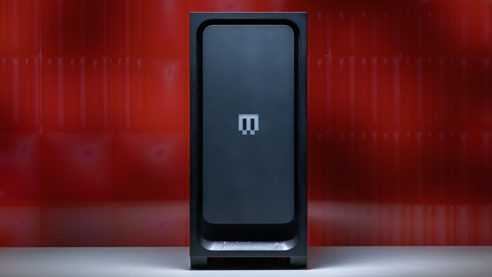
The Maingear MG-1 MK. II manages to accomplish a bit of everything. At our test model’s pricey configuration cost, we have no choice but to put it in the cost-no-object slot, though its starting configurations are more modest. Our unit’s AMD Ryzen 9 9950X3D2 processor, 32GB of memory, and Nvidia GeForce RTX 5090 GPU made quick work of our benchmark tests. It looks slick and is cooled effectively, too, helping you make use of those fast parts. This is not only ready as a 4K gaming machine: It could be a professional workhorse, too.
Who It’s For
Performance enthusiasts: If you can afford it, this is a smart pick for frame-rate-first gamers. The speed of our configuration ensures smooth performance in virtually any gaming scenario, and you’re receiving it all in one meticulously built package.
Professionals with big budgets: If you’re a media creator or professional with demanding tasks, then the MG-1 MK. II will excel on your desk. It has the processing and graphics power for pro-grade media tasks, so it can power virtually any workload when you’re not gaming.
Specs & Configurations
Boot Drive Capacity (as Tested) 2 Boot Drive Type SSD Desktop Class Gaming Graphics Card Nvidia GeForce RTX 5090 Operating System Windows 11 Home Processor AMD Ryzen 9 9950X3D2 Processor Speed 5.6 RAM (as Tested) 32 Learn MoreMaingear MG-1 MK. II Review
-

Credit: Joseph Maldonado
Best Multipurpose Desktop for Gaming and ProductivityDell Tower Plus (EBT2250)
4.0 Excellent
Pros & Cons
-
- Highly customizable
- Potent review configuration
- Broad port selection
- Solidly built and reasonably sized
- Easy access to components
-
- Lowest- and highest-end configurations aren’t the best values
- Some quirky component combinations in Dell’s prebuilt configs
- Proprietary motherboard and power supply design
Why We Picked It
The Dell Tower Plus (EBT2250) is not strictly a gaming desktop, but it’s a desktop capable of gaming. If you’re looking for one do-it-all home PC that doesn’t scream “I’m a gamer” but can boot up the latest titles with ease, this is the leading solution. It looks the part as an office PC rather than an edgy esports rig, and it’s highly customizable.
However, as our review configuration shows, it’s still up to the task for gaming when called up: The Intel Core Ultra 7 265K processor and Nvidia GeForce RTX 5070 graphics card in our unit pushed fast frame rates in several games. Some towers are better values compared with this high-end configuration. Still, you don’t always get so many customization options, a professional look, a bevy of ports, and easy access in other systems. This tower can do it all.
Who It’s For
Home-office gamers:If you want a PC in your living room or office that can also power games outside of work hours, this tower is the way to go. It will also blend into your space rather than look like a gaming machine.
Configuration lovers:With Dell’s customization options, you’ll undoubtedly find the right Tower Plus configuration for you. Whether you want to upgrade the processor, graphics card, memory, or storage, you can pick the right loadout for your needs.
Specs & Configurations
Boot Drive Capacity (as Tested) 1 Boot Drive Type SSD Desktop Class Mainstream Desktop Class Tower Graphics Card Nvidia GeForce RTX 5070 Operating System Windows 11 Processor Intel Core Ultra 7 265K RAM (as Tested) 32 Get It Now
Learn MoreDell Tower Plus (EBT2250) Review-
Credit: Joseph Maldonado
Best Plug-and-Play Gaming DesktopValve Steam Machine
3.5 Good
Pros & Cons
-
- Impressively compact, quiet design
- Capable of mainstream PC gaming
- SteamOS is (mostly) streamlined for TV gaming
- Built-in adapter for wireless Steam Controller
-
- Expensive for the power level it delivers
- 512GB base SSD is too small
- Fumbles with external game launchers, and other quirks
- Lack of Linux anti-cheat support makes many multiplayer games incompatible
Why We Picked It
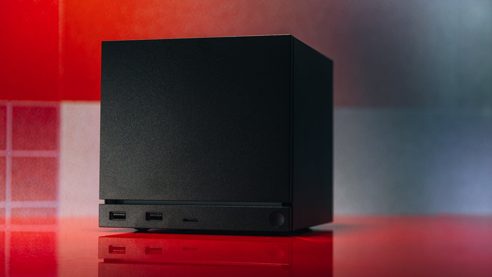
Valve’s Steam Machine is unlike most of our recommendations. This is a true plug-and-play device made to function more like a console, even though it’s a Linux-based PC at its core. It runs SteamOS, which is an accessible and TV-friendly way to access your Steam library from your couch. You can use this box for other “ordinary” PC needs, too, but its main purpose as a gaming desktop makes it a fitting pick for this category. It’s compact and quiet, and it will get you gaming quickly. You’ll encounter some minor obstacles, but it mostly trades PC gaming headaches for SteamOS-specific hurdles.
Who It’s For
Couch gamers: If you want to expand your gaming setup beyond a desk, this is a fantastic solution. It’s a bit pricey for its parts (thank the current component market), and it has a few quirks. Also, not every Steam game is compatible. Regardless, you can load up and play most of your existing Steam library of PC games on this compact box.
Living-room aesthetes:This PC is a plain, minimalist black box that both doesn’t take up much space and won’t clash with your decor. It will blend in just fine in an A/V center full of other black components.
Specs & Configurations
Boot Drive Capacity (as Tested) 512 Boot Drive Type SSD Desktop Class Gaming Desktop Class Small Form Factor (SFF) Graphics Card Semi-Custom AMD RDNA3 GPU Operating System SteamOS Processor Semi-Custom AMD Zen 4 CPU RAM (as Tested) 16 Learn MoreValve Steam Machine Review: Breezy PC Gaming From Your Couch Review
-
Compare Specs
Select Up To 3Select Up To 2
Your Selections

CyberPowerPC Gamer Xtreme MA-01

Velocity Micro Raptor Z55i (2026)
CyberPowerPC Gamer Xtreme MA-01
Velocity Micro Raptor Z55i (2026)


Maingear MG-1 MK. II


Valve Steam Machine
| Our Pick | CyberPowerPC Gamer Xtreme (GXI2000CSTV3) | CyberPowerPC Gamer Xtreme MA-01 | Velocity Micro Raptor Z55i (2026) | Asus ROG NUC (2025) | Maingear MG-1 MK. II | Dell Tower Plus (EBT2250) | Valve Steam Machine | CyberPowerPC Gamer Xtreme (GXI2000CSTV3) | CyberPowerPC Gamer Xtreme MA-01 | Velocity Micro Raptor Z55i (2026) |
| Rating | 4.0Excellent | 4.0Excellent | 4.5Outstanding | 4.5Outstanding | 4.5Outstanding | 4.0Excellent | 3.5Good | 4.0Excellent | 4.0Excellent | 4.5Outstanding |
| Best For | Best Budget Gaming Desktop for 1080p Play | Best Gaming Desktop for Midrange 1440p Play | Best Gaming Desktop for 4K Play | Best Ultracompact Gaming PC | Best Cost-No-Object Gaming Desktop | Best Multipurpose Desktop for Gaming and Productivity | Best Plug-and-Play Gaming Desktop | Best Budget Gaming Desktop for 1080p Play | Best Gaming Desktop for Midrange 1440p Play | Best Gaming Desktop for 4K Play |
| Desktop Class | Gaming | Gaming | Gaming | Gaming | Gaming | Mainstream, Tower | Gaming, Small Form Factor (SFF) | Gaming | Gaming | Gaming |
| Processor | Intel Core Ultra 5 225F | Intel Core Ultra 7 270K Plus | Intel Core Ultra 7 270K Plus | Intel Core Ultra 9 275HX | AMD Ryzen 9 9950X3D2 | Intel Core Ultra 7 265K | Semi-Custom AMD Zen 4 CPU | Intel Core Ultra 5 225F | Intel Core Ultra 7 270K Plus | Intel Core Ultra 7 270K Plus |
| Processor Speed | 3.3 | 2.7 | 5.6 | 3.3 | ||||||
| RAM (as Tested) | 32 | 32 | 64 | 32 | 32 | 32 | 16 | 32 | 32 | 64 |
| Boot Drive Type | SSD | SSD | SSD | SSD | SSD | SSD | SSD | SSD | SSD | SSD |
| Boot Drive Capacity (as Tested) | 2 | 2 | 2 | 2 | 2 | 1 | 512 | 2 | 2 | 2 |
| Secondary Drive Type | ||||||||||
| Secondary Drive Capacity (as Tested) | ||||||||||
| Optical Drive | ||||||||||
| All-in-One Screen Size | ||||||||||
| All-in-One Screen Native Resolution | ||||||||||
| All-in-One Screen Type | ||||||||||
| Graphics Card | Nvidia GeForce RTX 5060 | Nvidia GeForce RTX 5070 | Nvidia GeForce RTX 5090 | Nvidia GeForce RTX 5070 Ti Laptop GPU | Nvidia GeForce RTX 5090 | Nvidia GeForce RTX 5070 | Semi-Custom AMD RDNA3 GPU | Nvidia GeForce RTX 5060 | Nvidia GeForce RTX 5070 | Nvidia GeForce RTX 5090 |
| Operating System | Windows 11 Home | Windows 11 | Windows 11 | Windows 11 | Windows 11 Home | Windows 11 | SteamOS | Windows 11 Home | Windows 11 | Windows 11 |
Buying Guide: The Best Gaming PCs for 2026
What Are the Best Gaming PC Specs for 2026?
Gaming PCs live and die by their graphics cards (or graphics chips, in the case of gaming laptops), the most critical PC component for determining your gaming performance ceiling. Most gaming systems will come preinstalled with a single midrange or high-end graphics card; higher-priced systems will naturally have better cards, since purchase price typically correlates with frame-rate performance and visual quality. AMD and Nvidia make the graphics processors, or GPUs, that go into these cards, which are made by third parties such as Asus, Gigabyte, MSI, PowerColor, Sapphire, and XFX (to name just a few).
Gone are the days of complicated dual-card setups: Today’s top-end GPUs, like the Nvidia GeForce RTX 4090, GeForce RTX 5080, and GeForce RTX 5090 are more than powerful enough on their own. Games are developed to take advantage of the increasingly cutting-edge features available in single GPUs like these, but these premium cards will cost you. A tier of less-expensive GPUs in the GeForce RTX 50 series, fortunately, is also available for smaller budgets; you can find a full breakdown below.

(Credit: Joseph Maldonado)
Still, you should allocate as much of your budget as possible to the best GPU you can afford; the most pivotal decision you’ll make when purchasing a gaming desktop is which card you get. Of course, one option is to go without a card at all; the integrated graphics silicon on some modern Intel Core and AMD Ryzen processors is adequate for casual 2D and light 3D gaming. However, to reliably play 3D AAA titles, you need a discrete graphics card, and these cards are what distinguish a gaming desktop from “just a desktop.”

(Credit: Joseph Maldonado)
Whether you go with an AMD- or Nvidia-based card is based partly on price and performance. Some games are optimized for one type of card or another, but for the most part, you should choose the card that best fits within your budget. If you’re buying a complete gaming desktop, you (of course) don’t have to pay for a card in isolation, but this should help you understand how the card factors into the total price. You also have to know what you’re shopping for.
How to Choose the Right Graphics Card in 2026
For some time now, Nvidia has dominated the high end of the GPU battlefield. The previous era of Nvidia dominance came through the GeForce RTX 40 series, which launched in 2022 and is based on the “Ada Lovelace” architecture. By now, these have given way to Nvidia’s latest line, the RTX 50-series “Blackwell” GPUs. These are the graphics cards you’ll find in most new desktops today.

(Credit: Joseph Maldonado)
The first two releases in this line were the RTX 5090 and the GeForce RTX 5080 (both referenced earlier), followed by the RTX 5070 and 5070 Ti. The RTX 5060 Ti and RTX 5060 followed, with a low-end RTX 5050 completing the product lineup.
In general, for both Nvidia and AMD GPUs, the first number in a model name denotes the GPU generation—40 series and 50 series for Nvidia, while AMD is up to the Radeon RX 9000 line, and the last two numbers indicate the hierarchy within that generation. For example, the RTX 5080 is superior to the RTX 5070, and both replaced their RTX 4080 and RTX 4070 predecessors, respectively.
Nvidia GPUs have used the “RTX” branding since the late 2010s, when 20-series GeForce cards were the first to feature ray tracing, a fancy real-time lighting technique that put the “RT” in “RTX.” This new acronym replaced the previous long-running GTX branding. Ray tracing remains a centerpiece of high-fidelity graphics to this day, but it’s quite demanding to run smoothly. (See our primer on ray tracing and what it means for PC gaming.)

(Credit: Joseph Maldonado)
The high-end cards in the RTX 40 and 50 series are the ones most capable of running ray tracing, but they are undeniably expensive. Their prices heavily influence the cost of prebuilt PCs that contain them: The GeForce RTX 5090 on its own is a whopping $1,999 MSRP (and far, far higher on the street), while the RTX 5080 is $999 list price (with similar street-price inflation driven by demand). The RTX 5070 Ti and RTX 5070 are list-priced at $749 and $549, respectively. The more mainstream RTX 5060 Ti comes in 16GB and 8GB varieties for $429 and $379, while the entry-level model, the RTX 5060, is priced at $299 MSRP. The true budget option, the RTX 5050, costs $249. Again, these are just list prices, too; realistic street pricing is often much higher, and varies by the card version.
All of these pricing changes, generational differences, and availability are why buying a prebuilt gaming desktop, like the PCs in our list here, makes a lot of sense: You get parts that complement each other well. Plus, prebuilt PCs from major manufacturers or boutique vendors are one of the most accessible ways to acquire a top GPU because theyacquire the GPU stock, which can save you some money versus buying a single card on your own. They have economies of scale that you don’t.

(Credit: Joseph Maldonado)
If you’ve held out this long against upgrading from RTX 20-series GPUs or earlier, we strongly recommend making the jump. We recommend the latest GPUs even more emphatically if you play (or plan to play) on a faster 1440p or sharper 4K monitor.
Budget Cards and Nvidia Graphics Alternatives: Don’t Forget AMD and Intel
Even in budget systems, older RTX 30-series GPUs are no longer available, and RTX 40-series are mostly gone, too. With the RTX 5050 and 5060 families available, most prebuilt PC makers are selling systems with these GPUs. These are all graphics cards friendly to 1080p mainstream gaming at a minimum.

(Credit: Joseph Maldonado)
In case you are still finding models with 40-series GPUs on sale, we’ll cover both options. At the higher end of the budget scale, an RTX 4060 Ti system suits high-frame-rate 1080p gaming (and moderate 1440p gaming, in some cases), while the RTX 5060 Ti can more comfortably perform at 1440p. You can try ray tracing on a per-game basis, or just turn it off to your preference. Modern DLSS upscaling and frame generation, especially DLSS 4 in Nvidia’s RTX 50-series GPUs, will give its budget graphics cards a further leg up in boosting frame rates in demanding titles. This makes the RTX 5050 and RTX 5060 family appealing in low-end systems; if you can afford them, you should opt for these options.
Then you have AMD. Inside prebuilt gaming PCs, AMD competes mainly in the midrange and low end with its Radeon RX cards, and its cards compete better now than they have for a long time. Its top-end AMD Radeon RX 7900 XTX and AMD Radeon RX 7900 XT, which start at $999 and $899, really pushed Nvidia’s RTX 40-series GPUs on cost-to-performance.

(Credit: Joseph Maldonado)
AMD furthered its position with the AMD Radeon RX 7600 as a go-to value play for steady 1080p gaming, and the AMD Radeon RX 7800 XT, which launched in late 2023, still makes a compelling case as a midrange value. Team Red doubled down on that in 2025 with the AMD Radeon RX 9070, 9070 XT, and RX 9060 XT. These deliver formidable midmarket performance at a fair price, putting more pressure on the competition. We also now have the semi-custom AMD GPU inside Valve’s Steam Machine, which is not a full-size graphics card, but more akin to a laptop chip that delivers console-like performance. Nvidia still holds the power crown in the latest generation, but AMD’s GPUs make a compelling case with their pricing.

(Credit: Joseph Maldonado)
Finally, in 2023, Intel entered the discrete graphics market with its Arc GPUs. While the first efforts left us underwhelmed, follow-up GPUs have improved, starting with the Intel Arc A580 (one of the top-value budget graphics cards when it launched) and followed by the more recent, better Intel Arc B580. You won’t see Arc cards in many prebuilt desktops, but more competition from the Blue Team (Intel) may help keep the Red and Green Teams (AMD and Nvidia) honest on pricing.
Should You Equip Your PC for 4K Gaming and VR?
Equipping your system with any high-end GPU will boost your total PC bill by a few hundred dollars. Beyond adding extra power to your gaming experience, some graphics cards can power up to four displays, though few gamers go beyond two or three (and even then,only rarely).

(Credit: Joseph Maldonado)
In the long run, a better reason to opt for high-end graphics is to power 4K gaming and virtual reality (VR) experiences. Monitors with 4K resolution (3,840 by 2,160 pixels) and the displays built into the latest VR headsets have much higher pixel counts than a “simple” 1080p HD monitor. You’ll need a decidedly high-end graphics card to drive a 4K display at the highest quality settings. If you mean to play games on a 4K panel with detail settings cranked up, you’ll want to look at one of Nvidia’s highest-end cards suited for 4K play, with the RTX 4080, RTX 4080 Super, RTX 4090, RTX 5080, and RTX 5090 easily the best picks. An AMD card in its Radeon RX 7900 series could work, too.
Selecting a graphics card for VR involves different considerations and is not quite as demanding as 4K gaming on recent AAA games. VR headsets have their own graphics requirements. Generally, a modest GeForce GTX 1660 Ti or a Radeon RX 5600 XT/RX 6700 (or higher, in either case) should suffice as the floor for VR. Naturally, more demanding VR games will benefit from superior GPUs. Look at the recommended minimum GPU specs for your specific VR headset and exceed them by at least a small margin to guarantee smooth performance.

(Credit: Joseph Maldonado)
Know, though, that 4K gaming is unquestionably a more demanding pursuit than VR, from a resource POV. You can still get a rich gaming experience for thousands of bucks less by choosing a desktop with a single but robust middle-tier video card (an RTX 5060 or 5070, for example) and gaming at 1080p or 1440p; 2,560 by 1,440 pixels is an increasingly popular native resolution for gaming monitors. If you’re less concerned about turning up all the eye candy found in games—anti-aliasing and esoteric lighting effects, for example—then today’s less-powerful graphics cards and GPUs will still give you plenty of 1080p oomph for much less money than an elite card.
Which CPU Do I Need in a Prebuilt Gaming Desktop?
The main processor chip, or CPU, is the parallel heart of any gaming system, to its GPU. While the GPU specializes in graphics acceleration and some physics calculations, the CPU handles most everything else. It also determines how well your PC will perform on demanding tasks that require non-graphics calculations.

(Credit: Michael Justin Allen Sexton)
On the CPU front, AMD and Intel are racing to see which of them can provide the most power to gamers. In gaming PC, mainstream speed lies chiefly with the Core i5, Core i7, and Core i9 (and newer Core Ultra 5, 7, and 9) CPU options on the Intel side, and the AMD side’s Ryzen 5, Ryzen 7, and Ryzen 9.
The most common mainstream CPUs range from $150 to $500 in AMD’s Ryzen 5 and Ryzen 7 lines and Intel’s Core i5 and Core i7 (and Core Ultra 5 and 7) CPUs. These provide the computing muscle needed for a satisfying gaming experience, but their lower-price roots show in their performance in some higher-end productivity and media-creation applications. Shopping in this still-capable tier will knock hundreds of dollars off the bottom line, so look for chips like the Intel Core i5-14600K.
On the higher end of this midrange, you have chips like the AMD Ryzen 7 9700X and Intel Core i7-14700K, which are impressive in this category. These two in particular are some of the best-value gaming CPUs in Intel’s and AMD’s processor platforms. Chips like these are the sweet spot for gamers outside the entry-level or highest-end range.

(Credit: Joseph Maldonado)
At the top of the Intel and AMD mainstream stacks are the Core i9, Core Ultra 9, and Ryzen 9 tiers. Recent powerhouses include the Intel Core i9-14900K, the head of Intel’s 14th Gen family, and the competing AMD Ryzen 9 7950X and Ryzen 9 9900X.
AMD also has specialized 3D V-Cache CPUs, notably the killer Ryzen 9 9950X3D, and later the Ryzen 7 9850X3D, to deliver targeted game boosts under some circumstances for extreme gamers using the absolutehighest-end GPUs, like the GeForce RTX 5090. These “X3D” chips carry a price premium over their equivalent non-X3D kin. The latest AMD Ryzen 9 9950X3D2 Dual Edition takes it all to another level at $899 MSRP just for the chip, but it’s mainly for gamers who are also pro content creators.
Intel’s newest desktop CPUs, the Core Ultra 200S family, also dubbed “Arrow Lake,” didn’t make waves with enthusiasts at first, but the latest entries are strong recommends. The Intel Core Ultra 5 250K Plus and Core Ultra 7 270K Plus are fantastic values for their performance, upsetting the pricing hierarchy to the point that we’d recommend them to a wide swath of gamers. The Ultra 7 270K Plus competes with far pricier chips, including the Ryzen 9 options, for a fraction of the price.
AMD’s latest Ryzen Threadripper chips power demanding professional workloads more so than gaming. They’re super expensive, and you may find them in crossover content-creation machines equipped with gaming-ready graphics cards used for AI work or GPU acceleration of content creation apps. However, know this: Threadrippers are not meant as gaming chips.

(Credit: Joseph Maldonado)
We would be remiss not to mention the mid-2024 Intel “Raptor Lake” processor bug. This voltage-related issue affected its higher-end 13th and 14th Gen processors with instability and worse. (We even had our own first-hand experience with this bug.) While patches have been issued, this fault has somewhat eroded customer confidence in these particular chips and created update headaches for owners who bought PCs with these chips before 2025. The problem should not affect new prebuilt systems, which will have remediations installed.
What Are the Specs for an Average 2026 Gaming PC?
The average gaming PC sold today will likely house an Intel Core i5, Core i7, Core Ultra 5, or Core Ultra 7 processor and a GPU from Nvidia’s RTX 50 series. (Look for the RTX 5060 or RTX 5070, or their Ti variants) You may sometimes see AMD-based PCs or AMD Ryzen CPUs paired with Nvidia GPUs. More-expensive desktops will feature Core i9, Core Ultra 9, or Ryzen 9 CPUs, and cards like the RTX 5080 and 5090, but these are not what we would call “average,” even if they’re tempting.

(Credit: Joseph Maldonado)
Factoring in the current lineups from AMD, Intel, and Nvidia, consumers have more options than ever. The baseline has come a long way, so even Intel’s and AMD’s less-expensive CPUs are well-suited to gaming. You’ll seldom see gaming systems with anything below a Ryzen 5, a Core Ultra 5, or a Core i5.
Don’t let the existence of the high-end parts dissuade you if you’re shopping on a budget: Core i5 chips like the Core i5-14600K, or the Core Ultra 5 250K Plus, are perfectly acceptable for entry-level and midrange gaming, especially when paired with a hearty modern graphics card like the RTX 5060, RTX 5060 Ti, or Radeon RX 7600. These PCs won’t top the charts, but in reality, this is the tier most gamers are shopping in.

(Credit: Joseph Maldonado)
If your choice comes down to paying for a higher-level GPU or a higher-level CPU, and gaming matters most, favor the graphics. A system with a higher-power Nvidia GeForce GPU and a Core i5- or Ryzen 5-grade processor is generally better for 3D-intensive FPS gaming than one with a low-end card and a zippy Core i9 CPU. We particularly think the Core Ultra 5 250K Plus and Intel Core Ultra 7 270K Plus deliver excellent price-to-performance ratios.
Regardless, you may want to favor a fast CPU if you’re into games that involve a lot of background math calculations, such as strategy titles (like those in the Civilization series), or if you also mean to use the system for CPU-intensive tasks, like converting or editing video, or editing photos when you are not gaming.
How Much Memory and Storage Should I Get in a Gaming PC?
One thing often overlooked on gaming systems is RAM; modern games can severely tax it. In fact, memory costs are more relevant than ever: A memory pricing crisis has struck the market due to demands from AI infrastructure. RAM costs are way up, but we’ve put together some tips for building or buying a PC in today’s market.
In short, 8GB of RAM is the absolute minimum for a gaming PC, but 16GB is essentially the new baseline. Many new PC games list 16GB as the recommended amount, if not the outright requirement; 16GB is no longer just a bonus. The most powerful machines available will pack 32GB, and power users or multi-taskers will want this much memory, but it’s more expensive than ever. Find out more about how much memory you need for different use cases in our RAM buying guide.
Meanwhile, solid-state drives (SSDs) are the storage format of choice in most desktop PCs now. For a while, SSD prices came down from their initial highs, but storage, too, is being affected by the AI demand rush. Still, SSDs are what you’ll want for gaming. They speed up boot time, wake-from-sleep time, and game launch and level load times.

(Credit: Joseph Maldonado)
Although you can get an SSD of any size up to around 4TB (with the larger 8TB capacity prohibitively expensive for most shoppers), the pairing of a small one (a capacity of at least 1TB is a fine floor to set) with a large-capacity spinning hard drive (8TB or more) is a smart, affordable setup for gamers who download lots of games and want to keep them installed and local. You can keep a subset of your favorite games and applications on the smaller SSD, where they’ll load more quickly, and install the bulk of your library on the hard drive.
Favor PCI Express SSDs over SATA ones. (You probably won’t have to choose; the former, the performance darlings of the moment, are now the norm for boot drives in current-model desktop gaming systems.) These drives come in gumstick-size modules in the M.2 format.
The Perfect Accessories for Your Gaming PC
Don’t stop at internal components. Once you have your ideal gaming desktop, some extras can enhance your gaming experience. We recommend that you trick out your machine with a top-notch gaming monitor with a fast refresh rate and a reliable gaming headset to trash-talk your opponents. For smoother gameplay, a high-refresh-rate monitor can absorb the excess frame rates that a robust video card puts out. In-monitor support for Nvidia G-Sync or AMD FreeSync, matched to your video card brand, can also eliminate artifacts caused by varying frame rates.

(Credit: Zackery Cuevas)
A comfortable gaming keyboard, mouse, or specialized controller can round out your options at checkout. However, you’re often better off selecting these items separately rather than limiting your selection to what the PC maker sells.
Ready to Buy the Best Prebuilt Gaming PC for You?
If you’ve made it this far, we trust you’re more prepared than ever! In our review summaries and spec comparison chart, we’ve outlinedthe best gaming desktops we’ve tested recently. Some are configured-to-order PCs from boutique manufacturers, but others are from bigger brands typically associated with consumer-grade desktops. Note that many of the same manufacturers also make gaming laptops if you’re choosing between the two.
- 5.0 – Exemplary: Near perfection, ground-breaking
- 4.5 – Outstanding: Best in class, acts as a benchmark for measuring competitors
- 4.0 – Excellent: A performance, feature, or value leader in its class, with few shortfalls
- 3.5 – Good: Does what the product should do, and does so better than many competitors
- 3.0 – Average: Does what the product should do, and sits in the middle of the pack
- 2.5 – Fair: We have some reservations, buy with caution
- 2.0 – Subpar: We do not recommend, buy with extreme caution
- 1.5 – Poor: Do not buy this product
- 1.0 – Dismal: Don’t even think about buying this product
Read Our
Editorial Mission Statement
and
Testing Methodologies.

4 Comments
Pingback: Post Malone engaged to stylist girlfriend - Comic Vibe
Pingback: Sons Of Anarchy is revving up for a comeback with the OG crew and a wild twist - Comic Vibe
Pingback: $62m raised for charity, a sanctuary for marginalised gamers, and a platform for indies: Why Games Done Quick is a beacon of hope for the gaming community - Comic Vibe
Pingback: Hongsheng offshore gaming firm faces P2.228 - Comic Vibe