

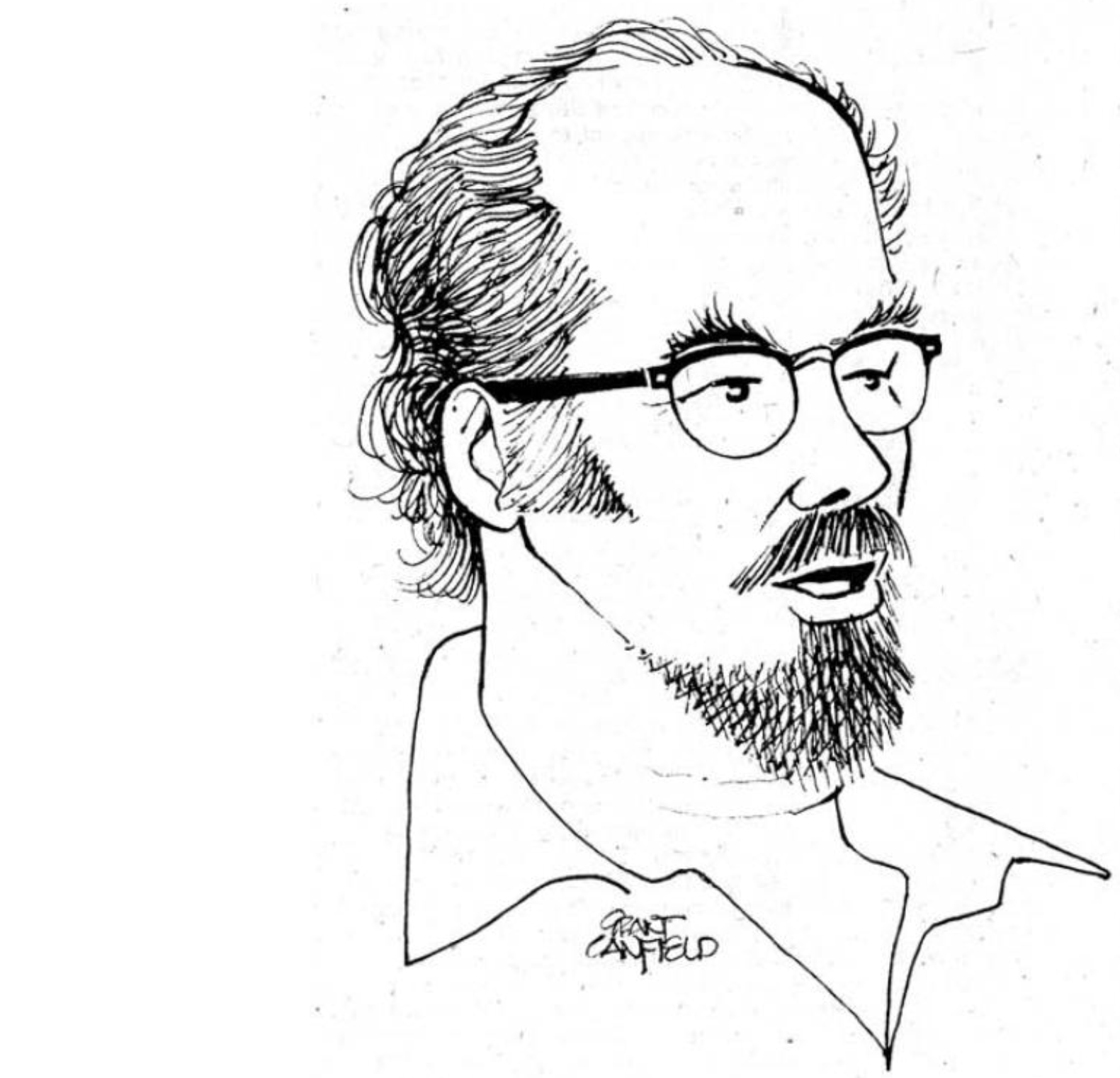
At the fanzine convention Corflu 41, held in Las Vegas in 2024, writer Sandra Bond asked Ted White, then 86, if there was anything he wished he could have done that he hadn’t yet. His answer was concise
That’s an impressive thing for anyone to say, but White was a lifelong fan who followed his enthusiasms wherever they led him—and they led him to some fascinating places. He published his first fanzine at the age of 15, and in 1968 he won the Hugo award for Best Fan Writer. He went to fan cons, organized fan cons, and was the guest of honor at fan cons. His love of music led him to become a jazz critic, and his love of science fiction and comics led him to become a novelist. He was the editor of the science fiction magazineAmazing Storiesfor almost ten years and ofHeavy Metalfor a year. Wherever it led him, fandom remained an important part of his life.
White was born on February 4, 1938, in Washington, DC, and grew up in Falls Church, VA, where he would spend much of his life. He started reading science fiction when he was eight years old and discovered the world of both professional science fiction magazines (“prozines”) and fanzines in his early teens.
Years later, in an editorial inAmazing Stories,he described his epiphany as a fan. As a teenager, he discovered a copy ofOther Worlds Science Stories,edited by Raymond A. Palmer, on a newsstand. “Other Worldshad a unique feel to it,” he wrote, “not the least of which was the personalized editorials and long replies to letters in the letter column, both signed ‘r.a.p.’” He continued:
Other Worldsranfreepersonal ads from the magazine’s readers: ads for fanzines, magazines or books wanted or for sale, clubs looking for new members, etc. And that letter column: readers wrote in with serious critiques of the magazine and were answered in kind. There was a strong feeling ofcommunication: Palmer was a palpablyrealpresence in the magazine.
White was captivated and not only subscribed but ordered all the back issues. The tone of the magazine gave him the confidence to start sending in his own comments, some of which were published. “I felt I knew [Palmer] as a friend,” he wrote. “I imagine many of his readers felt the same way.”
White got his first fanzine, a postcard-sized, mimeographed affair, in 1951, and the following year he got his own postcard mimeograph, a Sears model that set him back $10. His first publication was a Superman fanzine, which he speculates may be the first comics fan publication, along with some other experiments, but he hesitated to make the leap into science fiction fanzines. This initial reticence came from reading a fan-advice column by Marion Zimmer Bradley, who would later be his collaborator, in the fanzineVega,in which she cautioned newcomers to hold off until they had material worth publishing. White was already contemplating a career as an editor, and he had seen plenty of bad fanzines already. During the summer he was 15, he worked over his possible material while doing yardwork. “Instead of writing brilliant prozine editorials in my head as I followed the lawnmower, I started writing brilliant fanzine editorials,”he wrote 40 years later. “Like the brilliant letters I wrote in my head to fan correspondents and the occasional prozine, these editorials were far better than any I ever committed to paper.”
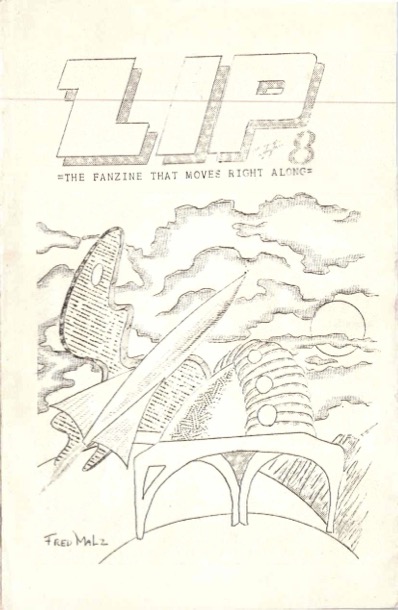
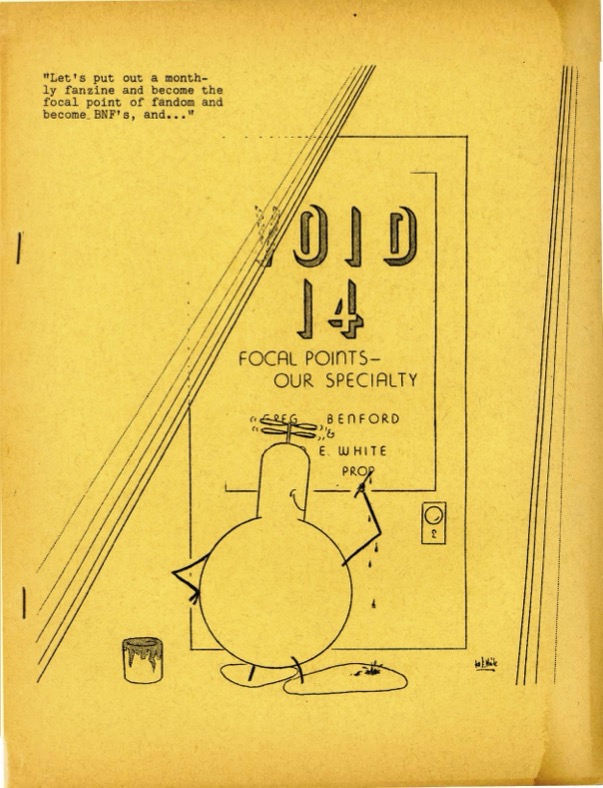
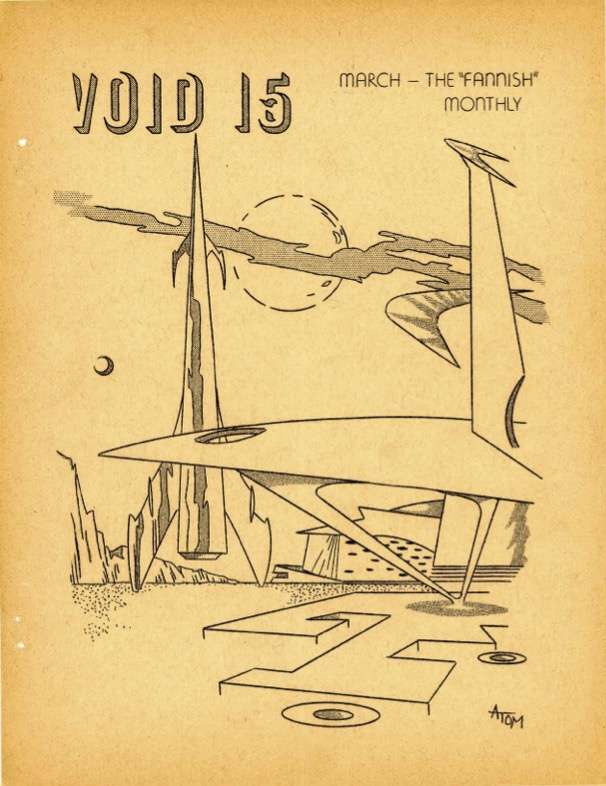
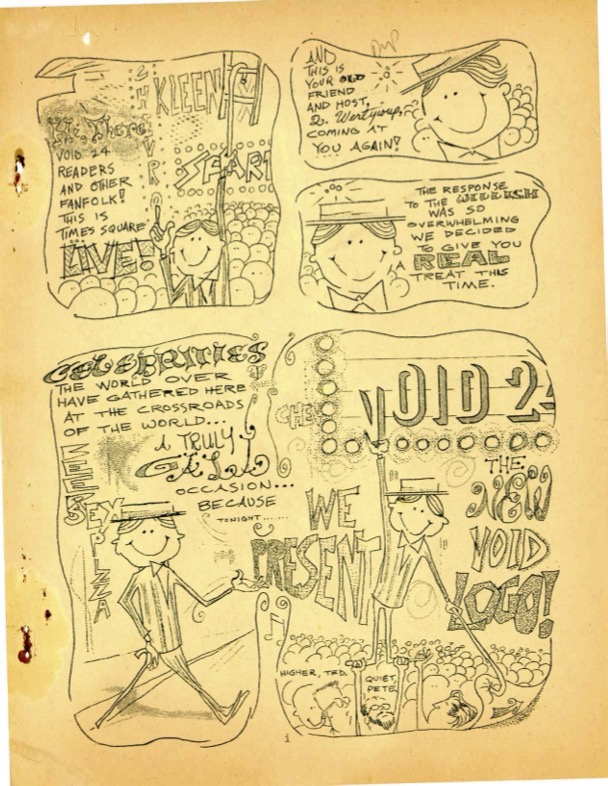
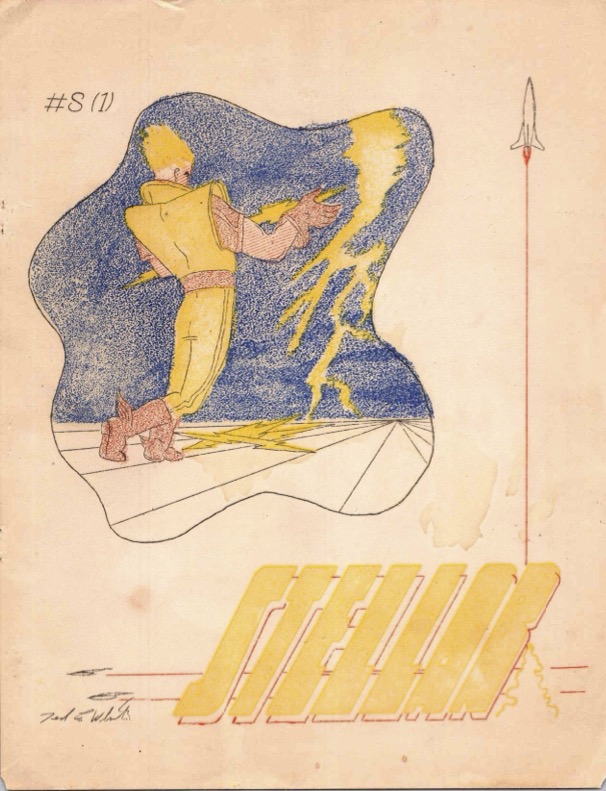
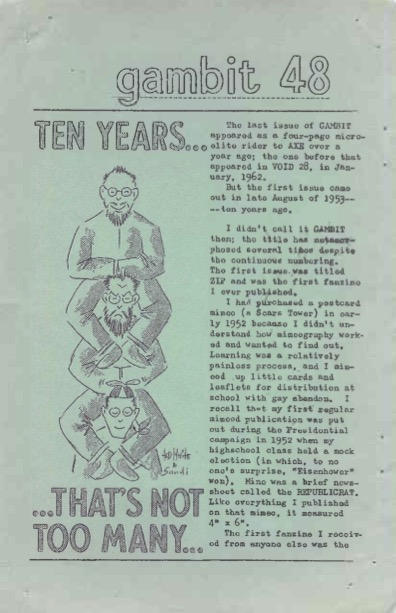
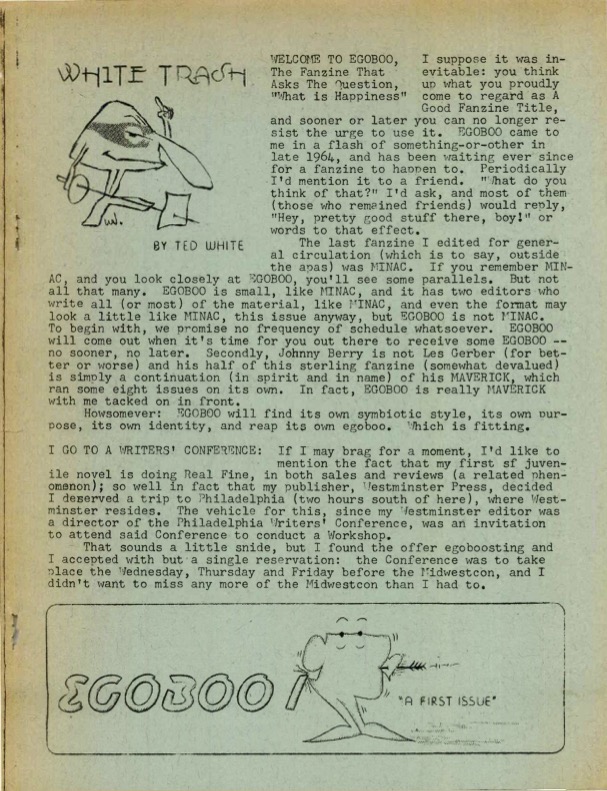
His change of heart came in August 1953, when he was leafing through some fanzines from the 1940s and realized he could start by republishing those. He designed a logo, cut the first stencil at his dining room table, and pulled mailing addresses from the letters columns of his favorite fanzines. The mimeograph was messy, the ink was runny, and the paper had to be cut to size by hand, but when he was done, he had 50 copies of his first zine,Zip#1. Humble as it was, it was an important step. “Making that decision to Pub My Ish that August day was a major turning point in my life,” he wrote later. “It was my decision to stop being a part of the passive audience in fandom, and to become an active creator.” It was also liberating: “I had to throw away my preconceptions about the ‘perfect’ fanzine I wanted to publish and had no chance of publishing, and realize that right there, at that moment, Icouldpublish arealfanzine, warts and all.” And it launched him into the world of fandom. In the next few years, he would edit and write for a number of fanzines, serving as publisher forStellar(co-edited with Larry Stark),Void, Minac, and Egobooand writing columns forYandro and Psychotic/SF Review.
Living the Bohemian Life in New York
In 1958, White marriedSylvia Dees, another active member of the fan community and an early cosplayer who appeared in several Worldcon masquerades in the early 1960s. In 1959 the pair moved to New York City, and White began writing about forMetronome,which he described later as “then the world’s oldest (and best) jazz magazine.”Metronomehad just returned from hiatus with a new editorial staff. “My article on Ornette Coleman—then a very controversial and misunderstood figure in jazz—was the cover story in the first new issue of Metronome,” Whitewrotelater, “and earned me a lot of respect in the field when Coleman said (in print) that I was the first to understand what he was doing.” That led to more gigs with Metronome and Ted Wilson’sJazz Guide,as well as writing record liner notes.
In 1960, Ted and Sylrned away because the festival refused to accept his press credentials. He described what happened next in an essay forMimosa:
Sylvia and I drove a mile away to the Cliff Walk Manor, where an insurgent jazz festival was being held, featuring Charles Mingus, Max Roach, and Ornette Coleman. The streets along the way were full of rowdy college-age kids (some were mooning passersby in the mid-afternoon) and beer cans littered the sidewalks. During the evening’s concert at Cliff Walk Manor, our eyes began stinging and we discovered that the police had been using tear gas at the main festival, a mile away, in what turned out to be a riot by kids outside the festival walls.
After the festival, they drove to Boston to stay with friends, and White called Harlan Ellison, who was then living with the couple and editingRogue,aPlayboymagazine knock-off. When he told Ellison what happened, Ellison responded “That’s a great story. Why don’t you write it up forRogue?” Ellison had been selling articles toPlayboy,but this was his first piece forRogue(aside from a suggested article title, for which Ellison sent him a check for five cents). It was during this period that he and Ellison made a bet – Ellison’s entire record collection versus one record of White’s – that ended in a dramatic denouement with Ellison first trying to cheat and then, after losing, showing up in White’s apartment waving a gun and demanding his records back (at least according to White’s account, later written up inMimosa).
White and Dees were still involved in fandom, and the pair were among the founding members of the invitation-only New York fan group theFanoclasts. As another founder, Dick Lupoff, later recalled “The Fanoclasts came into existence in late 1960, in a manner well supported by New York fan traditions: we schismed from another club.” That club was the(Second) Futurian Society, which folded in 1961 after many of its members decamped for the West Coast.
White and Dees separated in 1962 and divorced in 1966 (Dees died in 2011). By 1963, White was living with Sandi Bethke, another Fanoclast member and the publisher of the fanzineTurning On.The two evencontemplated buying a house together. In 1964, however, she married Les Gerber, another Fanoclast as well as a friend of White’s.
“I live in what some call the East Village,” hewrotein 1964. “Actually, it is the Lower East side of New York.” Although the neighborhood had a rough reputation, he hadn’t had any problems. Quite the contrary. “This is the area where the new coffee houses and the poets and painters are springing up,” he wrote. “Mainly because it is cheaper to live here. A person who does not overly value externals can tremendously enjoy the internal benefits that are to be found here and within a ten minute walk of here. I even enjoy the soothing garbage filled waters of the East River on a hot summer’s evening.”
During this time he continued to write and edit fanzines. He owned a mimeo shop, which he referred to as “Towner Hall” in tribute to a former fan, where many of the fanzines were published, and he got involved with the World Science Fiction Convention, a.k.a. Worldcon, as well as many smaller conventions. And in 1964, he got into the middle of a famous fandom battle, the Boondoggle.
Walter Breen and the Boondoggle
One of the first new members to join the Fanoclasts was Walter Breen, who had been convicted of child molestation in 1954. Although most members of the fan community were not aware of that in 1960, they soon became aware of Breen’s predilections as he wrote openly about them in fanzines. In 1964 he was banned from Worldcon, not because of a specific accusation but because of the fear that he might harm a child, and that the convention would be held legally liable. Many people, including White, defended Breen, and the affair erupted into the 1960s equivalent of a flame war, known from then on in fandom circles as the Boondoggle.
White’s defense of Breen lay partly in his belief that Breen was not particularly predatory and in fact had an idealized notion of relationships between older men and young boys. “Briefly stated,” White wrote in the zineIzzard20 years later, “this philosophy (based on actual social conditions in ancient Greece) holds that a mature man should befriend a young teenaged boy and act as his mentor in all things, including sex.” White was familiar with Breen’s thinking not only because they were friends but because, as he revealed in the article, he was president of the small press that published Breen’s bookGreek Love,which laid out this philosophy. (Breen wrote the book under the pseudonym J.Z. Eglinton.) The press was owned by Robert Bashlow, who was, like Breen, a numismatist. White wasBashlow’s secretaryin the early 1960s and also put his name on the corporation papers.Greek Lovewas published in 1964, during the Boondoggle.
White was one of Breen’s defenders. Writing in 1984 inIzzard,he said, “I think almost any decent human being who chanced upon this situation would have been forced sooner or later into the camp of Walter’s defenders, simply because the tactics of his critics were so vile and unfair.” At a time when the excesses of the McCarthy era were still fresh in people’s minds, the accusation that anyone who defended Breen must be an apologist for pederasty struck many as chilling. Breen did not attend Worldcon that year, but attempts to ban him from fan organizations mostly failed, in part because of his marriage that year to the writer Marion Zimmer Bradley. White later recounted in theIzzardarticle that Breen’s chief accusers were themselves pedophiles who were jealous that he was getting away with something they didn’t dare try themselves. “I lost most of my remaining respect for those men when I learned that,” White wrote.
Be that as it may, Breencontinued to prey on children, including at science fiction conventions; a 1991 conviction led to a lengthy sentence, and he died in prison.
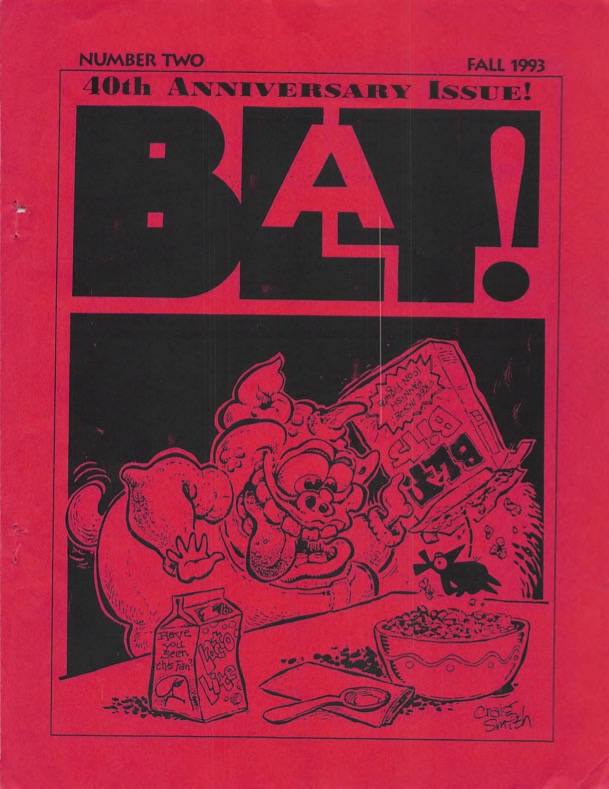
In 1993, White wrote an obituary for Breen in the fanzineBlat, in which he said, “Walter disappointed me… In a lot of ways we used up our friendship for Walter during the Boondoggle. We supported him and that was easy because of the nastiness, meanness, and dishonesty of the attacks against him. We supported him because it was the morally correct thing to do. But somewhere along the way we lost a lot of ourlikingfor the man.”
In 1963, White got a job as assistant editor forThe Magazine of Fantasy & Science Fiction, where he would work for the next five years. It was also in 1963 that he collaborated with Marion Zimmer Bradley on “Phoenix,” his first professionally published story, which he would later expand into the novelPhoenix Primeand then into the Qanar trilogy. In 1964 his first novel,Invasion from 2500,co-written with Terry Carr under the name Norman Edwards, was published by Monarch Books. In the following years, between 1964 and 1978, he wrote 11 standalone novels, including a tie-in to the TV showLost in Spacetie-in (with Dave van Arnam, under the pseudonym Rod Archer) andCaptain America: The Great Gold Steal,as well as original stories.
One of White’s guiding principles is that science fiction is not about spaceships but about humans and their relationship to technology. “Writing science fiction is no different from other kinds of writing,” White told an interviewer at Midwestcon in 1969, around the time the Apollo 11 astronauts were returning from the moon. “The writer just has to know his foundations. Fans tell you how unique it is, but they are readers, not writers. Basic good story telling is basic good story telling and one thing that is wrong with SF writers is that they have a feel for SF but they are poor writers.”
In 1966, White and Syler and a second-generation fan; her parents had been members of the New York Science Fiction Society, a.k.a. theLunarians. They had a daughter, Arielle “Kit” White
This was a busy time for White. He co-chaired the 1967 Worldcon, which was held in New York City, with Dave Van Arnam, as well as the regional Lunacon in 1968, 1969, and 1970.
He was also keenly interested in comics, although that is one of his lesser known pursuits. “I met him when I was 16 years old,” Gary Groth remembers, “by which time Ted was a seasoned science fiction author and editor, but more importantly, to me, among the first generation of serious, amateur comic book critics/historians (which included John Benson, Larry Stark, and others). I looked up to them as models of a critical intelligence that was rare in comics circles at that time — the late ’60s/early ’70s.”
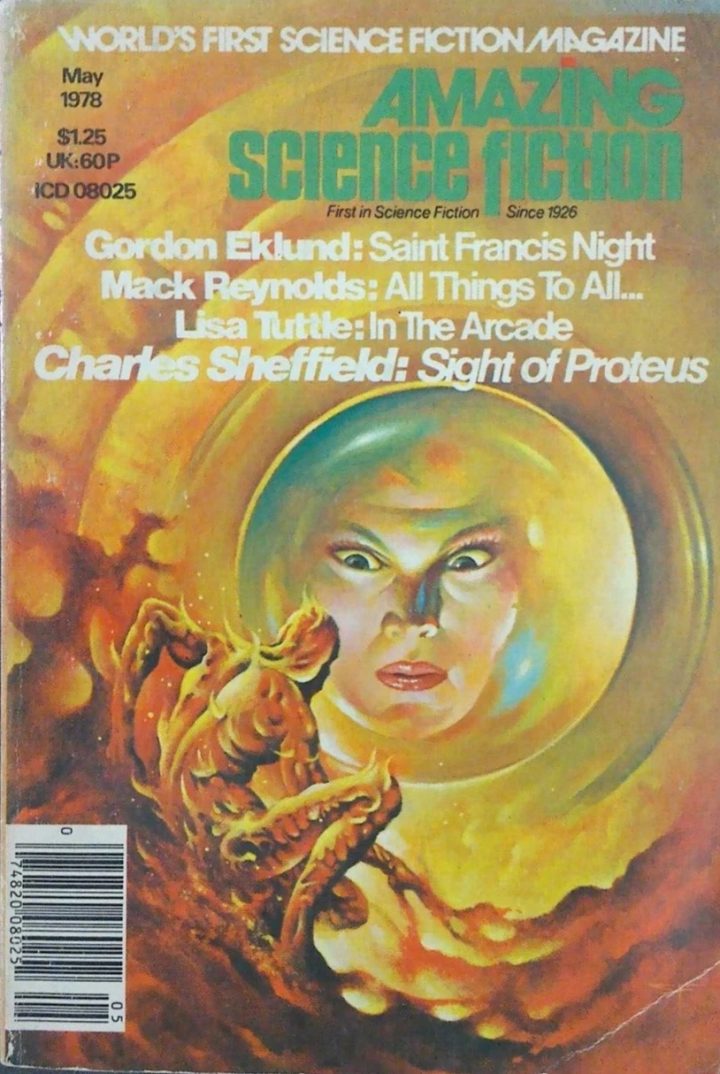
1968 was a big year for White. At that year’s Worldcon, he won the Hugo award for Best Fan Writer, and in October 1968, he became the editor of one of the most iconic science fiction magazines,Amazing Stories,and its sister publication,Fantastic.Launched in 1926 by Hugo Gernsback (for whom the Hugo Award is named),Amazing Storieswas a pioneering science fiction magazine, but by 1968 it had fallen on hard times. The magazine had been sold to Ultimate Publishing Company, in 1965, and the new owner had decided to cut back on expenses by publishing reprinted stories from earlier issues. At first they didn’t pay the authors for the reprints, but they changed that policy after the Science Fiction Writers of America (SFWA) called for a boycott of the magazines. Nonetheless, readers didn’t like the reprints, and one of the first things White did when he got into the editor’s chair was to start running new material again. Sol Cohen, one of the owners of Ultimate, had actually agreed to this a year previously but the change was not implemented until White took over.
Amazing Storieshad a circulation of about 38,500 in 1968, and it faced a lot of challenges. Almost all the sales were on the newsstand; in his bookGateways to Forever: The Story of the Science-Fiction Magazinesfrom 1970 to 1980, Mike Ashley wrote that Cohen hadn’t tried to increase the subscriber base because his wife mailed out the copies from home and he didn’t want to increase her workload. At the same time, the digest-sized magazine struggled to find a place on the newsstand, and despite White’s best efforts, the circulation dropped by over 10,000 during his tenure.
It wasn’t for lack of trying. White reduced the type size of the magazine in order to carry more stories, increasing the cover price to 60 cents at the same time. In 1972 he changed the title toAmazing Science Fiction.He worked for peanuts, serving as both editor and art director, and his friends read manuscripts for free. Most importantly, he improved the editorial quality of the magazine, bringing in new material and introducing new writers, including the future film critic Roger Ebert, as well as his own stories. He also edited two collections of short fiction,The Best from Amazing StoriesandThe Best from Fantastic,both published in 1973. And he wrote editorials for each issue of the magazine, essays in which his personality came through as strongly as that of his predecessor, Raymond A. Palmer.
Things continued to change. White and Postal divorced in 1976. The magazine’s fortunes deteriorated, and after a new owner refused White’s suggestions for a redesign and more investment, he left his job in 1979.
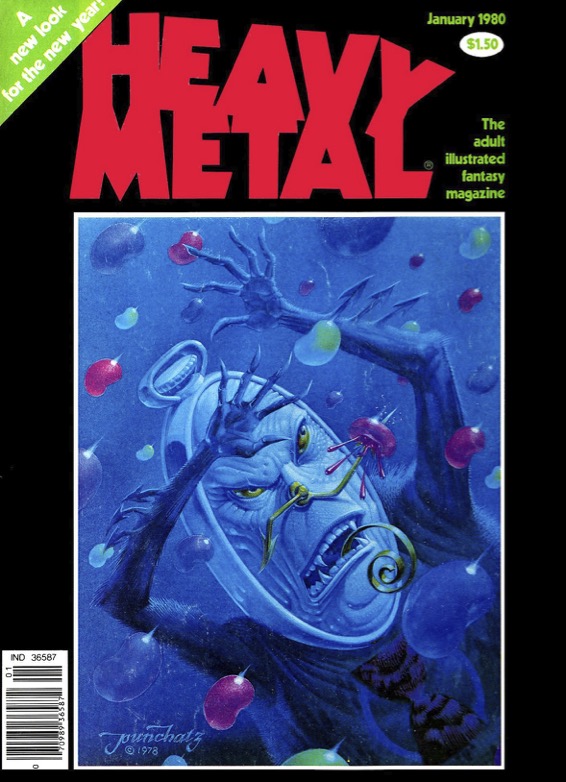
And then a new opportunity beckoned: White became the editor of another iconic magazineHeavy Metal,in 1979. White’s comics credentials are not as well known as his work in science fiction, but he was a lifelong fan of that medium as well, and he brought that knowledge to the magazine. During his year-long tenure, he made a number of changes, including adding columns on music, comics, movies, and science fiction, but his vision clashed with that of the owners. They wanted him to increase both circulation and ad sales (althoughHeavy Metalwas, unlikeAmazing Science Fiction,doing well at the time and turning a modest profit, they wanted to see more). White, for his part, saw Heavy Metal not as a magazine of popular culture but as a curated collection. “My approach is that I know I have definite opinions about art, about comics, about music, about writing, about all the things that we were involving in the magazine,” he told Gary Groth in an interview that ran in TCJ in 1980, after he was fired. “I have very strong and specific opinions based on years of experience in these areas, which may be right or may be wrong, but they are a unified vision.” That was important. Before he arrived, he said,Heavy Metalhad been a hodgepodge of good and bad material. “Now, if there’s one thing that people have said to me or have observed about ‘my’ issues, the 1980 issues, it is that the magazine felt like a magazine,” he said. “It felt coherently magazine-like. It didn’t feel like a scrapbook of diverse material.”
While White and his editorial overseers agreed that they didn’t want the magazine to be a fan magazine touting the latest Hollywood movie or big-label record, they didn’t see eye to eye on the alternative. “I think that my point of view was seen as too elitist, too in-groupish, and not broadly based enough,” he said. Despite his early exit from the editor’s chair, he was proud of the changes he had made at the magazine, and he continued to work as an editor of individual comics that were carried there.
As he had in New York, White stayed active in local fandom and convention circles in Virginia. He was on the committee for Corflu 3, in 1986, and he hosted Falls Church Second Friday, a monthly party at his home, from the early 1980s through 2020.
In 1986, White was arrested on charges of possession with intent to distribute marijuana, mushrooms, and LSD. He pled guilty but was unnerved by the length of his possible sentences. In an article in the fanzineFile 770, he blamed the arrest on spiteful neighbors and an overly aggressive police officer. “I am resigned to serving time, and hope that it will be no more than a few years,” he wrote. “I am not looking forward to an overcrowded state prison, but I imagine I’ll find a place in it for myself, and possibly in the library, or teaching. I look forward to getting some writing done, if I can gain access to a typer [sic]; my paper fanac may even increase.”
In fact, fate had other plans for White. He served a three-month sentence and was released in December 1986. Shortly before his sentencing, he had gone to Worldcon in Atlanta, where he met Lynda Magee, who would become his third wife. They wrote to each other while he was in jail, and on his release, he met her family. They married in March 1987 and had a son, Aaron, later that year.
Magee’s son by a previous marriage, Spencer Carlin, was eight years old when he and his mother moved across the country to live with White. “Ted and his community of artist/writer/musician friends introduced me to many creative things,” he reminisced onFacebook. “In many ways it was an incredible place to live for a child existing half in this world and half in that of my imagination. I was always treated like an adult amongst Ted and his community when it came to that imagination and inclusion. Ted was respected by so very many and he was incredibly accomplished. I am grateful for the time in my life he was a part of it. Experiences and exposure to this world surely shaped who I became and what I find valuable and important in life.”
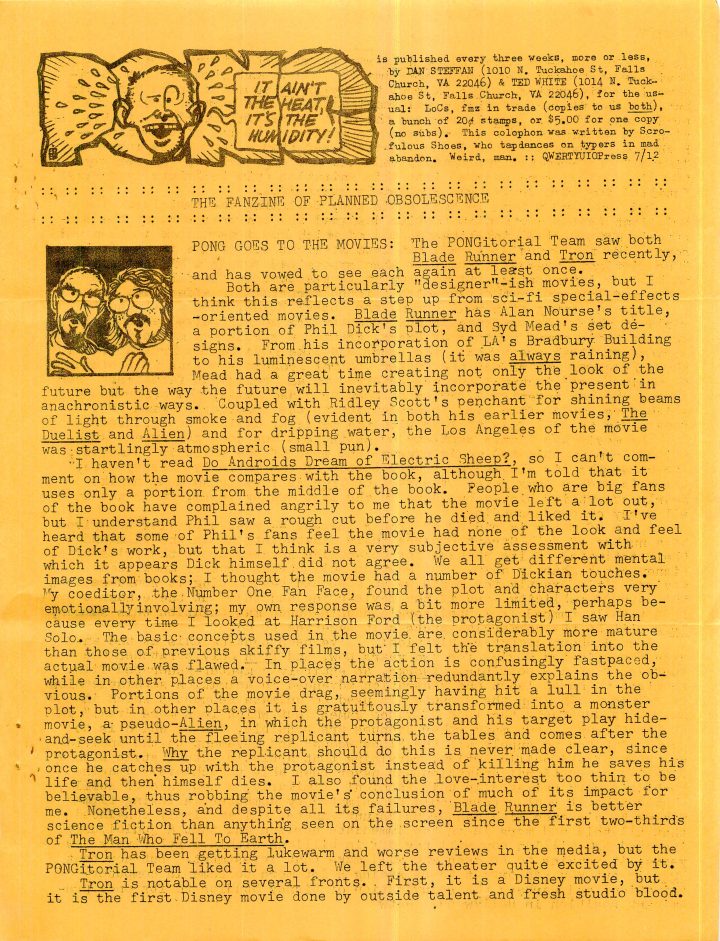
White continued to write about comics, science fiction, and music. “He published comics criticism regularly inThe Comics Journalin the ‘’70s, ’80s, and ’90s,” Groth said. “He even got us sued for $260,00.00 in 1983 when he called the comic book artist Rich Buckler a plagiarist, which we won, because he was a plagiarist.” He also contributed historical essays to a number of Fantagraphics collections, and he continued publishing fanzines.Blat, which he co-published with Dan Steffan, from 1993 to 1995, won a FAAn Award (Fan Activity Achievement Award, associated with Corflu) in 1994; he won another for Fan Writer in 1998 and the Lifetime Achievement Award in 2009. He ran a small press, QWERTYUIOPress, which published a volume of his jailhouse letters, and in 2023, Ansible Editions published two collections of his editorials and book reviews fromAmazing StoriesandFantastic.Music continued to be an important part of his life, as well, and starting in 2004 he played saxophone and keyboards in the improvisational band Conduit.
In short, he did it all.
“Ted was a fearless critic who took on sacred cows in both the comics and science fiction world, unafraid to vent unorthodox and unpopular opinions,” Groth said. “Ted always struck me as an outsider on the inside, both in comics and science fiction — he editedHeavy Metalfor a year in 1979, and the SF prose magazinesAmazingandFantastic,but it never felt like he belonged to any institutional clique. Which was just one more thing I liked about him.”
