

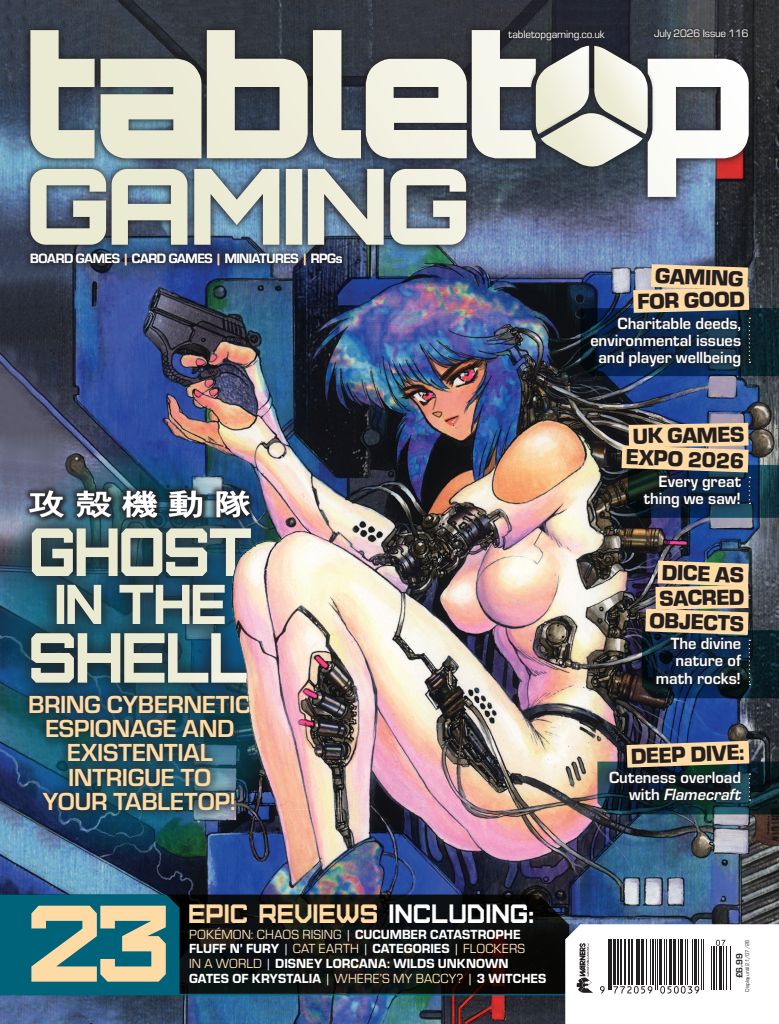
Ghost in the Shell has always been fascinated by what happens when technology fundamentally changes what it means to be human. From cybernetic bodies and computerised brains to artificial intelligence and global networks, Masamune Shirow’s manga imagined a future in which the boundary between humanity and technology had become increasingly difficult to define.
Now, Mantic Games is bringing that world to the tabletop with an officially licensed Ghost in the Shell TTRPG based directly on the original manga.
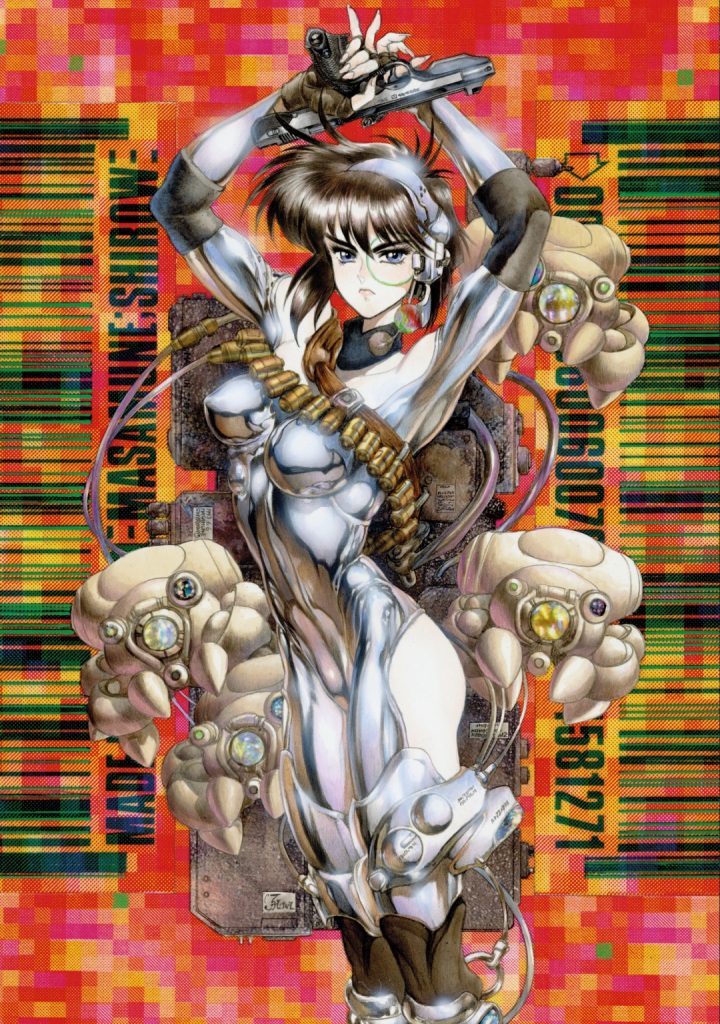
The Original Ghost in the Shell Manga
In 1989, Masamune Shirow introduced the world to Niihama, also called New Port City, set in mid-21st-century Japan. His manga Ghost in the Shell was serialised in Young Magazine
It followed a specialised unit of government operatives called Public Security Section 9, led by the main protagonist of the series, Major Motoko Kusanagi.
In a world where people have computer brains and other cybernetic enhancements, Section 9 is tasked with countering those who would use this technology to attack the country. Its members have various cybernetic enhancements themselves, including the Major, who has a full prosthetic body.
In such a setup, you might expect gunplay, action and high-speed chases, and you certainly get that. Fundamentally, though, the series asks what it means to be human and examines the nature of what we might call the soul. The series refers to this as a person’s Ghost.
Ghost in the Shell is incredibly influential, most famously being a key driver in getting The Matrix produced. It has spawned numerous adaptations, including the 1995 animated film, several TV series, a 2017 live-action movie and computer games.
Mantic Games’ TTRPG, however, goes directly back to thees the original manga as its foundation, allowing players to create their own Section 9 agents and explore Shirow’s cyberpunk world through a bespoke roleplaying system
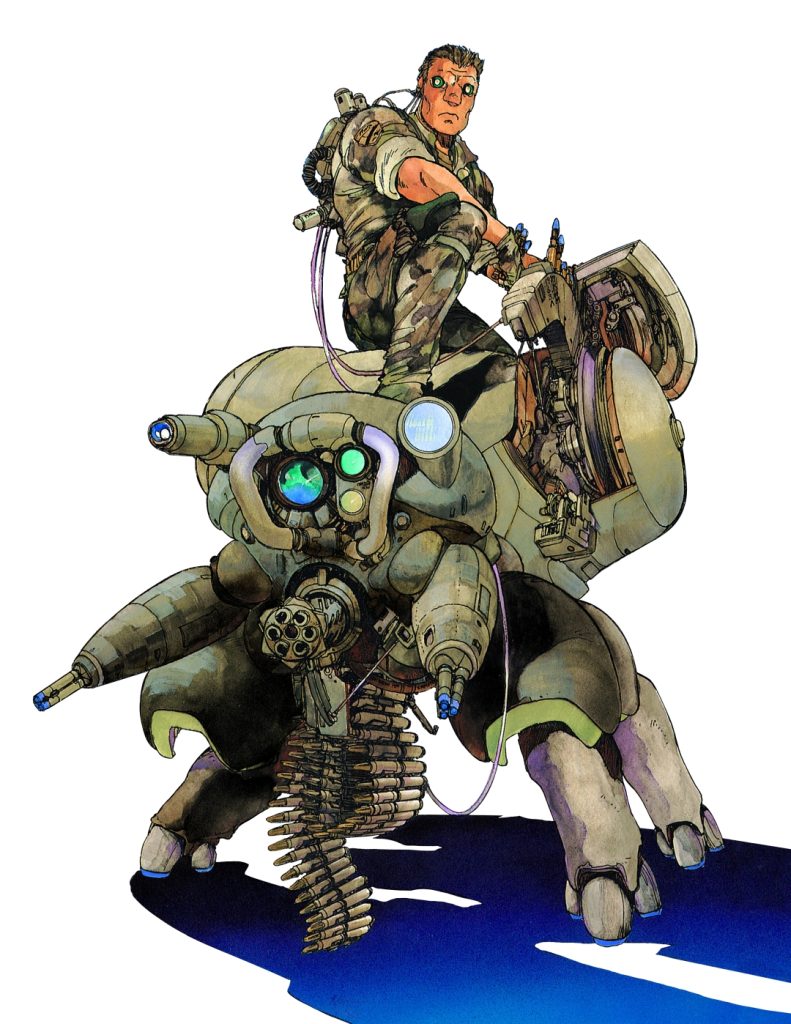
Ghost in the Shell: Love Story
While my own familiarity with Ghost in the Shell comes from the 1995 film and the two Stand Alone Complex TV series, lead designer and project manager Alessio Cavatore has a much deeper love of the material.
“I read the manga when it first came out [in Italy] in 1992, serialised in Kappa Magazine. It blew my mind,” Alessio tells Tabletop Gaming magazine. “At the time, it was truly groundbreaking material, dealing with topics that felt futuristic then, but feel more and more relevant to our everyday world right now.
“I loved the story and the art so much that since then I collected everything that Shirow Masamune has done – all his comics, all his artbooks, all the games and anime based on his works.”
Alessio is a veteran of the hobby. He worked for Games Workshop as an Italian translator, as well as a designer across titles including Mordheim, Warhammer and the Lord of the Rings Middle-earth Strategy Battle Game. In 2010, he left Games Workshop to form River Horse Games, producing a number of IP-focused RPGs, including My Little Pony: Tails of Equestria and Labyrinth. In 2024, he sold River Horse to Mantic, transferring ownership of the recently acquired Ghost in the Shell licence.
While this game is Alessio’s baby, as with the manga, such a large project required a team. Zak Barouh worked with Alessio at River Horse, has developed his own game (Animon Story) and has worked on various indie RPG projects over the years.
“Since I first experienced Ghost in the Shell, I’ve always loved the intriguing setting and characters of this world, so I was very excited to get involved,” Zak says, having come on board as the co-designer for the TTRPG rules. “This job in particular gave me the chance to become very familiar with the original manga, which has a unique character to it.”
Alessio and Zak are joined by graphic designer Glenn More, and have been helped by a playtest team that includes Paul Buntman, Kay Robinson, Dylan Trundell, Andy Gibson, Chris Hughes and Sam Charlton.
Ghost in the Shell TTRPG: Synthesis Conflict
Ghost in the Shell is rife with high-octane action, married with philosophical musings and introspection. One of the game’s most distinctive mechanics, Synthesis Conflict, is designed to bring that internal struggle directly into play.
At character creation, players define two important aspects of their character’s identity that exist in tension with one another. These could represent duty versus family, humanity versus technology, belonging versus solitude, or any other pair of competing values.
As the campaign progresses, those aspects can become increasingly important, eventually forcing the character to confront the conflict at the heart of their identity.
“A central feature of Ghost in the Shell characters is their ‘Synthesis Conflict,’ a pair of clashing aspects that represent some inner turmoil, ethical dilemma or other personal conflict they’re going through,” Zak explains.
“As the game progresses, these aspects compete for influence over the characters’ lives, and the players are able to use this to guide and react to their character’s personal journey. It’s a core mechanical part of every player character, designed to make it easy and fun for all players to engage with the messy complexities of this world and the people who live in it.”
“I’m really glad that Zak has stuck to his guns and managed to convince me,” says Alessio, who is more into the action side of RPGs than the more character-based roleplay elements and wasn’t initially sold on the concept.
“He tells me Synthesis Conflict has been very successful with the playtesters. It is both very intriguing and one of the elements that makes the game stand out as a bespoke design to best represent the IP.”
The game uses a traditional TTRPG structure, with a Game Master taking the reins. The player characters start as new recruits to Section 9, playing as rookies rather than the big-name characters from the manga.
Alessio tells us that this was key in getting approval from the licensors, as the manga’s established canon isn’t being compromised. But there’s also a gameplay-focused reason for choosing this path.
“The main characters [of the manga] can act as role models, someone to aspire to emulate as you develop your character, which starts from humble origins,” he explains. “I find that suitable for RPGs.
“Having said that, the stats of the main characters are included in the book, and of course nobody’s going to stop you if you really want to play as them!”
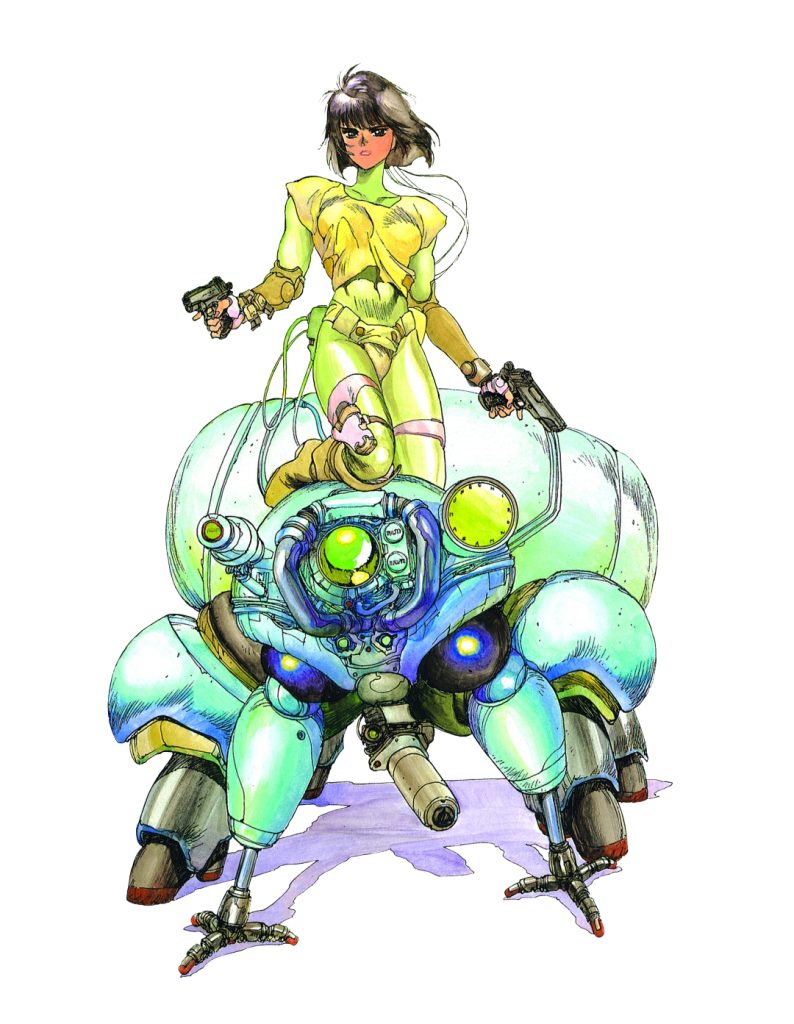
Ghost in the Shell TTRPG Rules and Character Creation
Alongside Synthesis Conflict, player characters are defined by six core traits: Awareness, Muscle, Barrier, Ghost, Shell and Cyberbrain.
Characters also have a set of skills and setbacks that allow them to specialise without locking them into a traditional character class. Cybernetic upgrades, equipment and the Section 9 armoury give players further ways to develop their agents.
The result is a system that aims to support both the tactical action of Ghost in the Shell and its more philosophical side.
What will these Section 9 rookies actually get up to during a typical session of Ghost in the Shell? Zak says a character’s time is split between action, investigation and downtime.
“There’s mystery and intrigue aplenty, of course, and often enough this breaks down into firefights, hacking battles or stealthy infiltrations,” he says.
“But Ghost in the Shell also has those quiet, introspective moments of existential questioning. As Section 9 rookies, the PCs are constantly experiencing the world through this new perspective, which asks much of them, both physically and emotionally.”
That means a typical mission could move between investigating a conspiracy, hacking into a secure network, preparing equipment, engaging in a firefight and dealing with the consequences of the decisions made along the way.
“PCs also have a reserve of Ghost Whisper points, which sets them apart from the NPCs, providing them with the chance of altering the plot,” Alessio adds.
“Hacking plays a big part in the mechanics, as well as the chance the characters get to equip themselves before a mission, whether they’re going for stealth and techno-infiltration, or overwhelming firepower.”
Ghost Whisper points give players another way to influence events. They can be used to improve outcomes, avoid disaster or even establish details that alter the story, giving the players some control over the narrative rather than leaving everything in the hands of the Game Master.
That balance between tactical freedom and character-driven storytelling appears to be central to the game. Players can prepare their agents for a mission, select weapons and technology and approach an operation with different strategies, while the mechanics also encourage them to engage with their characters’ internal conflicts.
How the Ghost in the Shell TTRPG System Was Designed
Zak and Alessio reveal that the Synthesis System takes inspiration from the John Wick TTRPG Houses of the Blooded, while the skills and setbacks come from Alessio’s enjoyment of character creation in games like Call of Cthulhu and the Serenity RPG.
The battle system, meanwhile, has shades of BattleTech, a miniatures game that has been a favourite of Alessio’s since the ’80s.
Alessio also reveals that the system for tests comes from a rather unexpected animated source.
“Some of the core mechanics of the tests/challenges etc. are a refinement of an earlier system I designed, which was very well received, though it’s for a completely different audience – Tails of Equestria, the My Little Pony: Friendship is Magic RPG!”
It might sound like an unlikely connection, but it demonstrates the approach behind the game: rather than simply attaching a licence to an existing RPG system, the team has attempted to build a ruleset around the particular demands of Ghost in the Shell.
What’s in the Ghost in the Shell TTRPG?
The Ghost in the Shell TTRPG launched on crowdfunding platform BackerKit on 28 July 2026, with the campaign ending on 13 August.
The campaign raised £366,327 from 4,035 backers, substantially exceeding its original £10,000 goal. The physical rewards are currently estimated to ship in May 2027.
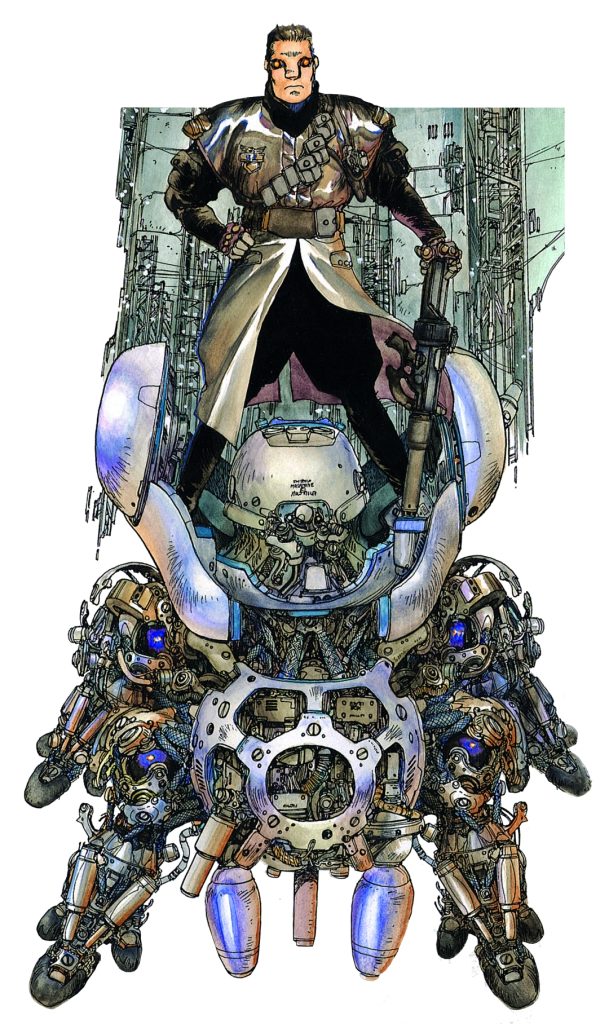
The core game is a hardback rulebook containing the rules system, character creation, setting information, character profiles, artwork from the original manga and the first mission, Lost Patriot.
The campaign ultimately expanded the number of included missions from one to four. Alongside Lost Patriot, backers will receive Puppets on a Wire, The Cruise and Cell Island Syndrome as bonus missions.
There are also a GM screen, dice, character sheets and a range of optional miniatures, including figures representing Major Motoko Kusanagi, Batou, Aramaki, Saito, Togusa and a Fuchikoma.
Ross Connell, Head of Crowdfunding at Mantic Games, previously offered more details of the package.
“Expect a gorgeous hardback rulebook packed with artwork from the original manga, everything you need to run your own game – GM screen, dice, character sheets – exclusive content, extra missions and perhaps even a brand new piece of art by Shirow Masamune himself!”
Ghost in the Shell Miniatures and Future Plans
While the miniatures aren’t fundamental to the RPG system, they give players and collectors the chance to bring Section 9’s characters to the tabletop.
Alessio has also suggested that the range could eventually expand beyond the RPG.
“The miniatures range may grow larger if the customers get behind the project, and who knows, maybe one day we’ll have enough critical mass to make a skirmish wargame system… needless to say, I already have a few ideas in that direction!” he tells us excitedly.
For now, however, the focus remains on the TTRPG and its attempt to recreate the world of Shirow’s manga.
A Love Letter to the Original Ghost in the Shell Manga
For the longest time in tabletop games, IP-laden projects were sneered at. They were seen as cheap attempts to make a buck, exploiting fans who were enthusiastic about the franchise in question.
These days, the relationship between licensed properties and tabletop games feels rather different. Some of the most interesting licensed games are being made by designers who are not simply working with a recognisable name, but are attempting to understand what makes the
Alessio, Zak and the team at Mantic feel like safe pairs of hands for Ghost in the Shell. It’s clear that Alessio is working on a franchise he dearly loves, while the bespoke mechanics suggest the team is attempting to translate more than just the manga’s aesthetics to the tabletop.
The real test will come when players get to experience those systems for themselves. But with Synthesis Conflict putting questions of identity and humanity into the heart of character development, hacking and cybernetics underpinning the action, and Section 9 providing the framework for missions, the game appears to understand what makes Ghost in the Shell more than just a stylish cyberpunk action story.
“Working on a game that is so close to my heart has been very, very exciting,” Alessio says. “As we are approaching the launch, I absolutely cannot wait to share it with the public, as I hope that we will bask together in the pure love for the subject matter that, in my opinion, oozes from every page of our rulebook. “Of course, there’s also a hint of fear that someone will not like the game and harshly criticise it, which I’m sure will hurt me deeply – and the internet being the internet, I’m sure someone will! Oh well, let’s hope that most fans will feel this game for what it really is: a love letter to the original manga!”
This feature first appeared in Issue 116 of Tabletop Gamingmagazine. You can subscribe to the magazine here or buy the latest issue here.
Sometimes we may include links to online retailers, from which we might receive a commission if you make a purchase. Affiliate links do not influence editorial coverage and will only be used when covering relevant products
