

In 1844, the Dutch informed the Tokugawa shogunate of the existence of steam ships, but the military government wasn’t interested in the idea. In 1855, the lord of the Satsuma domain commissioned a successful construction of the first Japanese steam-powered boat but news of that was mostly drowned out by the arrival of Commodore Perry and his American warships, demanding theopening of Japanese ports.
Perry introduced many advancements to the country, including its first steam locomotive, but the technology didn’t stick around that long. In 1883, Japan’s first arc lamps were installed in Ginza, marking the start of the country’s electric revolution. But what if it had all gone down differently? What if steam hung around and became the primary form of energy in early 20th-century Japan? The newest Kyoto Animation seriesSparks of Tomorrow,which began streaming on Netflix on July 5, asks and answers that question.
The Great Smog of Kyoto
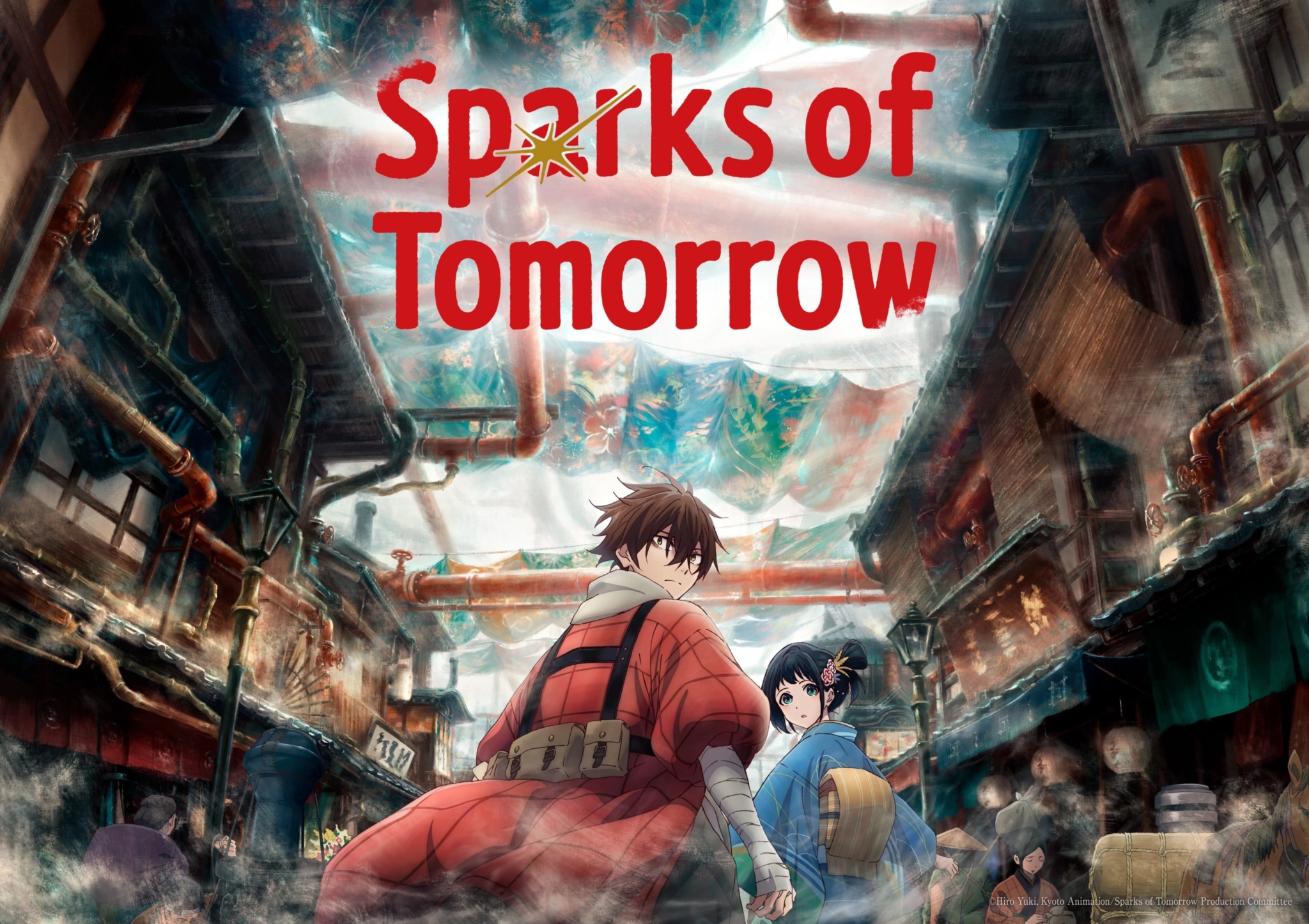
Electricity exists in theSparks-verse but is an emerging, poorly understood technology, not just in Japan but all around the world. In its place, places like Kyoto are poweredhe entire city, making the ancient capital look like one giant, ugly factory. It’s incredible worldbuilding
It expands on a world that Japan only really experienced for about 30 years by imagining its logical, visually fascinating conclusion, with the maze of steam pipes creating a grotesque contrast with people walking around in traditional Japanese dress. Against this backdrop, we learn that Japanese steam engines in the world ofSparks of Tomorroware essentially monopolized by one family (the Mizoe) who enjoy a level of power that rivals that of the government. Their scion, Yosuke, is the main antagonist of Kihachi Sakamoto, a young inventor who tries to bring about an age of electricity for the betterment of mankind. This is where the anime unfortunately stumbles a bit.
A Story That Does Not Need a Villain (But Still Has One)
In Episode 3 of the series, Kihachi tries to perfect the lightbulb, which do exist in theSpark-verse but more as novelties that aren’t taken seriously because they burn out too quickly. A lot of the episode is him experimenting with bamboo filaments and glass casings, with no action or suspense. Kihachi just moves methodically forward until he solves the problem, but along the way, it makes audiences appreciate the rigors of the scientific method and how breakthroughs happen. During these scenes, the show takes on characteristics ofiyashikeianimethat don’t feature tension or antagonists, instead providing relaxing immersion in interesting worlds, like camping, cooking or inventing.
When Kihachi succeeds, the payoff is as heartwarming as, say, watching a sunrise after a long day of hiking in the iyashikei animeLaid-Back Camp.His floating contraption of lightbulbs illuminates the night like an electric moon, radiating not just light but also the majesty of creation. And it’s immediately ruined by Yosuke screaming his head off. Yosuke is just an all-around problematic character, not just because he’s very stereotypically gay-coded (an issue that Japanese TV has beendealing with for too long) but also because he exists at all.
A story likeSparks of Tomorrowcould easily have focused on the act of creation, with no villain to fight. Kihachi could of course still encounter opposition during his quest to electrify Japan but it would have made more sense if that opposition was systemic and not a shrieking campy guy in women’s boots and his stoic manservant. They break immersion and only seem to exist because of a misguided idea that “Well, stories DO need bad guys.” Not true. But even if this one did, it could have given us a character that better fits the world and tone set up by the anime.
Technological Progress as an Engine for Social Change
Sparks of Tomorrowperhaps wouldn’t work as a fully iyashikei anime because while it does have relaxing scenes of science happening in front of our eyes, it also features a larger story about societal change in Japan. Kihachi is helped in the beginning by Inako Momokawa, the daughter of a sake brewer and a kind of symbol of a modernizing Japan.
One of the most notable things about Inako is that she goes to school. Equal access to education was technically codified during the early Meiji period (1868 – 1912) but social pressure and habits kept many girls from attending classes. This started to drastically change in the early 1900s, whenSparks of Tomorrowtakes place. Through the Momokawa family, we also observe the phenomenon of women starting to question the patriarchy, with Inako’s sister challenging their father’s supposed right to decide his children’s fates. And though the two aren’t connected in a literal sense, the more technological progress Kihachi makes, the freer and more independent the people around him seem to get.
It’s all done without words but the underlying theme appears to be that as technology advances, the better society gets. As of right now, the anime has a lot of really good ideas that over time will hopefully overcome some of its shortcomings.
