

Jake Gotta
/
KPBS
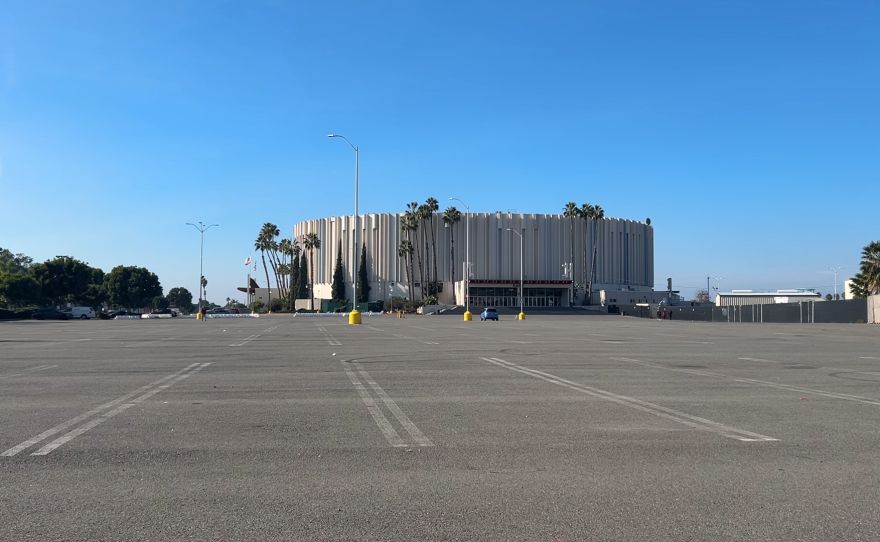
Midway Rising, the massive redevelopment plan for San Diego’s Sports Arena property, won approval from the City Council on Monday.
The 8-0 vote came after more than six hours of public comment and council deliberations, and more than four years after the council selected the Midway Rising team to lead the redevelopment of the 49.2-acre property.
The project features 4,250 homes, a 16,000-seat arena, 130,000 square feet of retail space, 14.5 acres of parks and 7,040 parking spaces. Two thousand of the homes would be subsidized affordable housing for low-income renters, which city officials say makes Midway Rising the largest affordable housing development in California history.
Advertisement
Become a KPBS sponsor
Councilmember Kent Lee said the project includes substantial public benefit.
“Supporting today‘s package does not mean that we’re ignoring the risks,” Lee said. “In fact, it actually means that we are weighing those risks against the opportunity to deliver the housing, the infrastructure, the public space, the jobs, the arena and a revitalized Midway community.”
Cathy Kenton chairs the Midway-Pacific Highway Community Planning Group, which voted to support the project. She said it would revitalize a blighted neighborhood that has long been characterized by strip clubs and large asphalt parking lots.
“We can create a mixed use entertainment landmark and a true neighborhood — one that instills a renewed sense of pride and belonging in our city,” Kenton said. “That future begins with Midway Rising.”
Critics said the project would worsen traffic in an already congested area and that the financial transaction with the development team was a bad deal for taxpayers.
Advertisement
Become a KPBS sponsor
Independent Budget Analyst Charles Modica said the deal does not seek to maximize cash revenue from the land, but rather prioritizes other public benefits such as affordable housing, parks and infrastructure.
“On the whole, our office believes that the proposed agreement represents a reasonable balance of risk, financial returns and public benefits for the city,” Modica said.
The project depends on the creation of an “enhanced infrastructure financing district,” which allows future growth in property tax revenues to remain in the neighborhood to pay for infrastructure investments. The creation of that district also requires approval from the San Diego County Board of Supervisors.
