

The most popular character in history is made to be sad and lonely
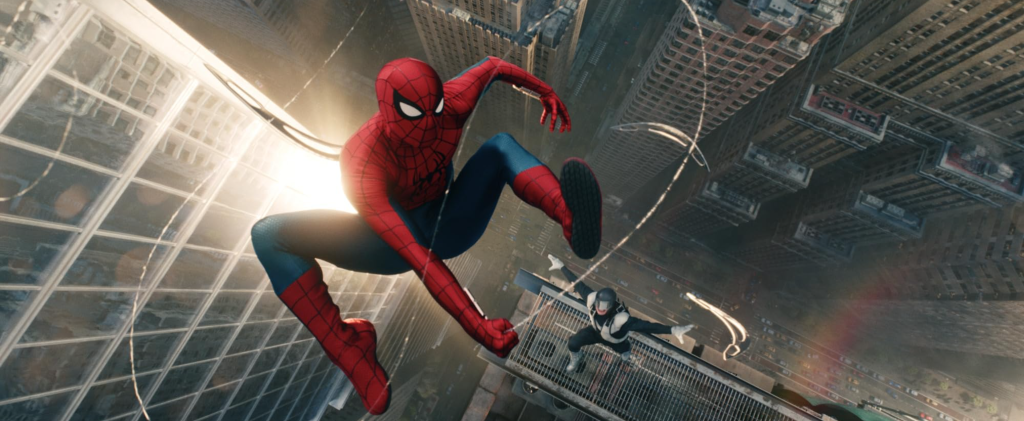
It’s now unquestionable: Spider-Man is the most popular character in the history of pop culture. Peter Parker and his adventures have resulted in the sale of more than 360 million comic books since his creation in 1962. In 2002, the original Spider-Man picture with Tobey Maguire was the first movie to make $100 million in its first weekend in America. Brand New Day, the fourth to star Tom Holland since Homecoming in 2017, followed in the original’s footsteps by setting the all-time domestic weekend record with $360 million.
The second-most popular fictional icon of all time is James Bond. The Bond movies have made $7 billion. By the fall, Brand New Day will finish its theatrical run with more than $2 billion in its coffers. Add up the films featuring the three different live-action Peter Parkers (Holland, Maguire, Andrew Garfield) and the animated Miles Morales of the two Across the Spider-Verse cartoons and you get nearly $14 billion, or double the take of James Bond.
There’s never been anything like Spider-Man. Ever. Given that he battles and is batted about by magical aliens and the like, you might even say Peter Parker is the Odysseus of our time, only he’s a nice boy from Queens—and, like most superheroes from comic books, culturally Jewish like his creators even if he is not portrayed as such—who’s been bitten by a spider and given strange abilities as a result.
Peter finds himself tasked with the responsibility of saving New York from bad guys even as he struggles to finish high school and college, to support himself and his widowed aunt as a freelance photographer, and to keep one step ahead of the cops and the cynical newsmen who are determined to portray him as a villain rather than a hero. He’s broke, he’s often lonely, and—this may be the quality that differentiates him from other superheroes—he’s genuinely frightened and unsure when he must face down a hyper-powered bad guy.
The genius of the Spider-Man conceit is that it both fulfills the dreams and nightmares of every solipsistic adolescent boy: on the one hand, being the most important person in the universe, and on the other being burdened by the responsibilities of being the most important person in the universe.
The problem with Brand New Day is that Tom Holland is 30 years old now and can’t play a teenager any longer. So here Peter has been aged up to 23. His problems can’t be immaturity and inexperience, as they were in the earlier movies. Instead, the movie centers his conflict around loss.
The death of his beloved aunt has left him without family, and a magic spell cast at the end of the last movie (No Way Home) has stripped the world of any memory of Peter Parker. So he has lost all his friends and his beloved, the wisecracking deadpan MJ (Zendaya, incandescent). Even his fellow Avengers have no idea who he is; it’s painful to watch him encounter Bruce Banner aka the Hulk (played as ever by the repulsive antisemitic piece of shit Mark Ruffalo, who is unfortunately a good actor) and see not a glimmer of recognition.
The only person with whom he seems to have a genuine relationship is Frank Castle (Jon Bernthal)—a non-superpowered Marvel character known as the Punisher who is an occasional ally and an occasional antagonist. Bernthal and Holland are hilarious together, and their bickering is the comic highlight of a movie that could use more comic beats. The only other moments of lightness are provided by Florence Pugh in her third go-round as a Russian assassin-turned-Avenger. She is as delightfully funny in this as she was in Black Widow and Thunderbolts.
Brand New Day explores Peter’s loneliness and the changes in his body that mirror his move from adolescence to adulthood. It has its moments in this regard, but suffers by comparison to the more touching and more original way these matters were handled in Spider-Man 2 back in 2004. Holland is a far better Spider-Man than Tobey Maguire was, but none of the Holland movies is anywhere near as good as Spider-Man 2, my candidate for the best superhero movie ever made.
Naming this movie Brand New Day is almost cynical on the part of Marvel, since it’s actually an effort to alter the course of Marvel’s downward trajectory over the past couple of years—it’s a Re-Brand New Day, really. That is made clear by the movie’s nominal villain, a mysterious mind-controlling telepath who can inhabit other bodies and chases Peter around by jumping from person to person bedeviling him. It turns out (spoiler alert) she’s Jean Grey, who is one of the X-Men—a group of teenage Marvel mutants who also debuted in the comics in the 1960s.
The firstX-Men movie, released in 2000, inaugurated the era of the Superhero Comic Movie. For reasons relating to rights, this is the first time an X-Men character has played a major role in a Marvel movie, and Jean Grey’s appearance here is clearly designed to begin the integration of the X-Men into the next phase of the Marvel Cinematic Universe that will kick off at Christmastime with Avengers: Doomsday.
Sadie Sink, who plays Jean, was more memorable as the tormented Max in the Netflix phenomenon Stranger Things, and just doesn’t quite have it in her to project power and menace.
Audiences are telling the polling firm CinemaScore that they love Brand New Day; it got an A on its scale. I liked it. I found it interesting and involving and Holland remains a knockout. (For the record, I liked him as Telemachus in The Odyssey, but that seems to be a controversial opinion.) It’s not as fun as the previous three Holland movies. But it’s fun enough.
