

Published date
07/09/2026 – 08:02
Courses
Diggit internship, track Children’s LiteratureCopyright
This work is licensed under a Creative Commons Attribution-NonCommercial 4.0 International License.
No AI was used in the creation of this content. More info: https://creativecommons.org/ai-and-the-commons/
Read time
21 minutes
On this page
Introduction
In December 2024, a mass of comments appeared on a video Young Adult (YA) author Victoria Aveyard posted to her TikTok page. The comments alleged that with her YA novel Red Queen, Aveyard had plagiarized another YA novel, Powerless by Lauren Roberts.
The problem with these accusations? Red Queen was released in 2015—eight years before Powerless came out in 2023. So, that Red Queen plagiarized Powerless was a baseless claim. Many TikTok users were quick to point this out, commenting on Aveyard’s video to explain the two publication timelines. These conversations expanded beyond Aveyard’s comments section to videos on TikTok and later YouTube. Although some bookish content creators focused on comparing the textual qualities of Red Queen and Powerless, a significant portion focused on the social media event itself. Bookish content creators framed the swell of false plagiarism accusations on Aveyard’s video as emblematic of broader issues with book publishing and reception practices conducted through TikTok.
Using the lens of anti-fandom, this article examines what the initial swell of comments on Aveyard’s profile and the reaction content it inspired across TikTok reveal about contemporary BookTok reception practices. In doing so, it demonstrates that comments are an influential, yet underexamined, component of the BookTok ecosystem, as BookTok research overwhelmingly prioritizes the analysis of videos.
Background
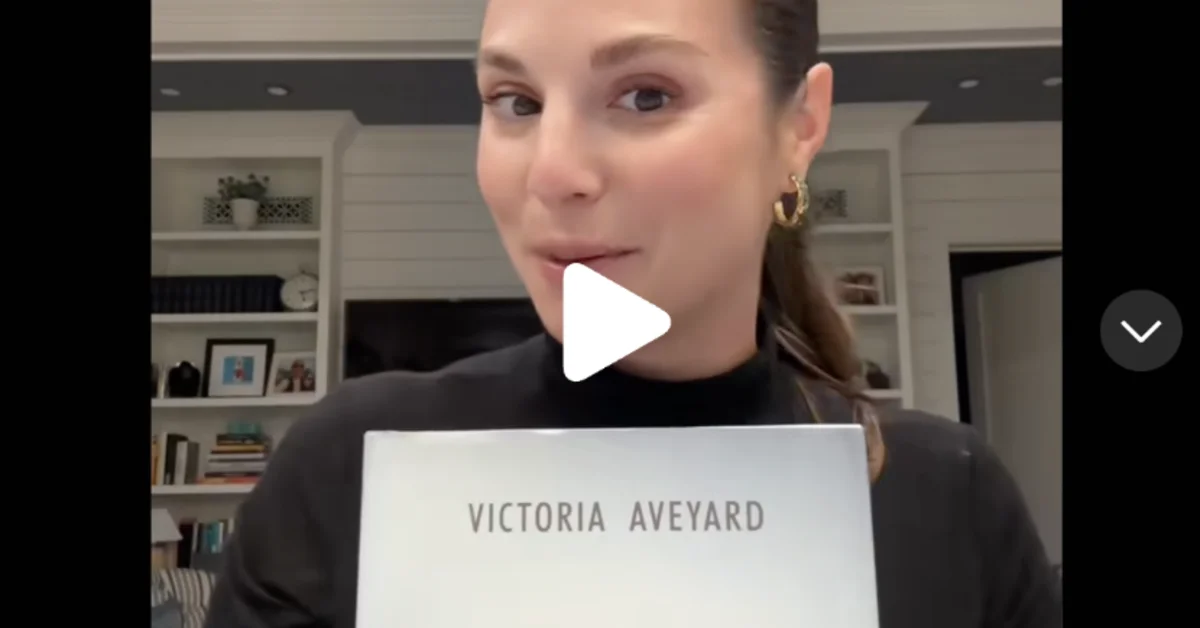
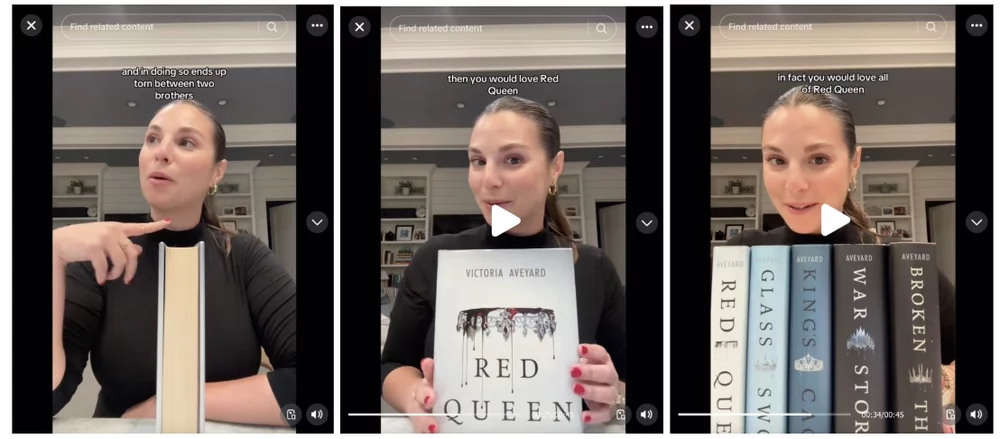
Lauren Roberts’ novel Powerless was released in early 2023. Occasional videos about the similarities between Powerless and Red Queen popped up on TikTok and YouTube over the following two years, generally focused on the books’ textual qualities (I’m Talking Waffles, 2024; L.A.M.E. Book Club Podcast, 2024; Mal, 2024; Richardson, 2024). However, tensions between Red Queen and Powerless fans came to a head in December 2024, when Aveyard posted a 45-second TikTok video promoting her YA dystopian fantasy series Red Queen. The four-book series was released between 2015–2018. In the video, Aveyard sits at a table with a book in front of her, turned so the spine and cover are hidden from the camera. “Would you read a young adult dystopian fantasy about…” she asks her viewers, then summarizes the book’s premise. Aveyard informs the viewer, “If you said yes, then you would love Red Queen.” She rotates the book in front of her to display the cover, then pulls four more books into the frame to indicate it is a full series (Aveyard, 2024).
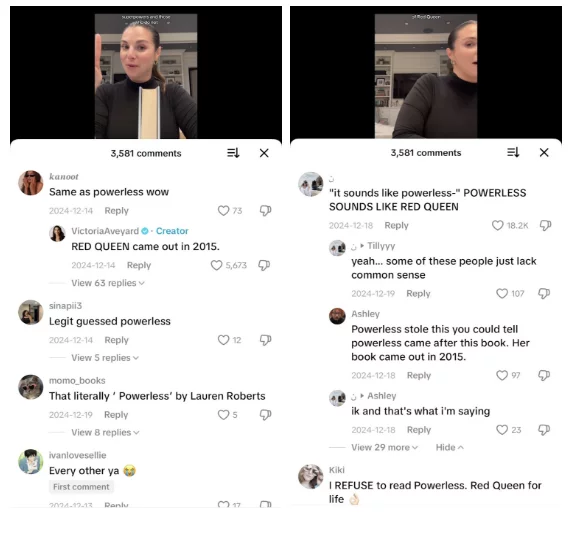
The comments section underneath Aveyard’s video quickly filled with claims that the plot summary sounds extremely similar to Powerless by Lauren Roberts. Aveyard replied to one of these comments—reading “Same as powerless wow”—with the simple statement: “RED QUEEN came out in 2015.” Other TikTok users were quick to come to Aveyard’s defense, similarly pointing out the publication timelines and stressing that Red Queen could not have plagiarized Powerless; if anything, Powerless plagiarized Red Queen. Within two days, the comments section filled with defenses of Aveyard highlighting the prior existence and originality of the Red Queen series, outnumbering the negative comments from Powerless fans (Rodriguez Wallach, 2024). As a note on the complexities of BookTok research, this history would have been impossible to determine simply from looking at Aveyard’s video and the comments section today; my understanding of this timeline was fleshed out through watching several reaction and summary videos posted by BookTok creators at the time the incident occurred in 2024.
Notably, comments on the video were frequently directed toward other commenters—by claiming to speak to Red Queen or Powerless fans or haters— just as much as comments on the video were directed toward Aveyard directly. In this way, Aveyard’s TikTok profile extended from “a site of self-representation” to also become “a place where people gather to converse and share” (boyd, 2010, p. 43). As boyd (2010) illustrates in her analysis of networked publics on social media sites, “Comments are not simply a dialogue between two interlocutors, but a performance of social connection before a broader audience” (p. 45). Thus, although it can be tempting to write off the influx of demonstrably false comments under Aveyard’s page as a form of trolling, envisioning the comments under Aveyard’s video as social performances in front of a broad audience points to the utility of analysing them.
In the following sections, I will further argue for the importance of examining comments in BookTok and analyze the reactions this swell of comments prompted in response videos on TikTok. Many reactions were posted within the same month as the inciting incident; however, content related to Red Queen–Powerless tensions continues to be posted on bookish platforms over a year later.
With examples from this paper’s case study, I put forth two reasons that (negative) comments on BookTok are important to study: their reach and their status as a practice of (anti-)fandom.
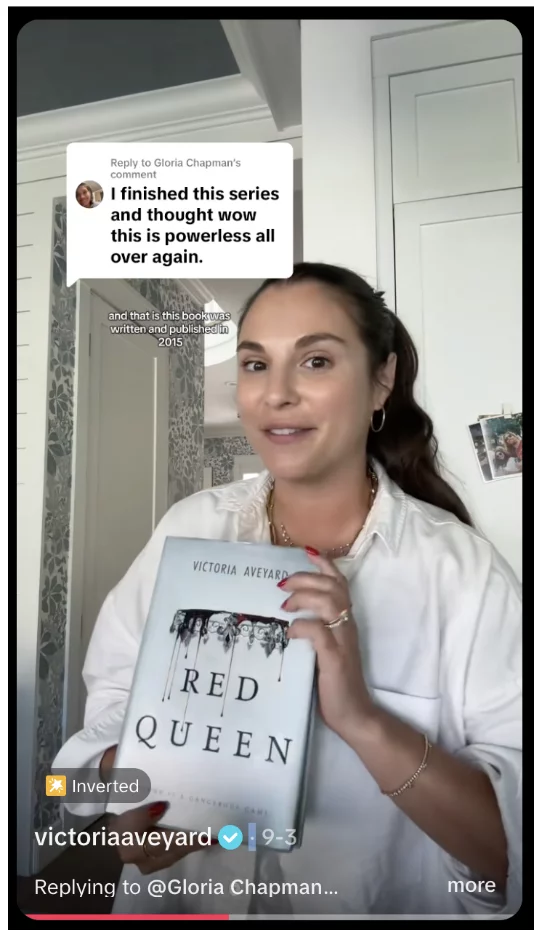
First, reach. The comments on BookTok videos do not stay confined to the comment section of the particular video they are posted on. They spread across TikTok in a way that is markedly different from comments on the bookish subcultures of Instagram and YouTube, Bookstagram and BookTube, making them more influential than comments on either of these platforms. One major contributing factor is a TikTok feature that allows a user to reply to a comment by creating a video, causing the original comment to appear as a small box onscreen. For example, in a September 2025 video, Aveyard uses this feature to reply to a reader’s comment accusing Red Queen of feeling like “powerless all over again.” The comment is visually displayed next to Aveyard’s head while she states, “I’m just going to say the thing I always say, the only thing I can say when I get a comment like this. And that is, this book [Red Queen] was written and published in 2015. … Stop saying this to me. It is so frustrating” (Aveyard, 2025). Thus, comments are recirculated directly in TikTok videos in a way not done in bookish content on YouTube or Instagram. This is an example of how BookTok practices are influenced by the platform’s affordances (Owens and Kulkarni, 2025) and explains why comments are a more influential force on BookTok than other online bookish platforms.
In addition, other BookTokers made both playful and serious video content about the onslaught of comments on Aveyard’s page, highlighting how BookTok comments are further made meaningful through users’ memes and continuing discussion. The approximately ten-second videos by Marie (2024) and McKenna (2024) exemplify the short, humorous content that proliferated on BookTok in the wake of the mass commenting event on Aveyard’s page. These videos overlay a trending, comedic sound with written text that connects the joke framework to the incident at hand.
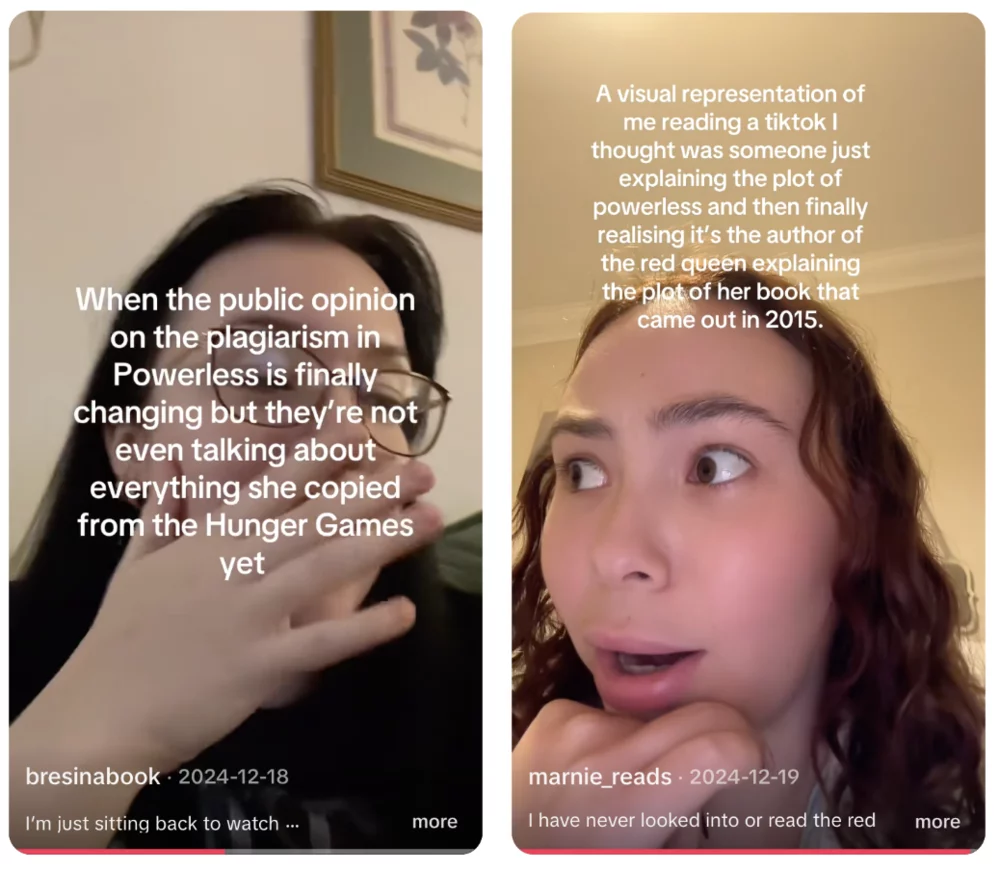
Other BookTok users posted videos of thirty seconds to four minutes in which they discussed the news of and presented their opinion on the mass commenting event on Aveyard’s page (examples of which are discussed in the next section). These conversations spread to other platforms, such as through video essays on YouTube (Book Chats with Shelley, 2024; Listen2Kristen, 2025; Meredith Novaco, 2025), further amplifying the impact of comments made on BookTok videos.
The second reason comments are important to study on BookTok is how they operate as a site of fandom, and more importantly, anti-fandom practices. Anti-fandom theory is underexamined in fan studies generally (Click, 2019), including in studies of BookTok, which have thus far tended to prioritize how positive affect and book love drive circulation (Dezuanni et al., 2022; Martens et al., 2022; Owens and Kulkarni, 2025; Reddan, 2022). But, as Gray (2019) highlights, “anti- fandom can tell us a great deal about people’s expectations and hopes of the media” (p. 35). In this paper’s case study, that applies both to people’s expectations and hopes for books as well as people’s expectations and hopes for BookTok content. Thus, studying anti-fandom as performed through BookTok comments can provide valuable insight.
What readers value in books and BookTok
As a form of anti-fandom, the accusational plagiarism comments and the reactions to them tell us about what (different) people value (differently) in books and BookTok content. In commenting dismissively under Aveyard’s videos that her books sounded like Powerless, the Red Queenanti-fans model a version of what Gray (2019) calls “competitive anti-fandom,” in which “dislike … is directed at a perceived rival of one’s beloved fan object” (p. 26). Gray suggests that it is helpful to ask “about the choice of rival, what this says about the beloved object that is being ‘defended,’ and what perceived threat exists to the beloved object in the first place” (pp. 26–27). The “threat” that Red Queenanti-fans perceived to the “beloved object” Powerless (and beloved author, Roberts) was simple, if erroneous: another author was trying to sell a knockoff version of their prized book. This specific anti-fandom commentary against Red Queen, accusing it of plagiarism or copycatting, was only published through comments underneath Aveyard’s TikTok videos; I found no examples of TikTok videos in which this opinion was professed. I suspect this is because no BookTok user wanted to voice a claim on their own page that was so easily disproven through simply referring to the respective publication dates of the two novels. Making this claim in the comments section could afford them anonymity, or, even if their username was attached to the comment, shelter them from widespread backlash as they became but one voice in the chorus of hundreds of comments underneath Aveyard’s video.
This contrasts with the behaviors of the Red Queendefenders, who can also be understood as Powerlessanti-fans. In addition to stating their claims in the comments sections of Aveyard’s videos, Powerlessanti-fans made independent videos elaborating on their opinions. In this section, I analyze four examples of these longform TikTok reaction videos published after the mass comments on Aveyard’s post. While these users certainly displayed a form of “competitive anti-fandom” by defending the “beloved object” Red Queen against the “choice of rival,” Powerless, the Powerlessanti-fans spent more time in their videos articulating a version of “anti fans anti-fandom,” directing their ire toward “fansof the nominal anti-fan object, rather than to the object” (Gray, 2019, p. 32, emphasis in original). What emerges in their “anti fans anti-fandom” commentary is a central concern with the changing conditions of book production and reception or critical evaluation advanced by BookTok.
Importantly, Powerless was a fannish project born on TikTok. When she was eighteen years old, Roberts began posting videos on her TikTok page, @laurenrobertslibrary, about an idea she had for a YA romantasy book. In several videos, she stated that she envisioned the book as a mashup of the worldbuilding of The Hunger Games and Red Queen, with the main characters acting out all of her favorite fantasy and romance tropes. Two years later, in 2023, Roberts self-published the novel, Powerless. Due to the enthusiasm of her TikTok followers, the title skyrocketed to #4 on the Barnes & Noble list within one day. Shortly after, Simon & Schuster acquired the rights to Powerless and signed Roberts for a three-book deal (Dam, 2023). One example of how Powerless’ TikTok roots pushed forward its success is that the book garnered a flood of five-star Goodreads reviews before it had even been released, because when documenting her writing and self-publishing journey for her TikTok audience, Roberts excitedly informed her followers that she had added her book title to the Goodreads page (Roberts, 2021). While the phenomenon of “review-bombing,” or flooding a Goodreads title with 1-star reviews as part of a frenzied social media campaign against an author for extra-book reasons or even as part of an extortion scam, has been observed over the past several years, the spamming of five-star reviews from Roberts’ loyal TikTok audiences departs from this trend because of how it seeks to uplift the book and author at hand (McCluskey, 2021; Zarroli, 2023). This highlights how BookTok is causing new shifts in bookish fandom cultures that extend far beyond its platform. A passionate Powerless fanbase continued to grow on BookTok as Roberts promoted her novel and released two sequels.
For BookTokers who made content defending Red Queen, one perceived threat, to use Gray’s framing, was the popularity of the BookTok-born Powerless overtaking the popularity — and thus commercial success and perhaps author career prospects — of the traditionally published Red Queen. As a striking example of how Powerless has bested Red Queen in TikTok-popularity-cum-commercial success, Powerless has been signed for a television deal with Amazon’s Prime Video streaming service, while a proposed television deal for Red Queen with the streaming service Peacock has been under discussion since 2021 (Andreeva, 2025; Lennon, 2025). In reaction videos to the onslaught of comments on Aveyard’s page, some video makers display a sense of injustice about Powerless overtaking Red Queen in commercial success, and use their platforms to highlight how in their eyes, Powerless underperforms in literary quality compared to Red Queen. Content about Red Queen and Powerless often cites not only Red Queen’s publication date but facts about or references to Aveyard’s overall, decade-long plus career as an author, implicitly or explicitly pointing to her status as a traditionally published author. In bringing up this information, the video makers tend to draw on “anti fans anti-fandom” framing by indicting Powerlessfans for failing to make themselves aware of these basic facts about the books and authors before they slung accusations of plagiarism and copying at Aveyard.
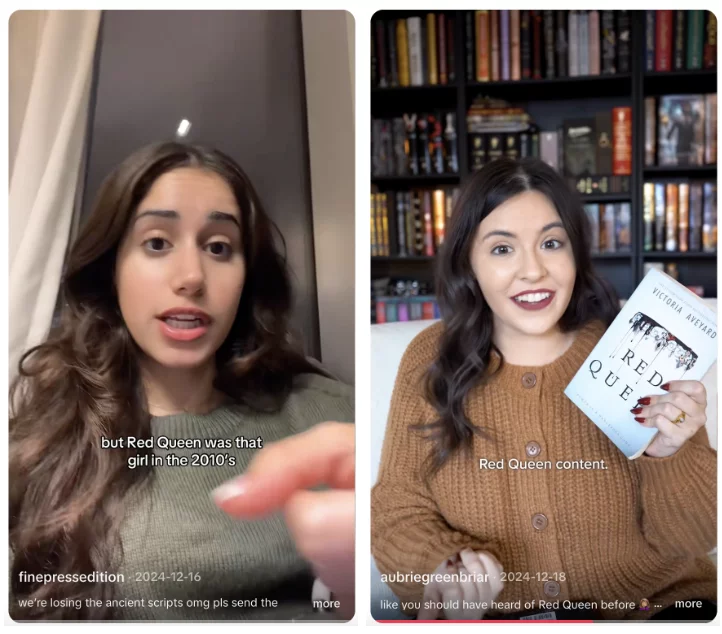
For example, in a conversational five-minute video captioned in part, “we’re losing the ancient scripts,” TikTok user Fine Press (2024) reminds her viewers of Red Queen’s beloved status in the YA community. She shares her personal experiences reading Red Queen and witnessing its popularity among peer teenage readers in the 2010s. She reminisces about her friends passing a copy of Red Queen between them when they were thirteen in school and how they all excitedly read the second book in the series on its release day. Her emphasis on the word-of-mouth popularity of Red Queen at her school, in addition to repeated claims that Red Queen was at “the top of the game” of 2010s YA, draw attention to the fact that Red Queen was commercially successful before BookTok existed.
With this backdrop established, Fine Press turns to the mass commenting incident: “[So] the fact that people are going into Victoria Aveyard’s comments, talking about Red Queen — THE BLUEPRINT — Red Queen sounding like a ‘copy of Powerless’?” she says in an incredulous tone. “I can’t even fathom.” Her use of the word “blueprint” to describe Red Queen indicates the value Fine Press places on the originality of the book. Shortly after, Fine Press reiterates her dislike of users who have “disrespect[ed]” Victoria Aveyard through the comments accusing Red Queen of being similar to Powerless. She insists: “Put some respect on her name. … You don’t know the lore…. Read what you wanna read, enjoy what you wanna read, but put some respect on the titans of YA, okay?” Fine Press (2024) contrasts her high opinion of Red Queen, which she views as “the pinnacle of 2010s YA,” with her low opinion of Powerless, which she describes as reading like “an AI-generated idea of what people who read Red Queen and grew up in the … golden era of YA in the 2010s would like to read.” Here, Fine Press frames Powerless as a derivative of Red Queen, and moreover, implicitly connects Powerless to an unfavorable view of BookTok-driven writing and reviewing practices by comparing it to “AI-generated slop.” Without making explicit reference to the different career trajectories of the two authors, Fine Press (2024) positively frames resounding success of Aveyard’s Red Queen series off of BookTok and labels Aveyard a one of the “titans of YA” while negatively framing the commercial accomplishments of Powerless achieved through BookTok.
Whereas Fine Press (2024) emphasizes Red Queen’s offline success, TikTok user Greenbriar (2024) takes a different approach, emphasizing Red Queen’s popularity on BookTok prior to Powerless’ release. In her tidily shot and edited thirty-seven second video, Greenbriar begins, “At this point, you’ve probably heard that Victoria Aveyard is being accused of plagiarizing Powerless, even though Powerless came out in 2023 and Red Queen came out in 2015.” This starting comment again underscores the extent to which the comments on Aveyard’s profile circulated through BookTok in December 2024 and incited fandom and anti-fandom practices among Red Queen and Powerless readers; Greenbriar assumes her viewer has “probably heard” about the incident. Greenbriar proceeds to illustrate a forgotten chapter of BookTok history to her viewers. “I feel like no one’s even talking about the fact that Red Queen WAS popular on BookTok,” she says emphatically. “Back in 2020, if you were on BookTok, you were seeing Red Queen content. You were hearing about the ending of this book.” Like Fine Press, Greenbriar expresses dislike that TikTok users who commented negatively on Aveyard’s page are ignorant of the high status that Red Queen holds among much of the YA community, indicating a deeper apprehension about the implications of Powerless’ popularity for authors and readers.
For these BookTokers, the behavior of Powerlessfans is worrying for what it portends for discussions on BookTok broadly. As articulated in multiple videos, the worry is not other fans disliking the series Red Queen, but other fans basing their dislike on a false statement and a misperception of chronology. During her robust defense of Red Queen, Fine Press (2024) draws attention to the fact that Red Queen brought “something new to the table” in 2010s YA, and other texts have since emulated its structure and template, to the point that readers encountering Red Queen for the first time today might think it sounds familiar to other texts they’ve read. But, Fine Press (2024) stresses, Red Queen was one of the originators of the now-familiar structure and template, not a derivative version of it.
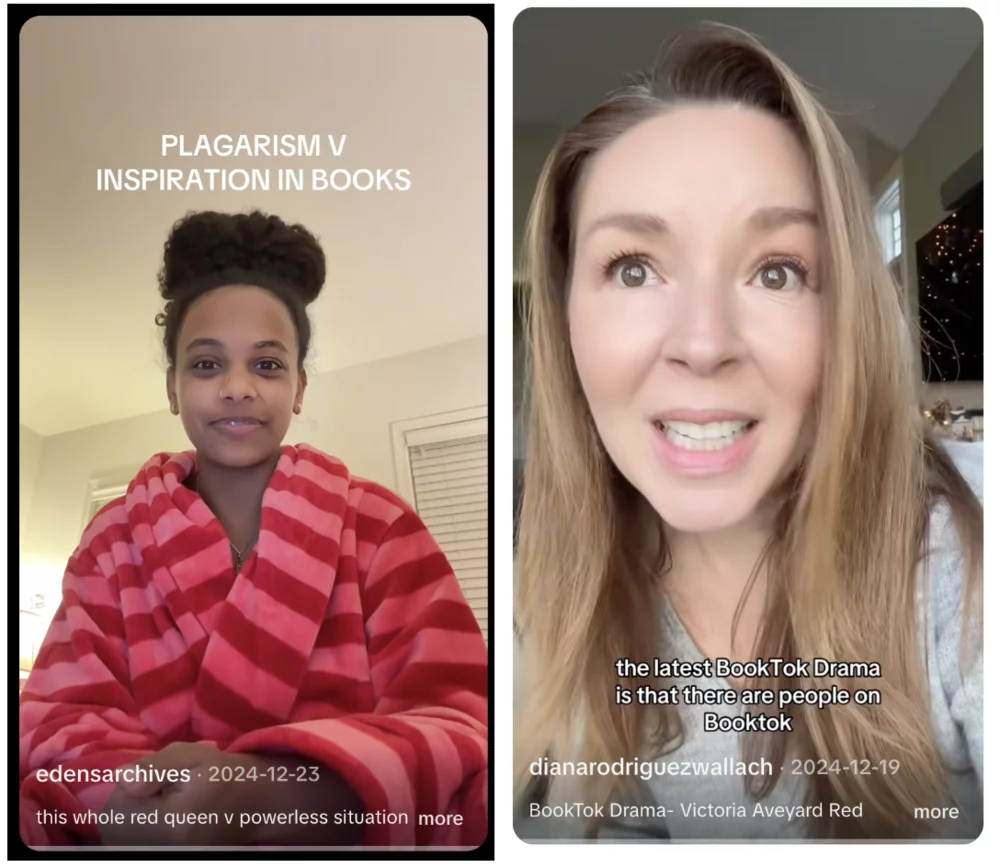
A similar concern of how TikTok chronologies impact new readers’ reception of old texts appears in Eden’s (2024) three-and-a-half minute video focused on “plagiarism versus inspiration” in the context of the Aveyard mass commenting incident. First, Eden clearly indicates how vexed she is with the social media event, as she notes that “this whole conversation [of plagiarism versus inspiration] was sparked on BookTok specifically because some whackos went into Victoria Aveyard’s comments section.” After providing definitions of plagiarism versus inspiration and speaking about why she doesn’t find Powerless to be original enough for her to enjoy reading it, Eden pivots to the broader reading community’s responsibility. She insists, “we as readers need to be a little bit more critical when we are observing similarities between the stories that have previously existed and new stories that are being created. … let’s not accuse people of stealing when they were the original.”
Another creator, Rodriguez Wallach (2024), expresses a similar frustrated concern in her one-and-a-half minute recap of, as she calls it, “the latest BookTok drama.” After summarizing the comment storm on Aveyard’s page, Rodriguez Wallach bemoans that the sheer volume of uninformed commenters accusing Red Queen of being too similar to Powerless under Aveyard’s video makes her “question …. the reading comprehension skills of people who [claim they] love to read.”
The videos analyzed in this section demonstrate how BookTok users are actively engaged in discussions of how judgements are made on TikTok and evaluating the utility of BookTok reception practices. These users took the seed of the unfactual comments on Aveyard’s video and spun it into broader reflections on BookTok culture. The TikTok users responding to the inciting plagiarism comments presumably enjoyed the labor of creating their content (Gray, 2019) and perceived a value in constructing a discussion around the social media event on Aveyard’s page. The fans studied here do not base their opposition to Powerless on the mere fact that it is mainstream, one prominent form of anti-fandom identified by Gray (2019, p. 34), but use the details of the Powerless fan comments to articulate their opinions about how readers should critically engage with books.
Warped temporality on BookTok
Fan comments and videos about Powerless and Red Queen point to the surprising effects the non-linear nature of reception on BookTok can have on the book publishing industry. It has already been well-documented how BookTok has warped temporality in book publishing practices by revitalizing backlist titles several years after their publication, such as the sales spikes for Colleen Hoover’s It Ends With Us or Adam Silvera’s They Both Die at the End (Barnett, 2023; Stewart, 2021).
However, this paper’s case study illustrates a previously unexamined angle: the negative influence BookTok might have on previously published titles. As response videos to the mass commenting event on Aveyard’s page pointed out, commenters who accused Red Queen of being too similar to Powerless not only ignored the basic fact that Aveyard’s book came prior to Roberts’ and thus could not have plagiarized it, but displayed their ignorance as to the popular success of Red Queen in YA community circles prior to BookTok and on BookTok in 2020. The initial comments and the video reactions they prompted thus illustrate how books that go viral on TikTok can induce a sense of warped temporality in fans. Some readers who encountered Powerless before they encountered Red Queen, either through BookTok content or through reading the book itself, reacted to the plot summary video of Red Queen that came across their For You Page with negativity and unhappiness. In their brief comments, these users placed no value on the publication timelines of the books; instead, the framework that structured their response was the timeline of their personal reading journey. This raises questions about how newly published books going viral on BookTok will impact the reception of previously published book titles, especially titles in the same genre. In addition, it raises questions about how young readers who construct a bookish or readerly identity primarily through BookTok will come to think about non-BookTok popular books.
Conclusion
In this paper, I have analyzed BookTok commentary about the Young Adult novels Powerless (2023) and Red Queen (2015) as anti-fandom practices. As part of this analysis, I frame TikTok profiles as not just sites of self-representation for the video creator, but as places where people can gather and communicate in front of an audience through comments (boyd, 2010).
Tracing expressions of anti-fandom in TikTok comments and videos related to the YA novels Powerless (2023) and Red Queen (2023) reveals two main points of interest. Using Gray’s (2019) framework, this paper demonstrates that analyzing anti-fandom practices helps to elucidate the broader issues that are at stake for fans when they defend “beloved objects” against a “choice of rival” and criticize the behavior of other fan communities. For Powerless fans, also understood as Red Queenanti-fans, their choice to make Red Queen the “rival” and dismiss it by accusing it of being too similar to Powerless illustrates a phenomenon of warped temporality on BookTok. TikTok users that commented negatively under Aveyard’s video description of Red Queen placed a higher value on the story they encountered first on BookTok, and used this first discovery to frame their reception of other books, including books that were published earlier. The way that BookTok virality of new books might negatively impact previously published books in this manner has not yet been examined in BookTok research. Meanwhile, videos by Red Queen fans, also understood as Powerlessanti-fans, defending Red Queen against accusations of plagiarism highlight how some BookTok users are concerned about and wish to intervene in the changing conditions of book reception on BookTok. A key topic of conversation for these users was the line between inspiration and plagiarism in literary works. The blurriness of this line has only grown more prounced in the era of publicly available Large Language Models (LLMs). Across literary categories, authors, readers, and companies are contesting what counts as plagiarism or copyright infringement versus original productions when generative AI models become involved (Alter, 2026; Powelson, 2023; Milmo, 2026). While some authors and readers embrace generative AI in literary production, others view it in a derogatory manner. A derogatory attitude about AI in literature is espoused, for example, by Fine Press (2024) in her TikTok video, when she articulates her distaste for Roberts’ writing styleby saying that Powerlessreads like “an AI-generated” text derived from the “golden era” YA texts in the 2010s. As debates about the role of AI in literary production continue, it will be worthwhile to pay attention to how BookTok users’ critical and evaluative frameworks incorporate differing ideologies related to AI use in literature.
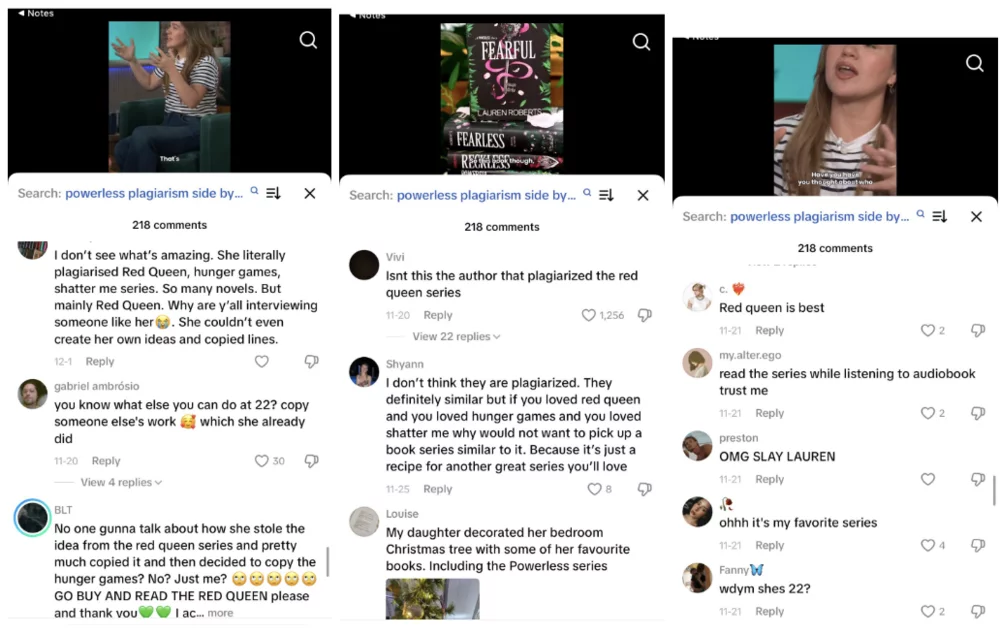
Although this paper focused on the inciting mass commenting incident under Aveyard’s page in December 2024 and video reactions posted immediately afterward, this incident has continued to have a long arc on and off TikTok, with both Powerlessanti-fans and Red Queenanti-fans continuing to post online content. For example, in November 2025, the Kelly Clarkson Show posted a clip on its TikTok page featuring Lauren Roberts promoting the Powerless series. Although Red Queen was not mentioned in the video, commenters drew attention to the comparison between Red Queen and Powerless, referencing the BookTok discourse that was stirred up in December 2024. In particular, Powerlessanti-fans made comments such as, “I don’t see what’s amazing. She literally plagiarised Red Queen”; “Isnt [sic] this the author that plagiarized the red queen series”; “Red queen is best”; and “you know what else you can do at 22? copy someone else’s work [hearts around blushing face emoji] which she already did.”
Meanwhile, Red Queenanti-fans continue to plague Aveyard. In a January 2026 TikTok video, a frustrated Aveyard stated that she continues to receive comments decrying Red Queenas an imitation of Powerless“almost every day across all my social media platforms.” Aveyard said she would repeat what she “always say[s]” when receiving such comments. Displaying a tenth anniversary edition of the Red Queenboxed series, she pulled out the books one by one and modeled the covers to the camera as she spoke: “I am emphasizing tenthanniversary because [these books] came out in 2015—2016—2017—you see where I’m going with this—2018— and 2019.” In a saccharine tone, she concluded: “I hope that was informative. I hope you are nicer to artists on their platforms, on social media. And I hope a lot of you guys learn how to use Google.” It is clear that the repeated Red Queenanti-fan comments, based on a false chronology, are upsetting to Aveyard. And it is notable that the Red Queenanti-fan commentary is perpetrated almost exclusively through the comments sections on her TikTok as well as other social media platforms. This underscores the significance of and need for further research on how comments spark and maintain anti-fandom practices on BookTok.
This paper focused on fan-generated TikTok videos concerning the accusational comments posted to Aveyard’s page. Future research on Aveyard’s direct and indirect responses to the incident could shine intriguing light on how changing BookTok reception practices are impacting authors.
References
Alter, A. (2026, March 19). A.I. Is Writing Fiction. Publishers Are Unprepared.The New York Times. https://www.nytimes.com/2026/03/19/books/ai-fiction-shy-girl.html
Andreeva, N. (2025, June 5). ‘Powerless’ TV Series Based On YA Fantasy Books In Works At Amazon From ‘Maxton Hall’s Daphne Ferraro. Deadline. https://deadline.com/2025/06/powerless-series-amazon-lauren-roberts-daphne-ferraro-1236423786/
Aveyard, V. [@victoriaaveyard]. (2024, December 13). So let me tell you about RED QUEEN [Video]. TikTok. https://www.tiktok.com/@victoriaaveyard/video/7447914258299358506
Aveyard, V. [@victoriaaveyard]. (2025, September 3). Replying to @Gloria Chapman let’s do better gang [Video]. TikTok. https://www.tiktok.com/@victoriaaveyard/video/7545983035376782605?_r=1&_t=ZT-92DkKFStTA5
Aveyard, V. [@victoriaaveyard]. (2026, January 16). Replying to @A🤍#Inverted just another day being an author on social media. TikTok. https://www.tiktok.com/t/ZTBujeusa/
Barnett, D. (2023, August 6). ‘I can’t stress how much BookTok sells’: teen literary influencers swaying publishers. The Guardian. https://www.theguardian.com/books/2023/aug/06/i-cant-stress-how-much-booktok-sells-teen-literary-influencers-swaying-publishers
Book Chats with Shelley. (2024, December 22). The problem with booktok: The Powerless + Red Queen booktok drama [Video]. YouTube. https://www.youtube.com/watch?v=JeG1PVW1lpc
boyd, d. (2010). Social Network Sites as Networked Publics: Affordances, Dynamics, and Implications. In Z. Papacharissi (Ed.), A Networked Self: Identity, Community, and Culture on Social Network Sites (pp. 39–58). Routledge.
Click, M.A. (2019). Introduction: Haters Gonna Hate. In M.A. Click (Ed.), Anti-Fandom: Dislike and Hate in the Digital Age (pp. 1–24). New York University Press.
Dam, J. (2023, November 7). EXCLUSIVE INTERVIEW: Lauren Roberts On TikTok, Tropes, And Her Debut Novel Powerless.The Honey Pop. https://thehoneypop.com/2023/11/07/exclusive-interview-lauren-roberts-on-tiktok-tropes-and-her-debut-novel-powerless/
Dezuanni, M., Reddan, B., Rutherford, L., & Schoones, A. (2022). Selfies and shelfies on #bookstagram and #booktok – social media and the mediation of Australian teen reading. Learning, Media and Technology, 47(3), 355–372. doi: 10.1080/17439884.2022.2068575.
Eden. [@edensarchives]. (2024, December 23). this whole red queen v powerless situation was making my a** itch! #booktok [Video]. TikTok. https://www.tiktok.com/@edensarchives/video/7451404160890752302?_r=1&_t=ZT-92BwhDy3LrR
Fine Press. [@finepressedition]. (2024, December 16). we’re losing the ancient scripts omg pls send the flood 💔 i cannot be having a “kids these days” moment [Video]. TikTok. https://www.tiktok.com/@finepressedition/video/7449131863060253968?is_from_webapp=1&sender_device=pc
Gray, J. (2019). How Do I Dislike Thee? Let Me Count the Ways. In M.A. Click (Ed.), Anti-Fandom: Dislike and Hate in the Digital Age (pp. 25–41). New York University Press.
Greenbriar, A. [@aubriegreenbriar]. (2024, December 18). like you should have heard of Red Queen before 🤦🏽♀️#booktok #bookmeme #powerless #redqueen [Video]. TikTok. https://www.tiktok.com/@aubriegreenbriar/video/7449865749969079598?_r=1&_t=ZT-92BwRu3S8zO
I’m Talking Waffles. (2024, May 25). POWERLESS is a copy of Red Queen & The Hunger Games [Video]. YouTube. https://www.youtube.com/watch?v=pluQF3glfEM
Kelly Clarkson Show. [@kellyclarksonshow]. (2025, November 20). Lauren Roberts teases what’s next in the #Powerless series! 👀#booktok #fearless #bookish [Video]. TikTok. https://www.tiktok.com/@kellyclarksonshow/video/7574968300082334989?_r=1&_t=ZT-92By7iXpaaE
L.A.M.E. Book Club Podcast. (2024, October 7). Powerless vs. Red Queen: Uncovering the Shocking Truth [Video]. https://www.youtube.com/watch?v=Y-bGakyz2a0
Lennon, M. (2025, July 15). 10 fantasy book adaptations seemingly stuck in development hell. Winter Is Coming. https://winteriscoming.net/10-fantasy-book-adaptations-seemingly-stuck-in-development-hell
Listen2Kristen. (2025, January 16). Should Powerless be SUED for copying Red Queen? [Video]. https://www.youtube.com/watch?v=5z7rRDHXD64
Mal. [@bookswithmal]. (2024, July 6). Not to mention that kitt power is literally fire #BookTok #books #bookish #victoriaaveyard #redqueen #powerles #laurenroberts #greenscreen [Video]. TikTok. https://www.tiktok.com/@bookswithmal/video/7388554917746593066?_r=1&_t=ZT-92By2Q75A2B
Martens, M., Balling, G., & Higgason, K. (2022). #BookTokMadeMeReadIt: young adult reading communities across an international, sociotechnical landscape. Information and Learning Sciences, 123(11/12), 705–722. doi: 10.1108/ILS-07-2022-0086.
Marie, B. [@bresinabook]. (2024, December 18). I’m just sitting back to watch #victoriaaveyard #powerless #redqueen [Video]. TikTok. https://www.tiktok.com/@bresinabook/video/7449529894683462958?is_from_webapp=1&sender_device=pc
McCluskey, M. (2021, August 10). How Extortion Scams and Review Bombing Trolls Turned Goodreads Into Many Authors’ Worst Nightmare. TIME. https://time.com/6078993/goodreads-review-bombing/
McKenna, M. [@marnie_reads]. (2024, December 19). I have never looked into or read the red queen series so i had no idea but when i saw [Video]. TikTok. https://www.tiktok.com/@marnie_reads/video/7450114280629849377?is_from_webapp=1&sender_device=pc
Meredith Novaco. (2025, September 22). Red Queen vs Powerless – Plagiarism or Inspiration? [Video]. YouTube. https://www.youtube.com/watch?v=nPTe3NYX4BM
Milmo, D. (2026, March 10). Thousands of authors publish ‘empty’ book in protest over AI using their work. The Guardian. https://www.theguardian.com/technology/2026/mar/10/thousands-authors-publish-empty-book-protest-ai-work-copyright
Owens, E. and Kulkarni, S. (2025). Sound Memes on BookTok: Understanding Affect in the Platformised Reviewing of Young Adult Books on TikTok. Barnboken – tidskrift för barnlitteraturforskning/Barnboken: Journal of Children’s Literature Research, 48(1), 1–19. http://dx.doi.org/10.14811/clr.v48.983
Powelson, N. (2023, November 15). A.I. Has Taken Self-Publishing By Storm. Writers and Publishers Weigh In On How to Cope.Observer. https://observer.com/2023/11/ai-self-publishing-books-author-interview/
Reddan, Bronwyn. (2022). Social reading cultures on BookTube, Bookstagram, and BookTok. Synergy, 20(1), n.p. http://www.slav.vic.edu.au/index.php/Synergy/article/view/597
Richardson, K. [@richardsonreadss]. (2024, July 4). DONT GET ME WRONG: taking ideas from other stories is NOT bad and probably more than likely happening in most [Video]. TikTok. https://www.tiktok.com/@richardsonreadss/video/7387550563044576555?_r=1&_t=ZT-92BxxF5JHe1
Roberts, L. [@laurenrobertslibrary]. (2021, August 13). Powerless is finally on Goodreads! AHH!!! #bookworm #booktok #writer #reading #books #writertok #yabooks #writing #author #reader #book #bookclub [Video]. TikTok. https://www.tiktok.com/@laurenrobertslibrary/video/6995673923207580933
Rodriguez Wallach, D. [@dianarodriguezwallach]. (2024, December 19). BookTok Drama- Victoria Aveyard Red Queen and Lauren Roberts Powerless controversy explained #booktok #redqueen #powerlesslaurenroberts #victoriaaveyard [Video]. TikTok. https://www.tiktok.com/@dianarodriguezwallach/video/7450130696988790046?_r=1&_t=ZT-92BxgbtklCA
Stewart, S. (2021, September 3). How TikTok Makes Backlist Books into Bestsellers. Publishers Weekly. https://www.publishersweekly.com/pw/by-topic/industry-news/bookselling/article/87304-how-tiktok-makes-backlist-books-into-bestsellers.html
Zarroli, J. (2023, December 17). Goodreads has a ‘review bombing’ problem — and wants its users to help solve it. NPR. https://www.npr.org/2023/12/17/1219599404/goodreads-review-bombing-cait-corrain
Back to top
07/09/2026
Article
Content ID
Published date
07/09/2026 – 08:02
Course
Diggit internship, track Children’s LiteratureAI usage
No AI was used in the creation of this content. More info: https://creativecommons.org/ai-and-the-commons/
